Disclosure: This post (probably) contains affiliate links. If you click on one, I may make a small commission. Of course, this will come at no extra cost to you and helps keep this site running.
Countless travellers pass through Okayama Prefecture when moving between the popular cities of Kyoto and Hiroshima. But I think many would stop along the way if they knew what it was like visiting Kurashiki, a beautiful former merchant town in the region.
This small city is just a short distance from Okayama, but as it becomes increasingly popular among tourists, it may come to overshadow the prefecture capital. Discover why you don’t want to miss sightseeing in Kurashiki with this account of my time visiting there.
How to get to Kurashiki
There’s really no better place to start a visit to Kurashiki than Okayama.
A train trip between the two takes less than 20 minutes. With frequent trains going on the Hakubi and Sanyo lines, it couldn’t be an easier day trip from Okayama.
If you’re coming from farther away, such as Hiroshima and Osaka, it’s as simple as first going to Okayama.
Take the Shinkansen several stops to reach the city, then switch trains for the local service to Kurashiki. Allow around 1.5 hours from either of these major cities to reach Kurashiki.
Unfortunately, tours to Kurashiki from other cities are not common yet. So, it does mean you’ll have to find your own way there.
Where to stay in Kurashiki
Because of how easy it is to travel to Kurashiki, most people visit as a day trip.
That’s how I visited during my trip to Okayama. But that doesn’t mean you can’t choose to stay in Kurashiki if you want to take a slower approach to your visit.
Local accommodation is centered on the city’s downtown and historical quarter, with more options than I expected to see.
Here are some well-rated places to stay in Kurashiki:
Things to see in Kurashiki
When you’re visiting Kurashiki, you’ll spend most of your time exploring its Bikan Historical Quarter. This is where almost all of its tourist attractions are found, and it’s the historical character of the quarter that makes it so memorable.
Here’s what to do in Kurashiki to make the most of this charming destination, whether on your own or with a guide taking you on a walking tour.
The Kurashiki Canal
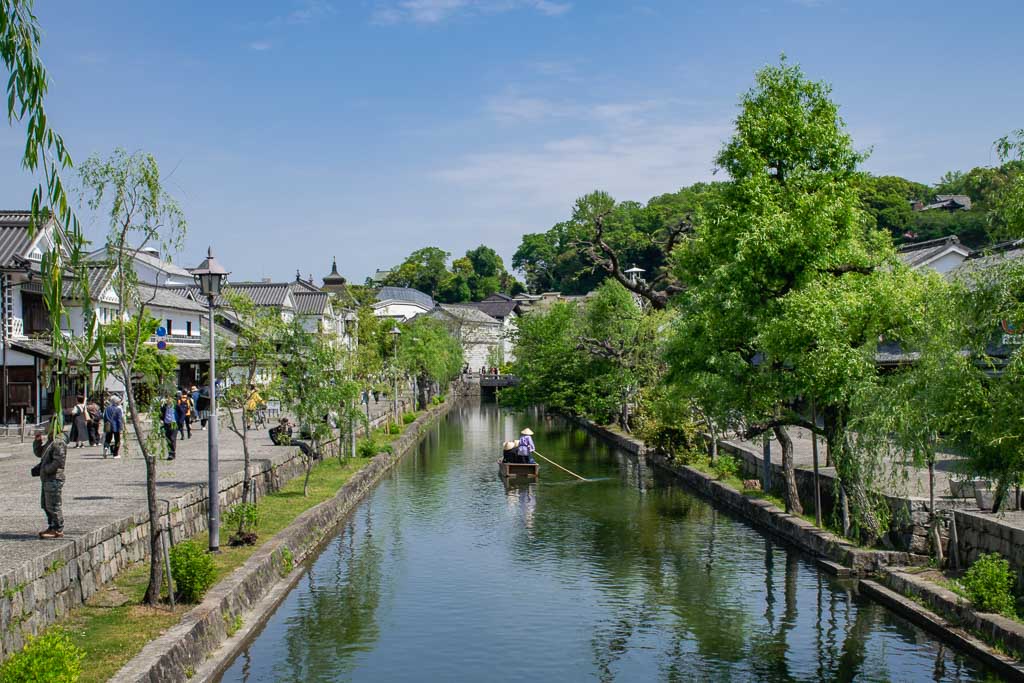
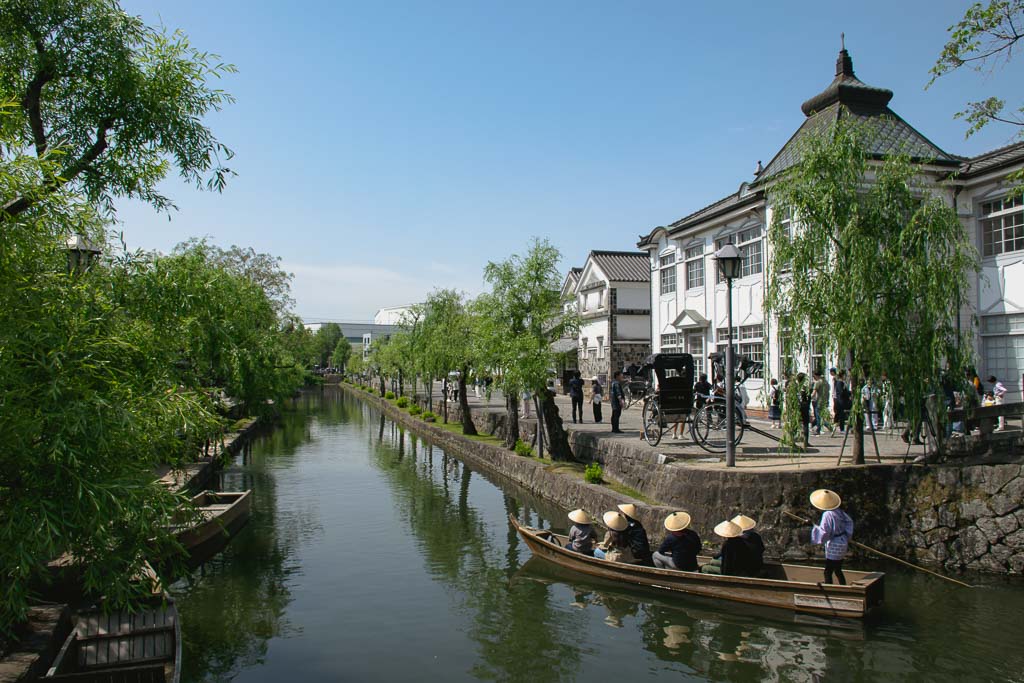
The part of Kurashiki that draws the most attention is the old merchant canal through the heart of the Bikan Historical Quarter.
This waterway connected the merchants and stores in town with a port, but now just creates a beautiful centerpiece for the city.
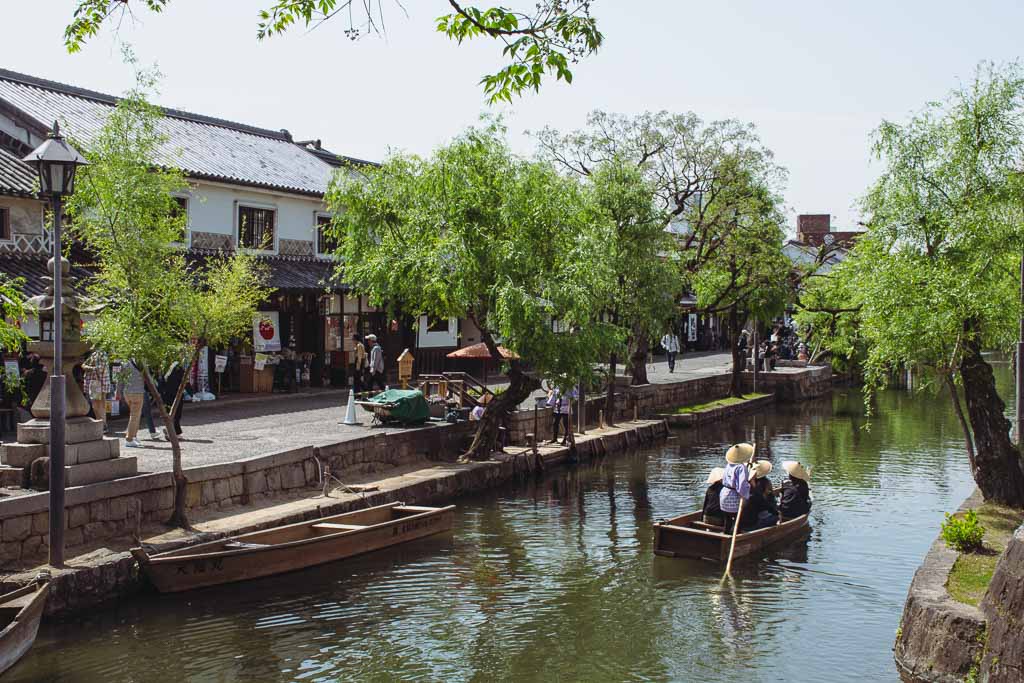
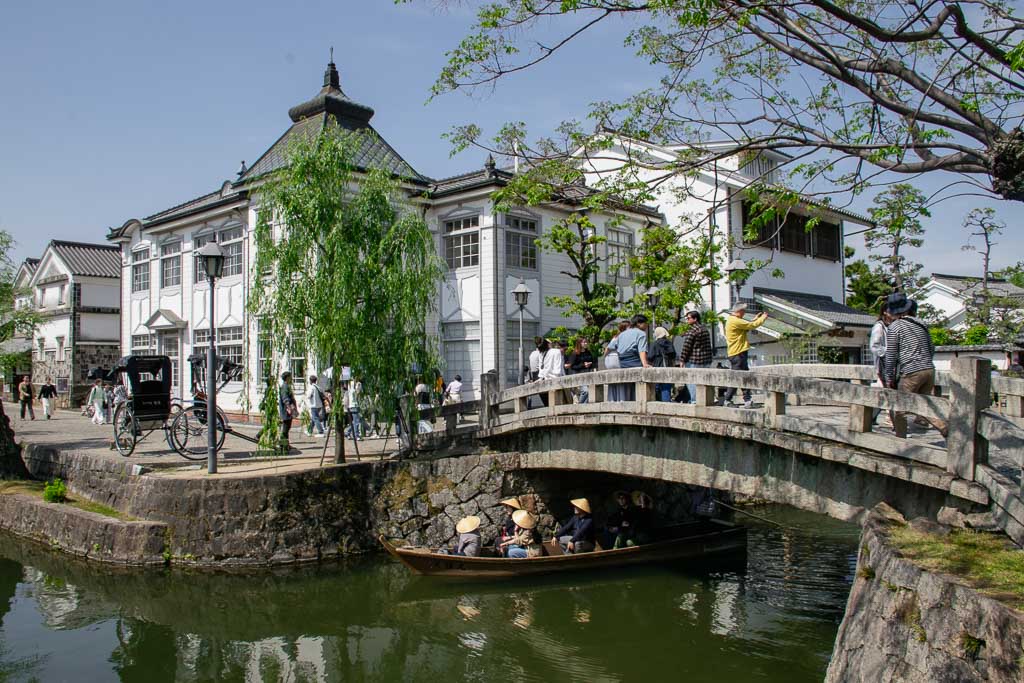
Little bridges and open boulevards allow you to easily explore the canal lined with lush willow trees. But you can also take punt boat rides down the canal or rickshaw rides along its banks to get around. Although sitting on the ledges along the canal is nice too.
There’s really not much more to say than that this is the most photogenic part of Kurashiki. This historical area is extremely pretty, and views of it are usually what draws tourists to Kurashiki.
Traditional Edo architecture
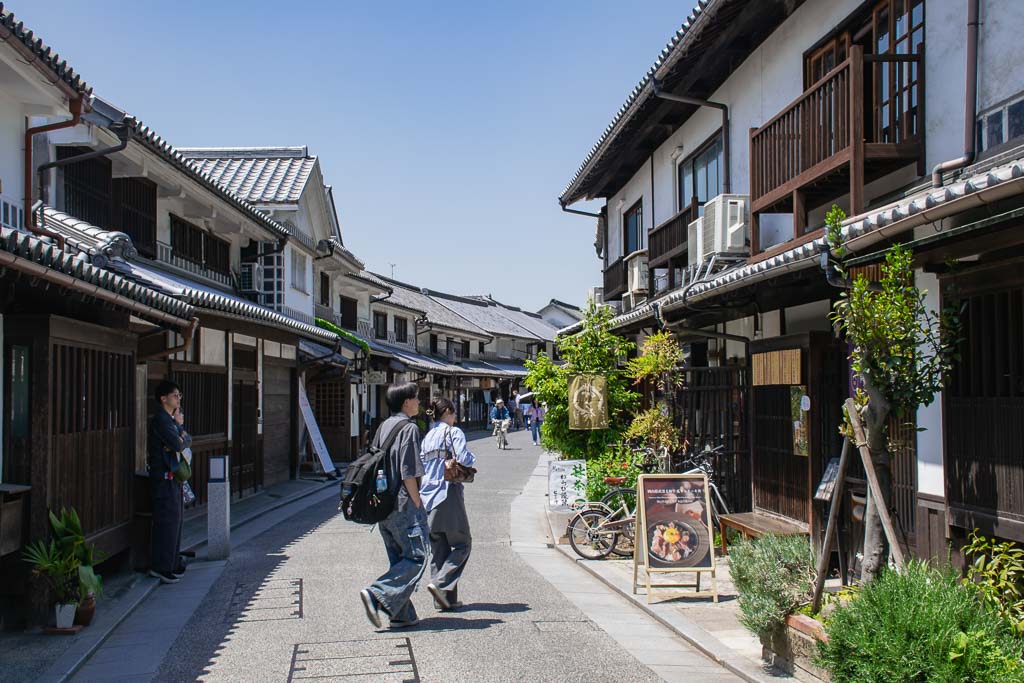
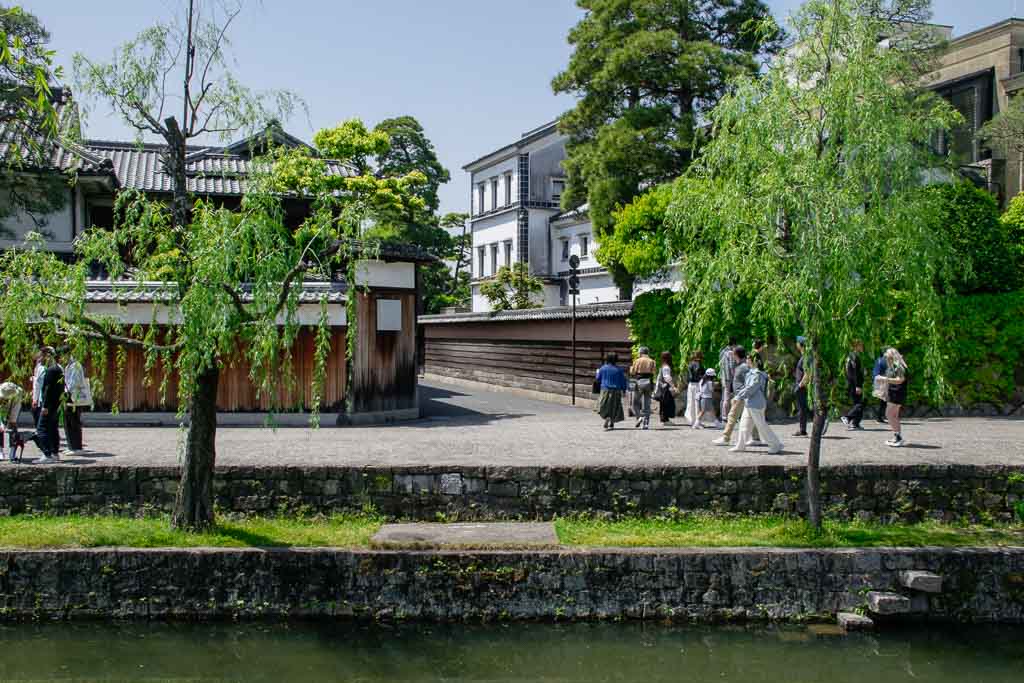
Besides the waterways, what makes the Kurashiki Bikan Historical Quarter so special is its preserved traditional Japanese townscape.
Walk down the streets and alleys of the quarter, and it does feel like you’ve stepped back to the Edo period. Homes, shops, and storehouses have all been preserved in their forms from hundreds of years ago.
Buildings in the Bikan Historical Quarter date from the 17th to the 19th century and include old residences such as Inoue House, which is from the 17th century and is the oldest building in the Bikan Historical Quarter.
This traditional architecture is a key part of what makes Kurashiki’s canal so pretty. However, it does have some later additions, such as the beautiful 20th-century building that now houses the tourist information centre.
I highly recommend taking the time to wander the back streets and little alleys of the quarter, as these prove it’s most than just a pretty waterfront.
Denim Street
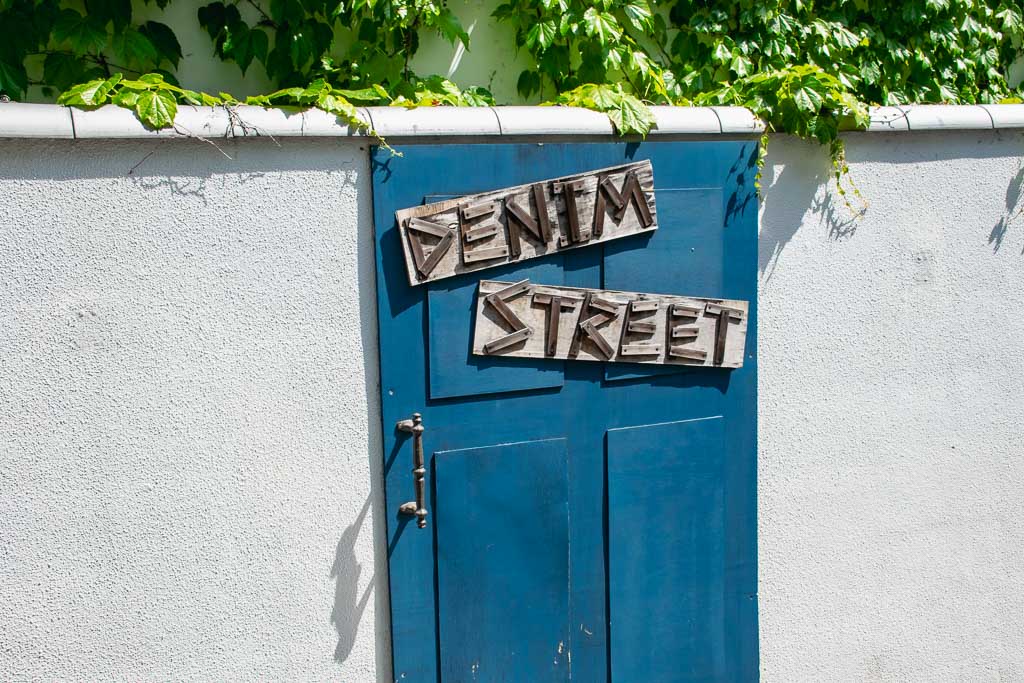
Textiles were once a large part of Kurashiki’s economy, with a cotton mill opening in 1888.
It was this industry that turned Kurashiki into a town of trade and provided locals with the wealth to build large, beautiful residences.
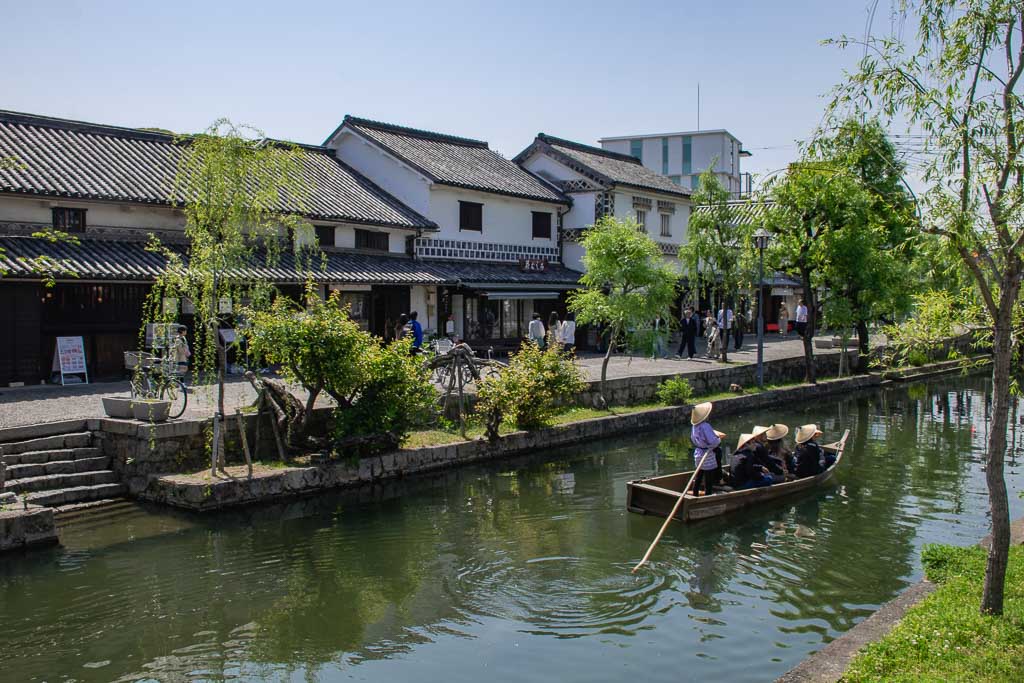
Over the years, the industry changed and evolved, and soon it was Japan’s premier supplier of denim. You can find these products in various shops around the historical quarter, but one hub is Kurashiki Denim Street.
I knew nothing about this side of the city before arriving, so all of this was a fun surprise. Keep it in mind if you’re after a special souvenir or interested in the history of fashion.
Achi Jinja viewpoint
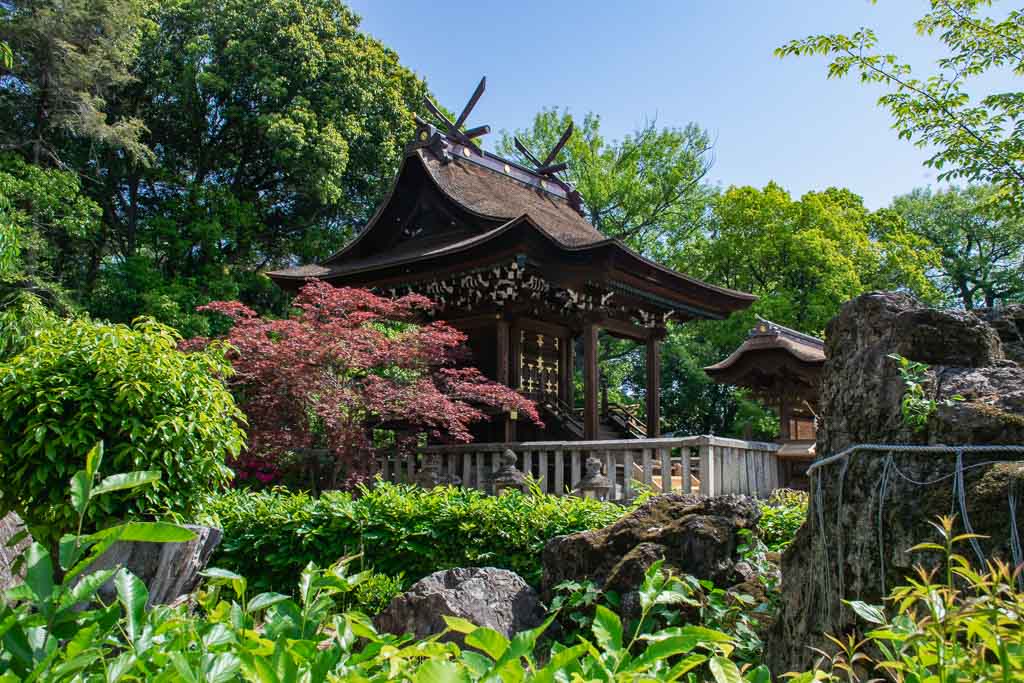
You really can’t go anywhere in Japan without finding a place of worship, and in Kurashiki, the most prominent is the Achi Jinja shrine.
Worshippers established this hilltop Shinto shrine back in 1594, while the oldest of its buildings dates from the 17th century. It doesn’t take long to explore this site, but lots of little details jump out at you as you do.
Take the occasional Buddhist elements you catch at this Shinto shrine, such as painted daruma dolls, which is an unusual blending of the two faiths.
Then there are the red leaves of its Japanese maples, which I think are just as eye-catching in spring as cherry blossoms.
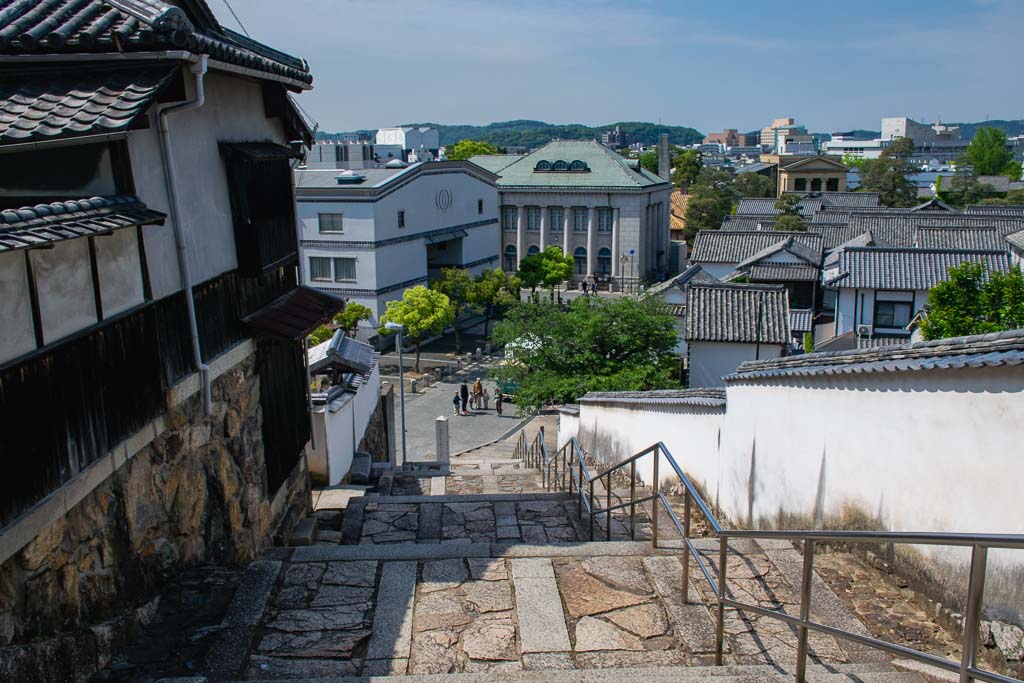
But I think what I most like about Achi Jinja was the views you got of the rest of Kurashiki. This central hill has great views towards the historical center, especially from the long staircase that leads up to the shrine.
The many museums of Kurashiki
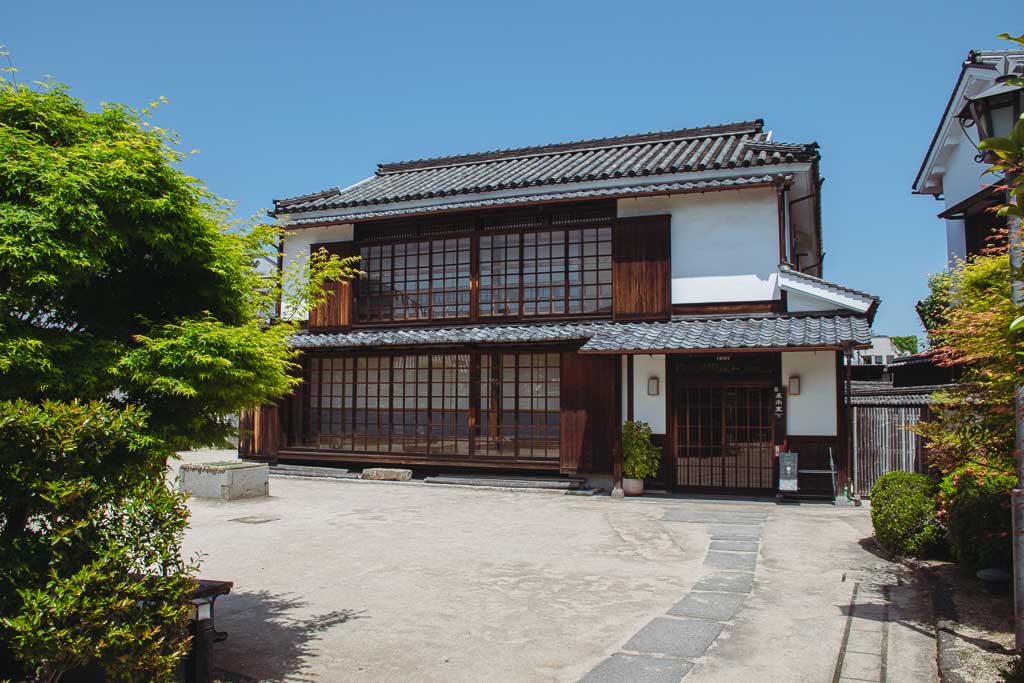
For such a compact historical quarter, Kurashiki sure has a lot of museums to tell you about its past.
Try to visit all of these museums around Kurashiki, and you can easily turn a half-day trip into a full-day excursion. The city has both big ones, such as the Kurashiki City Art Museum and Kurashiki Museum of Natural History, as well as plenty of small ones.
The one I’d start with, though, is the Kurashiki Monogatarikan. This free local museum occupies a restored residence and its garden, and is a handy place to learn a little about the city.
Other residences have been converted into house museums, such as the Old Ohara House on the waterfront.
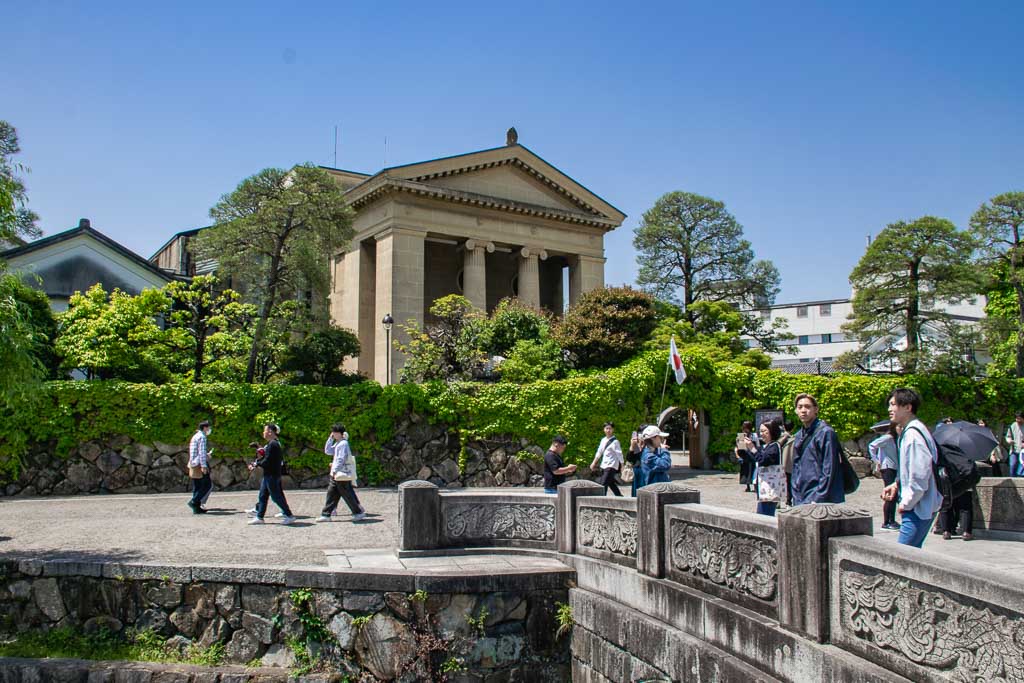
Three other popular Kurashiki museums worth noting are the Ōhara Museum of Art, Momotaro’s Karakuri Museum, and the Kurashiki Museum of Folkcraft. The Shinkeien gardens at the Ōhara Museum of Art are also not to be missed.
Kurashiki street food and snacks
Like so many places in Japan, local food is a big part of experiencing Kurashiki.
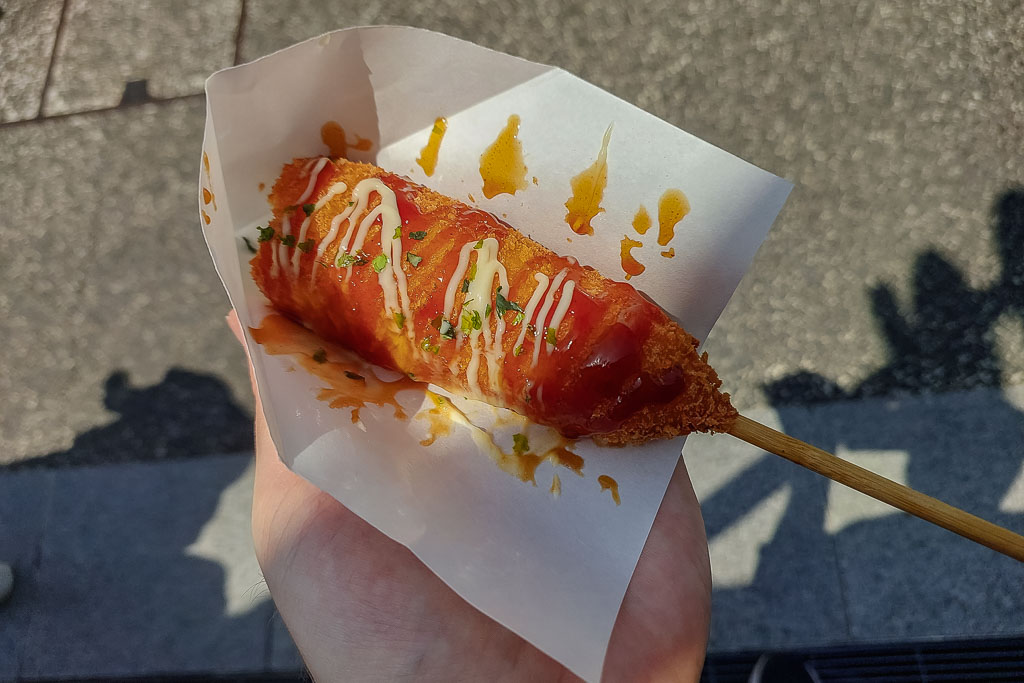
Here, it’s the snacks and desserts that are most likely to draw your attention. I know I couldn’t walk past too many kiosks selling croquettes and other fried goods before I caved and tried a Kurashiki Cheese Dog.
Street food pops up everywhere around the Bikan Historical Quarter, from the croquettes I mentioned to the local version of dango, which here are typically sweet flavours.
Two themes you’ll come across in Kurashiki are peach-flavoured things, related to Okayama’s connection to Momotaro, and denim-themed snacks—including blue “denim” ice cream.
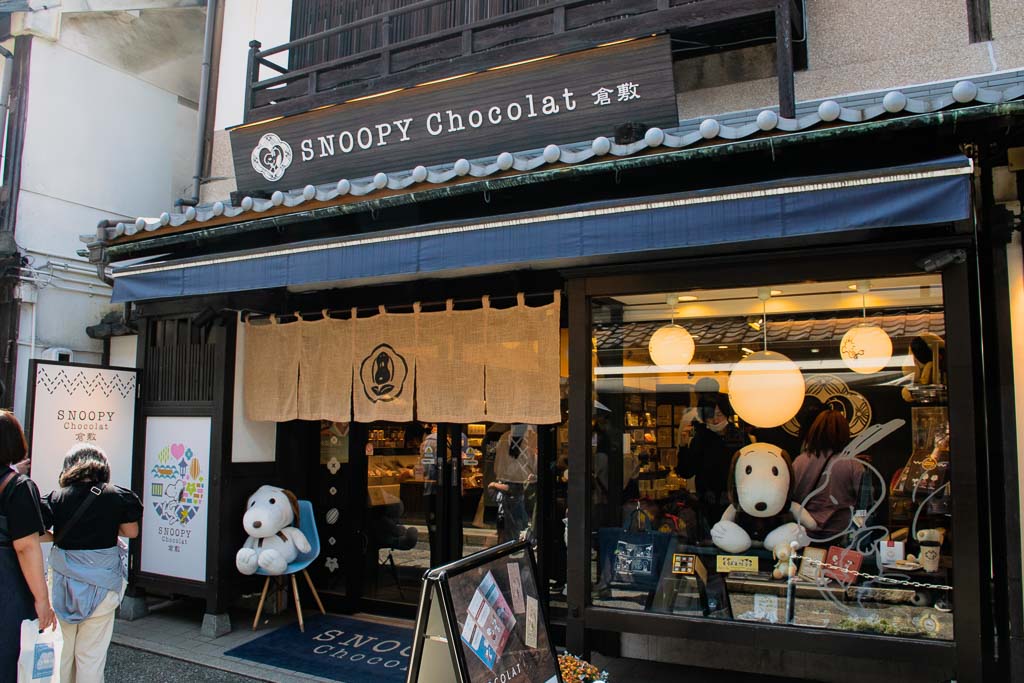
There are even some local cartoon-themed stores side by side, with Miffy Kitchen and Snoopy Chocolat playing neighbours.
Finally, for coffee, I happily recommend Mimura Coffee just off one of the main pedestrian streets.