Disclosure: This post (probably) contains affiliate links. If you click on one, I may make a small commission. Of course, this will come at no extra cost to you and helps keep this site running.
It seems strange, but one of the holiest places in Japan doesn’t receive much notice from international visitors. But that’s what I found when visiting Ise during Japan’s high tourism season. Apart from a few small tour groups exploring the Ise Grand Shrine, I saw remarkably few foreign tourists at this major cultural destination in Mie Prefecture.
Travellers interested in Japan’s Shinto spiritualism may come across Ise Jingu in their research. But maybe what they don’t realise is the other things to do in Ise that make this a place even more worth visiting. Here’s how to spend one day in Ise and see why you shouldn’t miss the chance to visit if you can help it.
How to get to Ise
Ise is located in Mie Prefecture, roughly east of Osaka and south of Nagoya. These two cities are the most useful starting points for reaching Ise.
It’s easiest to take the Kintetsu-Nagoya Line from Nagoya directly to Iseshi Station, with the trip lasting around 1.5 hours. From Osaka, there is also a Kintetsu line, with that trip taking just under 2 hours.
Now, it’s important to understand that Kintetsu trains are on private railways, so you can’t use the JR Pass to travel here.
One other route I think worth mentioning is that from Nachisan Waterfall at one end of the Kumano Kodo pilgrimage route. From its station at Nachikatsuura, you can travel by JR trains to Ise, via Taki Station — it takes roughly 3 hours.
This is the way I travelled to Ise, and it’s useful if you plan on exploring more of the Kii Peninsula.
Getting around Ise
Ise is a small city, but it’s worth knowing how to get around as your sightseeing will take you well beyond the city center.
While some things to do in Ise are located in the city center, many of the main attractions are not. For instance, the Inner Ise Shrine takes you out to the Jingu Kyu’ikirin Forest, while the Futami Okitama Shrine is off in the other direction on the coast.
To reach some places, you can get around by public bus, with main stops at the train station or outside the Sengukan Museum. This includes the #51 and #55 buses between the two areas of the Ise Grand Shrine.
You can also travel quite easily by local train to visit the seaside. Information on local transport routes (timetables, etc.) is easily found at the tourist information center at the train station.
Otherwise, Ise is a nice place to walk, whether through the city center or around Futamicho Chaya.
Where to stay in Ise

Assuming you’re not coming to Ise for a day trip, you’ll need somewhere to stay.
Now, there’s not a huge range of places to stay in central Ise, but there’s certainly enough to give you some choice.
I stayed at Toyoko Inn Iseshi Station, a nice and comfortable hotel away from the heart of the city. While a bit of a walk from the station, it’s close to the local shopping street and lots of food options.
Before I get to other central options, another area to consider staying at is Futamicho Chaya. This seaside area has a handful of ryokan right by the beach.
But for other options in Ise, these places are well-rated:
Where to eat in Ise
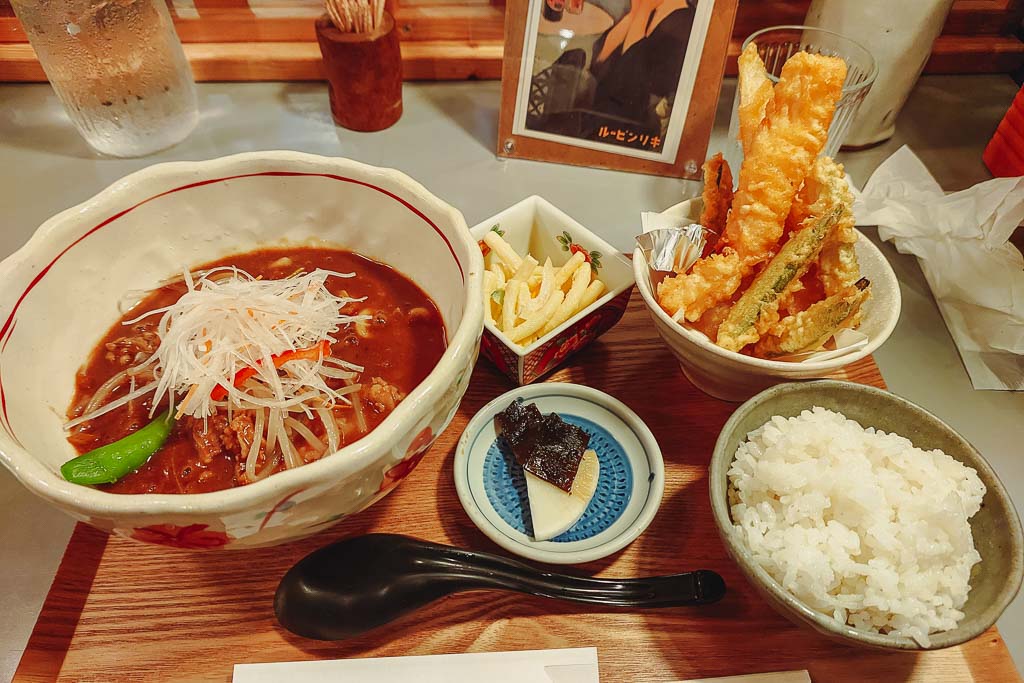
Because I spent several days in Ise, I had the chance to try a few restaurants and cafes around town.
Interestingly, most of the places I found served Western cuisine. While I normally wouldn’t recommend that kind of food to international visitors, it does seem to be what visitors want in this destination, with so many Japanese tourists.
- Kotobuki – this cafe was packed during lunchtime, and the menu ranged from desserts to lunch sets
- Killbilli – cafe with Western food, including lots of crepes, but also great coffee
- 参道terrace – a large modern coffee shop with elaborate desserts, opposite the train station
- Maruru Cafe – cafe in Futaminoura with a Western menu and welcoming ambience
Things to add to your Ise Itinerary
If you’ve heard of Ise before, then its main attraction shouldn’t come as a surprise.
What I didn’t realize before visiting was that there were other things to do in Ise that could easily fill a 1-day sightseeing itinerary. Sure, you might be looking at a pretty full day, but one well spent.
Look through these Ise attractions, and you might even decide to stick around longer to explore more thoroughly.
Sengukan Museum
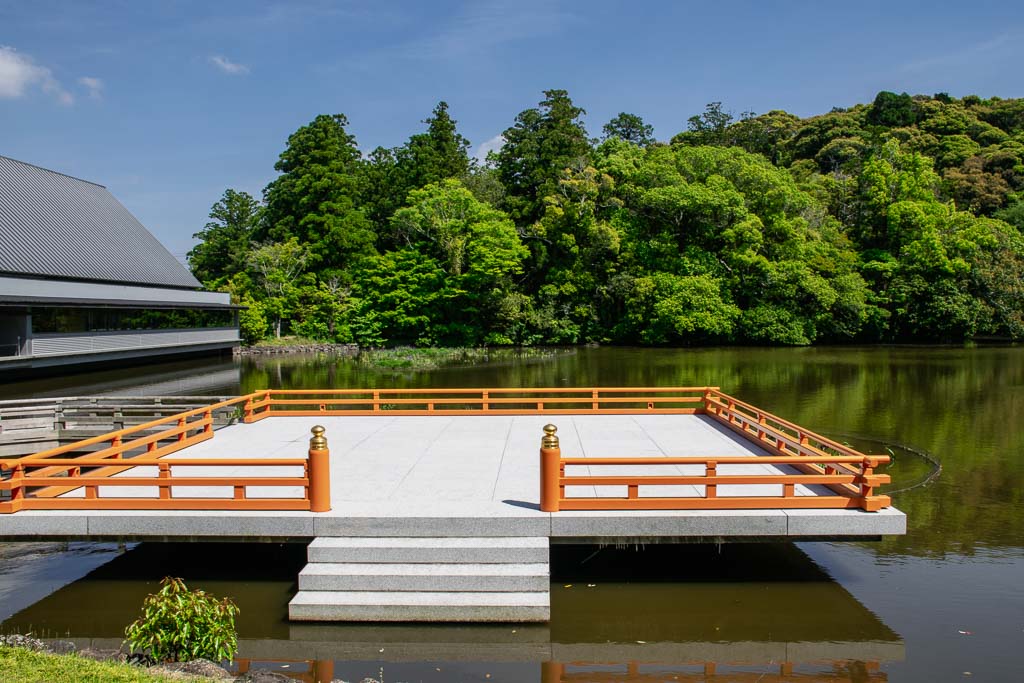
A good place to start when visiting Ise is the Sengukan Museum, since it’s all about the main attraction of Ise – the Ise Grand Shrine.
This modern museum sits by a small lake near the entrance to Geku Ise Jingu, one part of the Grand Shrine. Admission (in 2025) is 300 yen, and with that, you get background and context for this important Shinto place of worship.
The museum offers a mix of information displays, scale models, and audiovisual material, plus a library where you can do your own reading.
This is the place to learn about Ise Jingu, since the actual shrines don’t offer much information, most of which is in Japanese.

For instance, you learn that the Ise Grand Shrine is not actually one shrine, but really a shrine complex. There are 125 shrines within the Ise Jingu, separated into two areas around their main shrines, or Shougo — the Inner Shrine and Outer Shrine.
What’s confusing at first is that the Outer Shrine, Geku Ise Jingu, is right in the center of Ise, while the Inner Shrine is on the city outskirts.
These 125 shrines worship 140 deities. Every 20 years, the two main shrines are taken apart and then rebuilt on a new site. That’s why, despite its great cultural significance, the Ise Grand Shrine is not on UNESCO’s heritage list, as it is rebuilt regularly, even though it still uses traditional construction methods.
The next rebuilding, known as Shikinen Sengu, will be in 2033. As part of the event, the shrine holds 31 different festivals and rituals, spread over 8 or so years.
After visiting the museum, you should start to see why the Ise Grand Shrine is often considered the most sacred Shinto shrine in Japan.
Geku Ise Jingu (Outer Shrine)
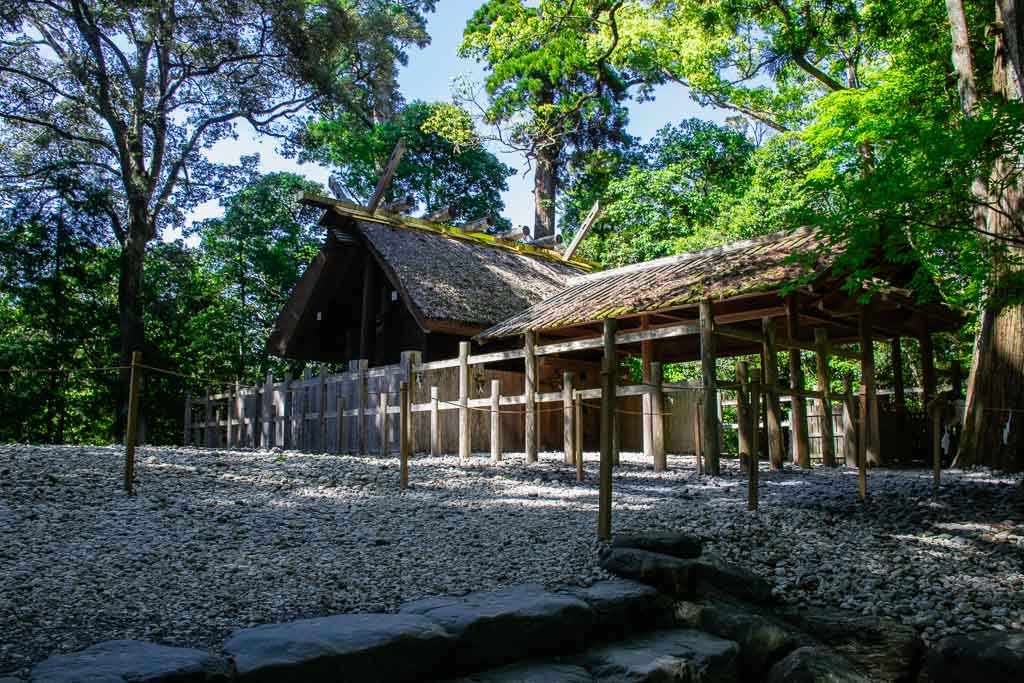
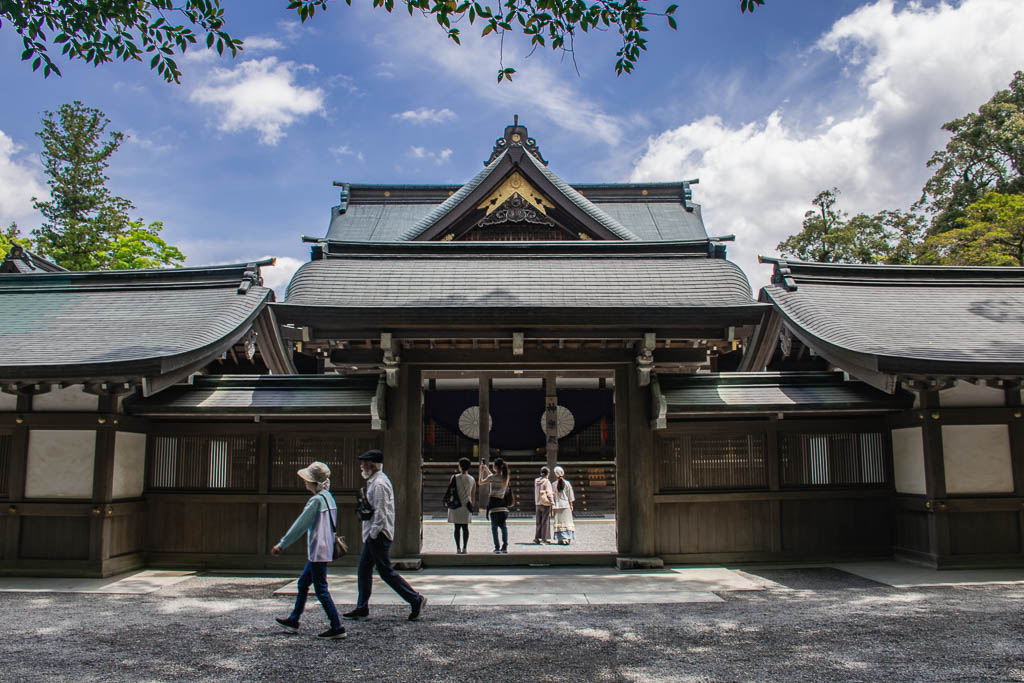
After learning a little about the Ise Jingu, you can then go explore the Geku Ise Jingu.
A circuit path with several branches leads you through the forest to see the shrines, gates, and halls that occupy this cool and quiet patch of forest.
There are several reasons why I think it’s better to first visit this outer shrine. One, it has the museum. Two, it’s a gentle walk from the train station. And finally, it puts the scale of the Inner Shrine into perspective.
Because the Geku Ise Jingu isn’t a huge complex. But it does have all the fundamental features of the Ise Grand Shrine.
You’ll see the shrines, built with the specific Misomayama timber used since the Middle Ages, as well as their golden embellishments. Just as important are the perfectly level stone clearings that show you where the main shrine once stood.
At Geku Ise Jingu, the main deity it enshrines is Toyouke Omikami, a deity of food, clothing, and service to the sun goddess Amaterasu. It’s said that Emperor Yuryaku built the shrine after a dream of Amaterasu.
You can’t access the main shrine, only the lesser shrines around it, but you can see its architecture from a distance.
Naiku Ise Jingu (Inner Shrine)

Travel across Ise, and you reach Naiku Ise Jingu, the Inner Sanctuary of the Ise Grand Shrine.
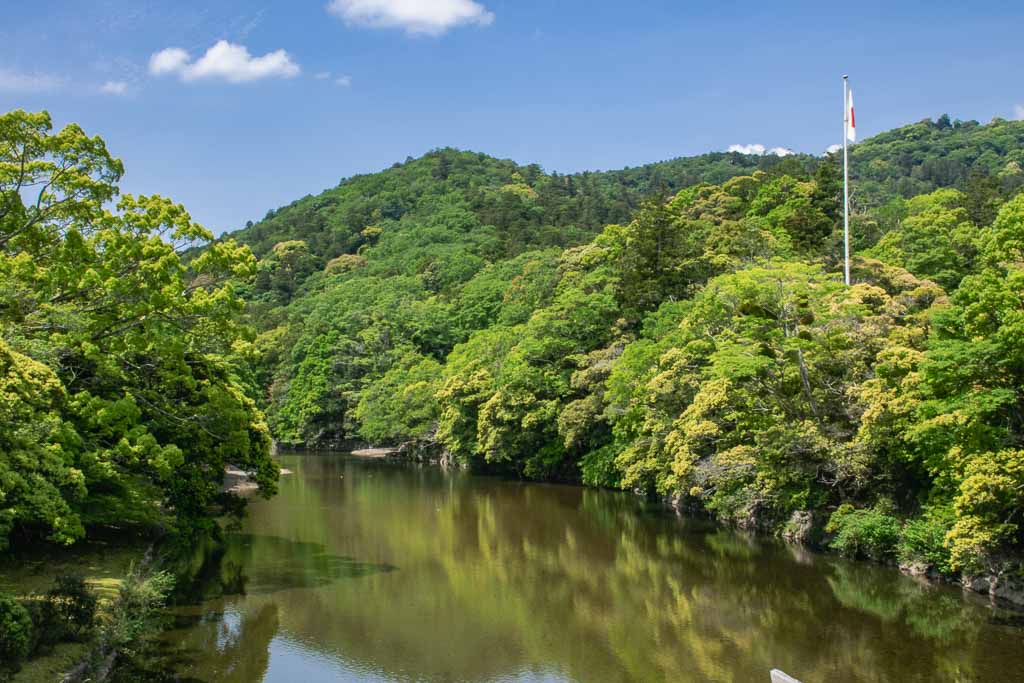
This is the main shrine complex, and that becomes immediately obvious when you cross the large Uji-bashi Bridge to reach it. Something I wasn’t prepared for when visiting Ise was just how beautiful the surrounding wilderness was around the Inner Shrine, with vibrant forest following the river south.
Crossing into the complex, you’ll first arrive at gardens and a large indoor rest area with souvenirs and places to sit.
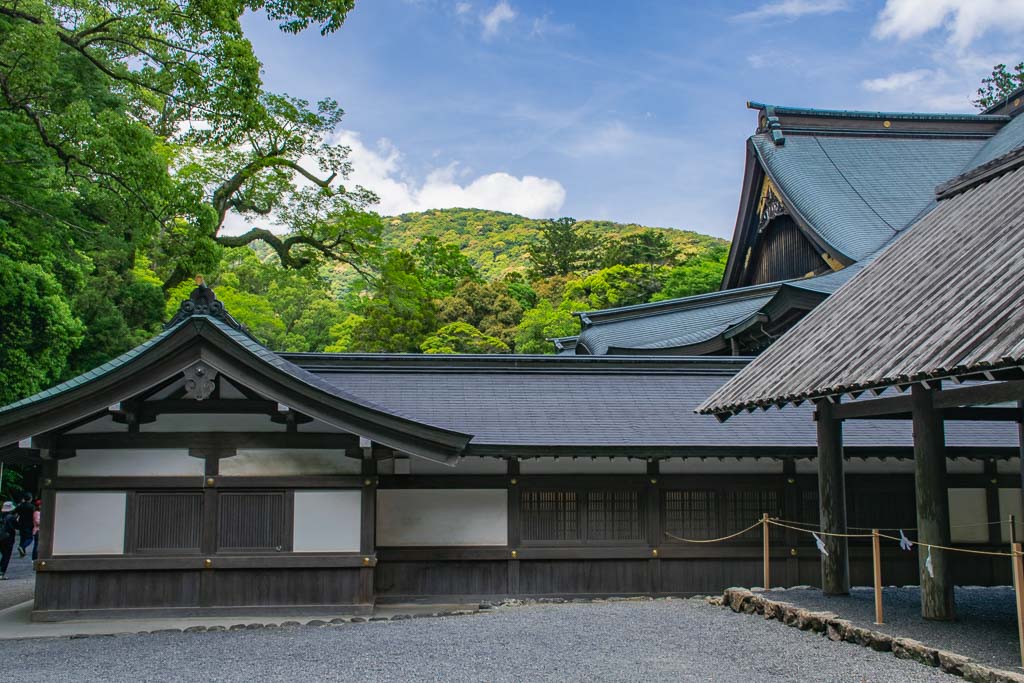
From there, trails go off in all directions, leading deeper into the forest to the various shrines of Naiku Ise Jingu. Some of the halls and lesser shrines here, such as the Kaguraden Hall, are large, ornate, and busy with people praying and receiving blessings.
It’s even further to the main shrine of Kotaijingu, which enshrines Amaterasu Omikami, the ancestral deity of the imperial family. This area again has limited access and strict rules on photography, but it’s worth coming up to see its Shinto priests and watch the prayer rituals.
I’d consider visiting with a tour guide, as I do wish I’d been able to learn more about the Ise Grand Shrine while on-site.
But even if you’re not curious about Shinto or Japanese culture, the nature here is gorgeous.
Okage Yokocho
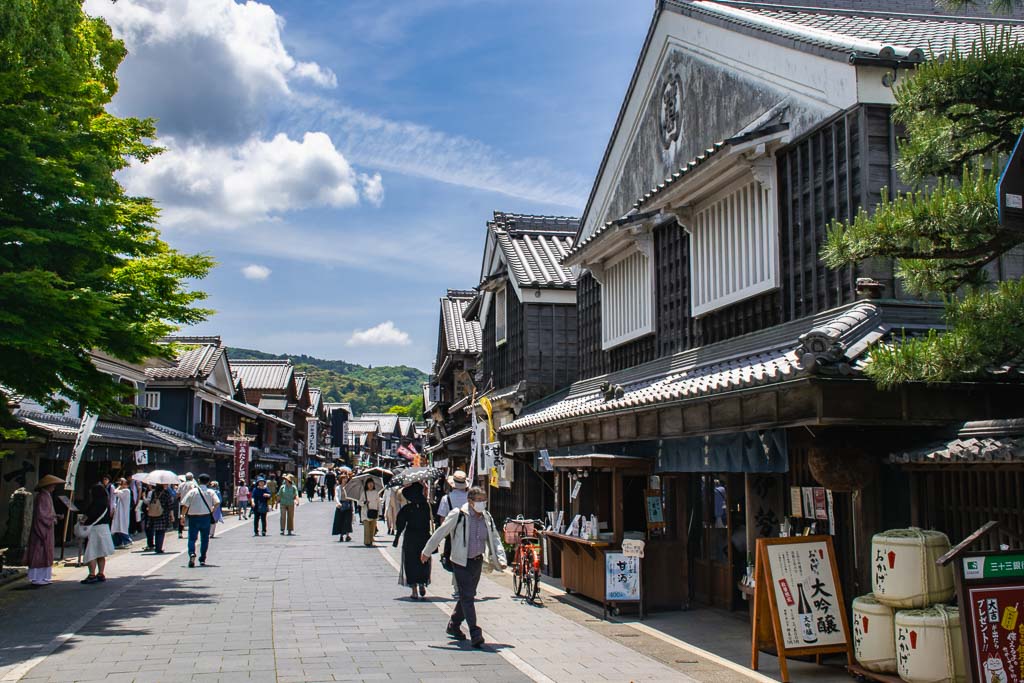
Come back out of Naiku Ise Jingu, and you’ll likely see a flood of people heading down a street to your right. Follow them.
That’s because this street (the Ise Highway) leads to Okage Yokocho, a district of buildings replicating the Edo-period look. Okage Yokocho is basically a shopping district for pilgrims and visitors, full of souvenir shops and restaurants.
The signature souvenir of Okage Yokocho is Akafuku Mochi, a traditional red bean mochi originating here. You’ll quickly realize that the Akafuku store is the busiest on the street, and that’s why.
While Okage Yokocho may not be as impressive as genuinely historic districts like those in the Kiso Valley or Kurashiki, it’s still picturesque and has a lot to look at.
The only problem is how busy it can be during the middle of the day, particularly in a month such as May.
Other Ise shrines
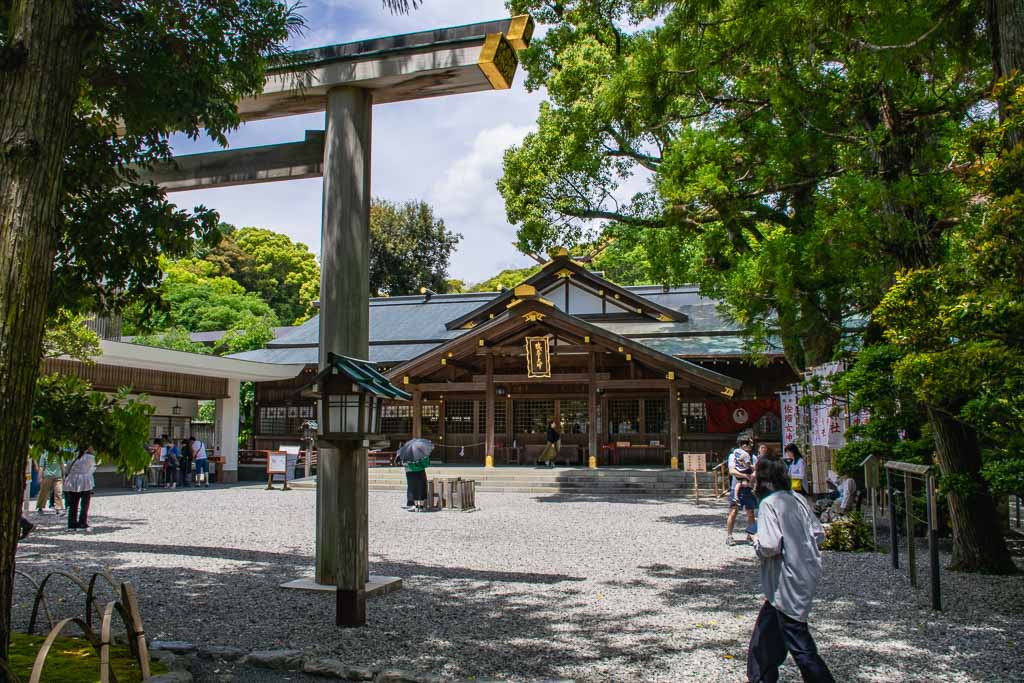
You’d think the Ise Jingu’s 125 shrines would be enough, and yet there are plenty more shrines around the city.
Two of the other shrines I visited while walking around Ise were the Sarutahiko Shrine and the Tsukiyomi-no-miya Shrine.
These Shinto shrines are dedicated to their own deities, and plenty of people still come to worship, despite the nearby Ise Grand Shrine.
Unlike in most places in Japan, you won’t find a mix of Shinto and Buddhist places of worship in Ise. I don’t recall seeing a single Buddhist temple here.
Futami’s Wedded Rocks
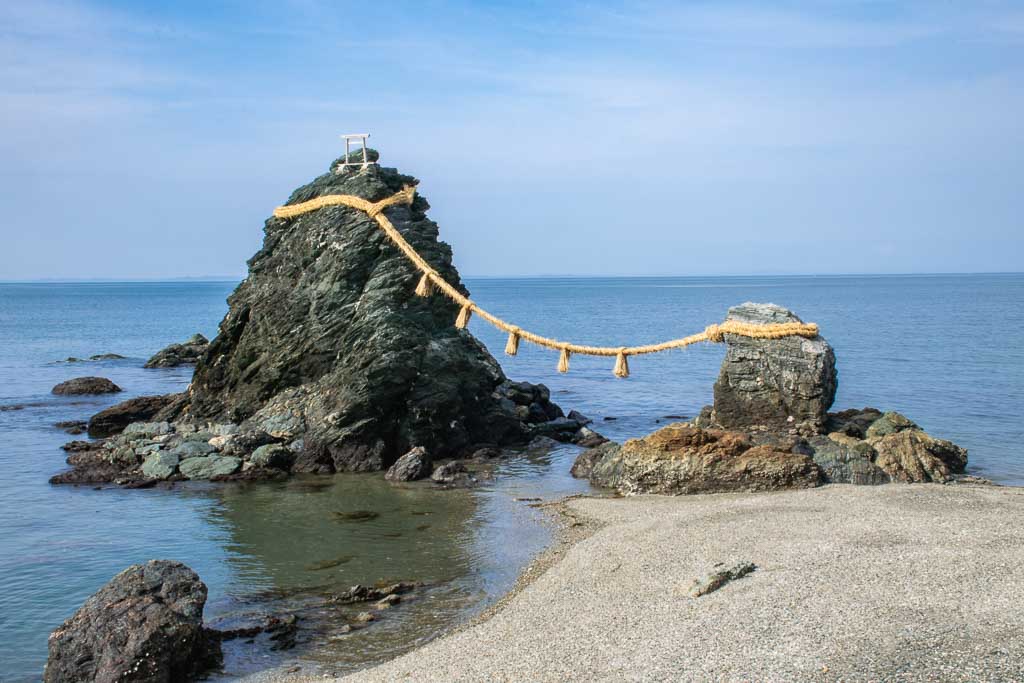
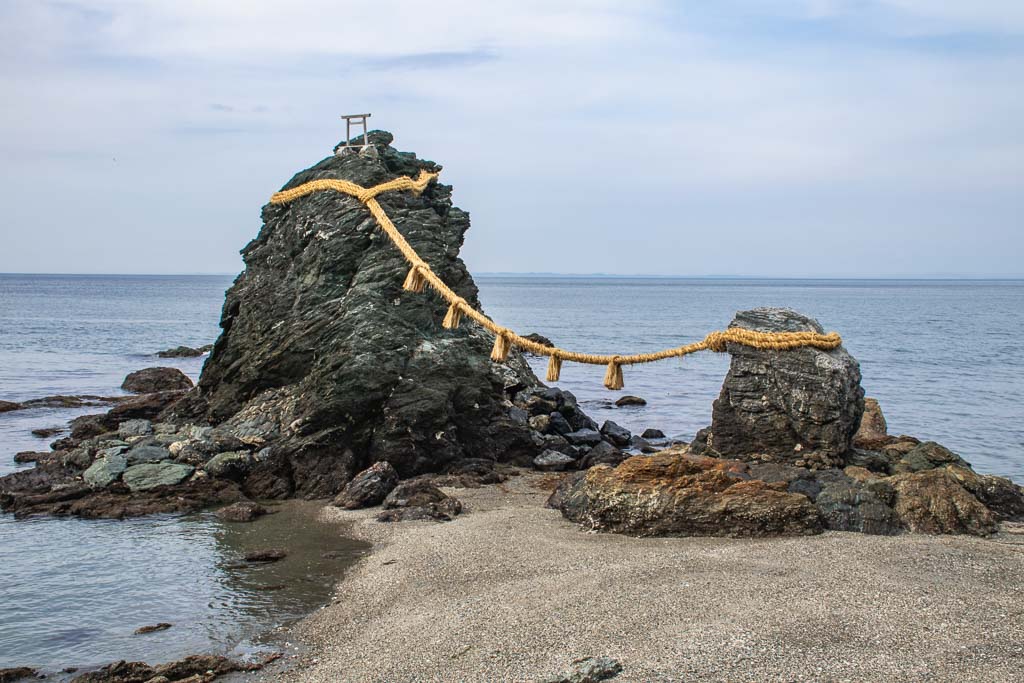
The one other shrine that deserves a mention is the Futami Okitama Shrine, best known for the nearby Wedded Rocks.
This Shinto shrine lies outside the city center on the coast at Futaminoura, a quiet area by the beach. It’s just off its coast that you find the Meoto Iwa rocks, commonly called the Wedded Rocks.
Worshippers say that these two rocky outcrops, tied together by a rope known as a shimenawa, represent a married couple. As such, the shrine is particularly popular with couples looking to bless their union.
While that idea is easy to grasp, the reason for the treasure trove of frog statues around the shrine is less clear.
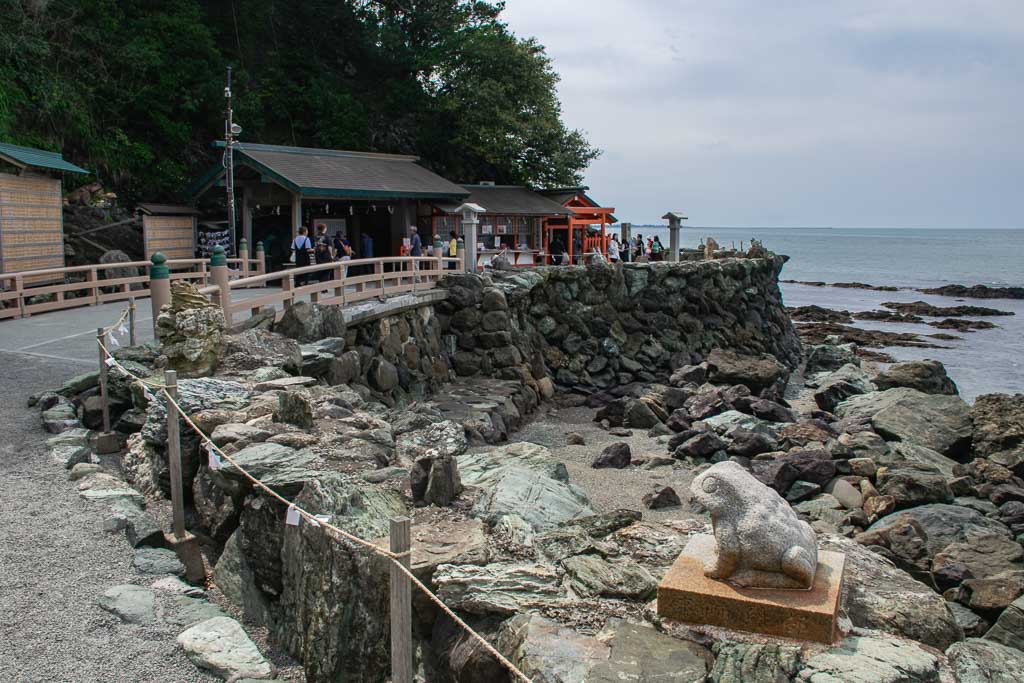
Whether you’re after a blessed relationship or just some nice photos, the area around the Futami Okitama Shrine is worth exploring. There’s the beach and waterfront trails, plus plenty of old-fashioned hotels.
Just beyond the shrine, you’ll find a shopping plaza around the ISE Sea Paradise aquarium. Fitting that in with only one day in Ise may be tricky.
As for getting photos, it’s said to be more beautiful with the high tide isolating the two rocks. I didn’t have much luck with the tide (same as when I visited Miyajima).
If you have the patience and energy, you can also stick around until sunset, but I just didn’t.
What to do with more than 24 hours in Ise
Because I explored Ise at a gentle pace after my Kumano Kodo trek, I didn’t leave much time for anything else.
So even with several days in Ise, there were places I missed. Some, such as ISE Sea Paradise, were simply a matter of personal preference.
The main thing I missed on my trip to Ise was visiting the Ise-Shima National Park. This national park covers most of the Shima peninsula and is filled with forest, mountains, and coastline.
It seems like there are days’ worth of things to do in Ise-Shima National Park — if you have a way of getting around. The most obvious main attractions here are the Toba Sea-Folk Museum, Yokoyama View Point, and Mikimoto Pearl Island. But there are also lighthouses, theme parks, and so much more.
Another attraction near Ise worth mentioning is Ninja Kingdom Ise. This theme park, based on Japanese culture, is not far from Futaminoura. It seems to appeal to kids and cosplay enthusiasts, but also has an onsen for some reason.
