
Disclosure: This post (probably) contains affiliate links. If you click on one, I may make a small commission. Of course, this will come at no extra cost to you and helps keep this site running.
Kyoto is one of the most interesting places to go in Japan, without a doubt. The city captures Japan’s traditional culture, unlike almost anywhere else, which is why it’s such a popular destination.
While Kyoto is definitely worth visiting, its struggles with tourism can’t be ignored. Excessive crowds in Kyoto have already led to new rules for certain areas, such as Gion, but have also left tourists feeling disappointed when the reality of some Kyoto attractions doesn’t live up to their social media image.
I loved my time exploring Kyoto, but I felt that some things to do in Kyoto were just too busy and didn’t live up to the hype. Hopefully, these insights will help you plan a Kyoto itinerary that meets your expectations.
Getting around

Kyoto may not be as sprawling as Tokyo, but it’s still a large city with attractions from one side to the other.
You can’t just get around by walking in Kyoto; trust me, I tried.
Using public transport is the key to getting around Kyoto, but it can be a bit confusing. Not only does Kyoto have a metro, buses, and train lines, but it also has private train lines and even a special tram.
Search for a route online between two points in the city, and you’ll get a wide range of options using different services. Some won’t be as frequent, some will be twice as expensive as others if you change between buses and other modes. That’s to say nothing of knowing which public transport you can use a JR Pass or regional pass for when travelling.
Do some research to decide how you want to pay for transport in Kyoto, based on where you stay and where you want to go.
The good news is that there are also options that make visiting Kyoto from Osaka super easy, such as the Hankyu-Kyoto Line. A one-way ticket between the two cities is just 410 yen.
Where to stay
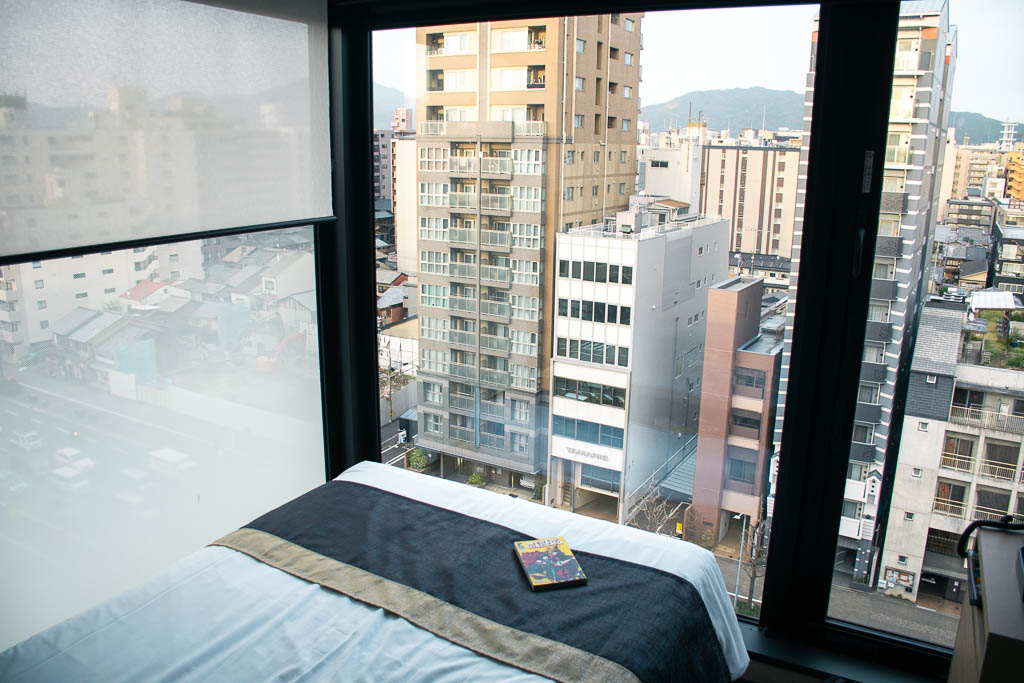
Deciding where to stay in Kyoto is no small feat. The city has many hotels in various areas, making it tough to pick one place that stands out.
Price can be a major factor. Similar to Tokyo and Osaka, accommodation in Kyoto is on the pricier end of the scale. If it’s not a problem, then the Higashiyama Ward can be a great pick.
For everyone else, I’d focus attention on two areas: the area north of Kyoto Station and the area around Karasuma Oike Station. Both benefit from good public transport connections and are hubs with everything you need.
During my stay in Kyoto, I used the Hedistar Hotel Kyoto Nijo. This place is known for its manga library in the lobby, which guests can borrow from at will. That was more a fun quirk to me than a selling point, but everything else about the hotel was great.
Other highly-rated hotels to stay in Kyoto include:
- Onyado Nono Kyoto Shichijo Natural Hot Spring
- KABIN Kyoto
- Hotel Forza Kyoto Shijo Kawaramachi
- Hotel The Celestine Kyoto Gion
Meanwhile, you can also choose to stay in ryokans, such as:
What tours/experiences to take
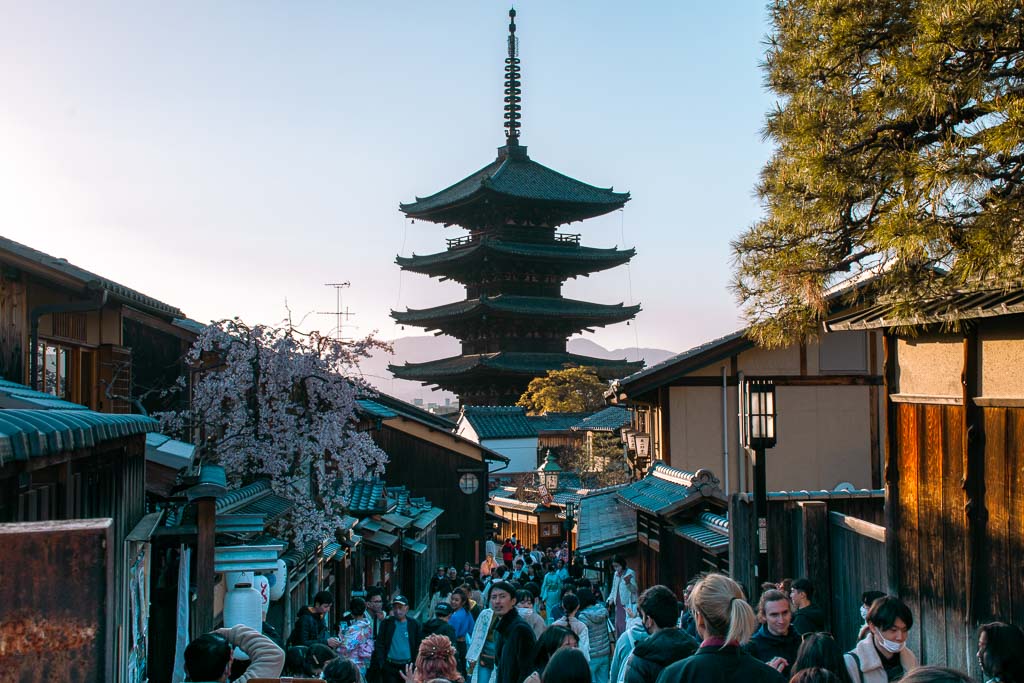
Kyoto has a lot to see and do. While exploring on your own is perfectly fine, sometimes you want help or someone to explain why certain attractions are so important.
People often just start with walking tours and sightseeing tours, as those make it easier to visit highlights, including many places on this list. But you can also arrange for experiences that let you focus on a specific part of Kyoto’s culture and gain a deeper appreciation for it.
These tours and experiences will make your sightseeing easier and more culturally involved:
- Kyoto: Gion Geisha District & Hidden Gems Walking Tour
- Kyoto: Tea Ceremony in a Traditional Tea House in Kiyomizu
- Kyoto: Early Morning Tour with English-Speaking Guide
- Kyoto: Full-Day Best UNESCO and Historical Sites Bus Tour
- Kyoto: Izakaya Bars Guided Walking Tour
Places to visit in Kyoto
No matter how long you have in Kyoto, you can’t see everything.
I spent three days in Kyoto sightseeing, and as you’ll see, I missed plenty. Your time visiting Kyoto is valuable, so I think it’s important you know what to expect, especially when it comes to places that might disappoint.
For this list, let’s start with attractions that are either overcrowded, not that interesting, or both. At the other end, we have attractions that are less busy, and I think, offer great value. Feel free to disagree.
Arashiyama Bamboo Forest

The bamboo forest in Arashiyama is one of the most famous attractions in Kyoto among international visitors. But it’s also kind of infamous, too.
I was excited about seeing this small landmark on the outskirts of Kyoto. But that excitement quickly faded when I arrived and joined the mob of people streaming into the forest in the morning.
Admittedly, I didn’t arrive first thing in the morning. And some sections of the path were really quite pretty.
But enjoying a walk through the bamboo forest has its challenges, mainly everyone jostling to take photos. It’s not just that it’s hard to get a photo without people in it; that’s understandable.
What surprised me was how rude some people here were, literally standing in front of you with your camera out or angrily gesturing for you to move, when there was nowhere else to go.
Consider visiting one of these alternatives instead, as the Arashiyama bamboo forest is often a letdown for people visiting Kyoto.
Kinkaku-ji
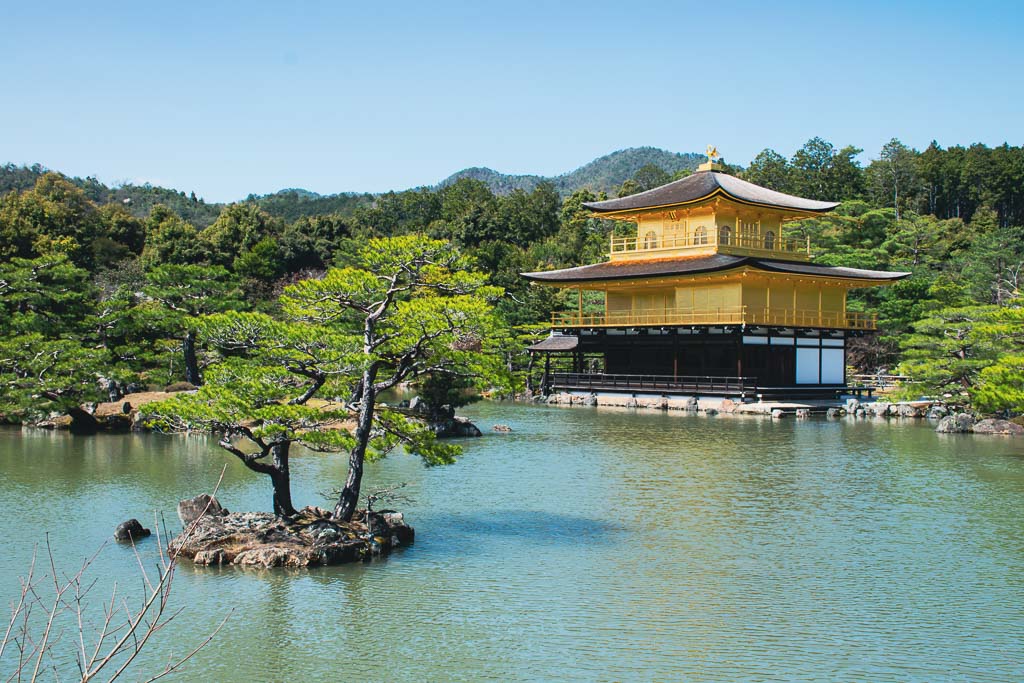
Kyoto is packed with temples and shrines, with Kinkaku-ji, also known as the Golden Pavilion, one of its most famous.
In case it’s not obvious, what makes this Zen temple special is the gold leaf decorating its top two floors. Neighbouring the temple are a large pond and carefully landscaped gardens, as well as some old temple halls and a teahouse.
While that sounds like a lot to see at Kinkaku-ji, it left me underwhelmed. Entry is 500 yen, but that somehow didn’t feel it for what felt like an attraction with not much to do.
It didn’t help that I got trapped between large tour groups when exploring the temple grounds. But I kept hoping for something with more substance while visiting, especially knowing that this is a 20th-century rebuild after multiple fires destroyed it over the years.
Getting to Kinkaku-ji also involves heading to the edge of Kyoto by bus, as there’s no train or metro nearby.
Maybe if I’d made more out of visiting this area by going to the nearby Ryōan-ji temple, I would have felt like visiting Kinkaku-ji was worth my time.
Ninenzaka walkway in Gion
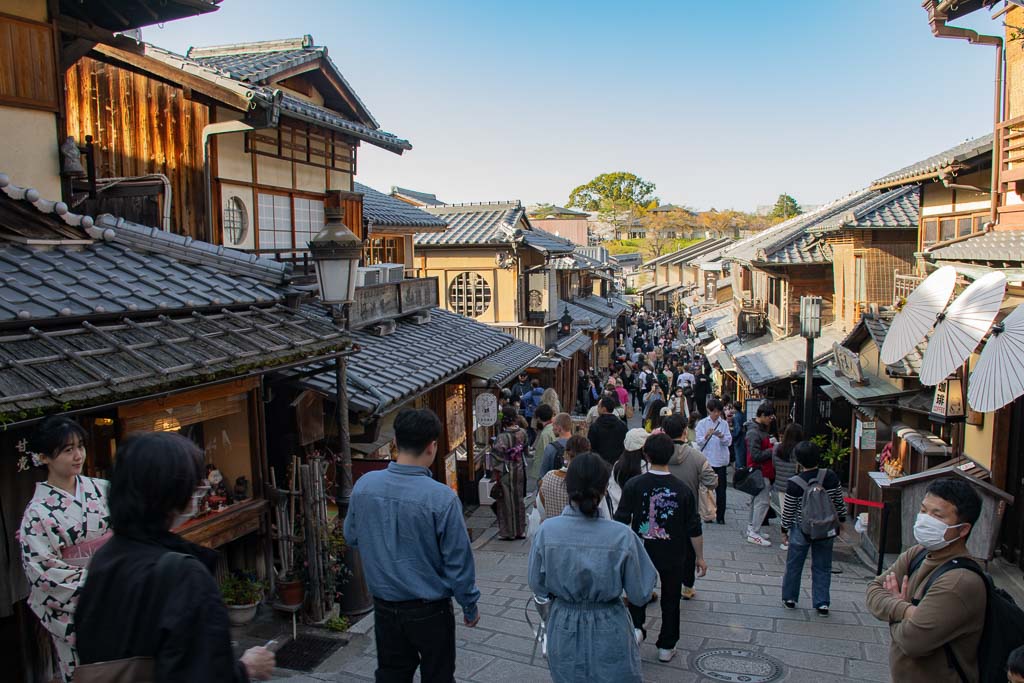
Gion is Kyoto’s famous geisha district, an area filled with traditional buildings and women wearing colorful kimonos.
While it’s a very picturesque place to explore and delivers on the image many people have in mind when thinking of Japan, it has one major problem. Gion is crowded to the extreme.
Nowhere better showcases this problem than the Ninenzaka walkway.
This narrow street, topped with stairs, is an iconic spot in Kyoto, but you’re sharing the space with a sea of people during the day.
Around the corner is another popular spot, this time with a view of the nearby Hōkan-ji Temple.
Maybe if you come first thing in the morning, these areas aren’t as crowded. But the experience of visiting during the day or afternoon highlights the overcrowding problem this area of Kyoto has.
Fushimi Inari Taisha
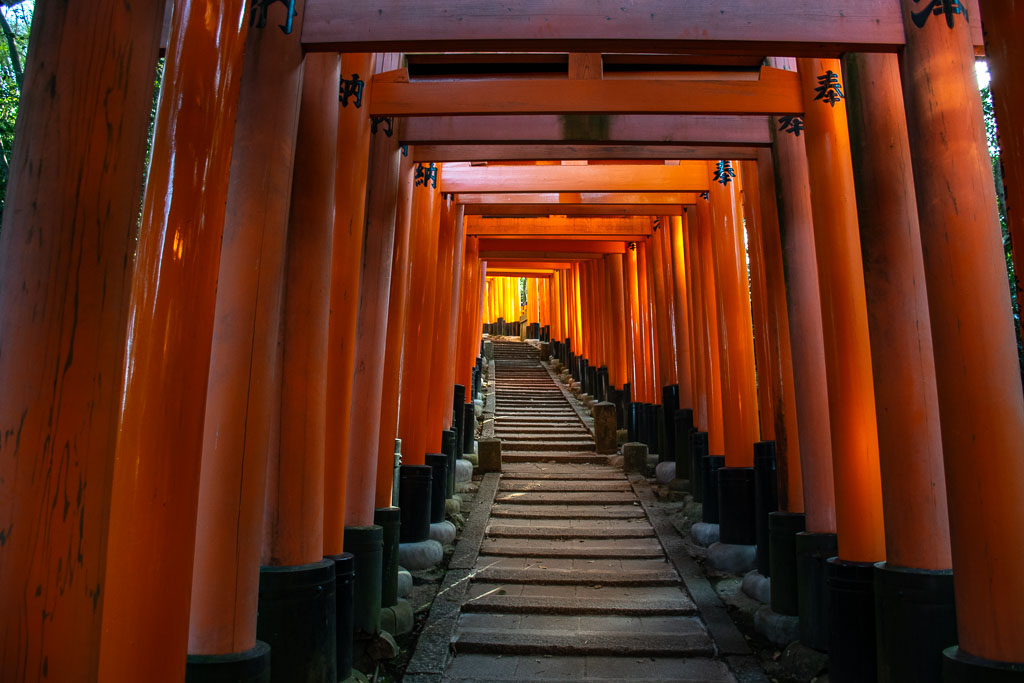
Some people may be surprised that I don’t have Fushimi Inari Taisha higher on this list.
This Shinto shrine on Mt. Inari is as famous for its crowds as it is for its long tunnels of orange torii gates. But I don’t think this Kyoto hotspot is overrated, and there are some opportunities to escape the crowds.
Like many attractions, visiting Fushimi Inari Taisha early is the key. By 9am, the place is already pretty busy. My advice, though, has more to do with where you go.
People arrive at the bottom and immediately start getting photos at the first torii gates they see. But this shrine is known as Senbon Torii, which is literally “Thousand Gates”.
The early gates stay busy, but if you wait and climb up higher, you’ll find quieter areas, particularly on the path leading down to the Araki Shrine.
Although people focus on the gates at Fushimi Inari Taisha, this attraction has more to offer. Its viewpoints offer nice views across Kyoto and are worth the climb, as are all the little details of its shrines, such as its dog statues wearing red bandanas.
Tenryu-ji
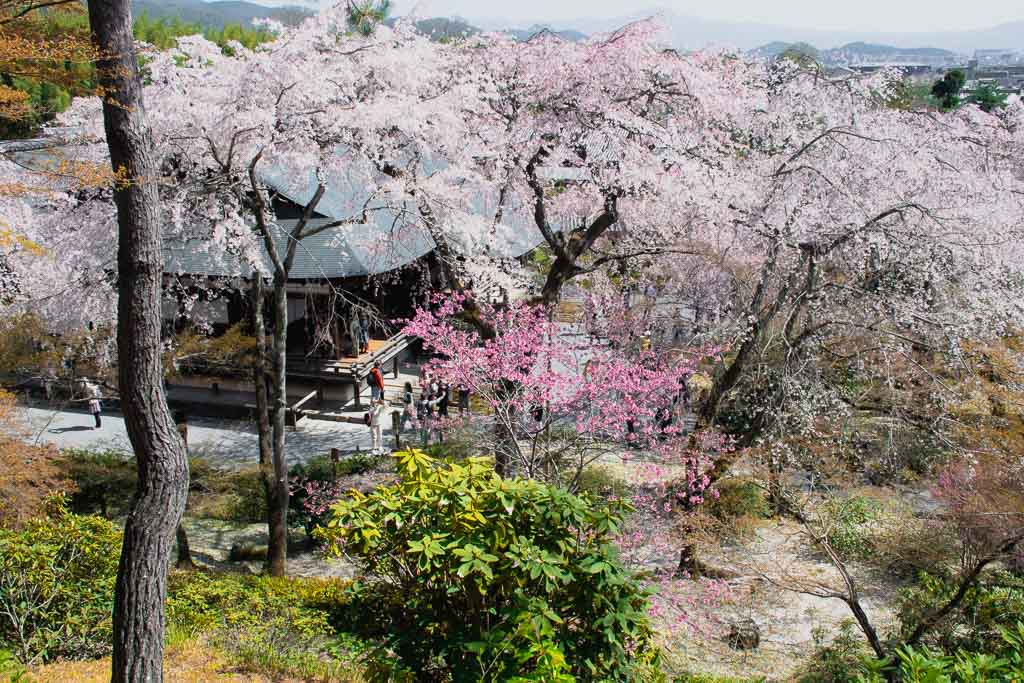
It gets overshadowed by the nearby bamboo forest, but the Tenryu-ji temple is one of the main attractions of Arashiyama.
This Zen Buddhism temple has a long history and played a key role in the development of Buddhism in Japan. But for visitors, the main things to see are its Meiji-era halls and pavilions, and the well-lanscaped gardens of Sogenchi Teien.
While the traditional design of the halls is nice, they’re nowhere as interesting as the palace rooms at Nagoya Castle.
What really made this temple stand out to me was its gardens. In spring, the gardens are bursting with blossom, but I’ve also seen photos during autumn where the gardens are equally as colourful.
While it has all of that in its favour, the downside is ticket prices and crowds. 800 yen to see the gardens and buildings is not nothing. Add in the many visitors who flow in from the bamboo forest and congregate in bottlenecks, and it isn’t necessarily the most “zen” place.
But it is one of the nicest gardens I’ve seen in Japan, after Kenroku-en in Kanazawa.
Keage Incline
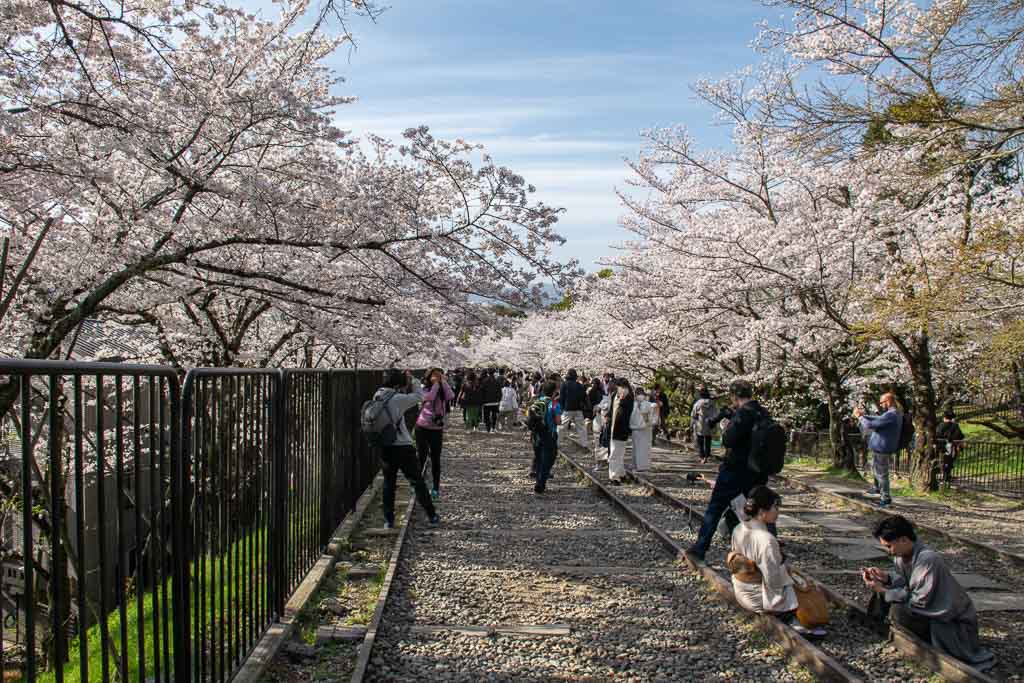
Visitors to Kyoto looking for somewhere to experience the local cherry blossom season should consider visiting the Keage Incline.
Located near Keage Station, this little spot is a popular place to go for photos with the blossoms. It’s set along old railroad tracks, bordered with white blossoms, which create an interesting space for photos.
Unfortunately, it gets a lot of interest at this time of year and doesn’t really have much else to do there. I’d only suggest coming here during cherry blossom season, and if you’re already planning to go to other attractions in this part of Kyoto, such as the Nanzen-ji temple.
Shirakawa Canal
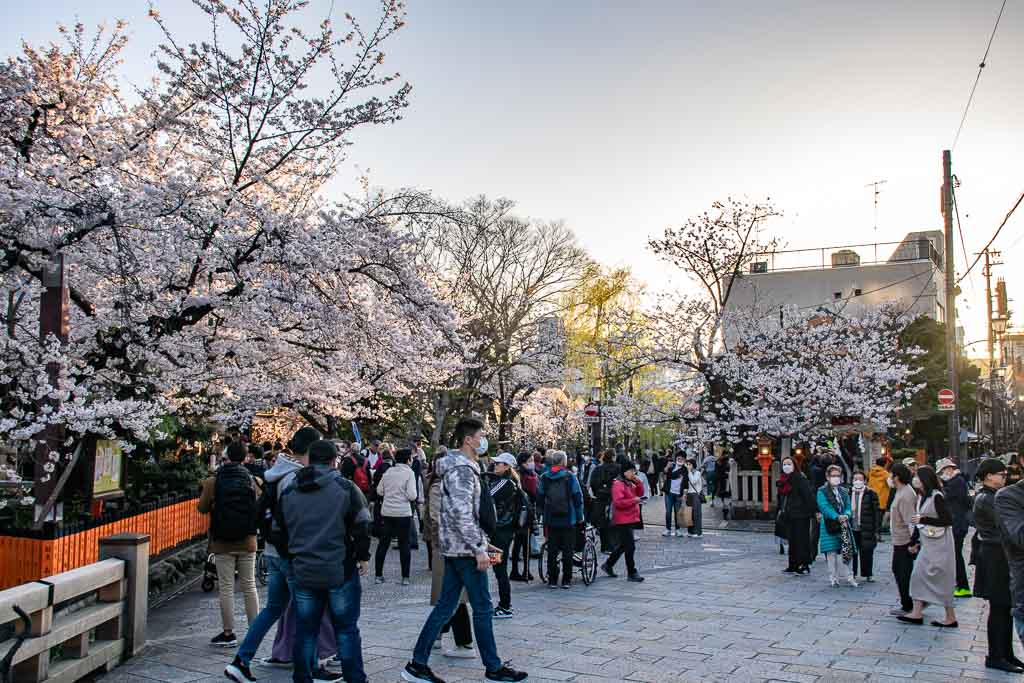
Yet another scenic spot in Kyoto where you can find cherry blossoms is the Shirakawa Canal in Gion.
Like the rest of Gion, it’s a pretty busy place to go sightseeing, but it’s a little more open than places like the Ninenzaka walkway.
Probably the most crowded spot is around the Tatsumi Bridge, apparently a popular filming location for shows and movies. But the whole area along the canal and in the surrounding streets is quite picturesque with traditional scenery.
I think this spot much actually be just as good to visit outside of spring. Much of the area will stop be interesting to explore, plus you’ll have fewer people around to share it with.
Philosophers Path

The Philosopher’s Path was a welcome surprise during my Kyoto sightseeing.
Although I marked it on my map, I didn’t really know what it was until I walked over from the Keage Incline. Starting at Nyakuoji Bridge, this 1.5 km path follows a canal through the western outer neighbourhoods of the city.
While a quiet walking path through residential areas sounds nice enough, the path also happens to have lots of trees in bloom during spring. Yes, it can be fairly busy during the day, but it had a much more relaxed and pleasant atmosphere compared to other places in Kyoto.
Houses and shops along the Philosopher’s Path vary quite a bit, but some are old-fashioned and add to the overall charm of the area. I even think the area would be nice outside of spring.
Just prepare to do a lot of walking, as its far end isn’t close to trains or metro lines, so you may need to walk back.
Arashiyama
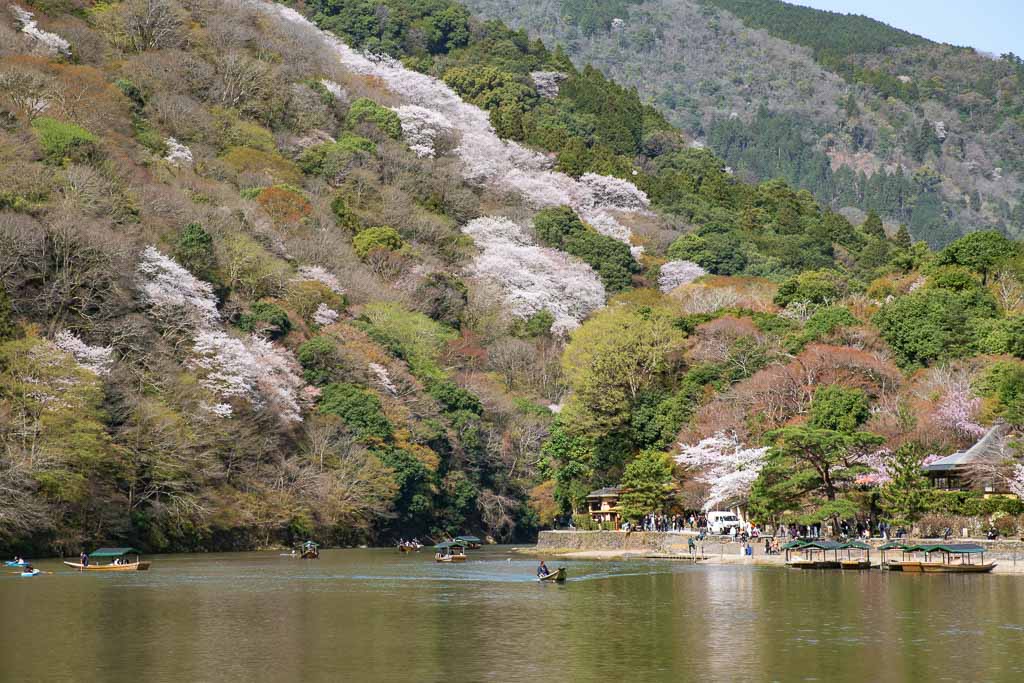
Most people come to Arashiyama to see its bamboo forest and then might visit the Tenryu-ji temple.
But Arashiyama is more than just these two spots, something I didn’t fully understand until I visited it myself.
Here, parks and forests line the banks of the Katsura River, while the local streets are full of cafes and eateries. It feels like a weekend spot for locals, the kind of place you go for a relaxed Sunday, just walking, enjoying nature, and getting food.
One popular thing to do in Arashiyama is to book a boat ride on the river. I didn’t try it myself, as it seems like something better enjoyed by couples or a group.
Instead, I just wandered through Arashiyama Park Kameyama Area to enjoy its scenery and views, plus popped down to the Nakanoshima Area on a small island to get views of the bridge and nearby hills.
Nishi Hongan-ji temple
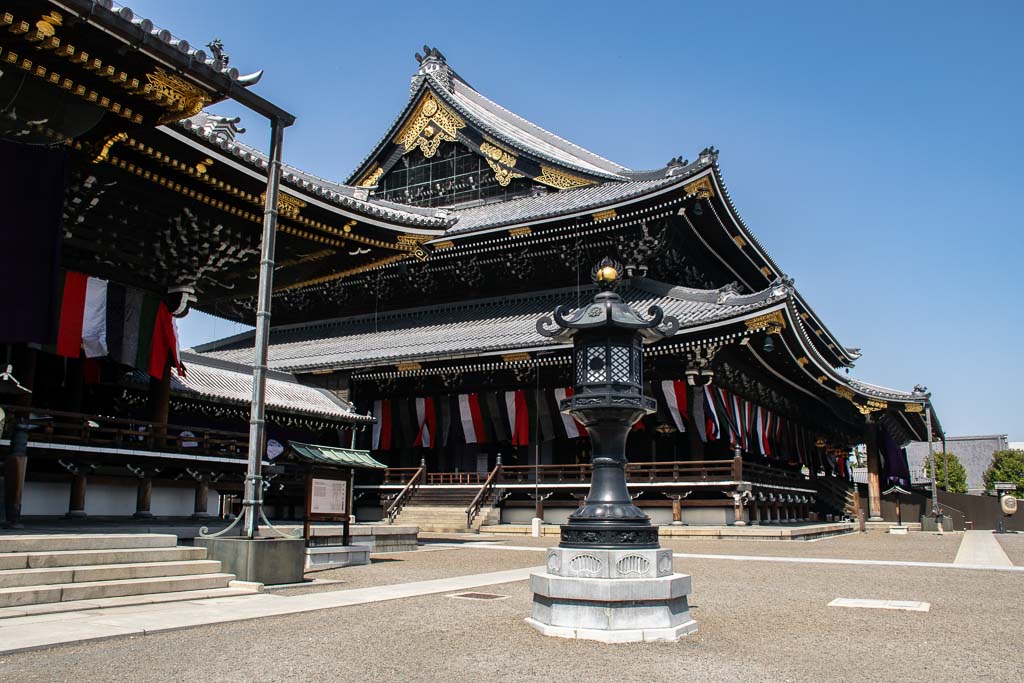
Travellers to Kyoto who want to see a Buddhist temple in the city center with no crowds should find the Nishi Hongan-ji temple.
Free to enter and with lots of architecture and details to admire in its halls and gates, this temple is a great little stop on your Kyoto itinerary.
Plus, apparently, the temple’s ginkgo tree turns bright yellow in the autumn.
Maybe it’s because there’s not a lot to do here, but the temple was practically deserted. So if you want to observe what a Buddhist temple is like without dealing with loads of other people, this is the place to go.
Kiyomizu-dera
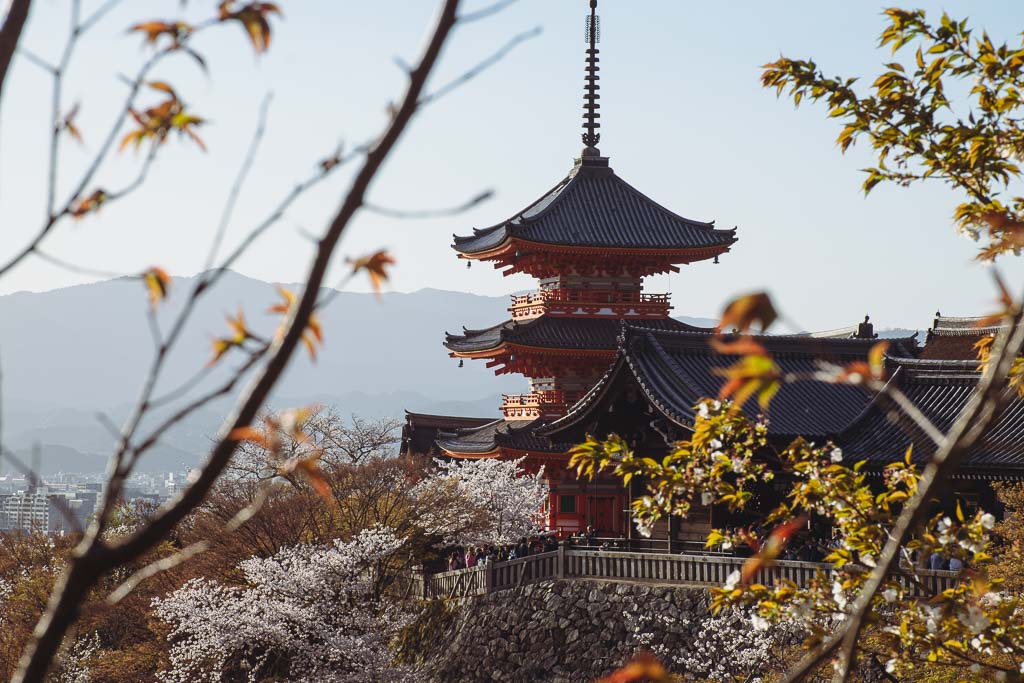
A temple that’s not ignored by tourists but not to be missed anyway is the Kiyomizu-dera temple.
Propped up on a hill to the east of Kyoto, this national treasure is famous for its views, large stage, and many pagodas that surround the complex.
When walking up through Gion, this is often the end destination for many people. City streets slope up to the base of its stairs, through the massive Niomon Gate.
Don’t let the 500 yen entrance fee put you off visiting, even though there are nice viewpoints and pagodas outside the paid area. Walking through takes you to the temple’s massive elevated wooden stage and then out into a huge complex across the forested hillside.
If you have the time, take a walk up to the pagodas on the southern hilltop for more views.
While spring adds bursts of white blossoms to the temple’s scenery, this is a place to visit at any time of year. If you only have time or interest to see one temple in Kyoto, this is it.
Kyoto Imperial Palace
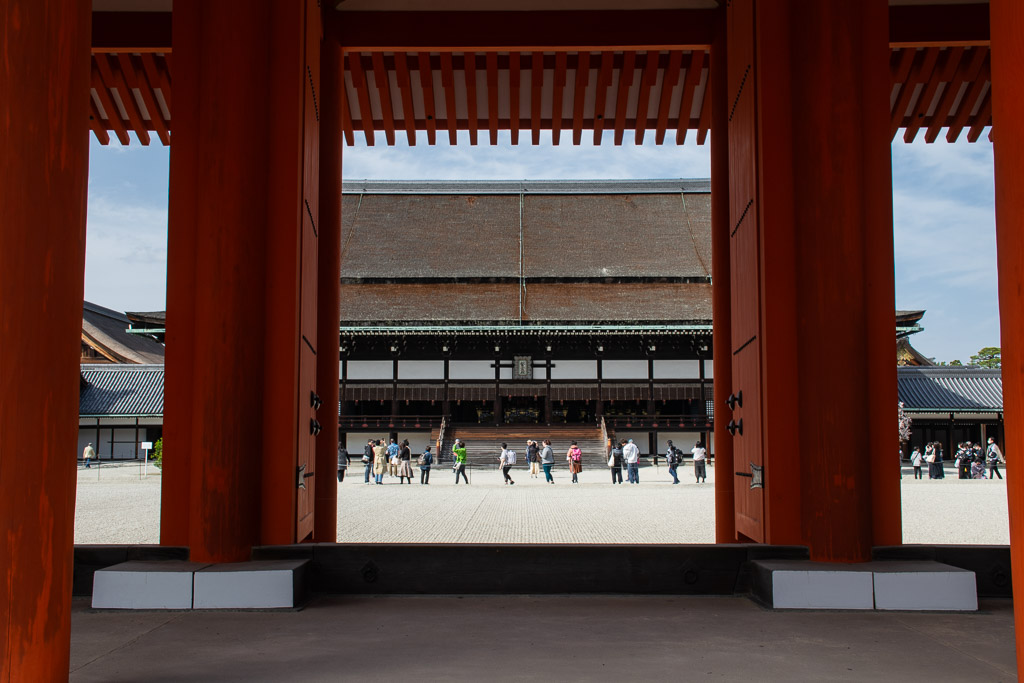
Kyoto was once the capital of Japan for over 1000 years until the capital moved to Tokyo in 1868. During its time as capital, the emperor lived at the Kyoto Imperial Palace.
A large park surrounds the site of the palace in Kyoto’s north, where you can freely walk around. What’s odd is that the palace is also freely open to the public, as are the guided tours offered twice daily.
Touring the palace complex, you’ll see halls, rooms, gardens, and more, which are still worth seeing even though they were rebuilt in 1855 after the palace’s most recent destruction.
Not only is the palace free to explore, but it’s also nowhere near as crowded as other Kyoto attractions.
I would have liked to learn a little more about its history and palace life, but if you take the tour or come prepared, I think this can be a really valuable cultural stop during your visit.
Kyoto Station
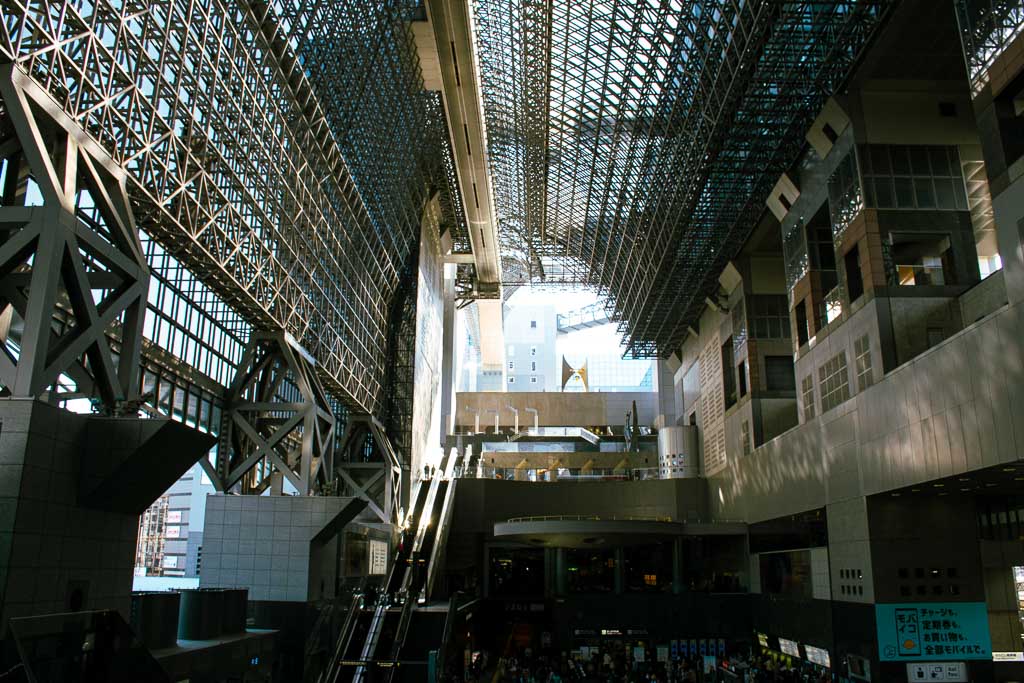
It may not be classically beautiful like Tokyo Station, but I think Kyoto Station is an attraction in itself.
You probably won’t notice when travelling through it, but the station is a monumental building with an old brutalist sci-fi look. A great way to get a sense of its scale is to ride the series of escalators that take you higher and higher through its stack of levels.
Reach the very top of the station and you’ll find an open-air observation deck with a nice view of Kyoto. They might not rival ones from Nidec Kyoto Tower, but they’re free.
One of the few things I remember about my first time in Japan as a kid was walking around Kyoto Station, taking in this huge (then) futuristic building, and it still impresses to this day.
Kamo River
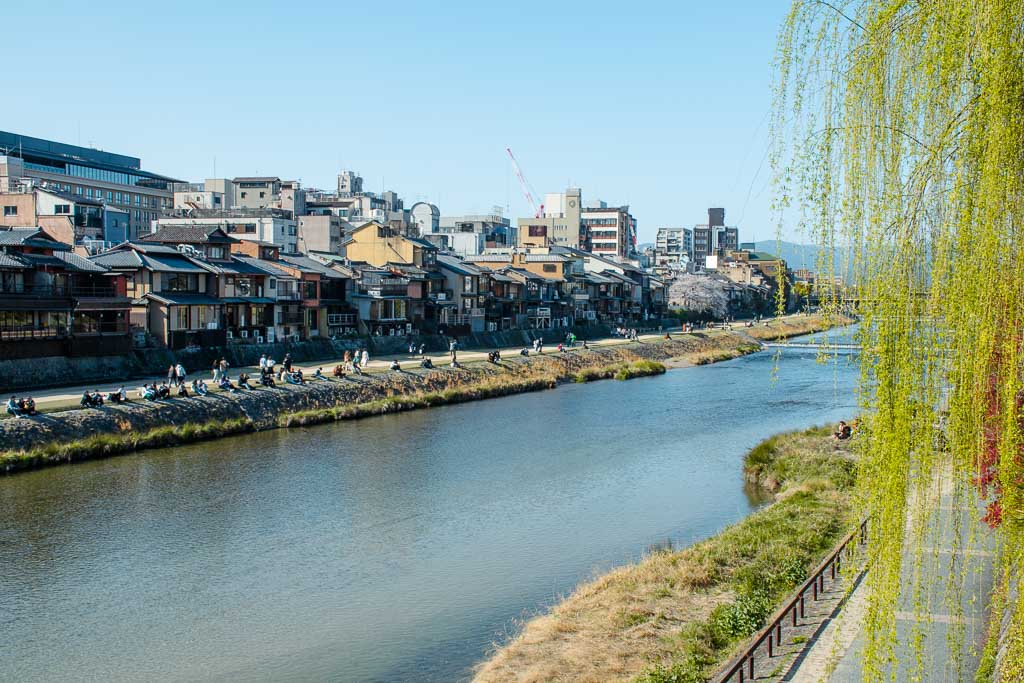
You don’t need to go all the way to Arashiyama to see a river in Kyoto. The Kamo River flows right near some of the city’s most popular areas.
It may not be as scenic as the riverfronts in Kanazawa or Takayama, but I do think this riverfront in Kyoto is worth visiting. The banks of the Kamo are quite casual and untouched compared to the built-up areas around it. There are still some traditional homes along the Kamo River, Noryo-Yuka, a path following the river. When I visited, many people were sitting by the riverfront, enjoying the peaceful views.
If you’re looking for a break from the crowds somewhere in the center of Kyoto, this is the place to go.
To-ji temple
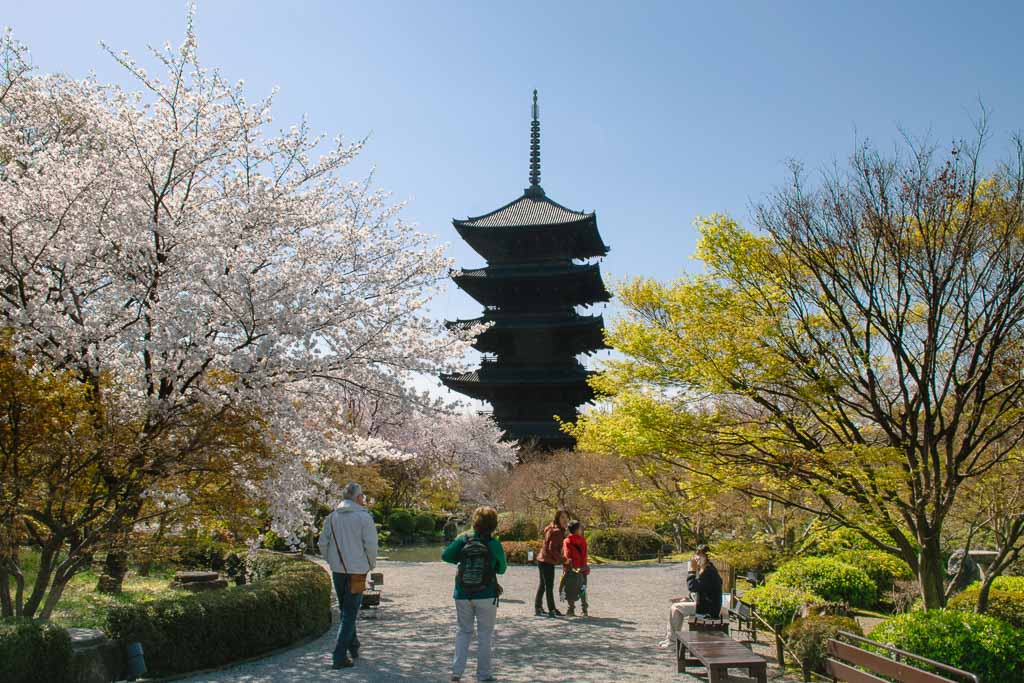
Of the many temples and shrines in Kyoto I saw, none were as empty and quiet as To-ji.
Maybe it’s because this Shingon Buddhist temple is located south of Kyoto Station, which puts it away from other top attractions. Alternatively, it could be because the temple has an entrance fee (500 yen for adults), unlike many others.
But I really didn’t mind paying to see the To-ji temple. Its gardens are wonderful; you can get great views of its 5-tiered pagoda, and it’s a quiet spot to view cherry blossom trees.
The pagoda is the most obvious attraction here, but it’s the Kondo and Kodo halls that are the real stars. These two halls date back to the 16th and 17th centuries, and inside, they feature highly ornate statues. Sadly, you can’t take photos inside the halls, but I think they’re worth seeing.
Other Kyoto attractions to visit
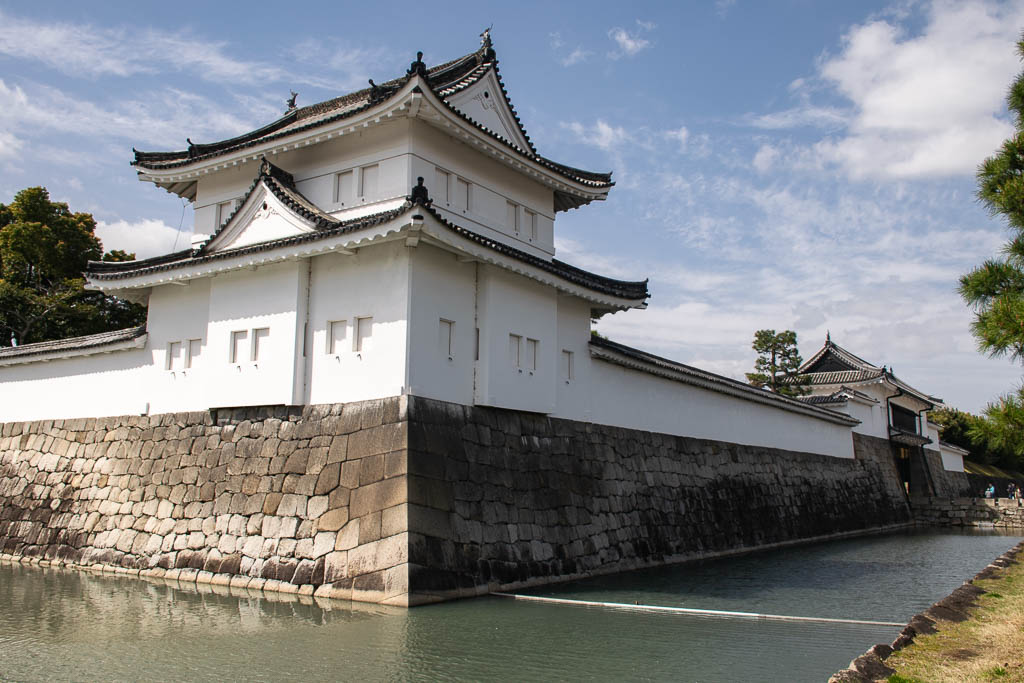
As I said earlier, Kyoto has a huge range of places to visit, and I only saw a small part of it. The following were places I had looked into but didn’t have time for:
- Nanzen-ji – sprawling Zen temple with a large central gate, rock gardens, and even an aqueduct
- Nijo Castle – a UNESCO castle with an original palace building and ruins
- Kyoto International Manga Museum – a museum dedicated to Japan’s love of manga
- Enkōji Temple – another Zen temple with rock gardens, bamboo forest, especially popular in autumn
- Ginkaku-ji – the Silver Pavilion, a Zen temple known for its gardens
