
Disclosure: This post (probably) contains affiliate links. If you click on one, I may make a small commission. Of course, this will come at no extra cost to you and helps keep this site running.
Food is often a driver for people to explore Spain, and nowhere is that more true than in San Sebastian. Known as Donostia in the Basque language, San Sebastian is one of the largest cities in the Basque Country, and is a city famed for its pintxos—little Basque bar snacks similar to tapas.
Before my visit, all I knew was that tucking into the local food was the most vital of the many things to do in San Sebastian. But I’m curious about this corner of the world and always enjoy exploring a destination’s different dimensions. Yes, sampling food in San Sebastian is important, especially with its impressive number of world-class restaurants, including ones with two or three Michelin stars. But I think you’ll soon agree that it’s worth sightseeing in San Sebastian too, as it’s a terribly beautiful city.
How to get to San Sebastian
Before anything else, you first need to get to San Sebastian.
Options for getting to San Sebastian will vary if you’re coming from places in Spain, crossing over from France, or coming from farther away.
I took a bus connection from France, travelling through Biarritz with Flixbus. Alternatively, you could come by train, changing at Hendaye on the border.
Flying to San Sebastian is an option, too, of course. Flights only come from a few major Spanish cities, but it may suit your needs. The only issue is that the airport is a long way from the city, so booking a transfer is wise.
When travelling from within the Basque Country or Spain generally, options for bus and train will vary. For instance, it’s best to only travel by bus from Bilbao and Donostia-San Sebastian, as trains require a connection and take a long time.
But San Sebastian does have trains coming in from major cities such as Madrid and Barcelona, some of which are direct, others that require you connect somewhere like Valladolid or Zaragoza.
Finally, beyond renting a car to explore, you can also see San Sebastian as part of a trip through the Basque Country with this tour.
Where to stay in San Sebastian
Thanks to its unique local culture and cuisine, San Sebastian is quite a popular tourist destination.
This means you have a great selection of hotels, pensions, and apartments to choose from when planning your San Sebastian visit. However, I would keep in mind how busy it gets during peak tourist season, and book far in advance to make the most of these options.
If you’re after an affordable, modest but comfortable place to stay, I found Pension Easo in downtown to be suitable for my needs. But if a budget hotel/hostel isn’t your speed, here are highly-rated places to stay:
What to do in San Sebastian
It’s clear that San Sebastian is a great destination for travellers looking for food culture.
Whether you’re after a casual pintxo walking tour or an in-depth food and wine tour, visitors have great options for exploring the San Sebastian food scene.
If you’re looking to explore the food scene on your own, this guide to the best pintxos in San Sebastian is a great place to start.
But what is there to do in San Sebastian between meals? That’s what I want to help you with, by showing you some of the great things to do in San Sebastian when you’re not busy eating. Explore these places on your own or visit with an e-bike tour; it’s up to you.
1. Enjoy the La Concha beachfront

With any visit to San Sebastian, you’re quickly going to notice one of its greatest features: its beautiful, long curving beach.
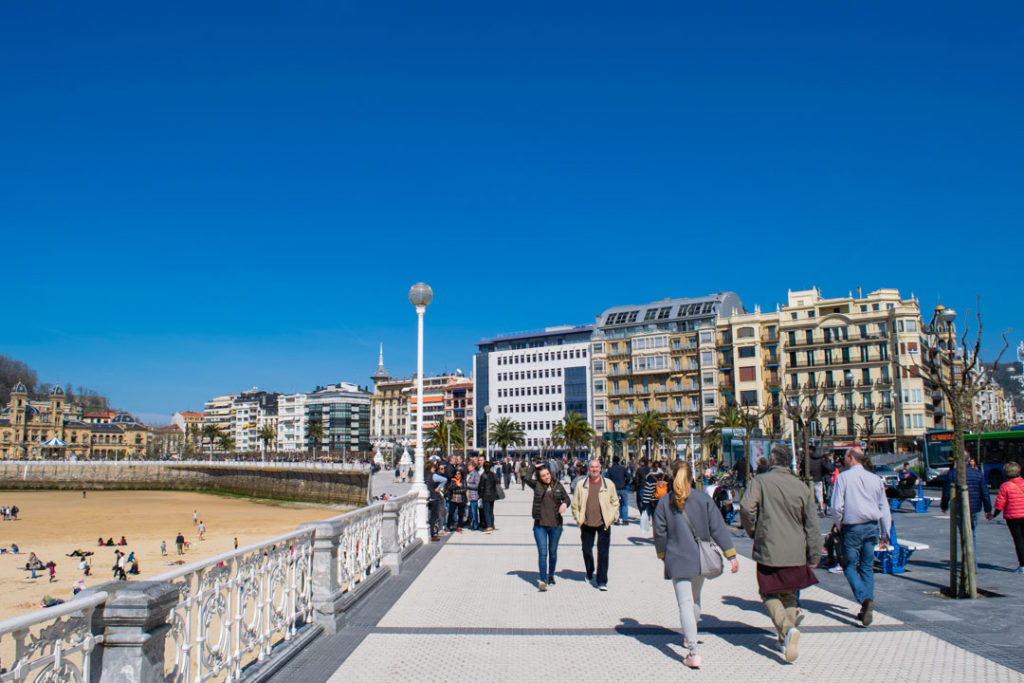
La Concha Beach starts right around the border between San Sebastian’s historic centre and its modern downtown, before running right around the local bay. With low tide, the beach gets quite deep and even in the earliest moments of spring, it had its fair share of people. I can only imagine what it’s like in summer!
The beach might be the fixture it is today, were it not for the scenic boulevard that follows its curve. Not only does the beachfront boulevard extend the beach atmosphere into the city, but you get some great bay views as well.
I think the greatest touch here is the glamorous white railing and lamp posts that run by the beach boulevard, elevating the space with an air of elegance. La Concha reinforced my belief that northern Spain has some truly fantastic beaches.
2. Wander the Old Town
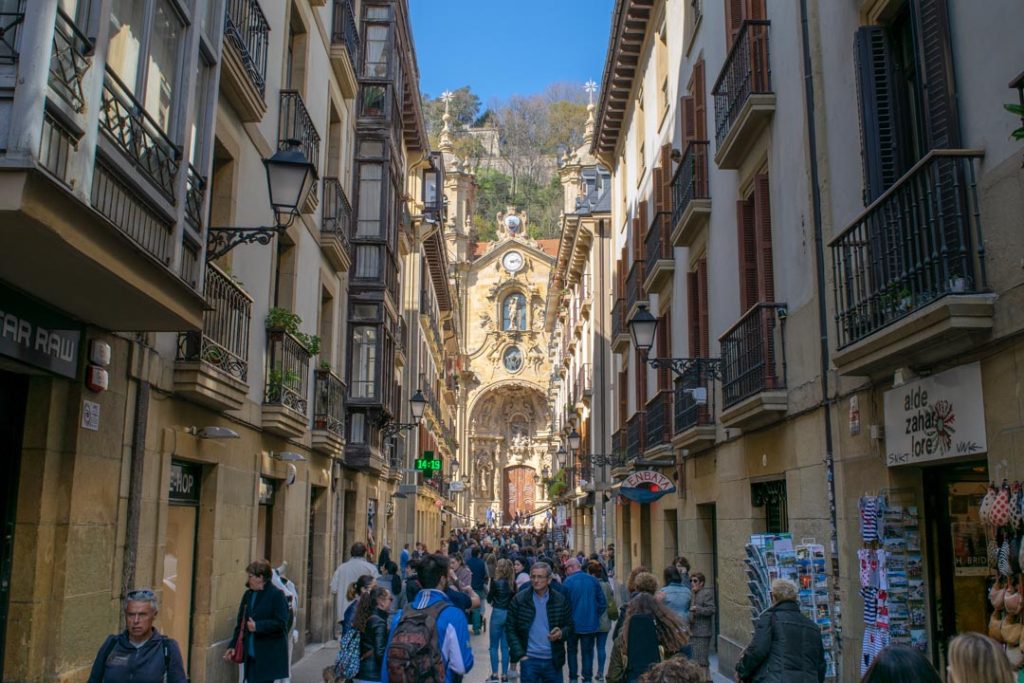
If I’m going somewhere in Europe, then you can bet I’m going to visit its old town. In San Sebastian, the Old Town is known as Parte Vieja and consists of a grid of high buildings along narrow streets. The thing is though, it’s hard not to see Parte Vieja when visiting, since so many pintxos bars are found there. Still, that’s typically in the dark in the evening, so it’s nice to see the Old Town by day.
Now I keep saying Old Town, but nearly everything here only dates back as far as the early 19th century. Sadly, nearly all of the city was destroyed during the Napoleonic Wars. This means that Parte Vieja is a great snapshot of that period in time, with its rather reserved style found throughout.

There are a few major spots to find your way to in Parte Vieja. The first is the Basilica of Saint Mary of the Chorus, with its fabulous baroque facade that demands closer inspection with its elaborate entrance.
Next, there’s Constitution Square deep in the Old Town. With almost uniform balconies around its sides, it feels like a beautiful, oversized courtyard. Lastly, there’s the Port Harbour, which is just quite colourful and charmingly humble.
3. Climb up to Castillo de la Mota
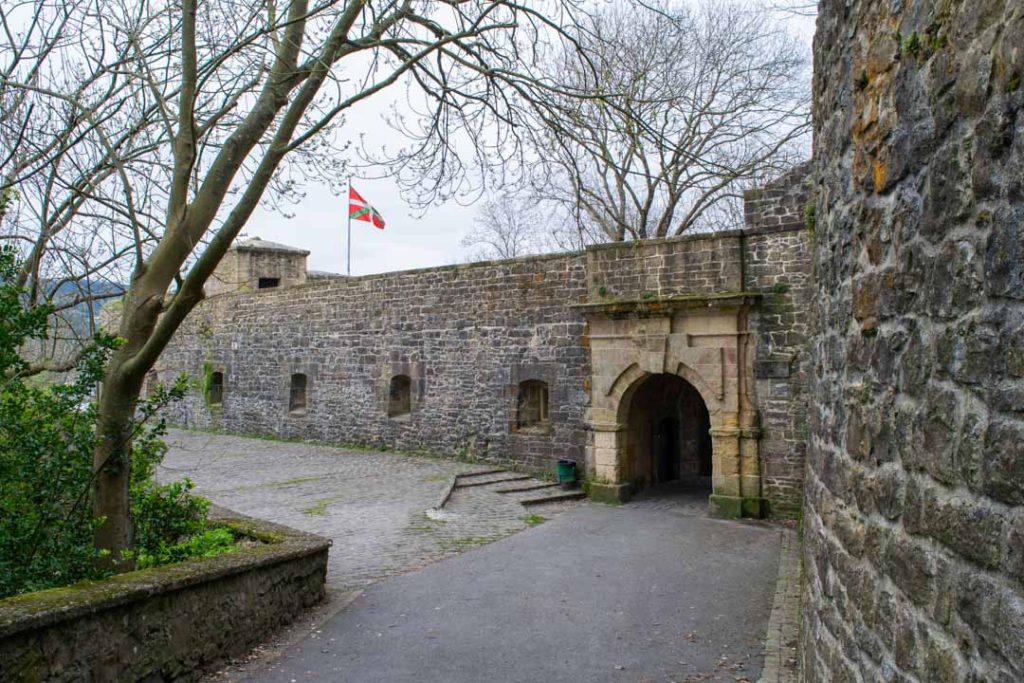
At the eastern point of the bay and sitting directly above San Sebastian’s Old Town rests Monte Urgull. This large hill is home to the city’s other big historic landmark, the Castillo de la Mota fortress.
Visiting San Sebastian, it’s an absolute must that you walk up Monte Urgull and venture into Mota Castle. Watching over the city, there have been fortifications here since the 12th century, and for a time, they were quite formidable.
Visitors don’t need to lay siege to Mota Castle to visit, as much of its grounds are open to the public. There is the Urguleko Gaztelua Museum inside the central keep, but I think the real draw is the incredible views the castle offers.
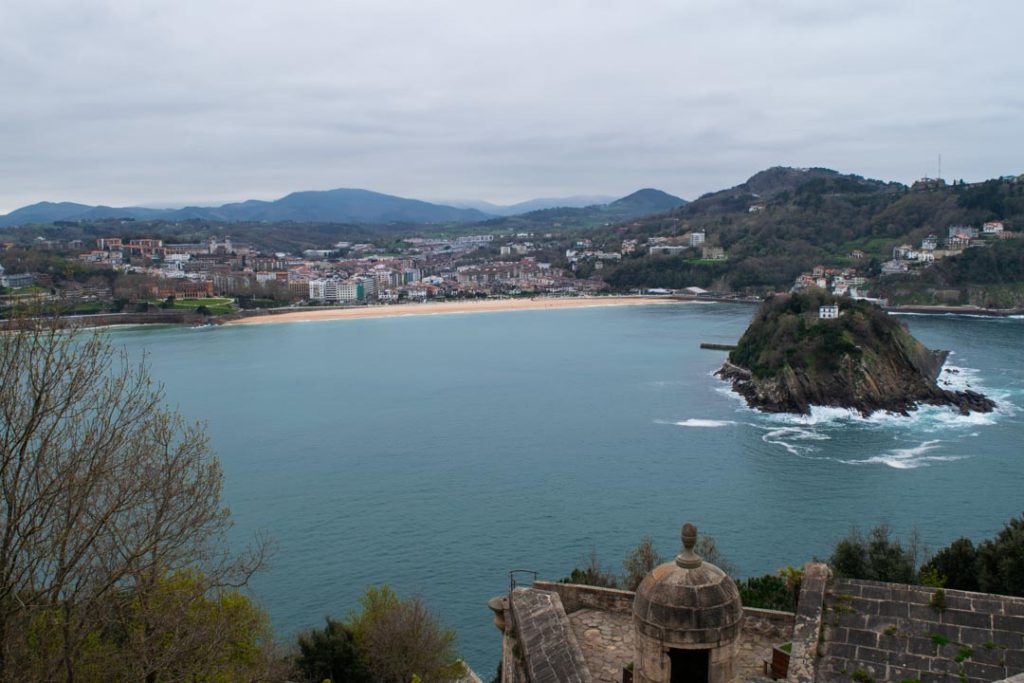
On different sections of the ramparts, you gain unparalleled views in each direction, including across the bay to Isla de Santa Clara and back over the city. Hands down, my favourite spot in San Sebastian.
4. Admire the downtown architecture
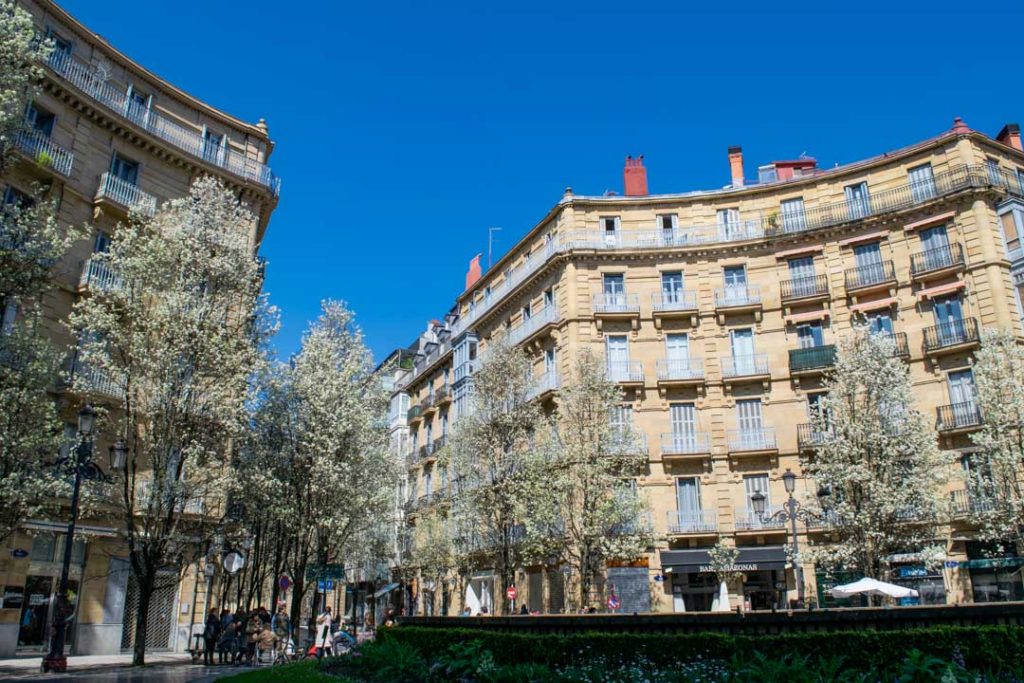
Some cities become much less interesting once you’ve left their old town, but not San Sebastian.
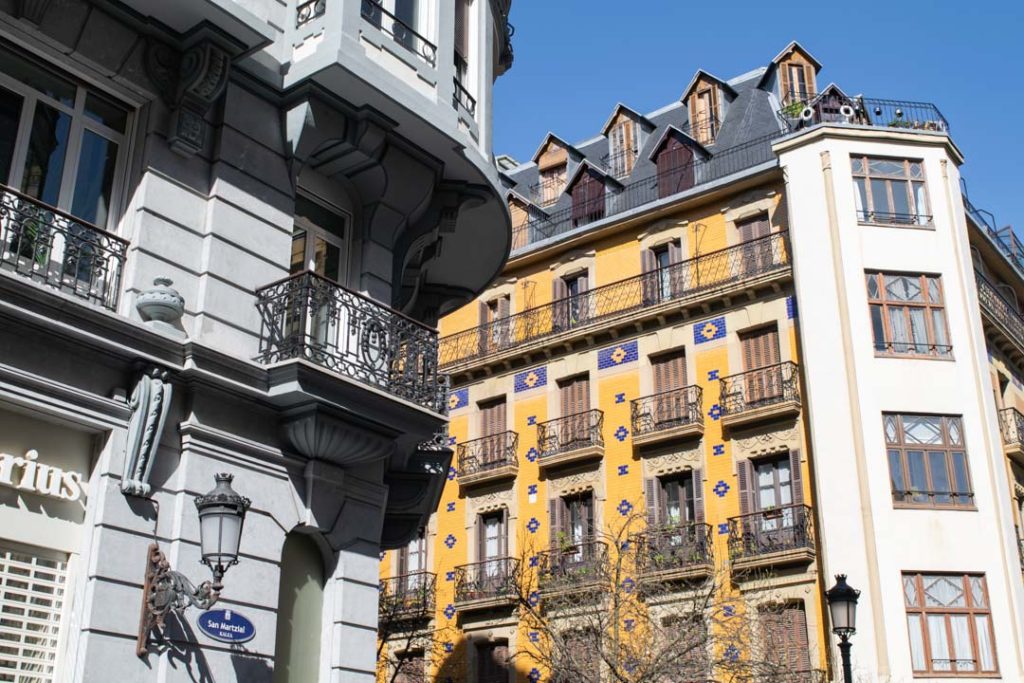
The city’s downtown area trades in traditional restraint for resplendent Belle Epoque architecture, making it a joy to stroll about.
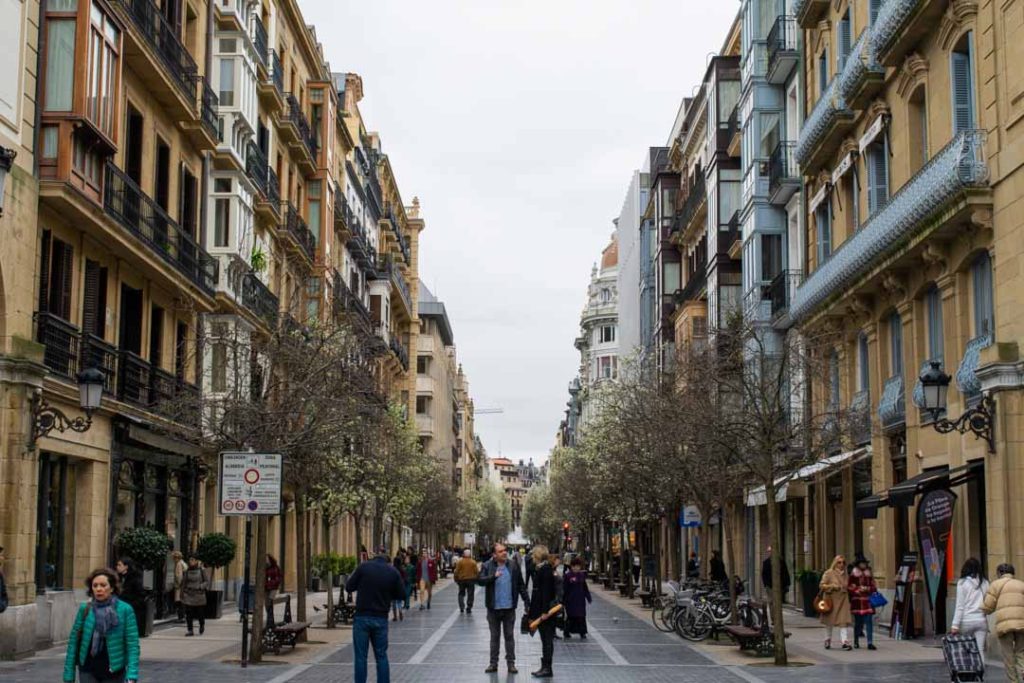
Downtown, also known as Old Amara, enjoys quite a few pedestrian streets that crisscross through it and several quite lively squares. If you visit in spring, as I did, the trees along each of the pedestrian streets are brought to life with blossoming trees.
It’s downtown that you find many of San Sebastian’s most impressive landmarks as well. There’s the San Sebastian City Hall on the fringe of the Old Town, plus the neo-Gothic San Sebastian Cathedral. Besides that, the area is full of shops, offices, and restaurants, with their architecture generally their most interesting element.
5. Watch the surfers at Zurriola Beach
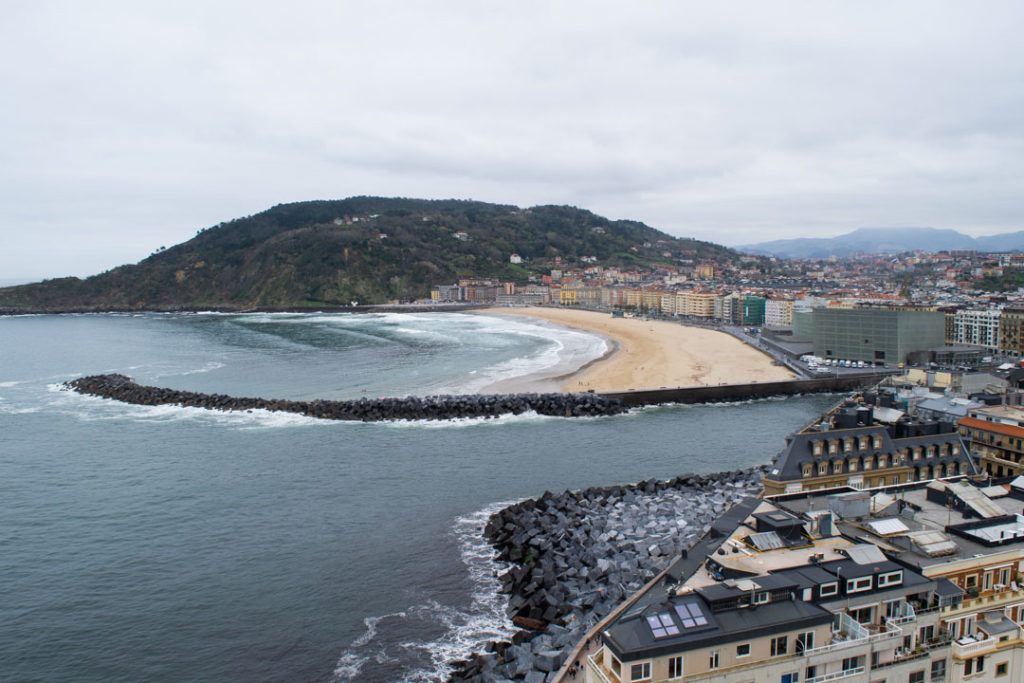
Zurriola Beach is the second of San Sebastian’s noteworthy beaches, sitting across the Urumea River by the Kursaal Auditorium. Bordered by a great big breakwater and away from the heart of Donostia, it’s less popular and admittedly less attractive than the main city beach.
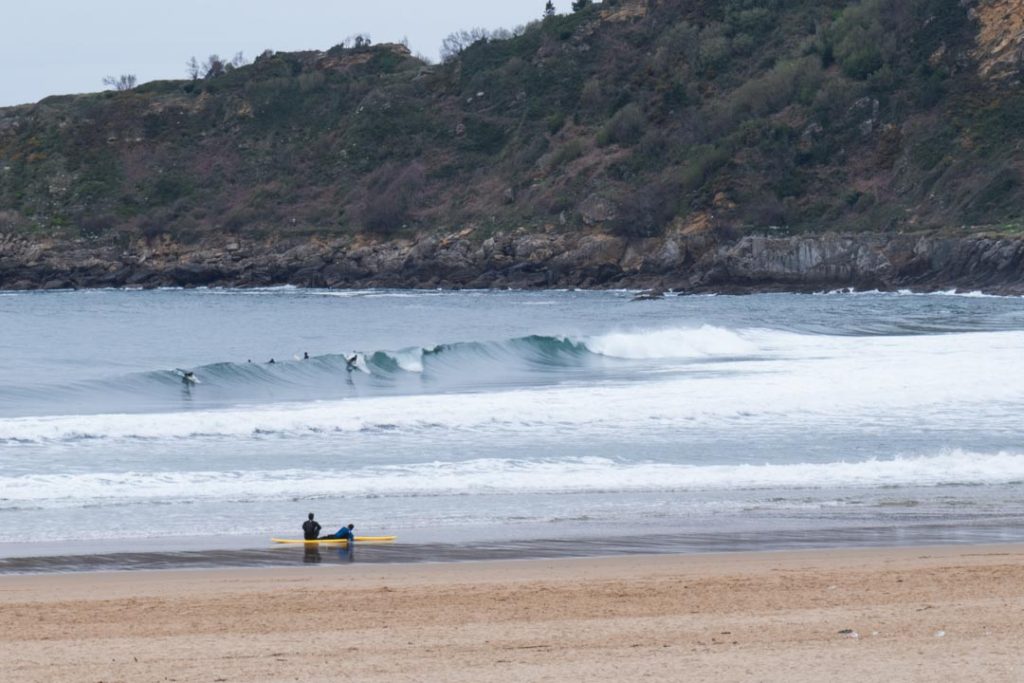
The major difference to La Concha, however, is that Zurriola is much less sheltered, meaning the waves are ideal for surfers. So if you surf, you’re in luck. If you don’t but would like to, there are opportunities to learn with surf schools and tours. For me, especially in March, I was content to watch locals ride the waves from the breakwater.
6. Cross the Urumea River to Gros
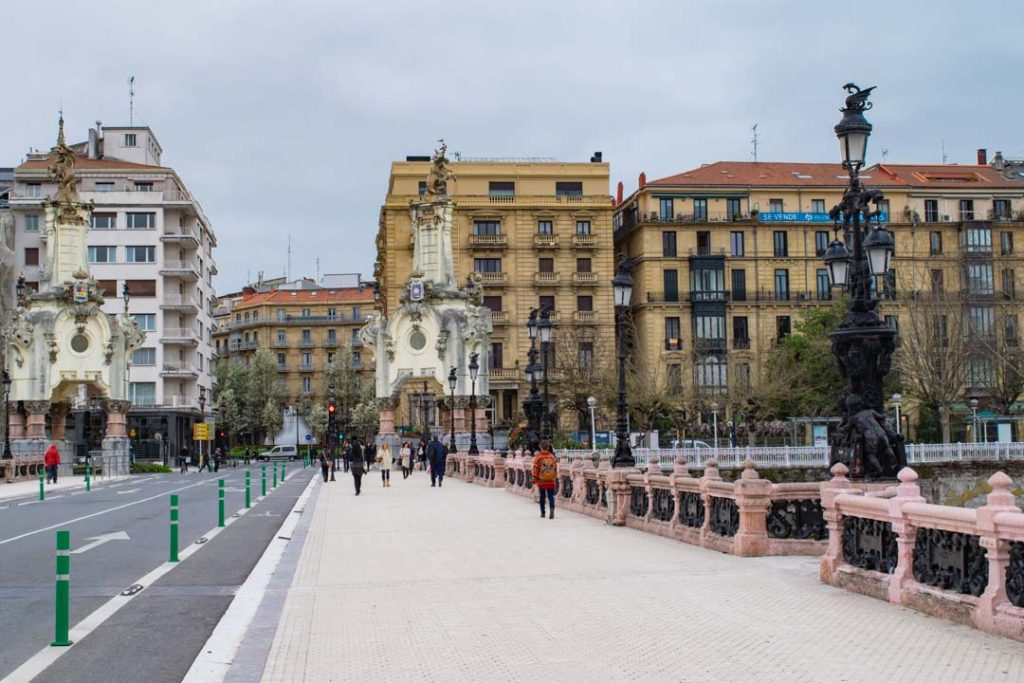
Besides the beautiful beaches and bay, San Sebastian is also defined by the Urumea River that flows through it. Lined with distinguished bridges and boulevards, the river is another pleasant slice of San Sebastian.
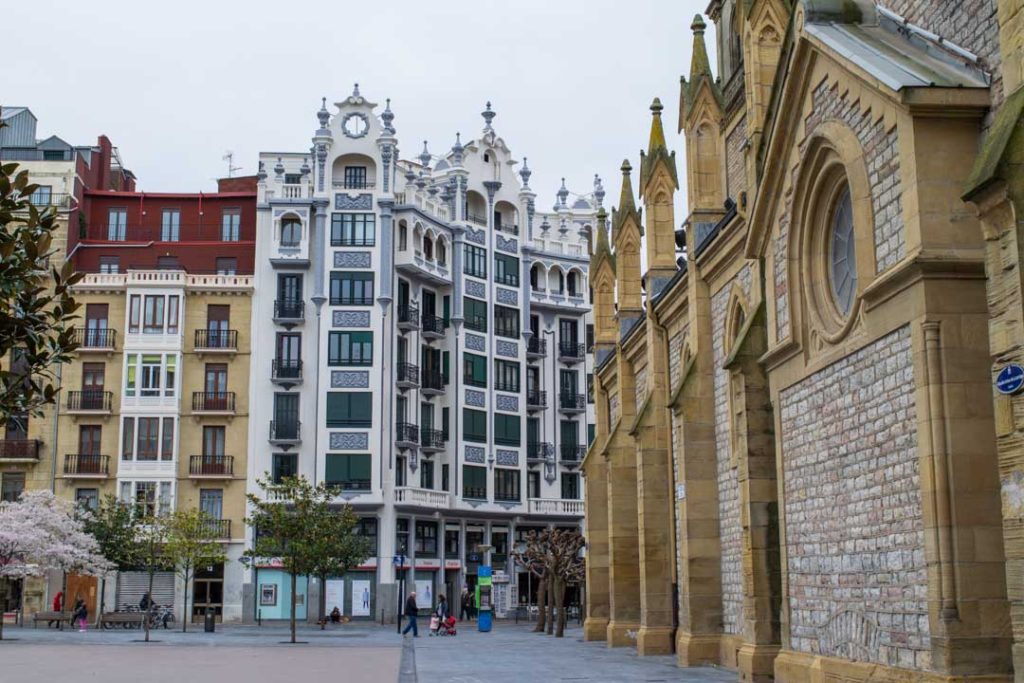
And yet, what lies across the Urumea River from the downtown area is even more intriguing. Here you find the Gros district, which for much of its life was working class and still holds quite a commercial feel to it. What makes this part of the city worth seeking out is the monumental buildings that pop up here and there in Gros. In particular, De Biteri Plaza is a great place to start.
7. Visit Miramar Palace
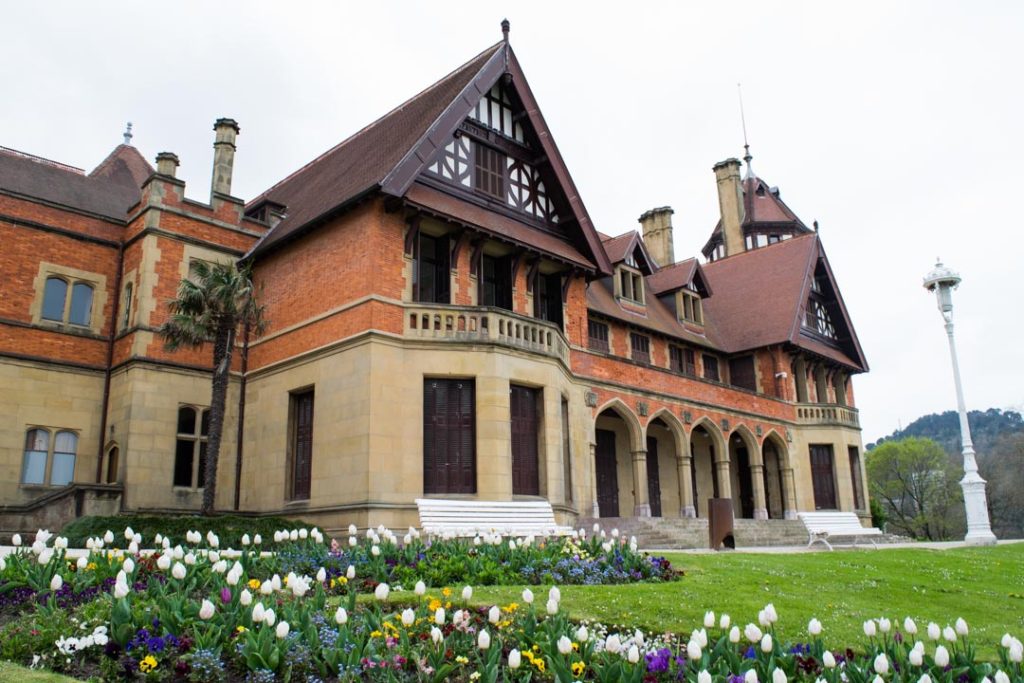
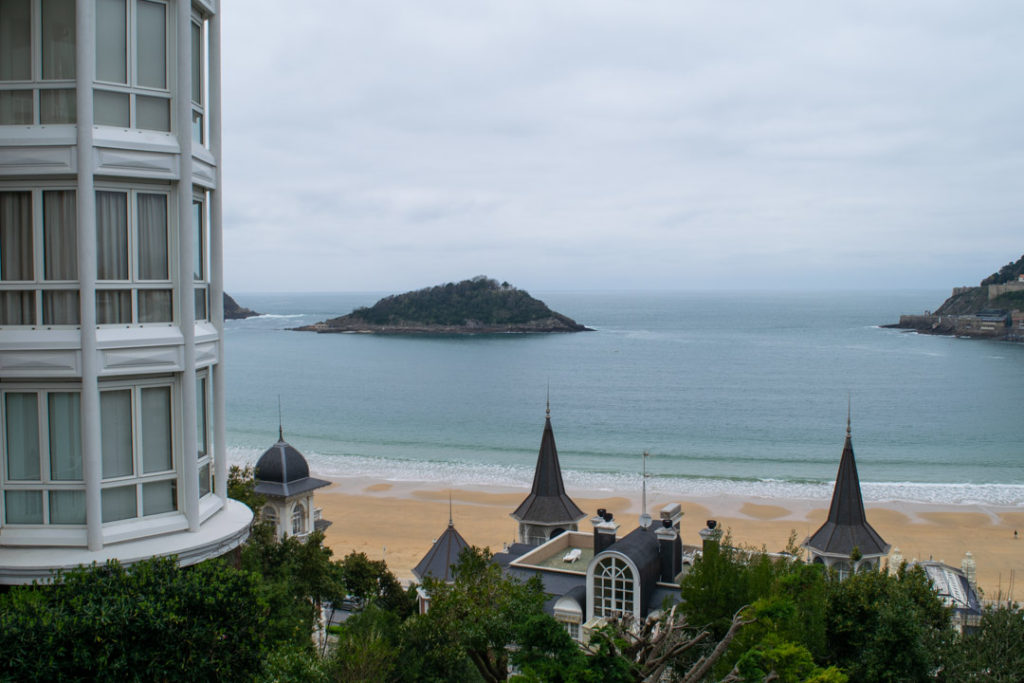
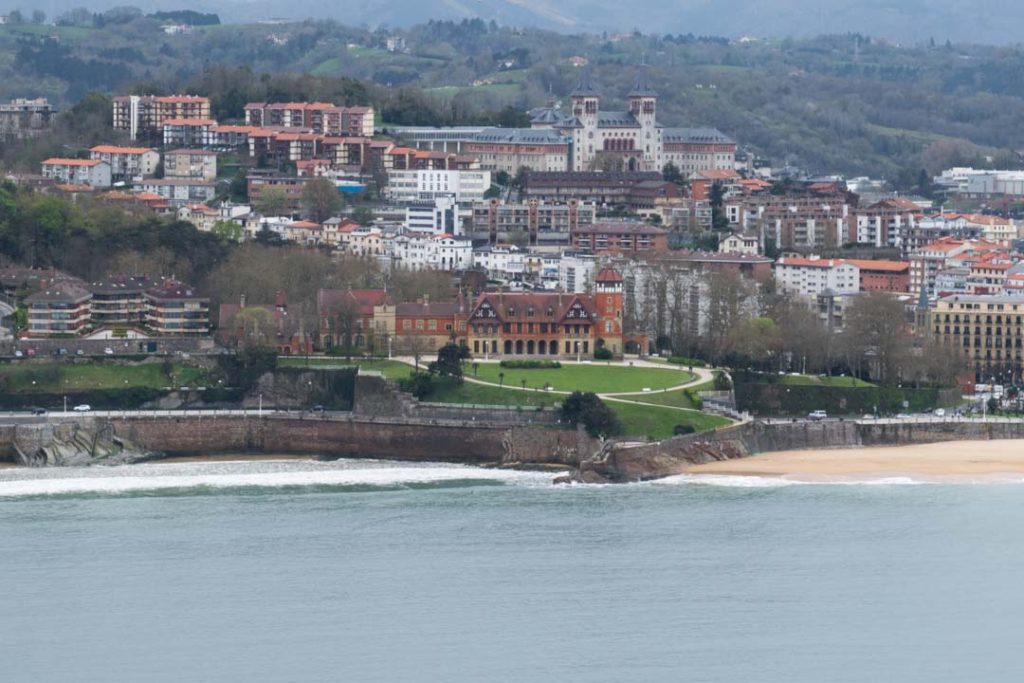
With a slope leading away from the beach up towards the surrounding hills, there’s plenty of San Sebastian to explore. While the backstreets further up the hillside offer nice views and a nice glimpse into regular life, the ultimate view around here is the Miramar Palace.
Built in the 19th century, it was once a summer residence of the Spanish Royal Crown. The palace sits over the Pico Del Loro point that divides Ondarreta Beach, the third of San Sebastian’s beaches, from La Concha. The point offers splendid views of the bay. It may be a fair walk from downtown, but since it has beach views the whole way around and a delightful spot itself, it seems worth it to me.
Which would be your first pick of these things to do in San Sebastian, Spain? Have you visited Donostia – San Sebastian and enjoyed an aspect of the city beyond the food? Please share your thoughts and questions in the comments below.

This article is now available as a mobile app. Go to GPSmyCity to download the app for GPS-assisted travel directions to the attractions featured in this article.

21 comments
I thought the beach here was great too – unusual for a city beach. We were there in November and there were people swimming even then! #TheWeeklyPostcard
LOL, I love your ‘between meals’ part of the title…. because really… San Sebastian and food, NOM! I also did these things between meals, so good call!
#TheWeeklyPostcard
Haha thanks Esther, I felt like avoiding the subject of food was the best way I could talk about the city without being too repetitive of other San Sebastian posts.
There really is a lot to do besides food in San Sebastian. We also did some hiking and took the cable car up Monte Igeldo. Thanks for sharing on #TheWeeklyPostcard
Ooh, I wanted to visit Monte Igeldo as well, but never made my way round there. I would happily go back to do some hiking in those hills. Thanks for commenting Anisa.
Strange to think that this town was actually destroyed by the Napoleonic Wars and now WWI or II as so much of Europe has been. It’s interesting that it’s practically an early 19th century city and I feel like it reminds me of combination of Paris and Vienna in style! I’d love to finally discover Pintxos though! Thanks for linking up with #TheWeeklyPostcard, David!
It’s heartbreaking at times to hear so many places and so much history were destroyed in recent centuries, along the loss of life. But I agree, it’s interesting to see snap shots like this. Definitely a connection to Paris with the Belle Epoque architecture, that’s for sure. Hope you get to visit one day Lori!
I was in SS just a few weeks ago and I loved it too. It’s fun to read how you experienced it. #TheWeeklyPostcard
Glad to hear Wendy, it seems we’re both with the majority of people about loving this city.
I am very eager to visit the Basque Country. Surprised by the sandy beach. Didn’t think I would find that there. Don’t know why it comes as a surprise, thinking about it, it shouldn’t 😀 #theweeklypostcard
Northern Spain can be a great surprise with its coast and beaches. The Basque country is definitely a culturally interesting place to visit, so I hope you get to go one day.
I love San Sebastian, not to mention the pitnxos LOL I was just traveling around the Basque Country last week, and couldn´t miss a chance to visit San Sebastian again! Although I felt like it´s become so touristic in these recent years: my first visit was almost 10 years ago, and I liked it even more back then… but I guess you can´t expect a place like this to stay a hidden gem forever… #TheWeeklyPostcard
Oh cool Anna, interesting to hear that the city has changed in recent years but I can understand it with the city’s increased popularity. Always interesting to go back to places. Thanks for commenting.
I’ve been reading a number of posts on San Sebastian and they are all about food. So glad that I found yours – this one – which isn’t about food, hahah! Great tips especially on things to do and see in San Sebastian. I would love to chill out at that beach! 🙂 #TheWeeklyPostcard
Haha I know what you mean Kat, so I thought I’d do something a little different. In all fairness, the food is such a big part of visiting San Sebastian that I get it.
Hi there, I really love your blog and thank you for sharing so much of information with us. Excellent blog you’ve got here. Nowadays, it’s difficult to find good quality writing like yours. I truly appreciate people like you! keep posting such information for us.
thanks again
Wow, that view of and from the Palace is fantastic! Royalty had its privileges, eh? Spain looms large on our To Do List, having spent so little time there so far. San Sebastian is one of several cities we’re dying to visit, for the history, architecture and Basque culture, and yes, for the food! Who knows…we may even grab a surfboard while there! \m/ Glad you shared with us on #TheWeeklyPostcard.
I mean if you’re going to have a palace, why not make sure it has a view, am I right?! Spain is a dangerous place for a to-do list, because it will just growing and growing. Thanks for commenting Rob.
Definitely a part of the world that I need to explore.
Hi, I’m from San Sebastian and I’d like to suggest a place that is always forgotten about in articles, one of the most beautiful and peaceful spots in Donostia, surrounded by nature and with breathtaking panoramic views: Mount Ulía.
Hi Sergio, thank you very much for sharing this local tip! I hope others find this useful.