Disclosure: This post (probably) contains affiliate links. If you click on one, I may make a small commission. Of course, this will come at no extra cost to you and helps keep this site running.
Travellers regularly pass the towns and cities along Lake Biwa in the Shiga Prefecture when visiting Japan. Places like Hikone lie just off the bullet train route between Tokyo and Kyoto. Many don’t realise what they’re missing by passing through rather than stopping.
Because there’s a nice mix of things to do in Hikone, as I learned while travelling back from Gifu Prefecture to Nara. And you’ll soon see that Hikone is not only worth visiting but also easy to visit. This guide to Hikone shows what the city offers travellers to Japan and how you can add it to your plans.
How to get to Hikone

You couldn’t ask for a more convenient location for tourism than Hikone.
Sitting midway between Kyoto and Nagoya, but also not far from Gifu City and Ogaki, it enjoys an incredibly central and accessible space among Japan’s most popular tourism regions.
Taking trains is the simplest way to reach Hikone.
Aboard the Tokaido-Sanyo Line from Kyoto, you can be there in one hour, meaning a day trip to Hikone is easy for many travellers.
You can also visit from Nagoya by using the Tokaido-Sanyo Line. This route connects through Maibara, so it’s slower, but it’s still around an hour by fast train.
Alternatively, backpackers can save money by using the local Tokaido Line through Ogaki and then Maibara. It adds 30 minutes to the journey, but is less than half the price.
Hikone also sits on the private Omi Tetsudo line, which can be a useful backup for travelling to Maibara or Omihachiman.
Where to stay in Hikone

Hikone is not a large city, and it’s also not a wildly popular tourist destination, so accommodation is limited.
While there are hotels found between the castle and the train station, you can find more interesting alternatives if you look more broadly. This includes the guesthouses and ryokan south of the castle complex.
For my visit, I stayed at Comfort Hotel Hikone, a convenient, comfortable, and uncomplicated mid-range hotel.
Other well-rated options include:
Things to do in Hikone
However you choose to visit Hikone, you’re mainly here for the city’s tourist attractions.
While the main thing to do in Hikone is visit its well-known castle, I was pleased to learn that there are other things to see there, too. In fact, I actually ran out of time when visiting Hikone, as it surprised me in the best possible way.
Hikone Castle

Without question, the main attraction in Hikone is Hikone Castle.
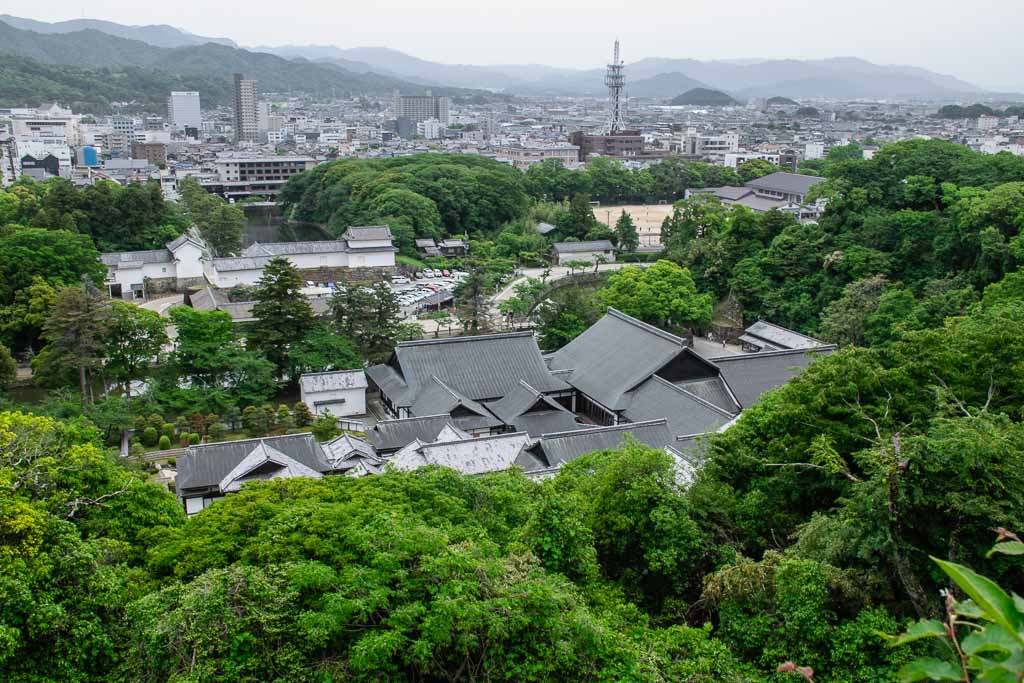
This is the defining landmark of the small city, and the castle complex covers much of the city center. High stone walls and two layers of moats protect this hilltop castle.
If all of this sounds like Hikone Castle is a picturesque place to explore, you’d be right. It doesn’t hurt that the castle’s upper terraces offer great views of the city and Lake Biwa.
But what makes Hikone Castle really special is that it’s an original castle. Unlike most castles in Japan, this is not a recreation.
The son of one of the top Tokugawa generals built Hikone Castle from 1603 to 1622 to replace Sawayama Castle, which now sits in ruins on a nearby hill. But Hikone Castle remains as it was 400 years ago.

Visiting the castle first requires tickets—1000 yen for the castle or 1500 yen for the castle and museum. Then there’s the climbing up its stairs and paths to reach the castle keep.
Inside this three-storey keep, you’ll find a few information boards in Japanese and an observation deck on the top floor. It’s only from up here that you see how lush and green the castle complex is.
While it may not seem as glamorous or impressive as the likes of Himeji Castle or Matsumoto Castle, Hikone Castle benefits from originality and its green castle grounds. It doesn’t hurt that you can also take boat rides in the moat (costs roughly 1500 yen).
Hikone Castle Museum
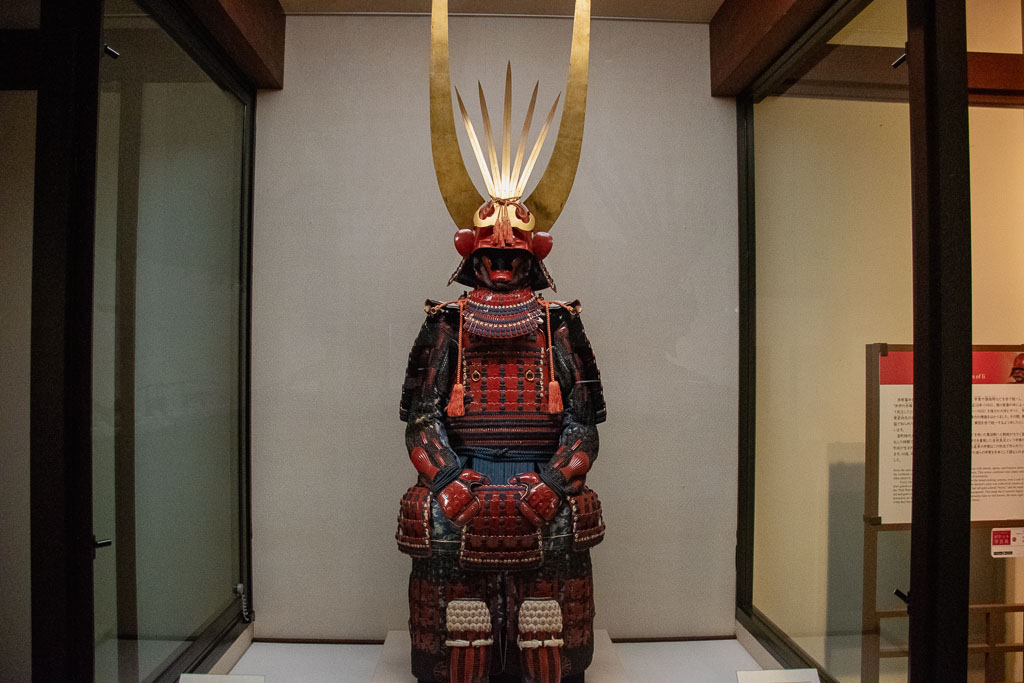
The lower buildings on the castle grounds host the Hikone Castle Museum and its gardens.
Set inside a recreated Omote Goten or Front Hall, it presents artifacts from the Ii family, who ruled as daimyo at Hikone Castle.
Touring the museum, you can learn about the castle’s origins through historical documents and see items such as sets of armor and musical instruments.
It’s here that you can learn how Hikone Castle relates to the Battle of Sekigahara, but also what it was like to rule as a daimyo in feudal Japan. I found learning about the Red Warriors of Ii and their distinctive armor particularly interesting.
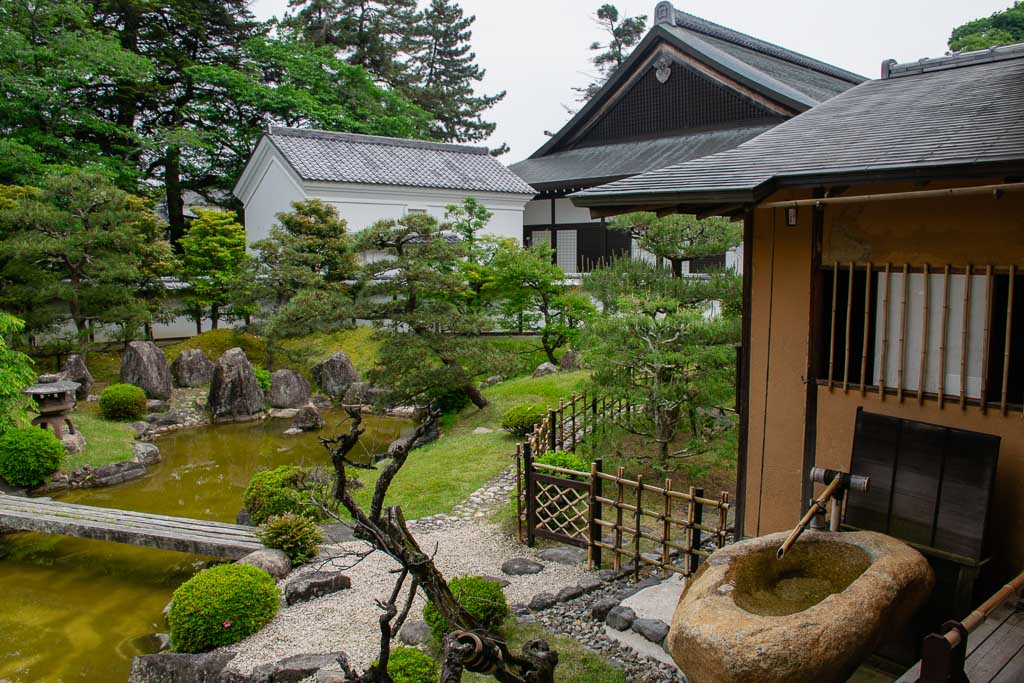
The museum isn’t solely focused on warfare; it devotes a lot of time to culture and the arts, especially the Japanese art form of Noh. It details the costumes and masks used in Noh, as well as the traditional musical instruments associated with it. You can even see a typical Noh stage, as Hikone has the only surviving Edo-period Noh stage in Japan.
Entry to the museum is included in a combined ticket to Hikone Castle for 1500 yen, but it’s worth the added cost.
Genkyuen Garden
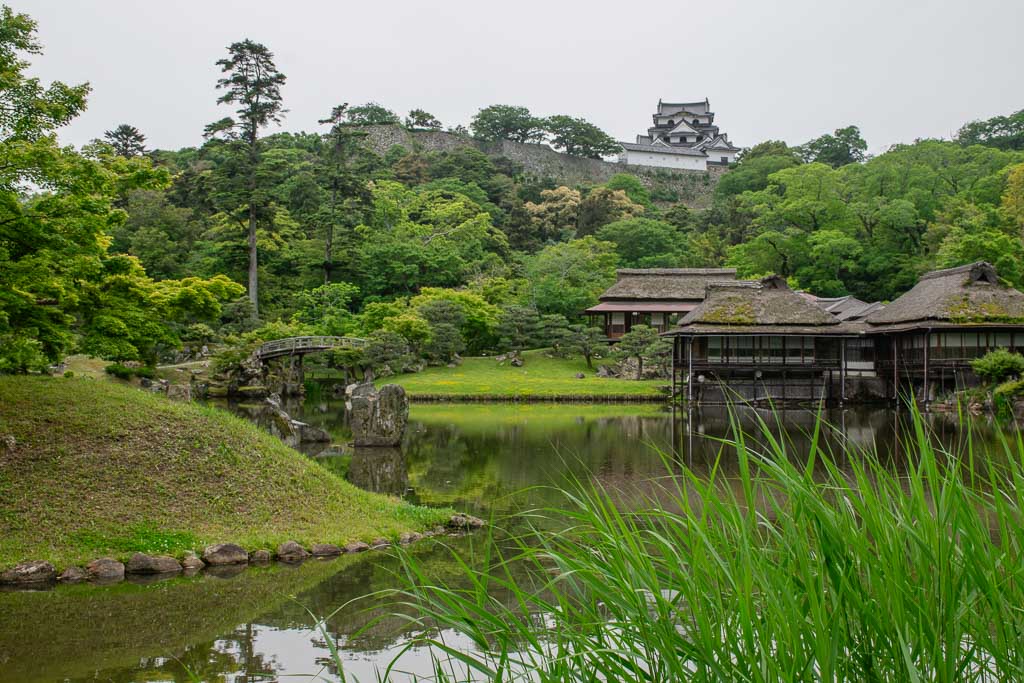
One of the first nice surprises I encountered when sightseeing in Hikone was the Genkyuen Garden.
Exiting the castle complex, this Japanese garden is located just across its northern moat. Tickets to visit are included in the castle admission, but you can also just pay 400 yen to see the gardens.
Genkyu-en was built by the fourth lord of the castle and finished in 1684. Since then, very little of the garden has changed much.
The garden centres on a large pond, with several bridges connecting the path around it with two islands. While the carefully designed islands and old buildings create a nice ambience, I quite like that you could also see Hikone Castle watching over it from above the treetops.
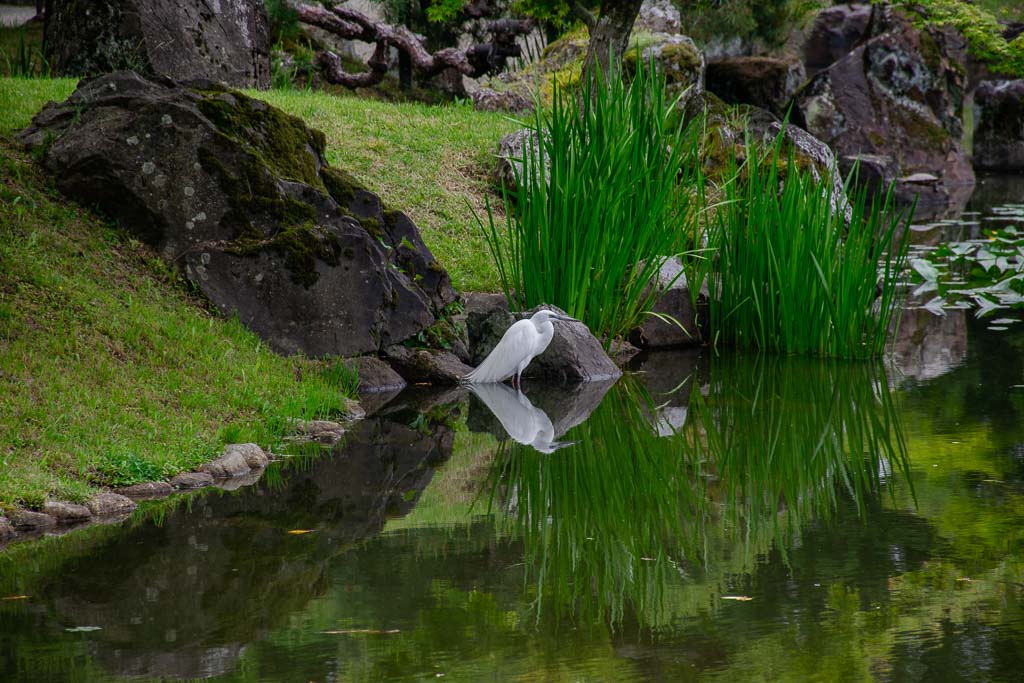
It doesn’t rival the great gardens of Okayama and Kanazawa, but it’s still nice to see.
The neighbouring complex is the Keyaki-Goten, a family residence for castle daimyo built alongside the gardens. It was undergoing renovation while I was there, but I believe it is now reopened to visitors.
Yume Kyōbashi Castle Road
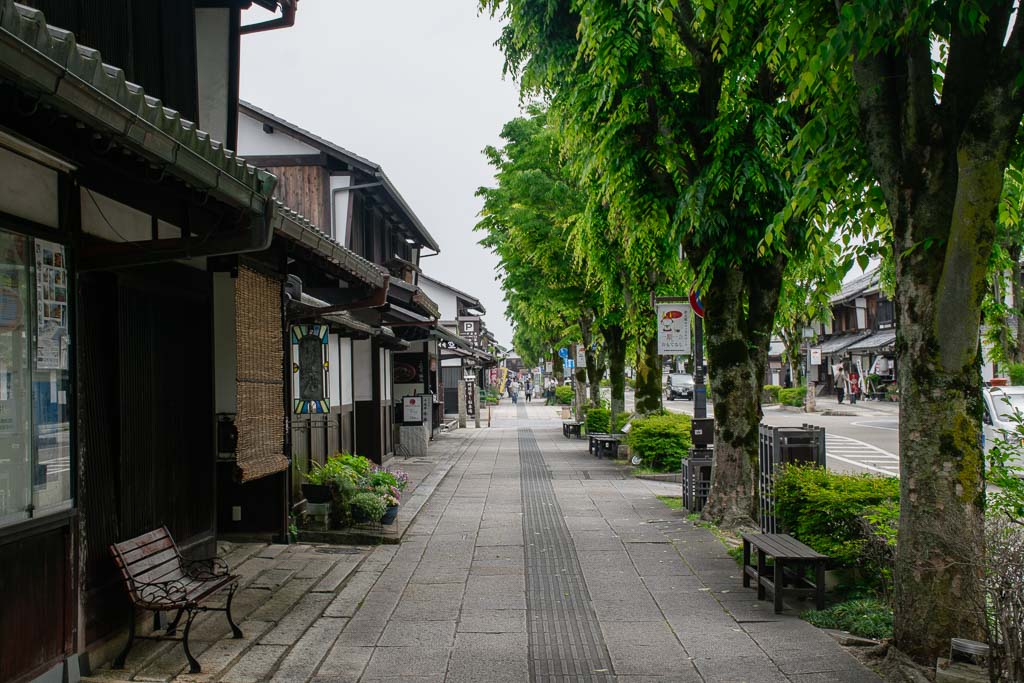
Once the south road leading from Hikone Castle, Yume Kyōbashi Castle Road is now another popular Hikone tourist attraction.
It’s in this area of the city’s Honmachi district that you find old Edo-era wooden buildings that have been converted into a shopping street.
Most of these old-fashioned buildings now host restaurants and stores, typically aimed at tourists. For more options in the area, head towards the Hikonyan Museum Square, which has its own retro post-War look.
Besides taking photos and seeing the older side of the city, shopping and eating are the main reasons to come here.
Most food options here are popular Japanese options, although you do find the odd surprise, such as a Ukrainian restaurant out of nowhere.
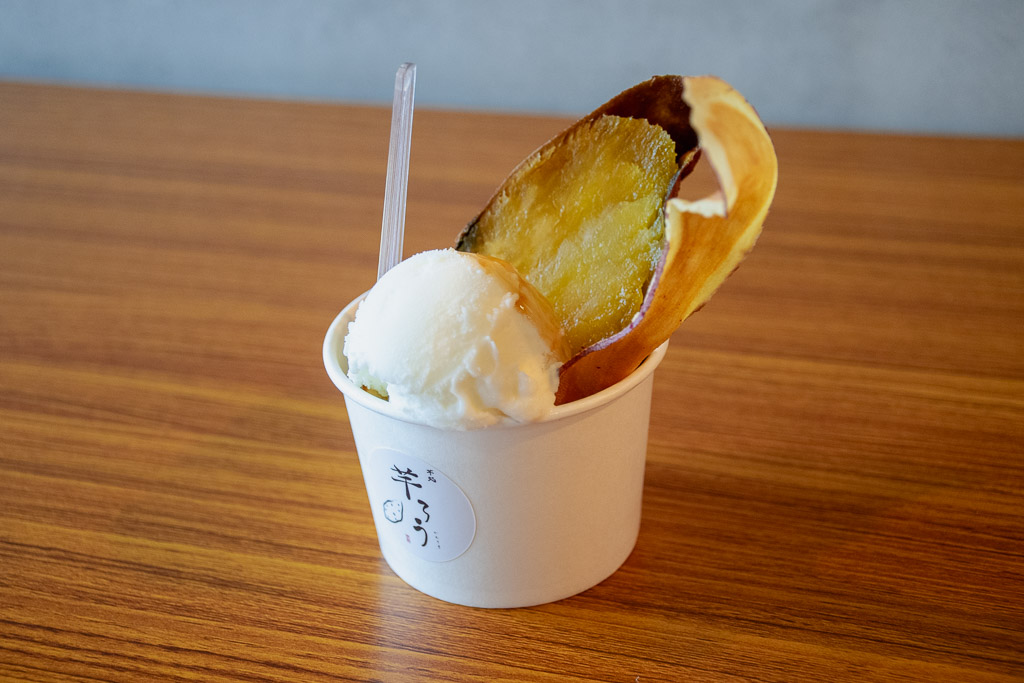
My recommendation, though, is Imo-dokoro Imorou, a sweet potato cafe serving all sorts of sweet potato snacks and desserts. I took the chance to try a popular Japanese dessert here, and really loved their roasted sweet potato with ice cream.
Local temples
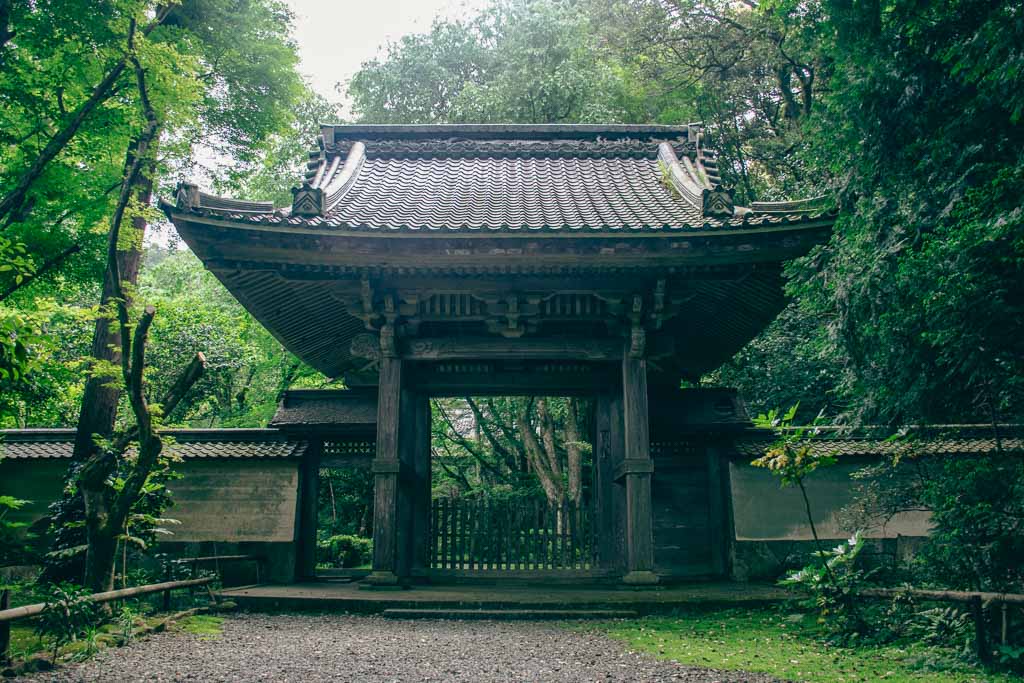
Hikone isn’t known for any specific temples, but that doesn’t mean you won’t find a lot around the city.
The main Shinto temple you’ll encounter is the Shiga Prefecture Gokoku Shrine in front of the castle, which serves as a war memorial.
But you’ll also come across some temples along Yume Kyōbashi Castle Road, particularly the Jodoshu Guzeisan Soan Temple, a small, cluttered Buddhist temple.
However, it was the cluster of temples across the train line in the north of Hikone that really made an impression.
Neighbouring the Seiryoji and Ii Shrines, Ryotanji was the site that really stood out to me. It felt like a temple lost to the forest and was incredibly tranquil.
My reason for visiting this Buddhist temple was to find the path to the Sawayama Castle Ruins in the hills. However, upon seeing signs warning of monkeys and hornets in the forests, I decided against it. Seeing Ryotanji was a nice consolation prize.
Day trips from Hikone

When visiting Hikone, you also have Lake Biwa right there, providing plenty of opportunities for half and full-day trips.
Interesting towns and cities run right around this central lake, giving you an unbelievable array of places to go. My pick was the pretty town of Omihachiman, and I didn’t regret it one bit.
Omihachiman is best known for its romantic canals that run between the old merchant town and the hilly Hachimanyama Castle Ruins. All three of these attractions in Omihachiman are worth visiting, and there are even more places to explore if you have the time.
Another alternative is take a ferry ride to Takei Island from Hikone. Boats leave from the harbor and visit this little secluded island in the lake, home to a Buddhist temple. Another ferry route visits Chikubu Island, with its own isolated temples.
Closer to Kyoto, you have the city of Otsu and some of the lake’s best-known attractions, including the Lake Biwa Museum and the Sagawa Art Museum.
