
Disclosure: This post (probably) contains affiliate links. If you click on one, I may make a small commission. Of course, this will come at no extra cost to you and helps keep this site running.
Some travellers are content with bouncing around different parts of Japan. But you can gain a lot by focusing on one region, exploring its different sides, and minimizing your travel time between destinations. The nice variety of places to visit in Gifu Prefecture is a perfect example of what I mean.
Gifu, much like neighboring Nagano, is a prefecture that can easily fill up your Japan itinerary with places to go. Things to do in Gifu Prefecture range from seeing traditional towns and villages to admiring the local mountain scenery, plus, of course, indulging in the regional cuisine. I haven’t explored as much of the region’s wilds as I would like; I know there are some impressive waterfalls in Gifu I’ve yet to see. However, during two trips, I’ve visited numerous destinations in Gifu Prefecture that I’m excited to share with you.
Where is Gifu Prefecture?

With 47 prefectures in Japan, you’re forgiven if you don’t know where this particular one is.
Gifu Prefecture is located in central Japan, in the Chūbu region, between the popular hubs of Kansai and Kanto, which tourists usually focus on.
However, travellers may not realize how close Gifu Prefecture is to popular destinations, with Osaka, Kyoto, and Nagoya all being relatively close. Adding destinations in Gifu to your Japan visit is easier than you think.
The landscape of Gifu is partly what makes it so interesting to visit. Alpine mountains border the east and west of Gifu—which include the Japanese Alps between Gifu and Nagano. But the interior of Gifu is also hilly, with many of its cities and towns found in river valleys.
Trains provide the main access into the region, particularly the Hida and Takayama lines between Toyama and Nagoya, the Chuo line towards Nagano, and the Tokaido Line heading west.
Takayama

A great place to start when exploring Gifu is the city of Takayama.
Also known as Hida Takayama, this city is a destination rich in history and culture that’s easily accessible to tourists.
The main draw for visiting Takayama is its historical center, home to streets lined with historical wooden buildings. Around the Sanmachi Historical Houses Preserved Area, you can see houses from the Edo period, as well as temples and the Takayama Jinya, a historical government building.
But there’s much more to Takayama than this. The city boasts a beautiful riverfront that comes alive with cherry blossoms in spring. On the outskirts of the city, the Hida Folk Village hosts various authentic houses that have been relocated from the region to preserve their design.
Food in Takayama is another reason to come, whether it’s trying delicious Hida beef in its various forms or the local take on ramen.
Takayama even delivers on onsen experiences, both at hotels in the city center and in the nearby hot spring resorts of Hirayu Onsen in the mountains.
Related: 10 Memorable Things to Do in Hida Takayama, Japan
Shirakawago

One of the most famous places in Gifu Prefecture is the small village of Skirakawago.
Located in the prefecture’s west, this village is renowned for its traditional architecture. Old-fashioned Gassho-style houses with thatched roofs fill this rustic village tucked between mountains.
While there are hints of modern life, such as cars and air conditioners, Skirakawago is a place that feels trapped in time. Some of its iconic homes now serve as restaurants and guesthouses, but people also still live in the village.
Exploring Skirakawago, you walk through rice fields along narrow paths and boardwalks to see these homes, some of which now serve as house museums.
It’s also worth climbing the hill behind the village to see all of the traditional homes in one view.
Visitors often pair Shirakawago with the smaller village of Ogimachi since they share the same authentic architectural style.
Related: Don’t Miss This Day Trip to Shirakawa-go, Japan
Magome

With so many mountains and valleys, it’s no surprise that Gifu Prefecture is a hiker’s paradise.
And the region’s most popular hiking route is also one of Japan’s most famous — the Nakasendo Way.
This route once connected post towns across Japan—like a pedestrian highway—and the post town of Magome is among the most picture-perfect. Located along the Kiso Valley, Magome-juku sits just before you cross the prefecture border into Nagano when walking between Magome and Tsumago.
But you don’t need to be a hiker to enjoy this picturesque town; although, you get more if you walk the trail to Tsumago, that’s for sure.
Vintage homes line the walking route that carves through the post town. It’s nice to walk from the farms below Magome to the viewpoint above, where you can look out towards the nearby mountains.
Along the Old Nakasendo Way, you can find little museums, restaurants, and souvenir shops. The whole town looks like it’s been drawn straight from a Hayao Miyazaki movie.
If you don’t want to pair it with equally enchanting Tsumago, the larger post town of Nakatsugawa is another nearby place travellers may want to see.
Related: 5 Towns in the Kiso Valley of Japan and Why They’re Special
Hida Furukawa

Want to get away from the crowds at more popular places like Takayama and Shirakawago?
Then head to the quiet town of Hida Furukawa, just outside Takayama. All it takes is a short train ride, and you can treat yourself to a peaceful trip around this underrated town.
In the heart of Hida Furukawa, canals filled with carp run alongside the Setogawa and Shirakabe Dozou Streets, and you find more old-fashioned houses similar to those in Takayama.
Like the city, Hida Furukawa also enjoys a picturesque riverfront with cute bridges and temples such as Shinshuji.
Visitors looking to learn more about the Hida region can pop into local museums, from the Hida Takumi Carpentry Museum to the local Festival Exhibition Hall.
Even just half a day here is well worth your time.
Gifu City
It may seem strange to mention the prefecture capital, Gifu City, so far down this list.
That’s not because Gifu City is boring, far from it. There’s just healthy competition for visitors’ attention.
Found to the north of Nagoya, Gifu City isn’t one of Japan’s most well-known cities. But visit Gifu City, and you’ll discover it has a lot to offer curious travellers.
Now, there isn’t too much for visitors in the downtown area of Gifu City beyond some shopping arcades and the Kogane Shrine. The north of the city, near the mountains, is another story.
It’s there that you can explore the old Kawaramachi townscape, home to old-fashioned streets reminiscent of Takayama. The nearby Nagara River is known for its cormorant fishing, known as ukai, which you can see on a riverboat tour.
Also not far away is Gifu Park, a beautiful collection of gardens and small museums at the foot of the mountains. From Gifu Park, a ropeway takes visitors to the top of those mountains to enjoy spectacular views that stretch all the way to Nagoya and the remote landmark of Gifu Castle.
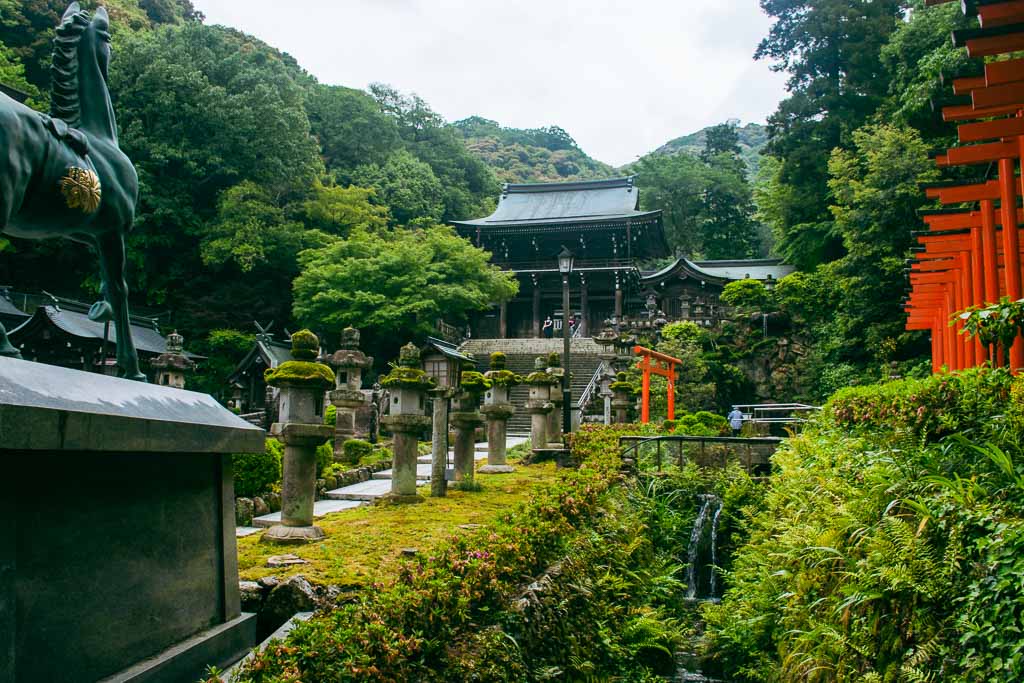
Finally, you have the city’s many Shinto and Buddhist temples; the two that stand out are the sanctuary-like Inaba Shrine (above) and Shōbō-ji, home to an immense golden Buddha.
Related: Worthwhile Things to Do in Gifu City, Japan
Ogaki

The city of Ogaki is a lesser-known destination in Gifu, but it’s a pleasant surprise for those who venture there.
Like Gifu City, it sits on the fringe of Nagoya, but it’s a much smaller and laid-back city than either of those.
Ogaki only has a few claims to fame.
Some know it for its connection to Matsuo Basho, the iconic haiku poet who wrote of Ogaki in Oku no Hosomichi. Unless you’re familiar with Edo-period poets, this might not mean much to you.
For me, it was Ogaki Castle that drew me there. Unlike Gifu Castle, it’s a flatland castle in the middle of the city, but one with some serious pedigree. The castle has ties to the famous nearby Sekigahara battlefield, where in 1600, a feudal battle effectively decided who ruled Japan for the Edo period.
Although it’s a reconstruction, the castle is still charming and worth exploring, with some interesting history to discover.
What I wasn’t familiar with is that Ogaki is known as the “City of Water”, which is easy to understand when you see its rivers and canals. Take a stroll along its waterways, and you’ll find cute bridges, an old lighthouse, and even a man-made waterfall in a quite idyllic setting.
Not bad for an easy day trip from Nagoya or Gifu City, right?
Related: Is Historical Ogaki Worth Visiting in Gifu, Japan?
