Disclosure: This post (probably) contains affiliate links. If you click on one, I may make a small commission. Of course, this will come at no extra cost to you and helps keep this site running.
Japan is home to many smaller cities that tourists might glance at briefly before settling for more familiar names. The small city of Ogaki, just outside Nagoya, is one of those smaller destinations of Gifu Prefecture.
Planning my trip, Ogaki fit neatly into my itinerary, and with two days spare, I decided to see if it was worth visiting. Here’s what I found, so you can decide for yourself whether Ogaki is worth visiting.
How to get to Ogaki
The easiest way to reach Ogaki is to take the train there.
From Nagoya, the Tokaido Main Line runs special rapid services past Gifu City to Ogaki. Trips only take around 30 minutes, so a day trip to Ogaki from Nagoya is easily done.
Coming from the other direction, that line starts at Maibara near Lake Biwa. You can reach Mairbara with a Shinkansen from Osaka or local train lines from places like Hikone and Omihachiman.
No regional rail passes help with this area, but it is covered by a Japan Rail Pass if you have one.
Where to stay in Ogaki

It’s unlikely that you’ll decide to stay in Ogaki. You’re more likely to do a day trip to Ogaki from Nagoya or Gifu City.
However, I decided to stay in the city, as it was slightly more convenient for a brief visit. Staying in Gifu City is another option, especially if you visit both Gifu and Ogaki as I did.
I used the Kuretake-inn Ogaki Ekimae hotel, which was fine, as these franchise business hotels in Japan often are.
You won’t find many more options in Ogaki, other than the basic hotels from the other business hotel franchises, such as:
Now, you might notice that the ratings for hotels in Ogaki are quite low. However, since Ogaki mostly sees domestic visitors, you have to keep in mind the Japanese approach to reviews, where a 6/10 is average, and a 7/10 is good.
Things to do in Ogaki
The real deciding factor for whether Ogaki is worth visiting is what there is to do there.
Most of the Ogaki attractions I had never heard of before visiting the tourist information center at the station, save for the castle. That said, two places I didn’t go, which really require day trips from Ogaki, are Sekigahara, the site of a famous battle, and the “Machu Picchu in Gifu“, a scenic tea plantation in the mountains.
Between the rain and reaching Ogaki, I only had half a day to explore there. Here’s what to do in Ogaki so that you can see if a trip here is worth it.
Ogaki Castle

The only reason I initially had to visit Ogaki was that I knew it had a castle.
I saw a photo of Ogaki Castle on a previous trip while exploring a different castle, and the name got filed away. So, my first stop when visiting Ogaki was to see this small castle.
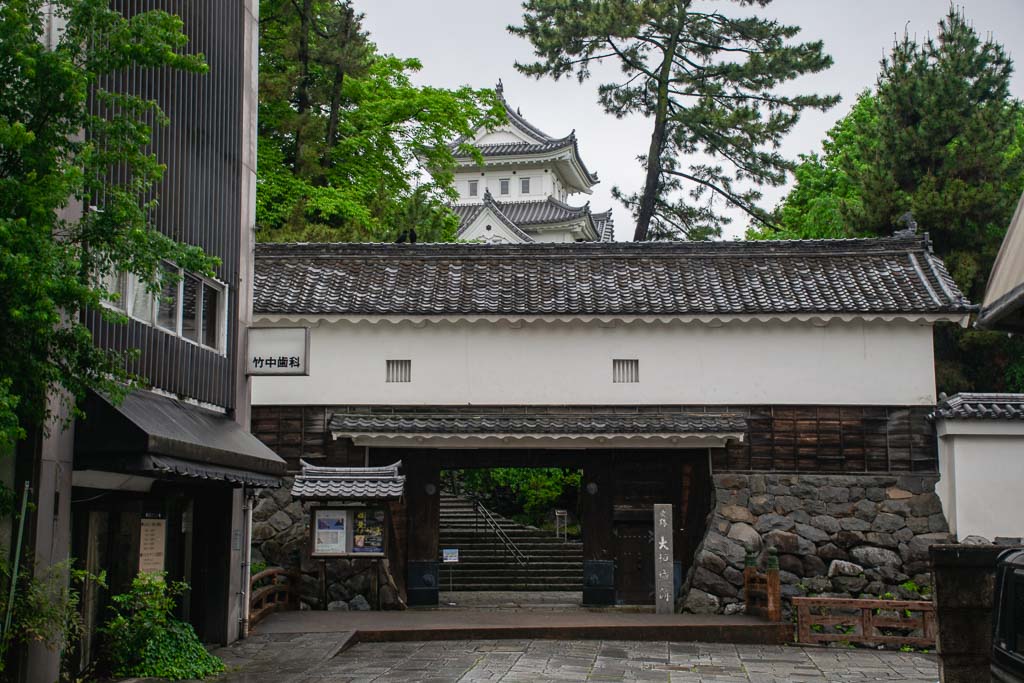
Ogaki Castle is quite different from many other Japanese castles. It’s not high on a mountain, or even at the top of a hill. This is a flatland castle, protected by walls and a moat, the Suimon River.
Miyagawa Yasusada likely built the castle, originally known as Todaiji-jo, in the mid-16th century.
Lords and clans frequently fought over this region of central Japan, so the castle saw a lot of use in battle. This includes the famous Battle of Sekigahara in 1600, where, following that battle, the Eastern Army besieged Ogaki Castle.
Visitors who want to learn about this history can do so when touring the castle. For 200 yen, you can enter the castle and see its four floors of exhibits, including its observation deck at the top. They provide an English-language pamphlet for tourists.
The city rebuilt the castle after WWII, but even though it’s not original, it’s still neat to explore a “small” castle like this. I’d say it’s a “must-visit” for people interested in the Battle of Sekigahara, or maybe those keen to visit Japanese castles.
Ogaki Hachiman Shrine

Like every city, Ogaki is home to a handful of temples and shrines. The one that most stood out to me is the Ogaki Hachiman Shrine.
Located at the northwest corner of the city center, this Shinto shrine dates back to the Middle Ages. Most elements of the shrine look no different to the ordinary tourist than other Shinto shrines across Japan. The exception is the freshwater spring over in one corner of the grounds.
But what makes this Shinto shrine noteworthy is its ties to the annual Ogaki Festival. The city continues to hold this May festival (which I missed by one week), with 360 years of history behind it, earning it classification as a UNESCO Intangible Cultural Heritage.
Celebrating the coming summer, the Ogaki Festival sees a parade of floats (similar to that of Takayama) and a huge street food market.
Ogaki City Folk Museum

With entry to Ogaki Castle, your ticket also includes admission to the nearby Ogaki City Folk Museum.
The city established this small local museum on the 350th anniversary of the Toda clan’s takeover of the castle. Past a pretty courtyard garden full of bonsai lies a series of exhibits with information on the city. Many relate to the history of the Toda clan or scholars who visited Ogaki.
Highlights include the scale model of how Ogaki Castle would have looked and the display about the Ogaki Festival. Much of the exhibit is only in Japanese, so prepare to rely on your phone to translate things.
You only need about 15-20 minutes here, and I’d only go to get further context about the castle and festival, not just visit it without seeing anything else first.
Suimon River walking route

To explore the historical center of Ogaki, the tourist office suggests two different walking routes. One is along the Suimon River, which was the old castle moat, and the other is a historical route visiting old gate markers and the site of the old Minoji Road.
I walked both and can firmly say that the Suimon River walk is far more interesting and scenic.
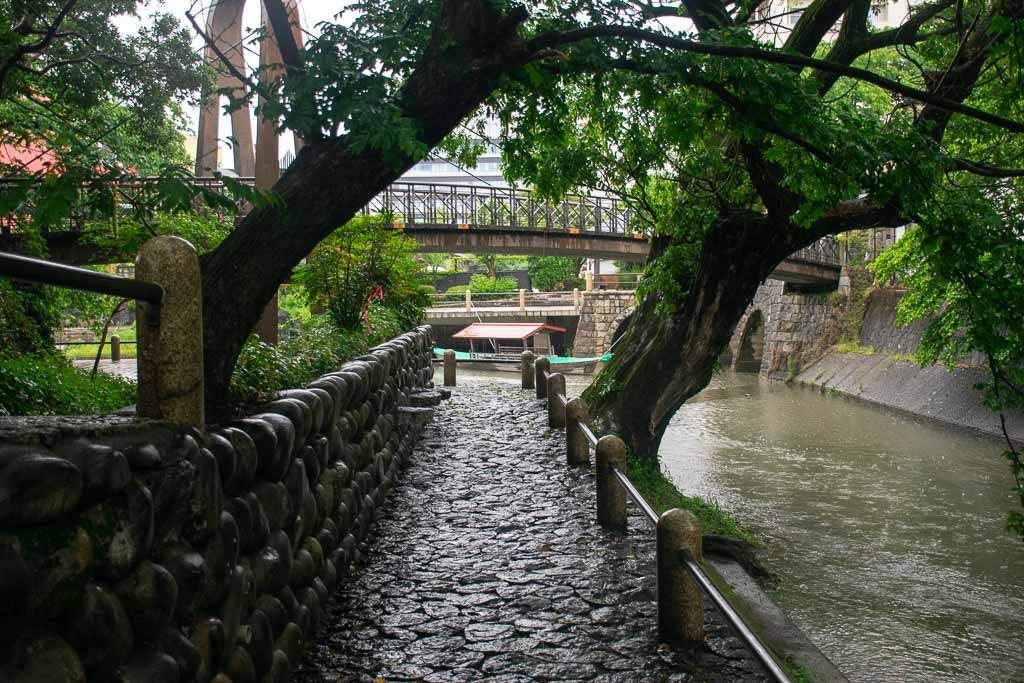
There’s a lot to see on the river walking route. Trees line the banks of the river, and small bridges provide easy access.
Shiki-no-hiroba Promenade

Where the river walk gets really pretty is around the Shiki-no-hiroba Promenade, the “Promenade of Four Seasons”.
This wide point on the river has small waterfalls, ornate bridges, a European-style clock tower, and lots of greenery. It’s basically a public square with water at its center.
Even under persistent rain, with the river flooding parts of its low-lying gardens, this area is a highlight of Ogaki. That’s to say nothing of the old boats tied up here, or the historical Sumiyoshi Lighthouse, which highlights this area’s former life as an Edo-period river port called Funa-machi.
No wonder, with the river, the canals, and the springs, they often call Ogaki the “City of Water”.
Basho’s Oku no Hosomichi Haiku Journey Museum

The Suimon River walk also leads you to Ogaki’s major literary connection.
By the river, you’ll find a statue and opposite it a museum, both dedicated to the famous haiku poet Matsuo Basho.
I was not familiar with Basho before this trip, but the tourist office made a point of directing me to see the statue and museum. It seems he often wrote travel essays and composed haiku of his journeys, one of which is about Ogaki.
I would imagine this connection is popular with domestic tourists, and maybe the odd haiku-enthusiast. So, yes, it’s a very niche attraction, which is why I mention it. I didn’t go inside Basho’s Oku no Hosomichi Haiku Journey Museum, as the 300 yen admission didn’t make sense for someone oblivious to the man, such as me.
Read up a little about Matsuo Basho before coming, though, and this could be one of the best things to do in Ogaki. If you do, let me know.
