Disclosure: This post (probably) contains affiliate links. If you click on one, I may make a small commission. Of course, this will come at no extra cost to you and helps keep this site running.
Looking for a quieter alternative to the canals of Kurashiki and one of the most underrated day trips from Kyoto? Then head to the merchant town of Omihachiman along the shores of Lake Biwa in Shiga Prefecture.
Visiting Omihachiman gives you a great reason to stop in Shiga, a part of Japan many travellers pass through but fail to stop at. Together with nearby Hikone, this town offers beautiful scenery and serves as a reminder that there’s always more of Japan to explore.
Is Omihachiman worth visiting?
In case there was any doubt, yes, Omihachiman is worth visiting.
The main reasons to visit Omihachiman are the town’s picturesque, traditional scenery and its hilltop panoramic viewpoints. It helps that the town is easy to visit from Kyoto or Osaka, meaning many travellers don’t need to take a big detour to come see the town.
I will say that I wouldn’t necessarily recommend Omihachiman if you want a deep cultural experience. While there are a few cultural landmarks around, it’s not really a place to deep dive into Shiga’s history or culture.
One reason to visit Omihachiman I wasn’t even aware of was to go to La Collina Ōmi-Hachiman. This confectionery store is apparently quite famous for its scenery and food, but I didn’t even know it existed.
How to get to Omihachiman
Part of the appeal of visiting Omihachiman is how easy it is to reach.
The easiest way to get to Omihachiman is by train, as the town sits on the Tokaido-Sanyo Line between Nagoya and Kyoto.
It only takes 15-20 minutes to visit from Hikone, as I did, while Kyoto is only 30-40 minutes away. That’s no longer than doing a day trip to Nara from Kyoto.
Once you arrive at Omihachiman Station, you then need to reach its main attractions. You can either walk 30 minutes or take a local bus from platform 6 in the bus station right outside.
Where to stay in Omihachiman
Doing a day trip to Omihachiman is the easiest way to visit, whether from Kyoto, Nagoya, or the Shiga region.
But maybe you want to spend the night in Omihachiman because it’s more convenient for your itinerary. If that’s the case, you have a small selection of guesthouses around Omihachiman to choose from.
While I can’t personally recommend a place, since I stayed over in Hikone, these are the top-rated options in Omihachiman:
Things to do in Omihachiman
Deciding what to do in Omihachiman isn’t overly complicated. The town has a few key landmarks that you should focus on, as they are where you’ll spend most of your time there.
Start with the following things to do in Omihachiman, and then let your feet show you the rest of the town.
Old Town
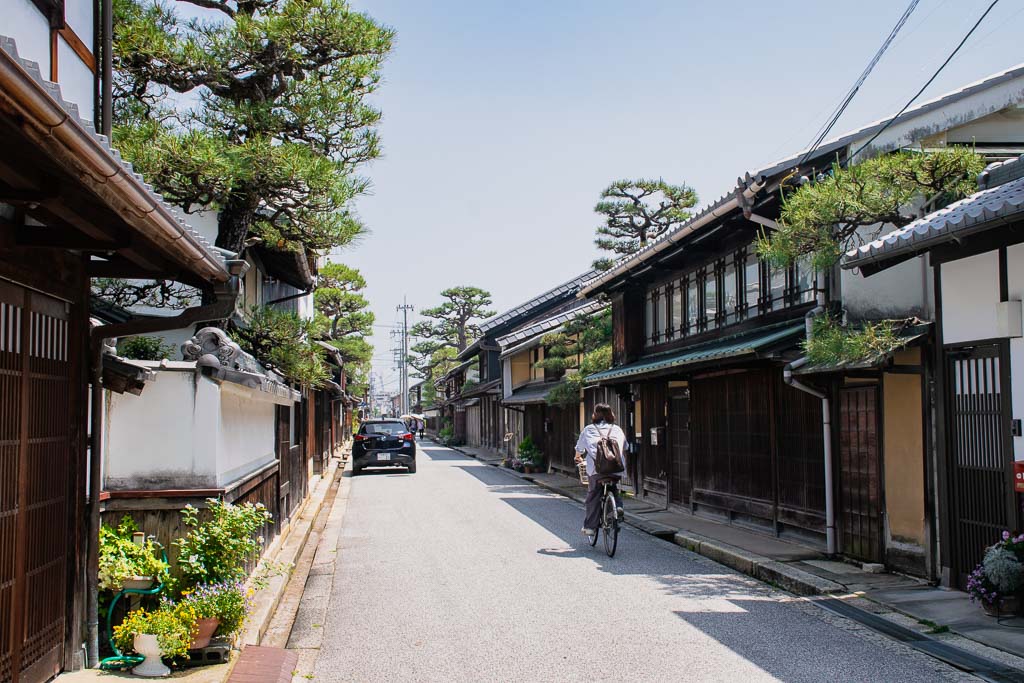
Arrive in Omihachiman, and the nearby streets won’t look traditional or particularly interesting.
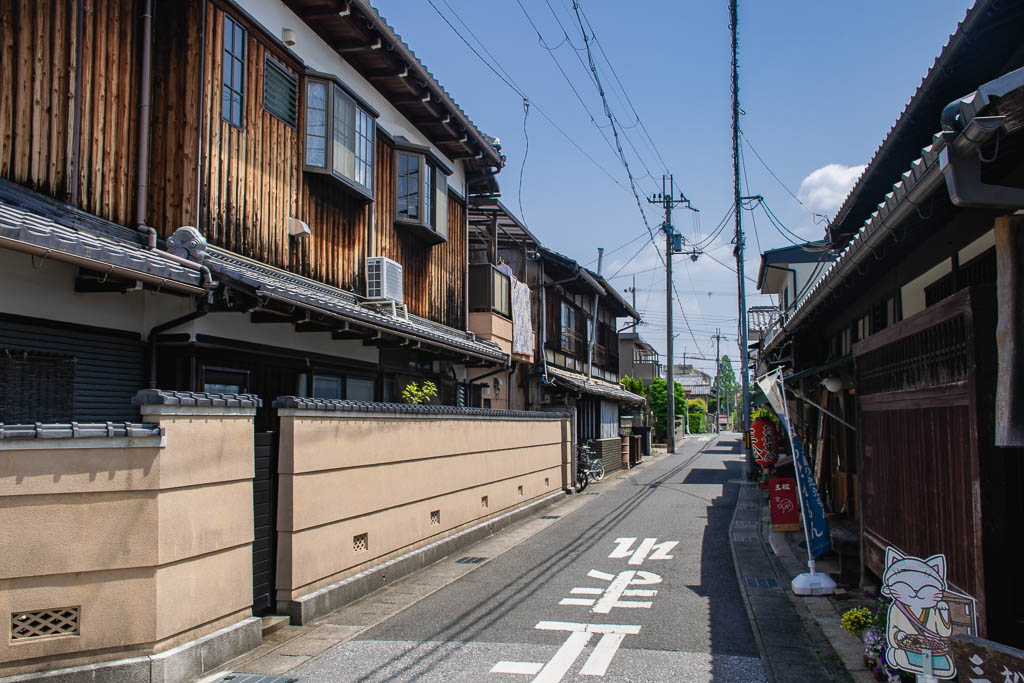
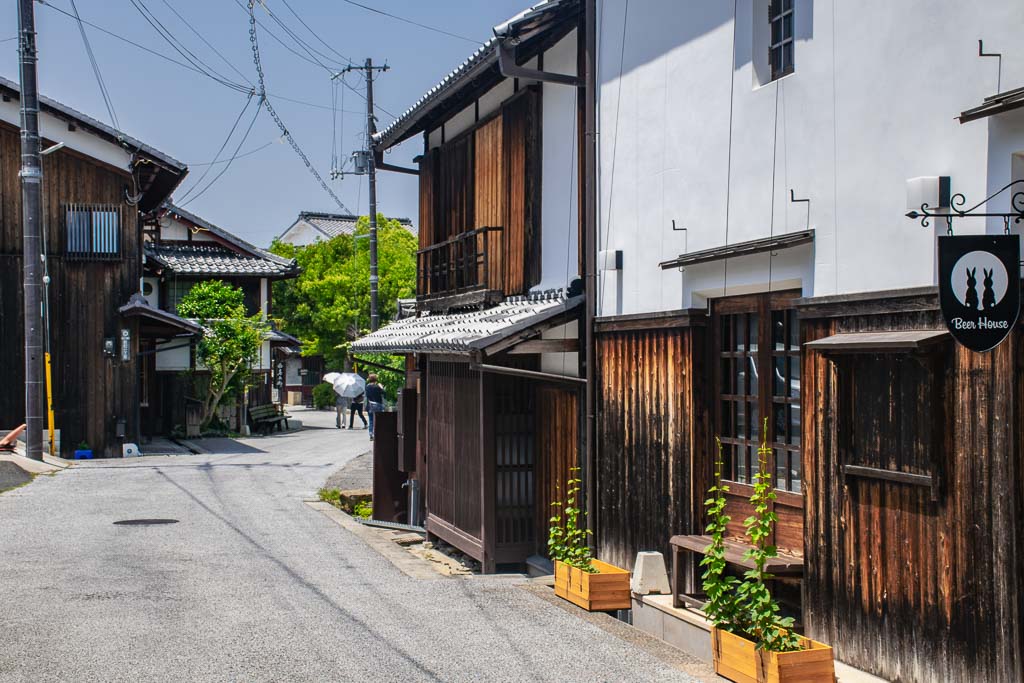
That’s because the historical part of the town is in the northwest around the Shinmachi neighbourhood. Once you cross into these older neighbourhoods, modern buildings are replaced by traditional wooden homes and even narrow streets.
I highly encourage you to just wander along places such as Shin-machi Dori, Nagaharacho street, and Ishincho street. Walking down each of these streets feels like you’re in a historical merchant town, and there are often signs explaining the history of homes and local businesses.
You actually find similar street scenery here as you do in Takayama, only without the crowds of visitors.
Hachiman-bori Moat
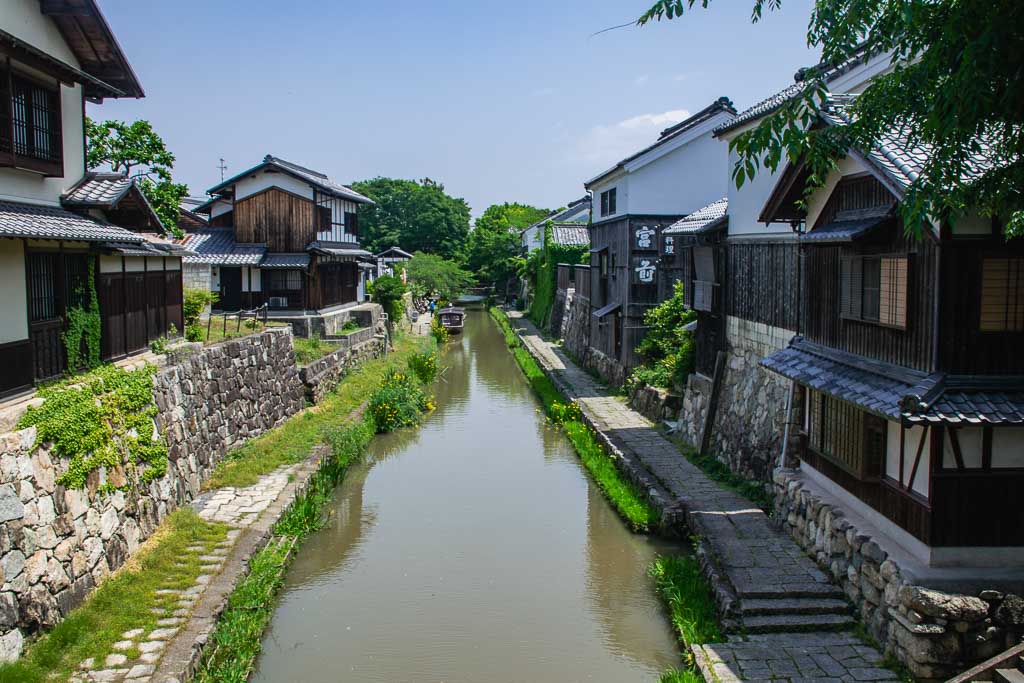
As nice as the wooden homes of Omihachiman are, they’re not the star of the show.
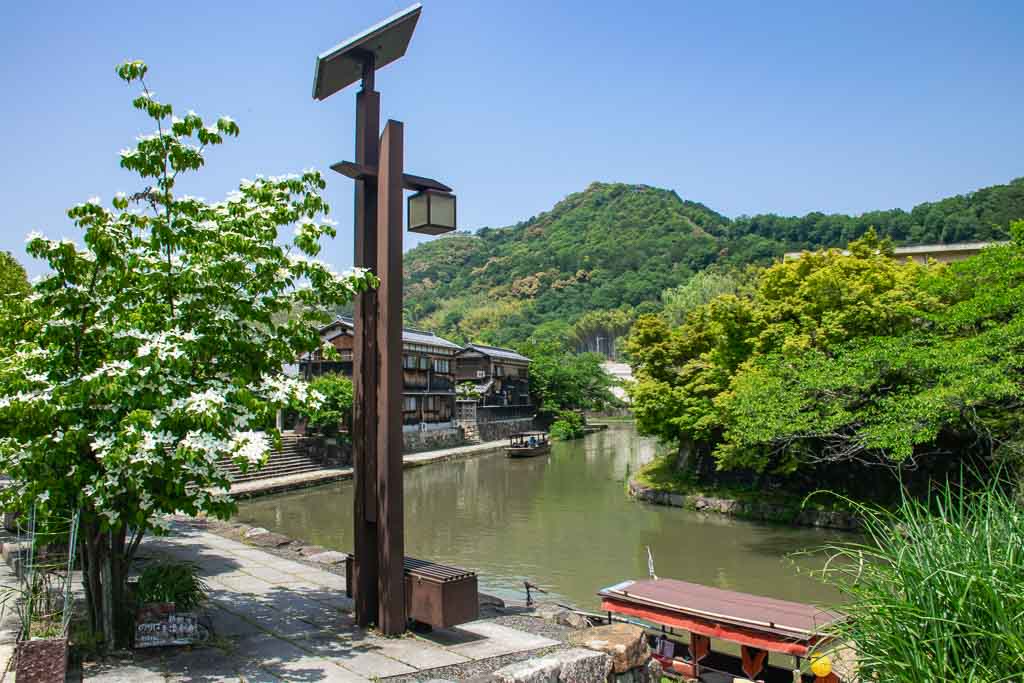
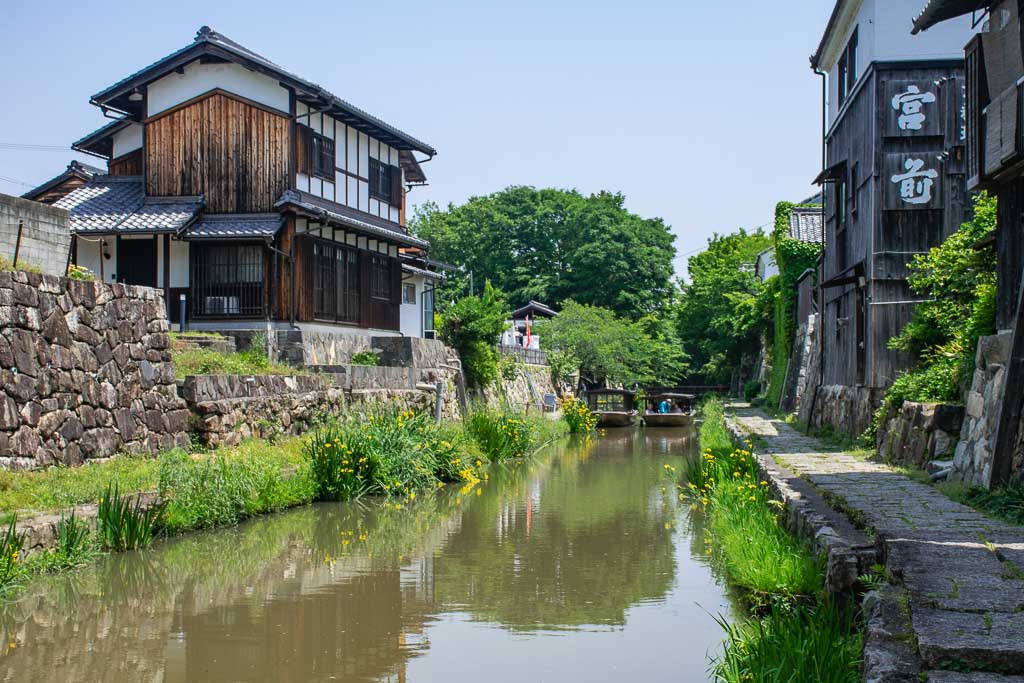
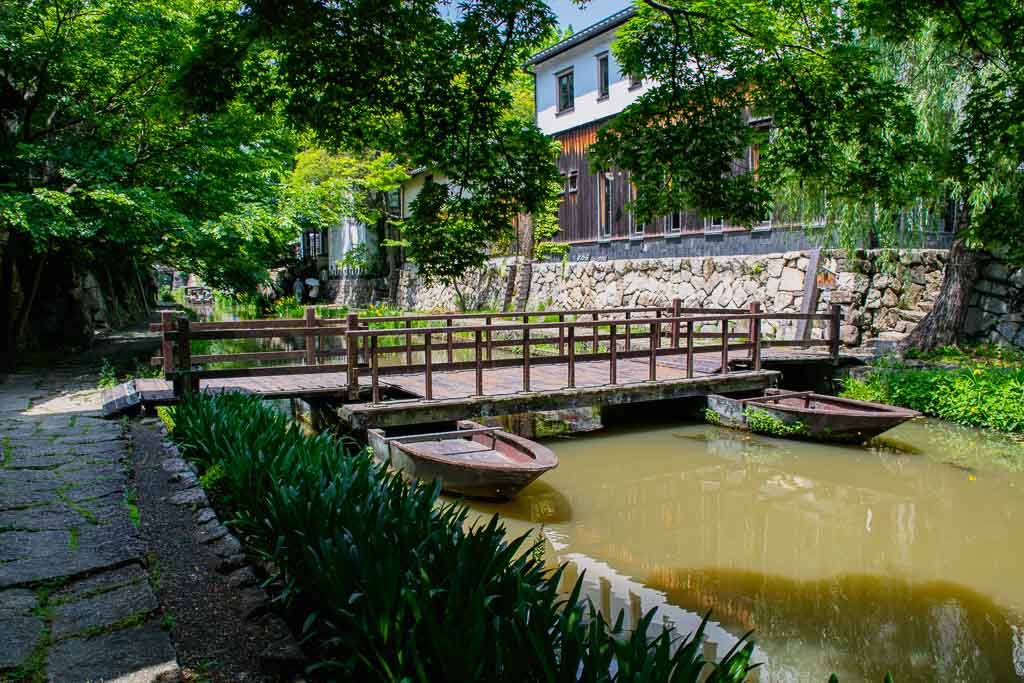
The highlight of visiting this former merchant town is Hachiman-bori Moat, a canal that eventually leads out into Lake Biwa.
This canal skirts around the base of the Hachimanyama hill, and is wedged between large, old-fashioned stone and wood buildings. It doesn’t take much imagination to picture merchants using boats along the canal to move goods stored in the surrounding buildings and warehouses.
To explore the Hachiman-bori Moat, you can either walk along its banks or take a leisurely boat ride. Unfortunately, access to the waterway is only possible down staircases, meaning it’s not fully accessible to people with reduced mobility.
However, you can enjoy views along the canal from the Haku’un-bashi Bridge and others.
Kawara Museum
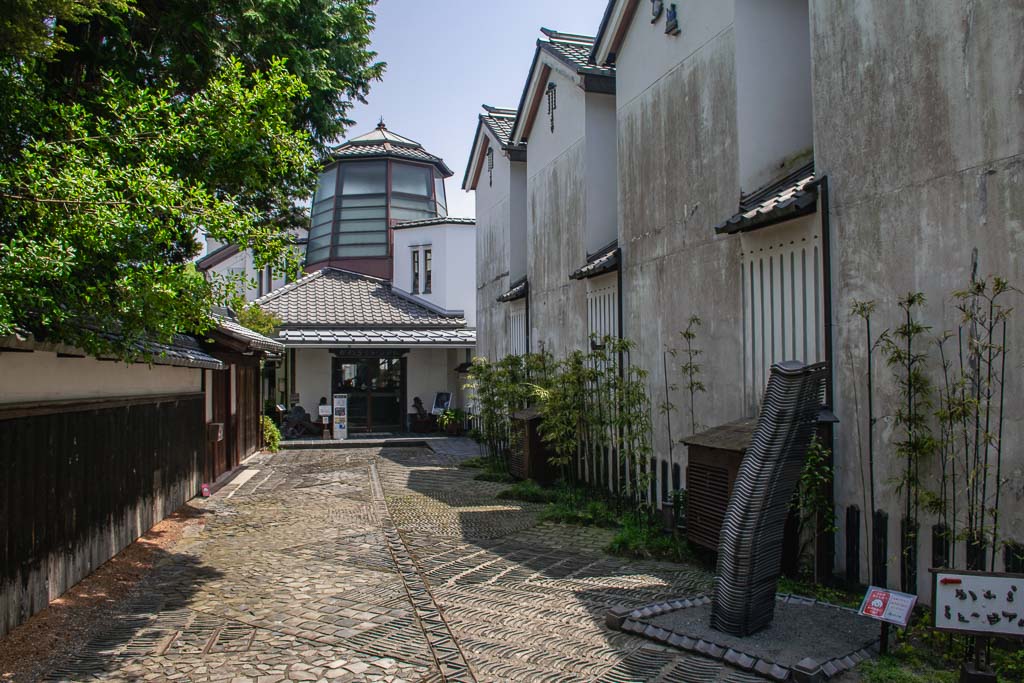
Omihachiman is a modest selection of several small local museums, but the Kawara Museum is the one you’re most likely to encounter.
Located at a bend in the moat, this museum focuses on the traditional local industry of decorative tiles.
Yes, it’s quite a niche topic, but I’m sure there are some visitors who would enjoy seeing its small exhibition. Personally, I didn’t spend a long time here, but I mainly visited out of curiosity rather than interest.
Other local Omihachiman museums include the Borderless Art Museum NO-MA and the Vories Memorial Hall, a museum dedicated to a Western missionary associated with the town. I was disappointed to find the art museum closed the day of my visit, especially since it’s so well-reviewed.
Hachimanyama Castle Ruins
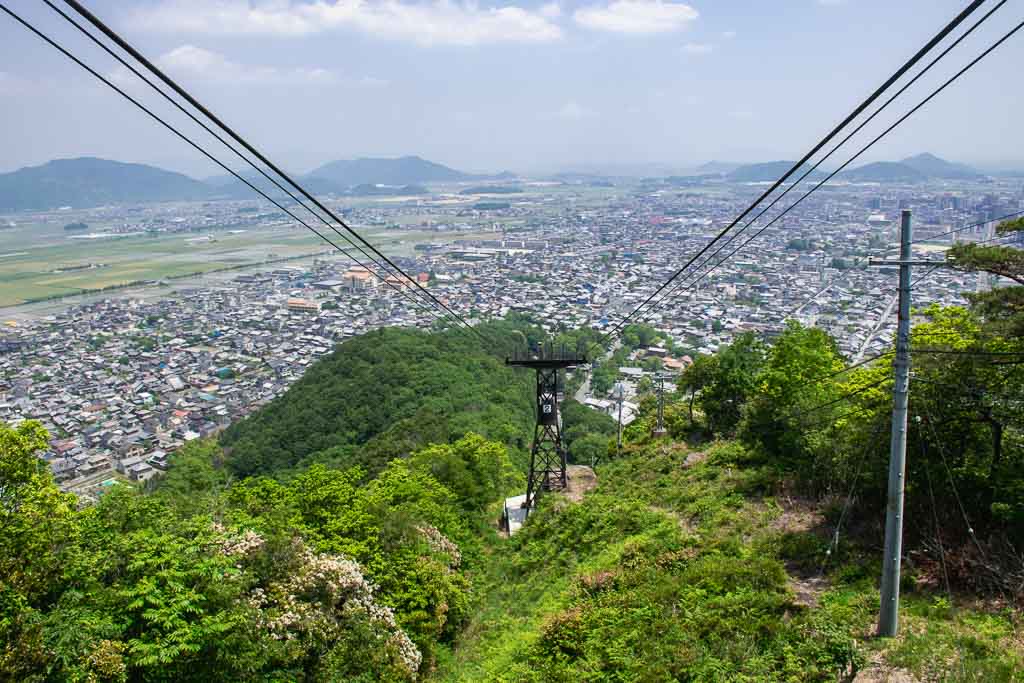
Walking around town, it’s hard to miss the large green hill to its north.
This is the forest-covered Hachimanyama, a hill that’s home to the ruins of a feudal castle. Now, the remains of the castle are modest, but the views from the top are worth the trip.
Just past the tranquil Himure Hachimangu shrine lies the bottom station of the Hachimanyama Ropeway. A quick ride up, and you reach observation points around the hilltop ruins.
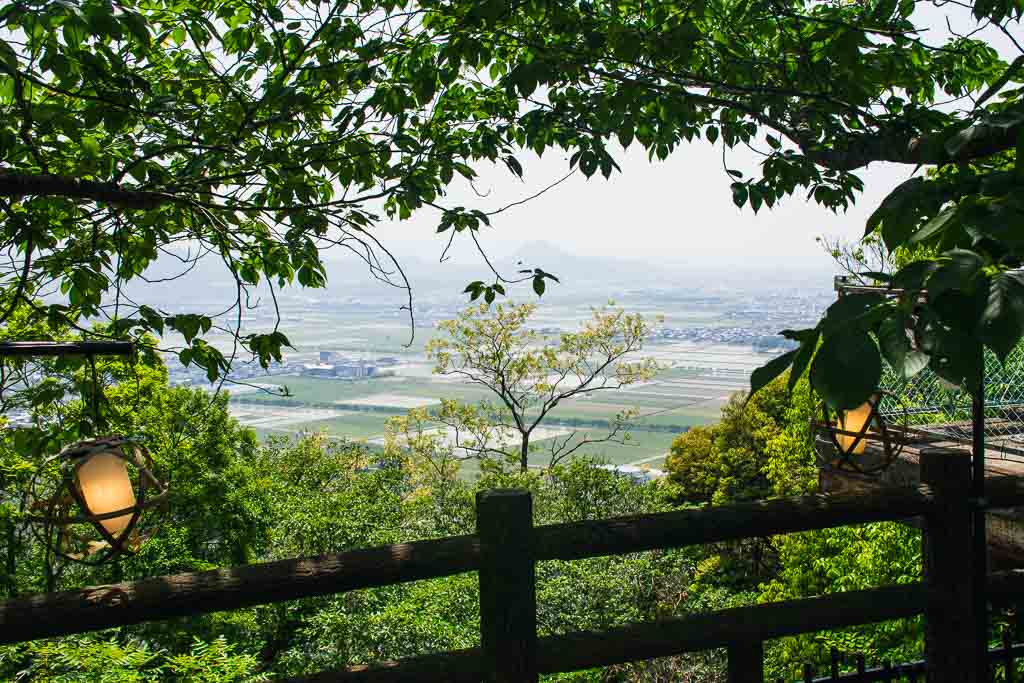
Besides several stone walls and terraces, the ruins aren’t much to take in. But the vista more than makes up for this. Not only do you see views of nearby Lake Biwa, but the surrounding flat farmland quickly stands out.
Walking trails connect viewpoints across the hills, so you can spend hours exploring if you have the time and energy. You’ll also find a Buddhist temple and shrines here, not to mention some stunning red foliage of Japanese maples.