
Disclosure: This post (probably) contains affiliate links. If you click on one, I may make a small commission. Of course, this will come at no extra cost to you and helps keep this site running.
When visiting a country like South Korea, you want to take as many opportunities as possible to experience its culture. Going to attractions and trying local food are the most common ways to do this, but an extra way is to do a hanok stay while visiting Jeonju.
Rather than stay in yet another hotel, switch things up and spend one or several nights in a hanok, a traditional Korean house. Similar to how you can stay in a ryokan in Japan, you can book to stay in a hanok in South Korea to see what it’s like. My time at Gaeunchae in Jeonju Hanok Village gave my trip a new dimension and it felt like I experienced the city in a fresh, new way.
A Jeonju hanok stay

A hanok stay is a fun way to experience more of Korea’s culture. And Jeonju is the perfect place to do it, as the city has the largest hanok village in the country.
Throughout all the traditional homes in the village, many now serve as guesthouses. This means you have lots of options for where to stay. But the scale of Jeonju Hanok Village also means you get the experience of living within a historic neighbourhood.
During my hanok stay, stepping out of the guesthouse and into a quiet alley surrounded by traditional homes was so nice. Rather than have that barrier of a hotel lobby between you and the world, the hanok village was literally on my doorstep.
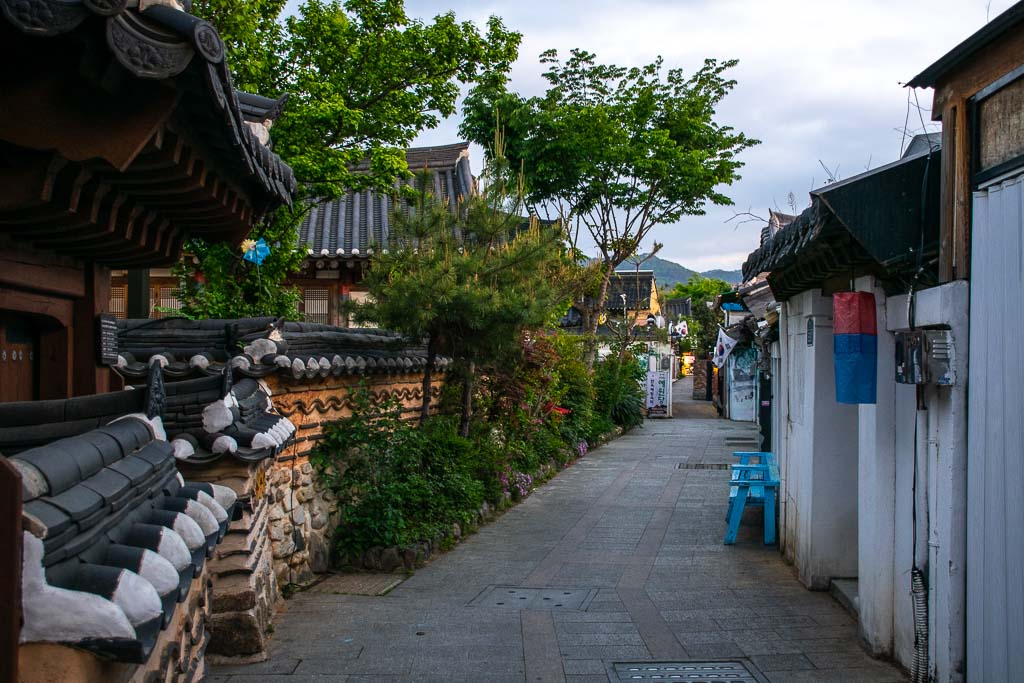
While I earlier made a comparison to staying at a ryokan in Japan, it’s worth noting that there are many differences between the two. Ryokan in Japan are more like inns, with meals offered there and amenities to use such as onsen pools. That experience is designed around spending a lot of the time at the ryokan.
Hanok stays, on the other hand, are more like guesthouses and the general experience is less intense. You get a room from the family that owns the property and that’s about it.
Meals aren’t typically provided, although a rare few offer breakfast. You also won’t be provided with traditional clothes for your time at the hanok as you will at a Japanese ryokan.
Staying at Gaeunchae in Jeonju
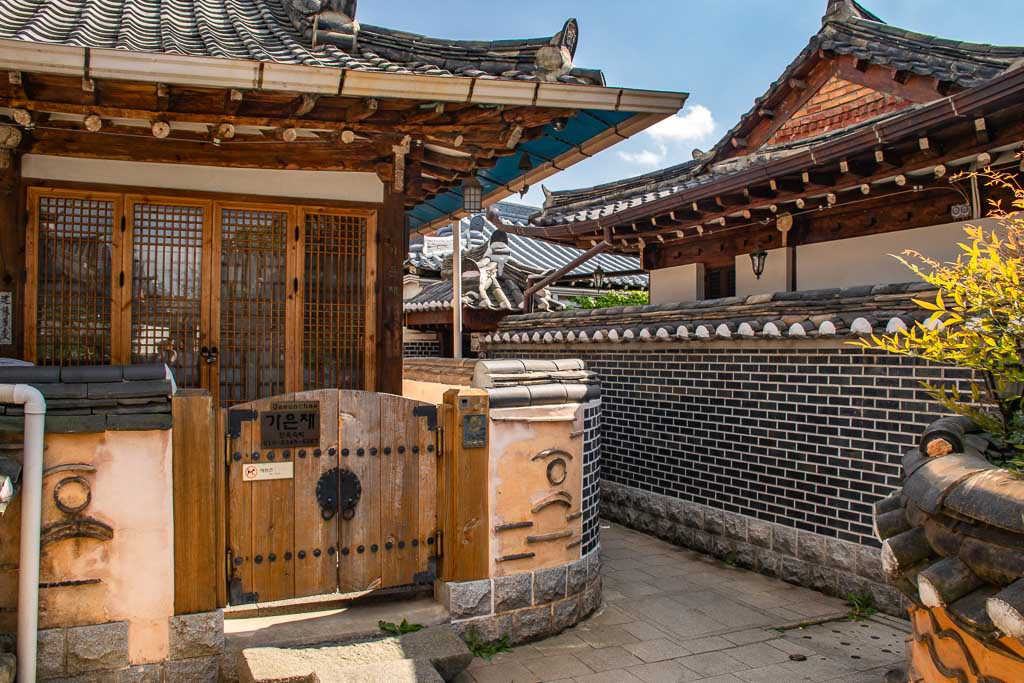
So, what’s it like staying at a hanok in Jeonju then?
Finding Gaeunchae down a sidestreet of the Jeonju Hanok Village wasn’t too hard thanks to the small plaque on its gate. The owner set me up in my room and provided a long list of local recommendations over WhatsApp, including the recommendation to eat at Hankookjib.
Half of the rooms look out to one of two peaceful courtyard gardens. It was nice just sitting out on the step outside the room to enjoy this calm little space, especially after the bustle of Seoul.

In terms of amenities, you do get most of the features you’d normally expect from a hotel. The property has Wi-Fi and rooms are equipped with a TV, a mini-fridge, and a hairdryer. There’s even a communal hut with appliances such as an electric kettle and microwave to prepare your own food if you like.
What are the rooms like?

Rooms at most hanok stays, including at Gaeunchae, are small and compact. You have a living/sleeping space and then a (really nice) bathroom that honestly was almost the same size. The standard room is essentially large enough for two futon beds and your luggage.
Larger groups may want to book the family room, which allows you to spread out more with its loft space that sleeps two.
In the corner, you’ll find your bedding, folded into a neat pile. This keeps it out of the way during the day until you’re ready to set it up for bedtime. The quality of the bedding at Gaeunchae was really good and I was much more comfortable than I ever was on futons and tatami mats in Japan.

What helps a lot with getting to sleep is the Ondol floor, basically a traditional form of underfloor heating. Visit South Korea in late April and it still gets reasonably cold at night. With the heated floor and ample bedding, you shouldn’t be able to tell. There’s also a climate control unit, which I imagine is useful come summer.
Tips and advice for a Korean hanok stay

Experiencing a hanok stay does come with some quirks worth knowing about. One small one is that rather than a key to lock your room, you’re provided with a combination lock.
While my hanok stay experience was overall good, there was one drawback.
Walls in the hanok are not especially thick and there was one night where other guests were loud well into the morning. I think groups of friends often book hanok stays for getaways and once you add alcohol, it’s a natural recipe for a noisy night. Bring earplugs and play white noise and it should help.
In hindsight, I think spending two nights at a hanok stay was maybe not necessary. Relocating for the second night would have been a hassle, but a second day without a table and chairs was a challenge for someone inflexible like me. But maybe this was tarnished by having the noisy night on my second night.
Regardless, no regrets!
Did you know that you could stay in a traditional hanok in South Korea? Do you like trying different types of accommodation when you travel to get more from the experience? Please share your thoughts in the comments below.
