Disclosure: This post (probably) contains affiliate links. If you click on one, I may make a small commission. Of course, this will come at no extra cost to you and helps keep this site running.
Don’t underestimate the city of Seoul. The capital of South Korea is a massive metropolis, with far more for visitors to do than they probably have time for. That’s the case if you only have one day in Seoul, but even my five days in the city left me with plenty of Seoul unseen.
Rather than give you a full itinerary for your visit, let’s take your trip to Seoul day by day. I’ll show you four different ways to spend one day in Seoul. That way, you have a starting point for what you do in Seoul each day. Together, these four days build an itinerary for 4 days in Seoul. Remember, you can also add in day trips from Seoul such as the DMZ and Suwon. Let’s get started.
Getting around Seoul

Before we look at what to do in Seoul, you need to understand how to get where you’re going. Seoul is huge, but thankfully, the city has an extensive public transport network that you can use to make sightseeing easier.
The Seoul Subway is an immense network of subway lines (23 different lines!) that sprawl across the city. That may seem overwhelming, but you only need to know a few for most sightseeing in central Seoul.
Lines 1-4 are the most useful for getting around centrally north of the Han River. As for the south of the river, lines 7, 9, and SB intersect with these lines to help you get around there.
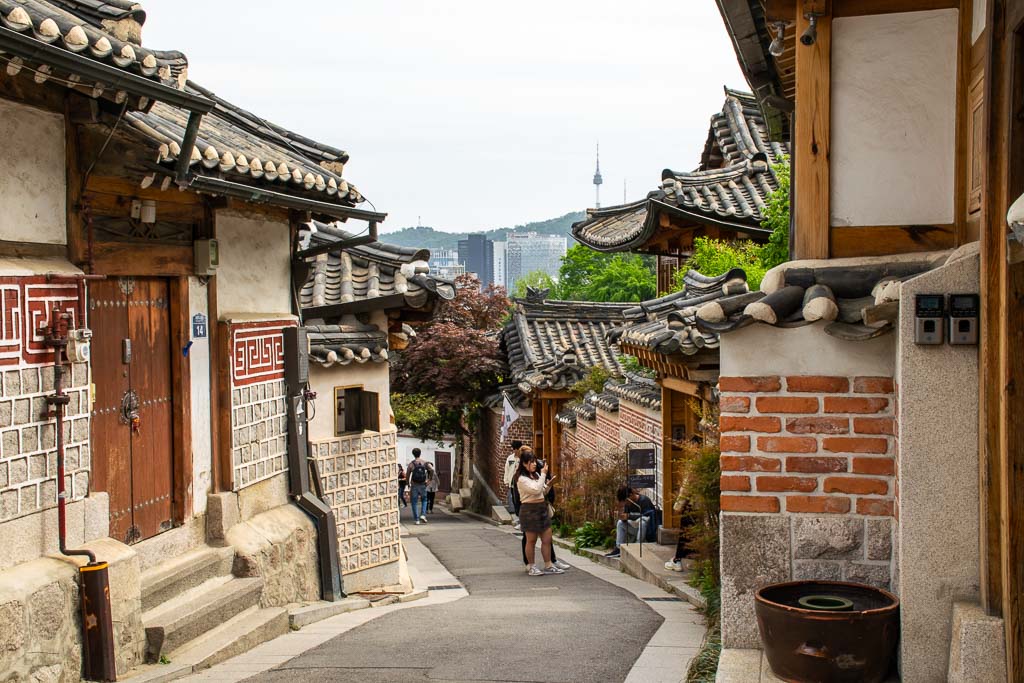
Buses in Seoul are also useful in certain areas, mainly (in my experience) for reaching hillier neighbourhoods. Both the Bukchon Hanok Village and Ihwa Mural Village are best reached by bus.
Pay for public transport in Seoul using a T Money card. This is a smart card like the IC cards used in Japan, where you load money onto the card and use it for public transport fares. Wowpass is an alternative to T Money that works both as a transport card and as a local prepaid debit card.
Getting to Seoul from the airport
Getting from Incheon International Airport, Seoul’s main airport, takes a little planning. The most basic option is to take the AREX express straight to Seoul Station and use public transport from there to get to your hotel. For half the price, you can also get a slower stopping-all-stations train.
What I think is neat is that Gimpo International Airport, Seoul’s other airport, is also on this line. The express doesn’t stop there, but the slower train does, making it easier to transfer between airports. Gimpo International Airport is much closer to the city and is conveniently located on several metro lines.
Things get more complicated once the train reaches Seoul Station. There, you’re thrown into the complicated world of the Seoul subway, which can be overwhelming. If that worries you, ditch the train entirely and take an airport bus instead.
Using the bus transfer service is more expensive and not quicker, but it is easier. They drop off in areas around the city centre, allowing you to pick the stop closest to your hotel. At worst, you then have to take the metro one stop or two, but you won’t have to navigate Seoul Station at least.
Where to stay in Seoul
Just as understanding public transport in Seoul is important, so is thinking strategically about where you will stay. Choosing where to stay in Seoul is honestly overwhelming at first because you have so many options available to you.
Throughout my trip to South Korea, I stayed in three different areas of Seoul – Myeongdong, Dongdaemun, and Insadong. The part of Dongdaemun I stayed in was too isolated from things, but staying near the DDP was not so bad. Myeongdong is probably the most convenient of the three, while Insadong is the most lively and interesting.
Of course, there are many other parts of the city (Hongdae, Itaewon, Gangnam), each with its own appeal. Factor in public transport, attractions, and places to eat before deciding on a place.
Some simple recommendations if you don’t have time to research hotels are:
Ways to spend 1 day in Seoul
Much like its southern counterpart, Busan, sightseeing in Seoul will require you to bounce around the city to different neighbourhoods. I think a better way to plan your Seoul visit is to focus on one area of the city each day. That way, you spend less time travelling and more time doing things.
1. Seoul highlights
- Deoksugung Palace
- Gyeongbokgung Palace
- Bukchon Hanok Village
- Myeongdong Street Market
If there’s a classic sightseeing experience in Seoul, it’s exploring the historic centre of the city. The Jung and Jongno districts are home to many of the most famous places in Seoul, making it a natural place for tourists to explore.
Start at Deoksugung Palace, a palace that has been used by kings and emperors since the 16th century. The palace offers visitors a good introduction to Korean imperial history and has rebuilt traditional halls and several large neoclassical buildings.
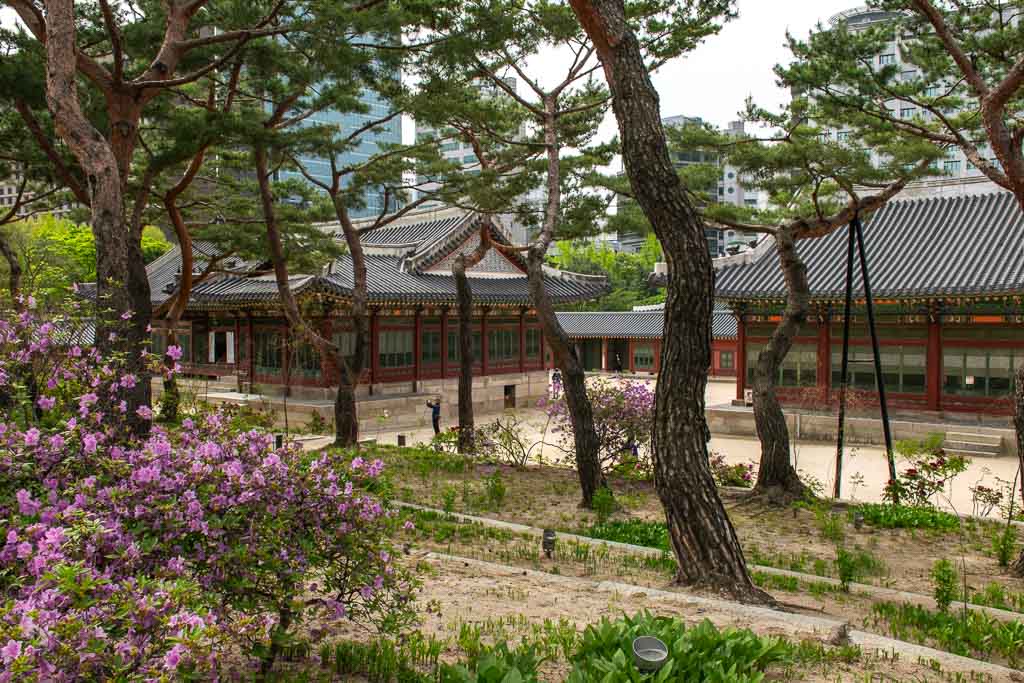
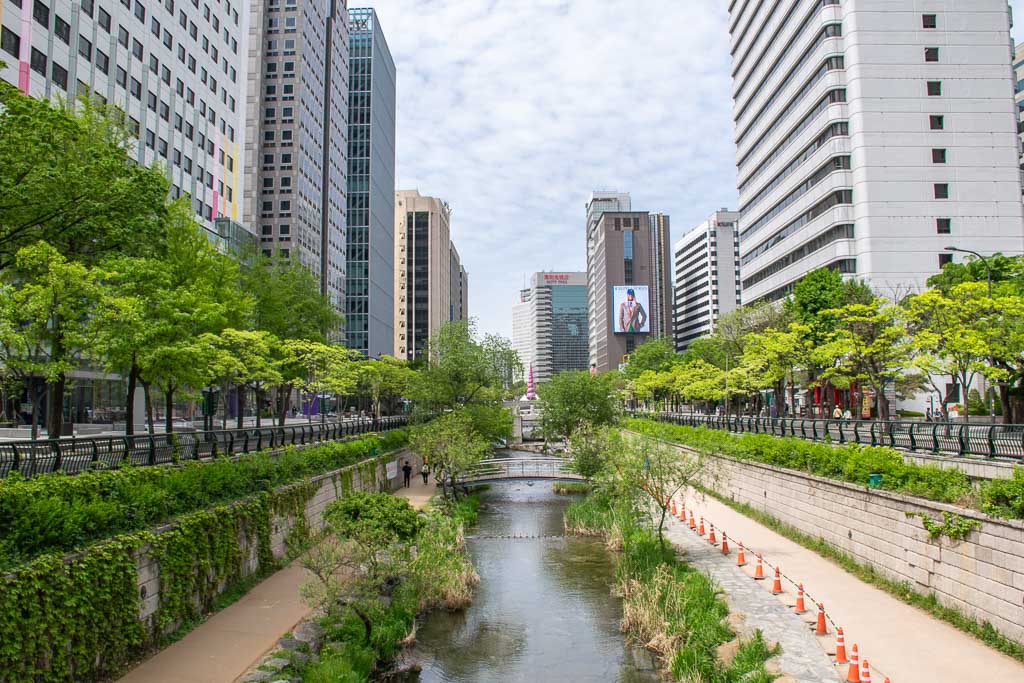
Head north and you’ll reach Cheonggyecheon, a pretty park along a stream that provides a much-needed breath of fresh air for the downtown area. Pass the immense Gwanghwamun Square and you’ll reach a Seoul highlight, Gyeongbokgung Palace.
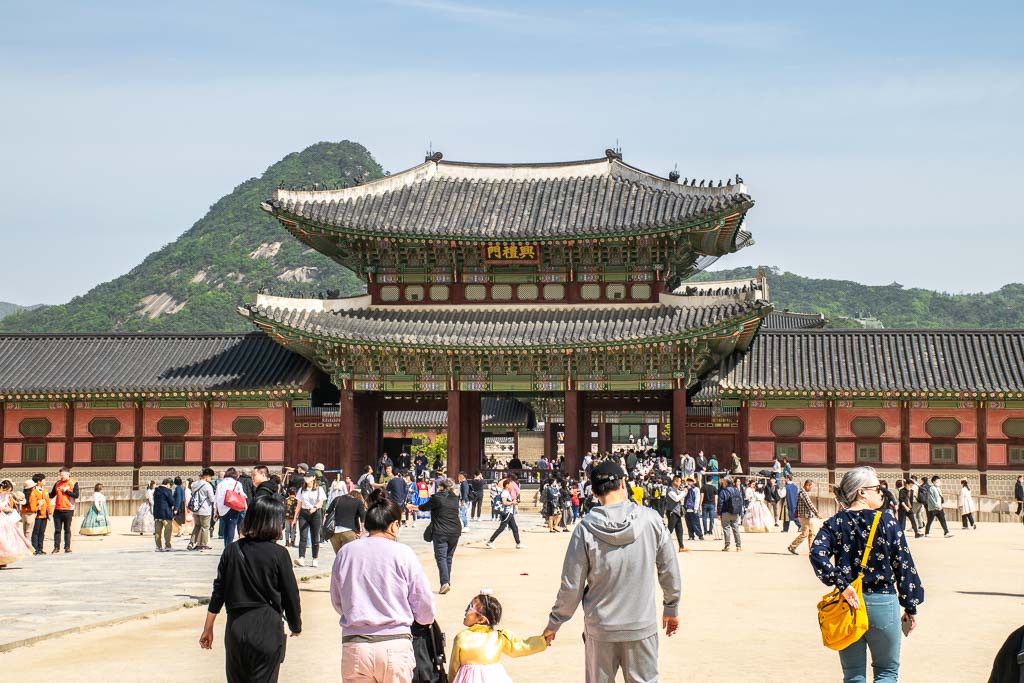
You’ll want to allow a decent amount of time (1-3 hours) to visit Gyeongbokgung Palace. This immense 14th-century palace complex is home to many impressive halls, residences, and pavilions, surrounded by ponds and landscaped gardens. You’ll see countless people here dressed up in hanbok, traditional Korean clothing (which you can rent here).

From one picturesque Seoul attraction to another, continue across to Bukchon Hanok Village. Like those seen in Jeonju, homes in this hilltop neighbourhood have kept their traditional design. Bukchon Yukgyeong (Photo Spot #6) is where you’ll find the most common view; remember, this is a residential area, so be quiet and respectful.
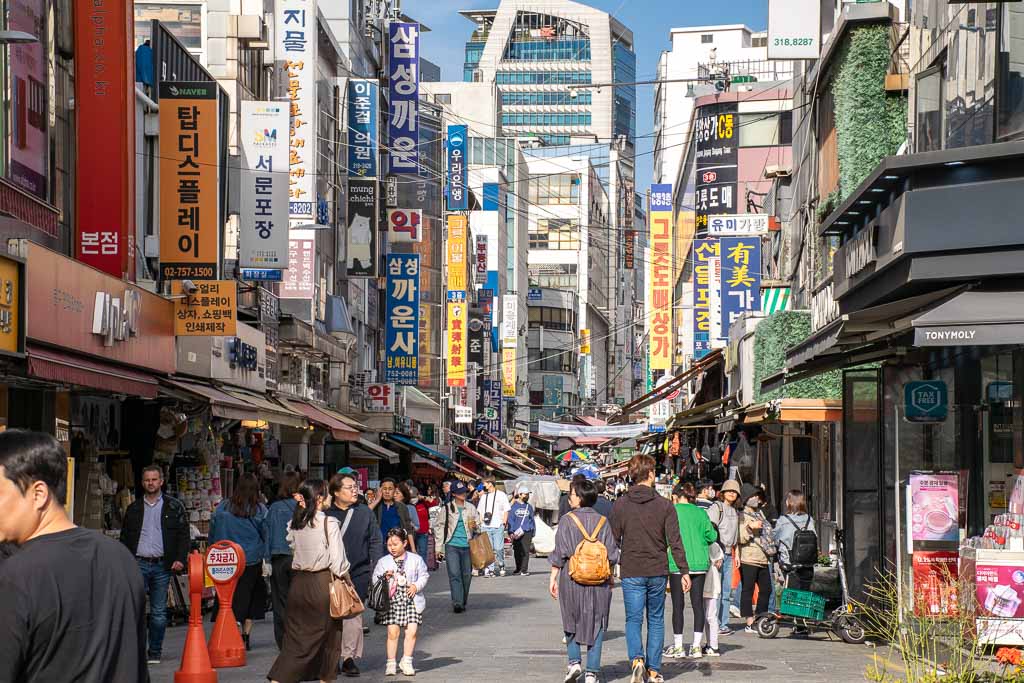
Finish your day back in the city centre at the Myeongdong Street Market. Try all sorts of street food alongside a crowd of other tourists, as well as locals.
2. Museum day

- National Museum of Korea
- War Memorial of Korea
Museums are a great way to learn about a place, especially to appreciate its history and culture. They’re also perfect activities when the weather outside is unappealing. So whether it’s too hot outside or too cold and rainy, you can easily spend a day in Seoul exploring these museums.
Begin by heading to the National Museum of Korea, south of Seoul’s historical centre near the Han River. This huge museum is the perfect place to familiarize yourself with Korea, its culture, and its history. If you don’t know your Joseon Dynasty from your Silla Kingdom, you soon will.
I’ve been to my fair share of museums. The National Museum of Korea ranks among the best and biggest. A whole morning there wasn’t enough time to comprehensively explore its exhibits. Prioritise the first floor, unless you really like calligraphy and world art. Visitors interested in the Korean language may also want to visit the nearby National Hangeul Museum.
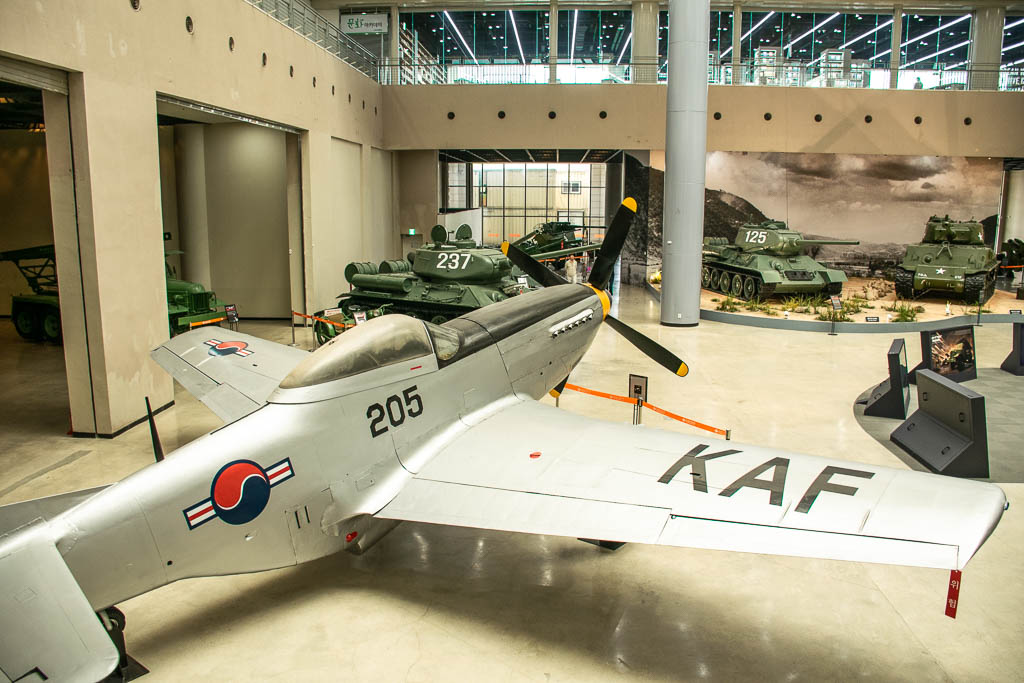
Your other stop for the day is the War Memorial of Korea, another excellent museum. Beyond its monuments and gardens lies another excellent museum, this time dedicated to the history of warfare on the Korean Peninsula.
I appreciated that the museum gives you context for the Korean War before its deep dive into the history since 1950. The War Memorial of Korea also has some thought-provoking art to see, from the installations in the memorial hall to the “Tear Drops” piece.
3. A little bit of everything
- Ihwa Mural Village
- Naksan Fortress Wall Trail
- Gwangjang Market
- Dongdaemun Design Plaza (DDP)
Seoul is a diverse destination. It’s both a big modern metropolis and a place where you can see historical landmarks. You can spend your time learning, but you can also spend it eating and just admiring the scenery.
It’s for this reason that I think the area around Dongdaemun is one of the most interesting places to go in Seoul. The area offers a mix of everything.
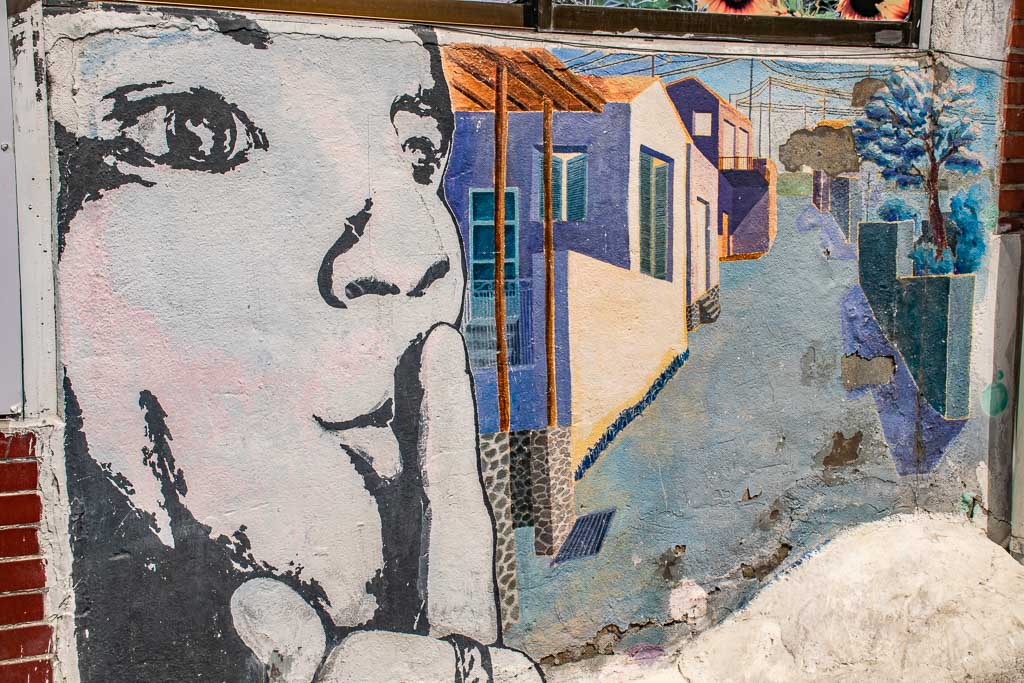
Start the day by visiting the Ihwa Mural Village. Get the bus to the Korea National Open University and walk up through the village’s steep streets. That may not sound fun, but once you start seeing the murals, walking up the narrow alley stairways becomes a lot more fun.
Up the hill from the village, you have Naksan Park, with its greenery and city viewpoints. To me, what was more interesting though was the Naksan Fortress Wall Trail that leads down the hillside. Peering over the old sections of walls you get more views of the city, as well as down to the Heunginjimun Gate.
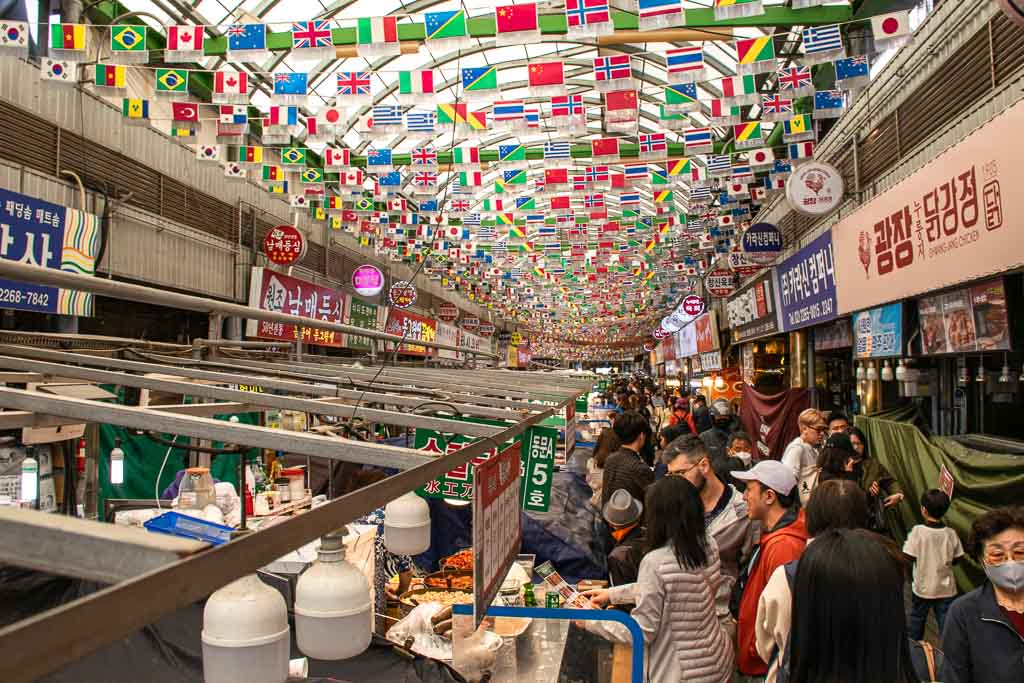
You’re bound to be hungry with all that walking, so head across to Gwangjang Market. This large and famous market has food stands right down its middle and is a great place to try Korean dishes like tteokbokki (spicy rice dumplings) and bindaetteok (mung bean pancakes).
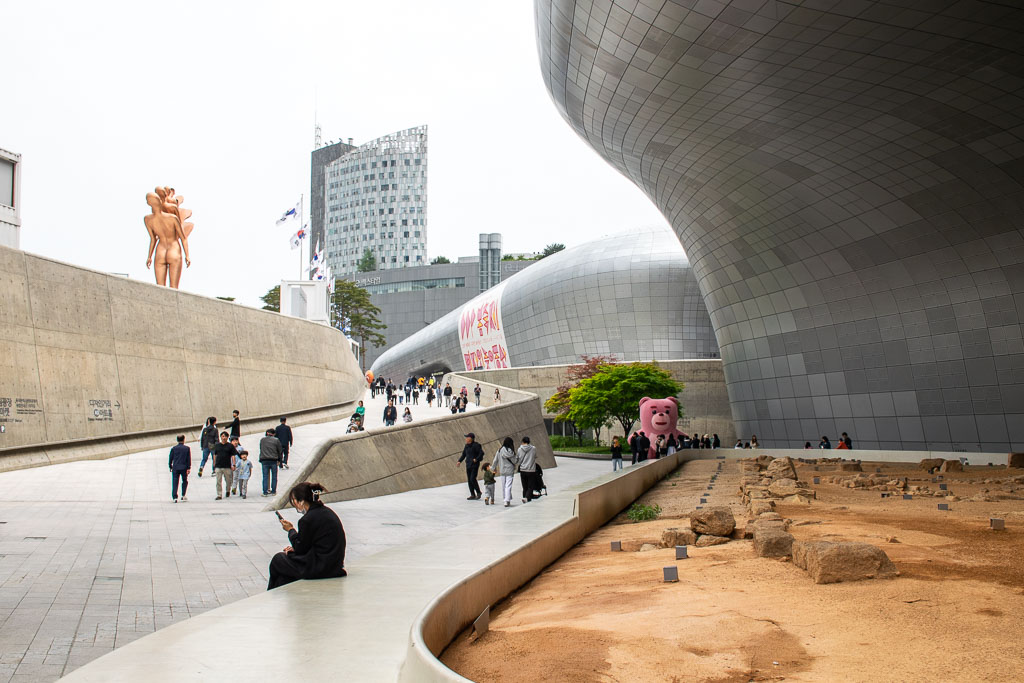
A trip to this page of the city isn’t complete without seeing the Dongdaemun Design Plaza (DDP). This futuristic building is a combined cultural/retail complex, with everything from exhibitions and design stores to markets and restaurants. It’s well worth a look, just to see what’s going on.
4. Gangnam-style

- Seolleung and Jeongneung Royal Tombs
- Starfield Library
- Starfield Coex Mall
Gangnam is one of the most famous areas of Seoul, but I’m sure many travellers don’t know what to expect from it. The district is obviously known for the Psy song, but it’s also a trendy area and commercial/business hub south of the river with a few things to see.
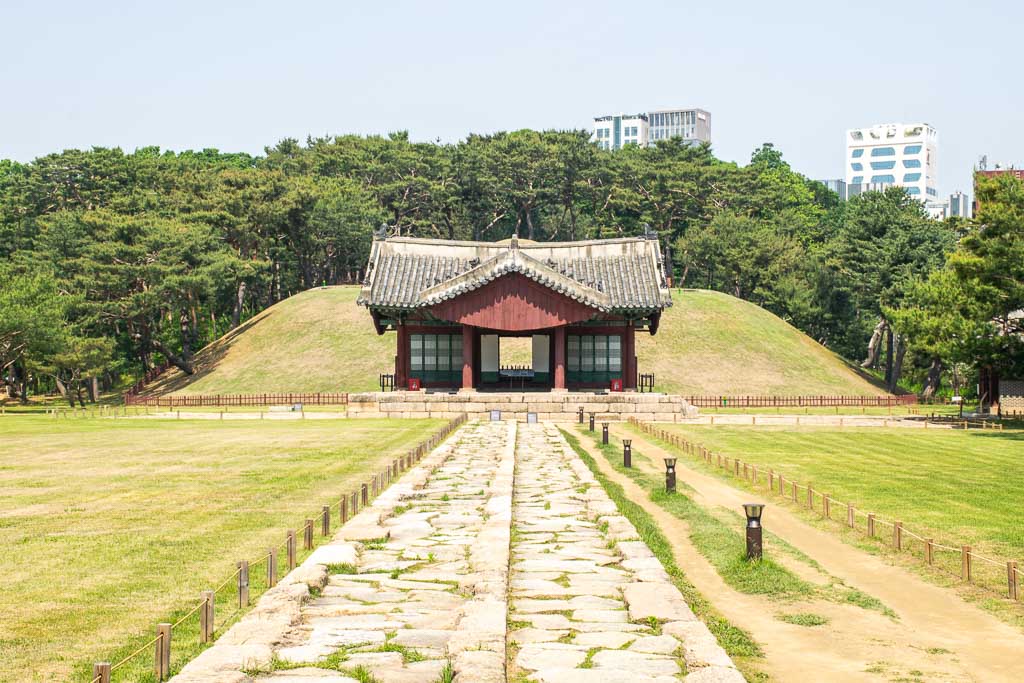
One of the most important attractions in the area is a significant historical site, the Seolleung and Jeongneung Royal Tombs. The complex is mostly a quiet forest with a few shrines surrounding three UNESCO-listed burial mounds. These Joseon Dynasty tombs, two kings and a queen, are from the 15th-16th centuries but are now empty after desecration during the Imjin War.
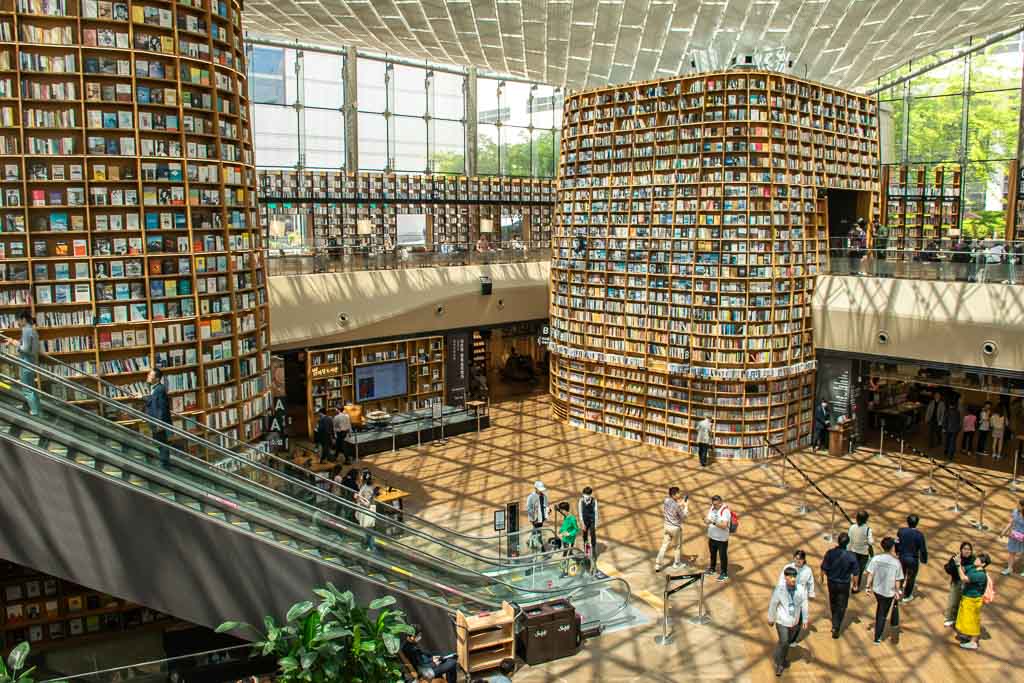
A Gangnam attraction that’s more on-brand is the Starfield Library. Spend enough time on social media and you’ll come across this incredible library with its towering bookshelves and glass windows.
Once you’re done admiring the library, move on to the rest of Starfield Coex Mall. This underground mall has loads of stores and restaurants to check out. Hot tip: don’t go at lunchtime on a work day! Outside the building, you’ll find a large statue dedicated to Psy.
I highly recommend exploring more of Gangnam on your own after this. Maybe head to K-Star Road, which celebrates K-Pop, but also has things nearby like the Figure Museum W on action figures and the K Museum of Contemporary Art.
Other places to visit in Seoul

You now have four different itineraries for one day in Seoul. With these outlines, you can plan your trip and add or substitute attractions or activities as needed.
Most of these sightseeing itineraries leave you evenings free, so you can spend your evening how you like. Maybe take a night cruise on the Han River or take an evening food tour of the city.
As for other places to go in Seoul, you can take your pick from the below:
- N Seoul Tower – iconic tower on Namsan mountain (cable car ticket here and observatory ticket here)
- Insadong Culture Street – shopping and food area with cosy teahouses
- National Folk Museum of Korea – a museum that explores the customs and culture of Korean people
- Changdeokgung – another royal palace, but with a “secret garden” sanctuary
- Changgyeonggung Palace – yet another royal palace
- Lotte World – an entertainment complex with an indoor and outdoor theme park (ticket here)
- Namsangol Hanok Village – a complex of traditional houses below N Seoul Tower
- Jogyesa Temple – a Buddhist temple with a canopy of lanterns overhead
