
Disclosure: This post (probably) contains affiliate links. If you click on one, I may make a small commission. Of course, this will come at no extra cost to you and helps keep this site running.
Sri Lanka is an increasingly popular destination in South Asia, one that rewards travellers in countless ways. Even if you’ve travelled extensively in Asia, a visit to Sri Lanka offers plenty of fresh experiences and sights.
While I thoroughly enjoyed travelling around Sri Lanka, things didn’t always go smoothly. To help you prepare for the occasionally bumpy road ahead, here are some things you’ll want to know about visiting Sri Lanka. Let’s dive in.
1. It’s a country with a little bit of everything

It’s very easy to underestimate just how diverse Sri Lanka’s landscape is. After all, the country doesn’t look huge on a map, so it can’t vary too much, right?
Wrong. Dead wrong.
One moment you’re on a beautiful tropical beach by the ocean, the next you’re way up in the mountains surrounded by tea leaves. Between those two extremes, there are countless other terrains and landscapes, from jungle and savannah to rolling hills, flatlands, and wetlands.
And the best things to do in Sri Lanka take you across all of this, where one destination is nothing like the last. Which creates a real challenge when planning and packing.
It’s hard not to overpack when you have to plan for both the stifling heat in Sigiriya and the chilly nights of Nuwara Eliya, and everything in between.

The weather also changes depending on which part of the island you’re at. Different coasts experience different monsoon seasons, so no one time of year is perfect for exploring all of Sri Lanka.
December to March is generally considered the best time to go, but for the east coast, that’s monsoon season. This is why I’ve yet to explore the east coast.
Weather isn’t the only issue. You also need to choose activities, and they don’t always overlap well.
The best time to go to the beach won’t necessarily be the best time for wildlife safaris or mountain hiking. And even if you decide to do them all, that means packing for each activity.
There’s no perfect solution, at least not that I’m aware of. Just accept you probably won’t go everywhere, see everything, or go at the perfect time for everything.
2. Getting to Sri Lanka
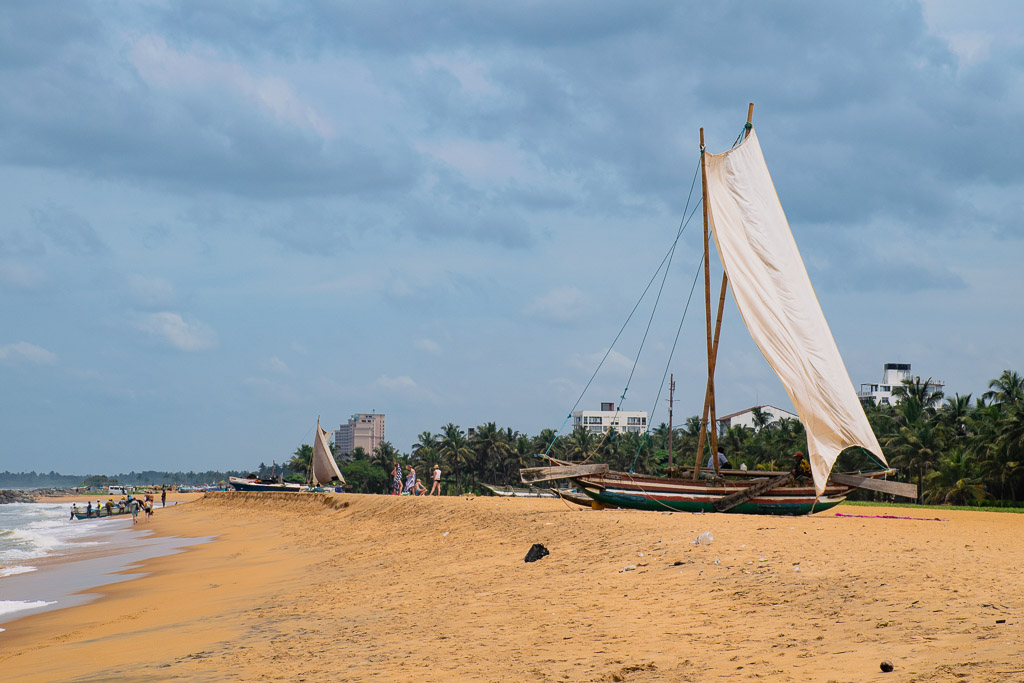
Compared to planning for its climates, working out how to get to Sri Lanka is easy.
While a ferry from India to Jaffna exists, it’s pretty likely you’ll be flying to Sri Lanka.
The country’s only regular international airport is Colombo Bandaranaike International Airport near the resort city of Negombo north of Colombo. There are other small airports around the country, but they mostly only receive charter flights or domestic traffic.
Because the international airport is closer to Negombo than Colombo, many people use this seaside city as their first and/or last stop, particularly if you have a late arrival or early departure.
Most Asian and Middle Eastern airlines offer routes to Sri Lanka through the world’s biggest hubs. But you also have SriLankan Airlines with direct flights to other destinations such as Paris and Melbourne.
The other half of the equation is working out the visa situation for Sri Lanka.
All foreign travellers need a visa, through Sri Lanka’s Electronic Travel Authorization (ETA). You apply and get authorization for a 30-day visa, which is given on arrival in Sri Lanka (it’s best to have the approval form with you).
As of now (July 2026), a list of 40 countries get the ETA for free – something not in place when I went. It lasts 30 days; staying longer requires a paid visa extension or obtaining it in advance from an embassy/consulate.
3. Taking trains in Sri Lanka
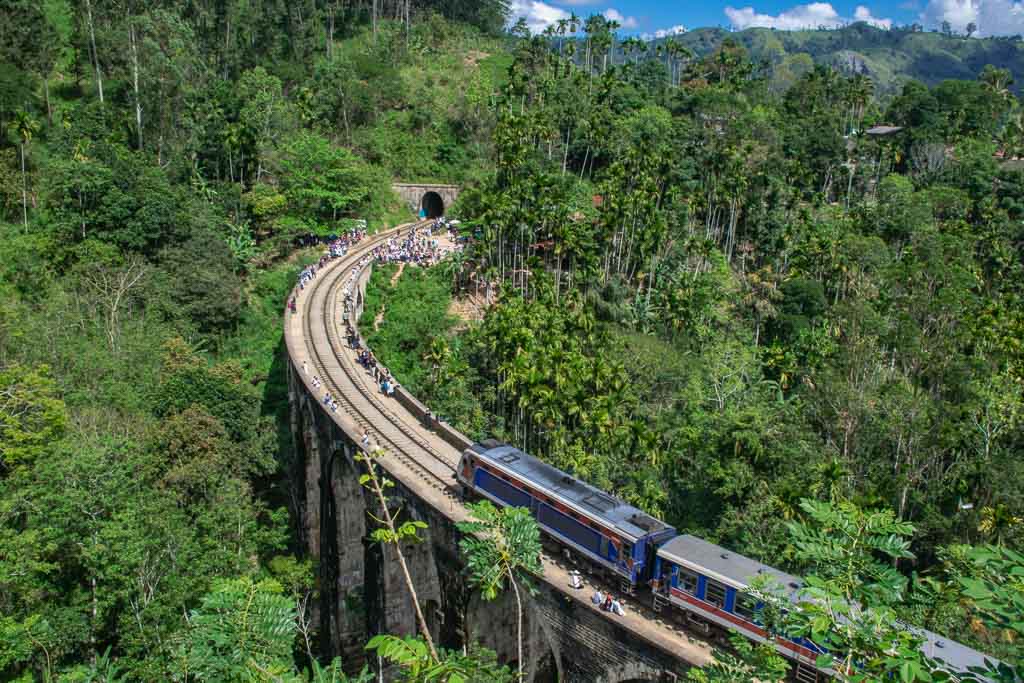
Normally, I’d talk about all transportation for getting around Sri Lanka. But perhaps the most famous activity for people visiting Sri Lanka to experience is taking the country’s trains.
Sri Lanka’s most iconic train route travels from Kandy to Ella, via Nuwara Eliya. But the railway covers much more of the island than that.
I took three trains in Sri Lanka, each a memorable experience, despite different classes, regions, and planning.
The most important piece of advice is to book any important train trips well in advance. Trains during high season book out quickly, leaving you to chance.
You can book trains through the official website or through 12Go, which can be more straightforward and have seats pop up on busy trains.

A lot of advice online will push you to travel in 3rd Class. These are the carriages with open windows, no AC, and heavily used by locals getting about. The reason people recommend 3rd Class is that it’s the cheapest and has the open doors so that you can do the now over-produced “hanging-on photo” on the Ella route.
In all honesty, I disagree with the recommendation. This mindset leads to needlessly overpacked 3rd Class carriages, worsening the experience for Sri Lankan passengers. Not that local passengers will necessarily make you feel unwelcome — the kindness and hospitality towards tourists I saw from local passengers on trains was heartwarming.
But I also don’t think people appreciate how hot it can get on the trains. I saw multiple people on the verge of fainting on the coastal routes – and this was in 2nd Class, even with overhead fans going.
As we’re setting expectations, a word on the famous Kandy to Ella train. You’re travelling in a humid mountain region, and fog is pretty common, especially first thing in the morning and in the late afternoon.
As of 2026, you’ll need to check which routes are currently operating or rerouted. Landslides from a 2025 cyclone impacted routes, including the train from Kandy.
It’s also important to check schedules in person at the station, as I often found contradicting information for timetables online. And yes, delays happen.
4. The other ways to get around Sri Lanka

But train travel is just one of the transport options in Sri Lanka.
If you’re seeking the cheapest way to travel around Sri Lanka, then you’ll be relying on the country’s bus network. Full disclosure: I never used the buses in Sri Lanka. There were always either faster or more direct options. Read more about bus travel here.
Instead, I relied on transfers and tours when I wasn’t traveling by train. Both offer door-to-door transport, which helps in places such as Sigiriya, where you often have to go to the nearest city to find public transport.
The transfers I organized either through my accommodation or using 12Go. However, you can also check the PickMe rideshare app, as intercity taxis are offered there too. Transfers are usually just direct transportation, though my Kandy-to-Nuwara Eliya shared transfer stopped several times for short sightseeing breaks.

Tours, on the other hand, are when you want to build sightseeing into the journey. My tour from Sigiriya to Kandy took me to visit Dambulla Cave Temple on the way. I also had a great time on safari in Yala NP thanks to my transfer tour from Ella to the coast.
If you’re tight on time, transfer tours can be a great way to pack more in. They are the most expensive way to get around, but the experience can be worth it.
One option I’m reluctant to recommend is self-driving a tuk-tuk rental. I understand the appeal of the experience, the independence, the novelty.
But I also saw how long it takes to adjust to Sri Lankan traffic, not to mention a tuk-tuk upended in a ditch in the early hours outside Sigiriya. It’s a big swing and comes with plenty of risk.
5. Planning a Sri Lanka trip

A big part of planning to visit Sri Lanka is deciding on your itinerary.
There’s no shortage of Sri Lanka itineraries online, but they all follow a similar theme. They usually last roughly two weeks, since that’s enough time to see some highlights and justify the journey, without expecting too much of your precious time off.
Itineraries for first-timers typically follow this route, in either direction: Colombo -> Sigiriya -> Kandy -> Ella -> South Coast -> Galle -> Colombo. I based my trip off this route.
Beyond that, a few things generally set them apart. One is whether they include a highland tea destination such as Nuwara Eliya or Haputale. Another is the option of a side trip to Yala National Park or Udawalawe National Park.
The big one, though, is their recommendation of beach destinations along the south (or west) coast. Sri Lanka has so many nice beach destinations to choose from that it’s easy to find quiet ones. I chose to visit Dikwella, which I liked, but you may prefer Weligama, Mirissa, Ahangama, Tangalle, Bentota, Hikkaduwa…the list goes on.
For destination ideas, feel free to browse my Sri Lanka blog posts.

Some people just come to Sri Lanka for the beaches, and you can just spend your time beach hopping, with so many options open to you.
But don’t discount the history, culture, nature, landscapes, scenery, and wildlife that the rest of the country offers. And if you have extra time, consider other destinations such as Polonnaruwa, Horton Plains, Sri Pada Wilderness Sanctuary, and the north/east of the country.
For the route above, December to March is the preferred time of year, which makes it Sri Lanka’s high season. The shoulder months of this season are better if you also want to go north/east.
6. Managing your money
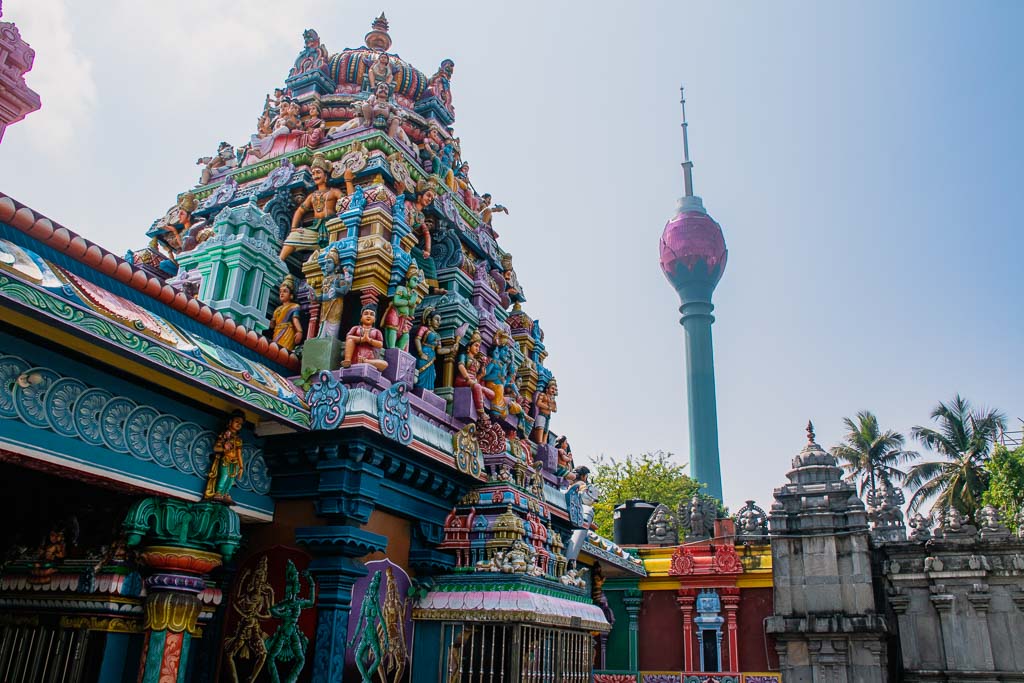
I think people look at Sri Lanka as being one of Asia’s more affordable destinations, but the reality is complex.
Yes, you can travel quite well here without spending a lot, but expenses can build up if you’re not careful. Plus, everyone travels differently and has different backgrounds, so your take may differ too.
A challenge right out of the gate is currency fluctuation. The Sri Lankan Rupee is quite volatile, so any past information given in local currency is often quite meaningless. Look at an old menu online, and you really have no sense of what you’ll pay today.
Prices also vary depending on where you are. Destinations on the coast or in a tourist hotspot are likely to be more expensive, especially when you choose anything aimed at tourists.
Cash is still the preferred payment method in Sri Lanka, so you’ll want to visit an ATM early on. In my experience, Com Bank and the Bank of Ceylon had no ATM fees (beyond your bank’s ones), while others charged a few US dollars. ATMs often have low-ish withdrawal limits, so those fees add up.
While paying by card is an option in places, such as accommodation, you’ll often be hit with an extra 3.5% card fee. It’s worth doing the math to see whether the card fee will be higher than the ATM withdrawal fee.
Another fee is the service fee, which may or may not be included in the bill. 10% is generally suggested if service is not included.
Payment for rideshares on the PickMe app is usually made in cash; don’t rely on the driver to make change.
7. How to see the wildlife
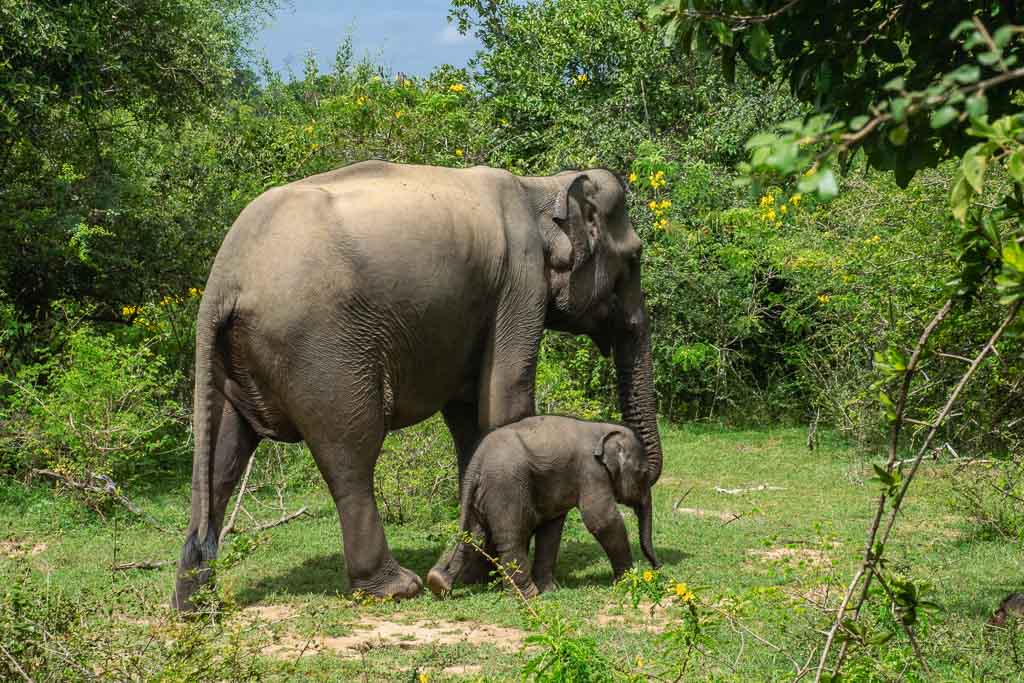
Sri Lanka is probably one of the best destinations in Asia for seeing wildlife.
National parks across the country offer safari experiences, from Wilpattu National Park toward the north to Minneriya National Park near the center and Yala National Park in the south.
Elephants are one of the most common attractions, with many parks home to wild Sri Lankan elephants. But I was also warned in Sigiriya that you can find them in many rural places and that encounters at night when self-driving or wandering around can prove quite dangerous.
Sadly, you can still find unethical/exploitative animal attractions in some places in Sri Lanka. I walked past a place right on the main road in Sigiriya still offering elephant rides. Please don’t do these activities.
If wildlife experiences are important to you, do the research to learn which experiences are ethical and check reviews of businesses before you do.

As for other animals in Sri Lanka, the country is home to incredible diversity. I saw plenty of toque macaques in the trees around Sigiriya, one of the three main native monkey species.
On my Yala safari, we saw spotted deer, crocodiles, water buffalo, and countless different types of birds—but sadly, none of the park’s leopards. There are no guarantees, after all.
Safari tours are usually the best way to see wildlife if you don’t have days to stay near a national park.
Just make sure to check whether the park entrance fee is included. The one for Yala is a little hefty, around US$40, so you need to ensure you have the cash on you.
8. Prepare for delicious food and coffee

One of my favourite things about travelling in Asia is the food, and Sri Lanka doesn’t let the side down.
I wasn’t especially familiar with Sri Lankan cuisine before visiting, so I was especially delighted by what I ate there.
My uninformed assumption was that I’d find the cuisine similar to Indian cuisine served in Western countries. And there are indeed similarities with South Indian cuisine, with dishes such as dosa, dal, and rice dishes being quite common.
Another dish they share, but that I now immediately associate with Sri Lankan cuisine, is hoppers. These thin bowl-shaped pancakes are served with coconut sambol, egg, or curries, and should be one of the first things you try in Sri Lanka.
Coconut sambol is another thing I think of immediately. This dry-but-spicy relish is frequently used as a condiment, and I couldn’t get enough.
Other dishes you’ll regularly find in restaurants are kottu (chopped-up roti in a stir-fry), devilled chicken (think a spicy, sweet-and-sour dish), and, yes, a wealth of different curries. Seafood is also a big deal when you reach the coast and not to be missed.
Of course, there is also the backpacker scene where you can get Western food, whether it’s near the beach in Hiriketiya, on the main street of Ella, or even in the cafes of Kandy.
Speaking of cafes—you may think of tea when visiting Sri Lanka, because the tea grown here is exceptional. But Sri Lanka had coffee before the British introduced tea, and the coffee in Sri Lanka is generally great, too. So, you don’t need to switch from coffee to tea unless you want to.
9. Language and warm hospitality

A common concern when visiting a new country is how you’ll get by not speaking the local language.
Sinhala and Tamil are the two main languages in Sri Lanka. The majority of the population speaks Sinhala, which is the main language tourists encounter, while Tamil is mostly spoken in the north and east.
Knowing simple Sinhalese phrases such as Ayubowan for ‘hello’ and Sthuthi for “thank you” is well received and a nice gesture.
But you can get by with English in Sri Lanka. It’s effectively the language of tourism in Sri Lanka, clearly affected by the country’s colonial history.
Not that everyone I encountered spoke good English. My driver to Sigiriya spoke broken English, and we spent much of the drive trying to chat through Google Translate to mixed success.
Regardless of any occasional language barrier, the hospitality I felt in Sri Lanka was next level. It seemed to me that tourists were very welcome, whether they were strangers or people in the industry.
But it was clear that people working in tourism were doing their best to provide visitors with a great experience. Twice, I had guesthouse owners kindly give me a scooter ride somewhere, when I was fine taking a tuk-tuk. Others were keen to chat and learn more about me, or just talk cricket.
Sri Lanka is a rarity, seemingly eager for more tourists. I often felt there was an oversupply of guides, tours, services, etc. That said, domestic tourism in Sri Lanka also seems strong, especially over the weekend, when places such as Kandy, Nuwara Eliya, and Ella got busier.
Unfortunately, overdevelopment does seem to be creeping in. You see it in places like Hiriketiya, especially if you look at photos from 5-10 years ago. I hope the country finds the right balance.
