Disclosure: This post (probably) contains affiliate links. If you click on one, I may make a small commission. Of course, this will come at no extra cost to you and helps keep this site running.
One of the most iconic sights visitors hope to see in Sri Lanka is the UNESCO World Heritage Site of the Ancient City of Sigiriya. This city was, for a short time, an ancient capital of Sri Lanka, and what remains is just as fascinating as it is picturesque. Visiting Sigiriya is a must for travellers looking to experience more than Sri Lanka’s coast and tea fields.
Adding Sigiriya to your trip takes a little planning, though. Climbing Sigiriya Rock is an incredibly memorable experience, but you also need to think about what else there is to do there, how to get there, how long to stay, etc. To hopefully make all of that easier, I’ve put together this simple Sigiriya sightseeing guide, with everything I can think of. Got questions? Let me know.
Why visit Sigiriya?

Maybe you’re undecided on whether to visit Sigiriya during your trip to Sri Lanka.
If you are, let me say that I think Sigiriya is a highlight of traveling in Sri Lanka and well worth visiting. You encounter a lot of beautiful scenery around the country, but Sigiriya just feels different.
I also think that Sigiriya is quite a well-balanced destination. The natural landscape dominates the conversation, as does the history surrounding the ruins atop and below its famous rock. But you also have opportunities to see wildlife and engage in the local culture, as well as just relax in a setting that’s not by the beach.
The biggest challenge to visiting is that Sigiriya lies off the most convenient tourist route around Sri Lanka’s popular southwest quarter. Don’t let that put you off; you’ll see below that there are also plenty of ways around that.
If you can, visit Sigiriya.
How to get to Sigiriya

Sigiriya is located near the center of the island, away from Sri Lanka’s biggest destinations.
On a map, it may not look that far from places like Colombo and Kandy, but getting to Sigiriya has its complications.
One is that Sigiriya is quite small, so often you need to travel to nearby larger towns first, such as Habarana, Kekirawa, or Dambulla.
For instance, to go from Colombo to Sigiriya, you take a train to Habarana or Kekirawa and then a tuk-tuk/taxi to your Sigiriya hotel. Come by bus, and you’ll first go to Dambulla, and then again need a local bus, taxi, or tuk-tuk to get the rest of the way.
Trying to travel from Negombo to Sigiriya, I found this option even more complicated, with the added step of first getting to Colombo. So, I abandoned my usual approach of public transport and instead booked a transfer.
You can book transfers in multiple ways. You can ask your hotel to arrange one, book one through PickMe (the local equivalent of Uber), or see what 12Go has to offer.
Going from Kandy to Sigiriya, you have even fewer options. No train runs between these places, so it’s either a bus to Dambulla, a transfer like this, or a “drop tour” with some sightseeing on the way (including Dambulla Cave Temple).
Only have time for a day trip to Sigiriya?
You might not do everything here, but this day trip tour from Kandy and this tour from Colombo let you fit it into your Sri Lanka itinerary. There’s even a day tour from Negombo.
Where to stay in Sigiriya

Even though Sigiriya is small, there are still a few things to consider when deciding where to stay.
One is that the layout of Sigiriya clusters along three roads: Sigiriya Road south of the rock, Sigiriya Road north of the rock, and an unnamed road that goes south from the Sigiriya Tank.
The most convenient places to stay are found south of Lion Rock, and I preferred the quieter atmosphere of the unnamed south road. Walking along that road, you felt like you were in the middle of the countryside, which you basically are.
Sigiri Shen Residence is where I stayed and also where I’d recommend.
It’s a small family-run place with several big spacious rooms and the kindest owners. Even better, you don’t need to leave the property for meals, as they run the Mr. Caffeine Cafe, one of the best-rated cafes/restaurants in the area.
But if you want to look at some more hotels at Sigiriya to see what’s available, these are other well-reviewed picks:
- The Cattleya Guest House Sigiriya
- La Dolce Vita
- The Otunna Guest House Sigiriya
- The Nature Park Villa
How to plan your Sigiriya itinerary
Unless you’re doing a day trip, you need at least two days in Sigiriya to get the most out of a visit.
With two or more days, you can see the main attractions related to Sigiriya Rock, even if you don’t arrive in town until late on the first day. If you can, I’d even consider three days here, as you’ll see there’s a nice mix of activities you can do after climbing the rock.
Here’s how I suggest you plan your Sigiriya itinerary, assuming you arrive before sunset.
Little Pidurangala at sunset
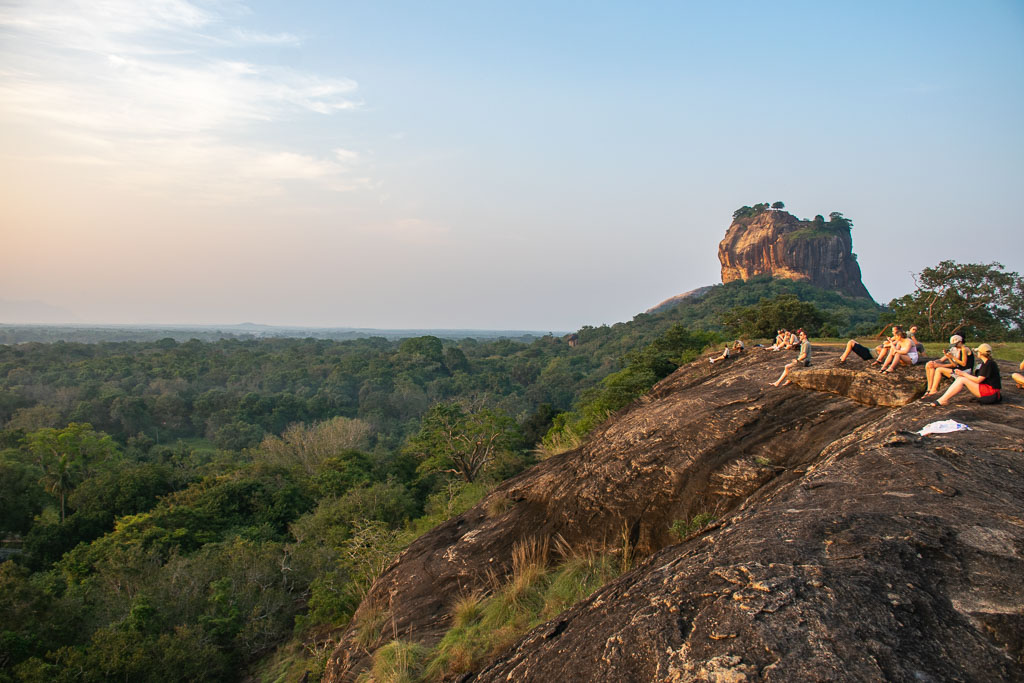
A nice way to get yourself ready to explore is by finding a nice viewpoint to get a lay of the land.
While you get decent views of Lion Rock from the main roads around town, it’s worth the effort to climb a little for a truly great vista.
Sigiriya’s classic sunset spot is Little Pidurangala, a rocky hill directly south of Lion Rock. Find the bus stop where the two main roads meet, and the trail to Little Pidurangala is just west of that.
Look for a sign saying “Mapagala Archaeological Site” and follow the path up to the left. Don’t go right, as some people evidently did, as you’ll wind up at the bottom of a cliff with not much view.
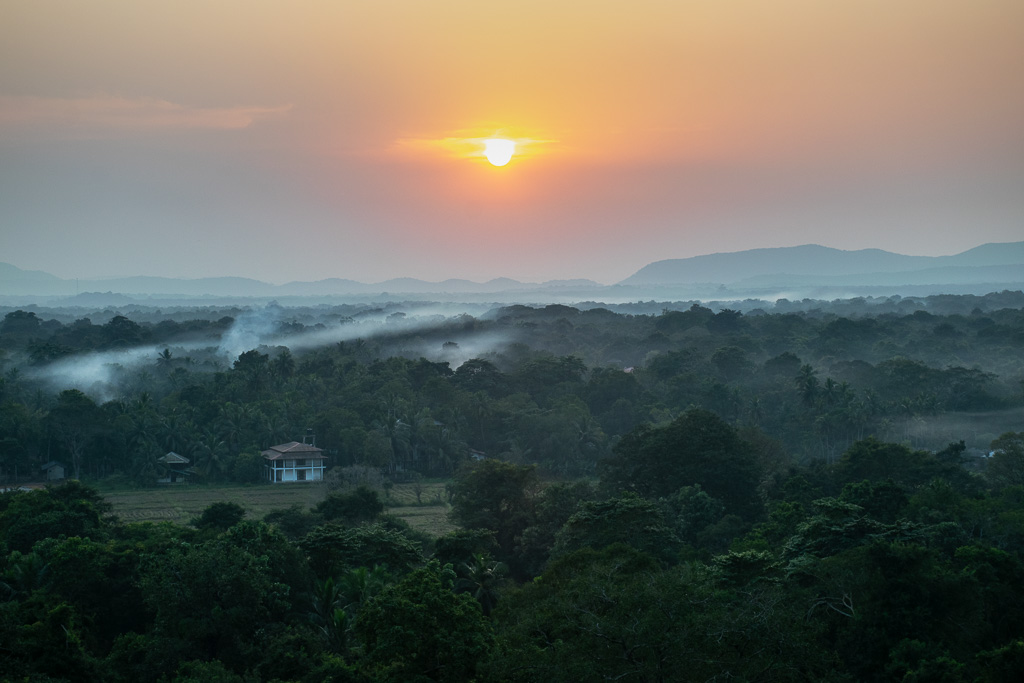
It’s a steep climb to reach the main viewpoint here, a long cliff made for watching the sunset, but it’s more of a walk up than a hike.
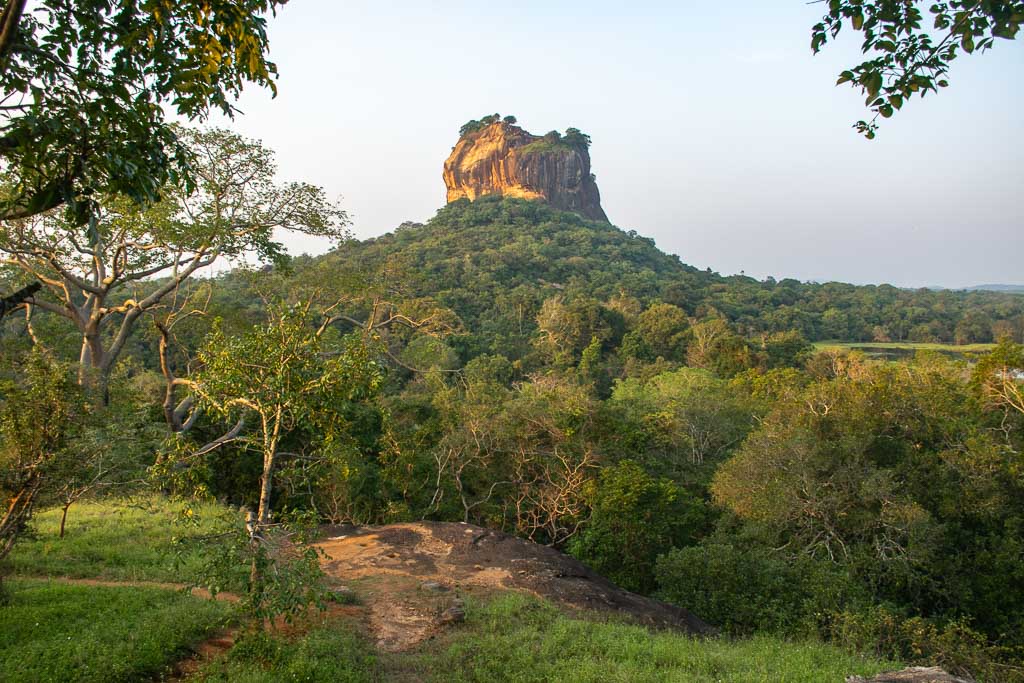
Turn back as you’re walking up for the awesome view of Sigiriya Rock at the top of the post.
While Lion Rock is visible from the top, the cliff faces west, meaning you can watch the sunset over the forest and take in the landscape.
I highly recommend doing this activity on your first evening in town, but if not, it also makes a great way to cap off your Lion Rock visit.
Pidurangala Rock at sunrise
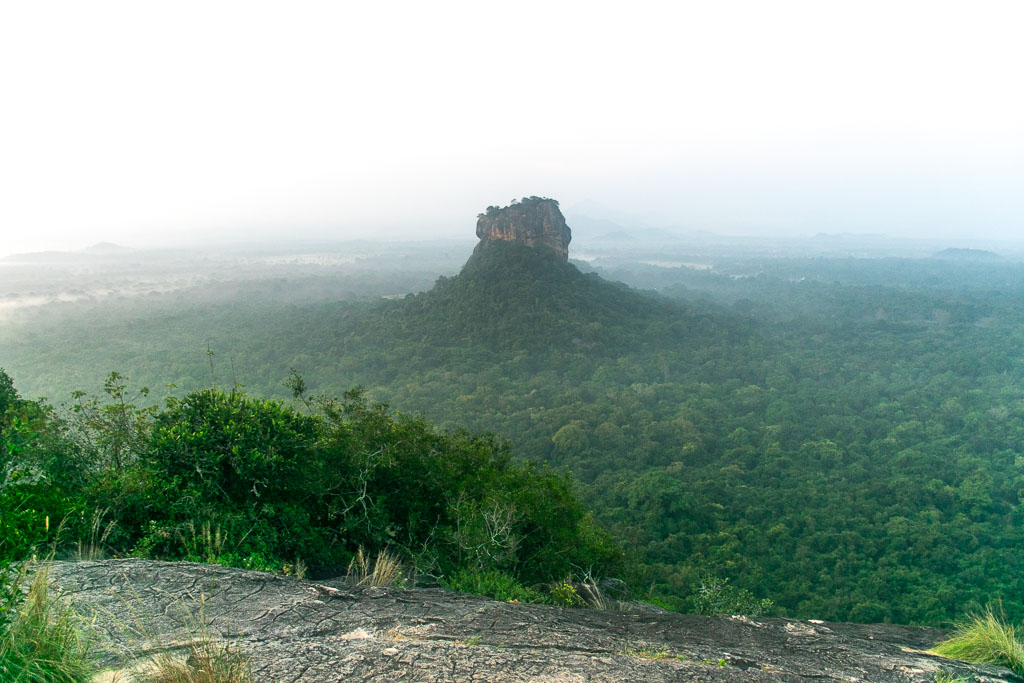
While sunset at Little Pidurangala has a small crowd, things are very different for sunrise at Pidurangala Rock.
Located on the opposite side of Lion Rock up north, Pidurangala Rock is the most famous vantage point to admire the rock from afar.
You don’t need to visit first thing in the morning, but it’s a popular activity thanks to the way the day gradually reveals the iconic landmark.
Obviously, to see the sunrise from the top of the rock, you need to get there early before dawn.
You’d think things would be quiet at this time of morning, but you run into a whirlwind of tuk-tuks at the base of the hill.
It’s a longer climb than Little Pidurangala but just as steep with lots of steps, using your phone as a torch. The biggest issue with the climb is a narrow point just before the summit that acts as a bottleneck.
Here, you have to wait for the long queue to climb several large rocks and then squeeze under an overhang. At least before dawn, everyone’s going the same way. After sunrise, you have people trying to climb up and down at the same time, and it’s even messier.
Make it to the top, and you reach several big open rock faces with views in each direction. Except you don’t know what kind of view they offer until the light arrives.
My morning at Pidurangala Rock was a bit washed out, so it wasn’t a very colourful sunrise. Still, a great way to start the day.
Visit Sigiriya Rock and Museum

Having admired Sigiriya Rock, also known as Lion Rock, from afar, it’s time to actually visit and climb it.
The main entrance is the parking lot west of the rock, and foreigners collect their (expensive) tickets at the Archaeological Museum.
Visit the museum first, not only to learn about Sigiriya, but so you don’t need to double back to the museum at the end, as it’s not near the main exit.
After the museum, cross the moat to enter the Sigiriya archaeological site, walking between reflecting pools and ruins that all reminded me of Angkor Wat.
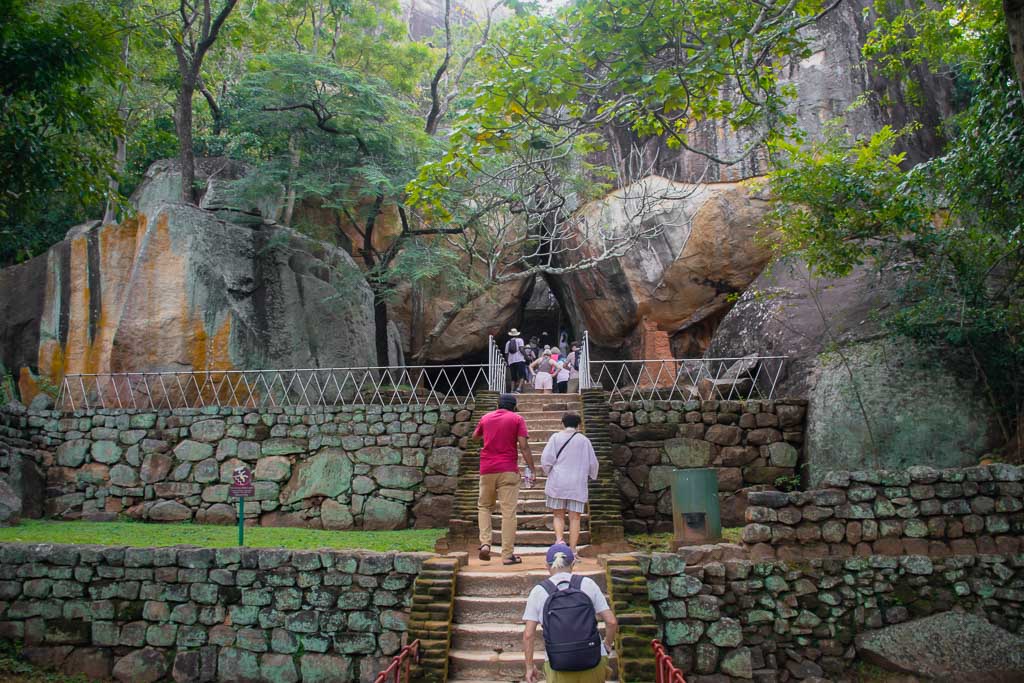
Then begins the steps to climb Sigiriya Rock.
Climbing Sigiriya Rock
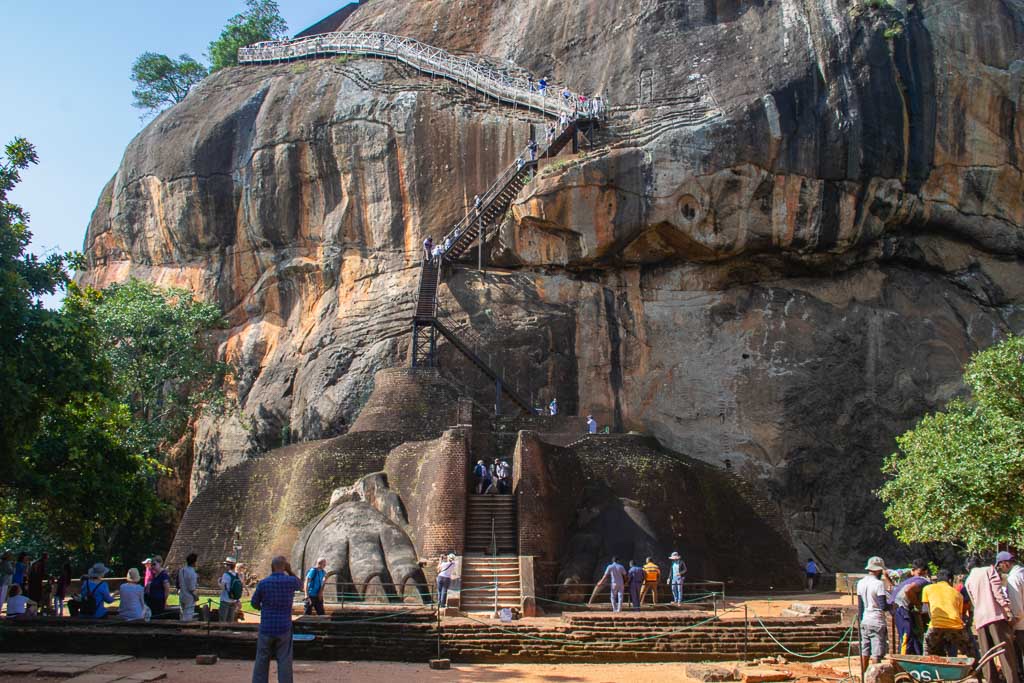
Early on the climb isn’t too intimidating and you head up long stone staircases.
Eventually, you’ll reach a landing roughly halfway up the rock. This is the Lion’s Paw Terrace, where you can see sculpted lion paws, once part of a gateway that earned the area the name the “Lion Rock”.
I should mention that you pass so many information signs here that it’s easy to learn about Sigiriya without a guide. So don’t feel like you need to hire one of the many local guides waiting at the entrance of the site.
During the 5th century, Sigiriya quickly became an important settlement when Kashyapa I moved the kingdom’s capital here from Anuradhapura in the north. His rise and fall is quite a story, but after the end of his reign, Sigiriya remained an important centre of Buddhism for centuries before falling into ruin.
From the terrace, steep and narrow modern stairs climb sheer rock faces to the top. Older, less mobile visitors often don’t make it past the terrace.
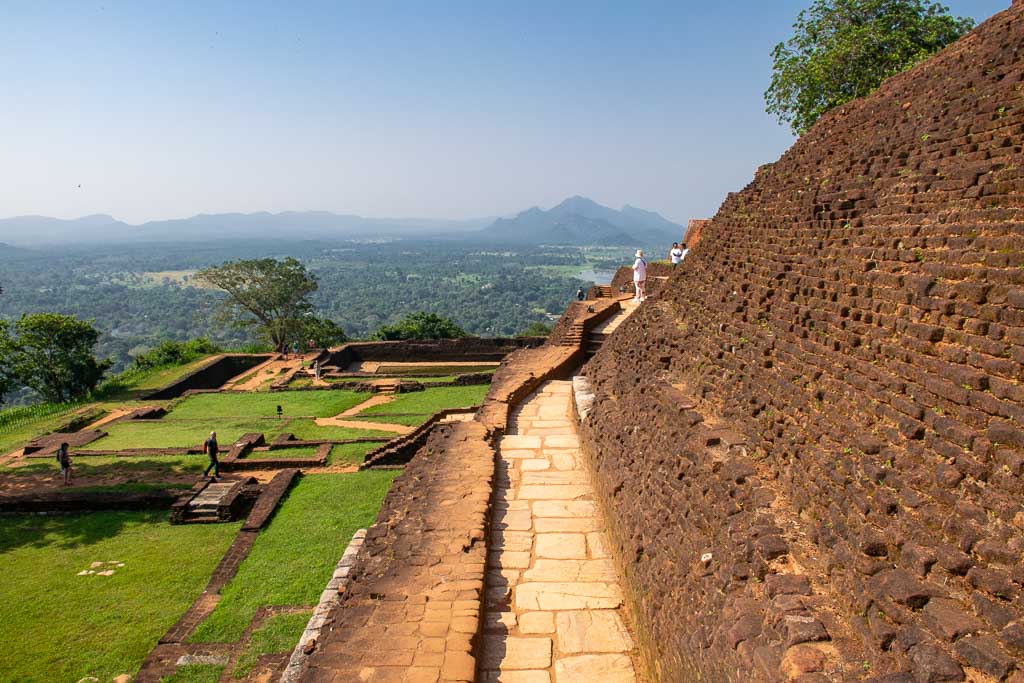
But the top is well worth the climb. Stairs and paths lead you up and around the remains of the citadel fortress, including its water gardens.
The real benefit of the top though is the views it offers you. Below, you can see the city ruins, which look like a settlement from this vantage point. The view also takes you well above the forest to see the region’s wetlands and mountains to the south.
On the way down from Lion Rock, the path diverges from the way in. Along this route you see the cave murals of Sigiriya and the Mirror Wall. No photos of these areas are allowed, but the religious art and historical writing all speak to how Sigiriya serves as a window to the past.
Other things to do in Sigiriya
Sigiriya Rock and the viewpoints around it are the main focus for tourists, but they’re not the only attractions in Sigiriya.
If you follow my itinerary, or if you have more time in Sigiriya, you should have at least one afternoon free. A good way to use that time is with an afternoon/evening elephant safari of Minneriya National Park or a Kaudulla National Park safari.
These two national parks are not far from Sigiriya, and safaris (available as morning or afternoon tours) give you the chance to see wildlife, particularly elephants. Finding affordable options as a solo traveller can be hard, though.
Another great place to visit from Sigiriya is the Dambulla Cave Temple.
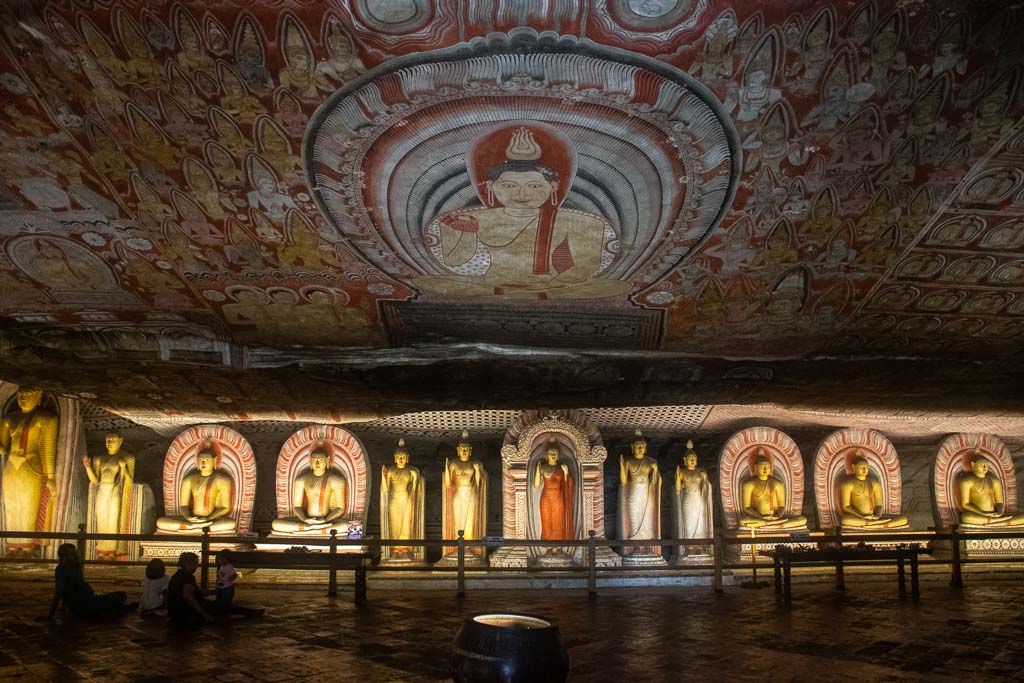
This is another World Heritage site in Sri Lanka, and Dambulla really isn’t far away. Dambulla Cave Temple may be the most impressive temple in the country because the paintings on the cave ceiling are just phenomenal, as are the countless statues.
These caves have been important places of worship since the 11th century, but are far older than even that.
Another historic and ancient attraction to visit is Polonnaruwa.
This third UNESCO site is a fair bit farther from Sigiriya, but still a day trip option for travellers. I had hoped to visit the ruins of this ancient city, but I simply didn’t have time.
Travellers who don’t want to go far should look at joining a cooking class in Sigiriya. They’re offered everywhere, and it’s a fun opportunity to learn how to make dishes you’ve tried on the trip.
Tip for visiting Sigiriya
- A warning I received several times was that you shouldn’t walk outside town at night. Elephants are active in the area, and encounters can be unpredictable.
- You should also be careful when driving tuk-tuks, generally, but specifically in the dark. On the way to my sunrise climb, we saw one tuk-tuk that had fallen into a ditch in the dark.
- Climb Sigiriya Rock as early as you can to avoid slow mid-morning tour groups and afternoon heat.
- Sigiriya is so small that the rideshare/tuk-tuk app PickMe isn’t very useful here.
- ATMs are all on Sigiriya Road, so they’re a bit far from the south road. Cash is king in Sri Lanka still, so make sure you have plenty.
