Disclosure: This post (probably) contains affiliate links. If you click on one, I may make a small commission. Of course, this will come at no extra cost to you and helps keep this site running.
The highland city of Kandy is one of the most popular destinations in Sri Lanka, and with good reason. It’s a very important cultural and historical city in Sri Lanka, so visiting Kandy is a must for tourists travelling the country.
With a good mix of culture, scenery, food, and tourist comforts, Kandy has a lot to offer visitors. But it’s usually working out what to do in Kandy that can trip people up. So, let me show you the different things to do around the city to help you start your planning.
Getting to Kandy

Kandy sits near the center of Sri Lanka, near the country’s major mountains.
The central location of the city, plus good transport connections, means you can reach Kandy from many other major destinations.
Taking the train from Ella and Nuwara Eliya to Kandy is the most famous route to the city. It’s incredibly scenic (and popular), so it’s worth doing, but you do have alternative options.
Now, I came to Kandy from Sigiriya, so I booked a private transfer that included the Dambulla Cave Temple and a spice garden tour in Matale. However, shared transfers are cheaper.
The other direction to come from is the west coast. You can take trains from Colombo, but there are also many options for buses and transfers, if that is more convenient.
It’s up to you to balance cost versus time and comfort, but in an affordable place like Sri Lanka, comfort comes at a reasonable price.
Getting around Kandy

Once you get to Kandy and settle in, the next challenge is getting around.
The city center of Kandy isn’t huge, and many main attractions are packed together, so you can do some sightseeing on foot. But taking tuk-tuks is relatively unavoidable when reaching outer attractions, or even just getting from your hilly accommodation to the city.
I recommend using the local rideshare app PickMe. It’s easy to order a ride from your accommodation in the hills and is almost always cheaper than flagging one down. And unlike in Ella, it actually works.
A good option for outer attractions is to book a half-day tuk-tuk tour. These tours take you to the hilltop temples and other attractions in a semi-guided way. Just be warned, they may pad it with shopping and massage stops. If those don’t interest you, clearly set out what you want to see and do in advance.
Where to stay in Kandy

A challenge I found when planning to visit Kandy was deciding where to stay in the city.
The layout of Kandy is complex: a small city center by a lake, surrounded by hills. And those amount to the three options of where to stay: city centre, Kandy Lake, or the Kandy hills.
Although the city centre sounds the most convenient, it lacks the ambience and views of the other two. On the other hand, staying way up in the hills makes it less convenient to go sightseeing, since it takes longer to travel from the hilltops.
A happy middle ground is the lower hills around Kandy Lake, with views and reasonable accessibility. I stayed at Janora Hills, which offered massive rooms with great views and a 3-minute walk to the lakefront.
Other highly-rated places to stay in Kandy include:
Things to do in Kandy
I think you’ll be surprised by how much there is to see and do in Kandy. For a city that doesn’t look too large on the map, it’s got a lot going for it.
You may also be surprised that I don’t mention walking around the city center as one of the main things to do in Kandy. You can do it, but you won’t find much scenery that really stands out. What it does offer are great cafes. Two I really liked were Buono and Cafe Secret Alley.
Some Kandy attractions I missed include the Ceylon Tea Museum, Udawatta Kele Sanctuary, and the Ambuluwawa Tower, which is actually a long way from Kandy.
Still, here’s what to do in Kandy based on my experience.
Kandy Lake
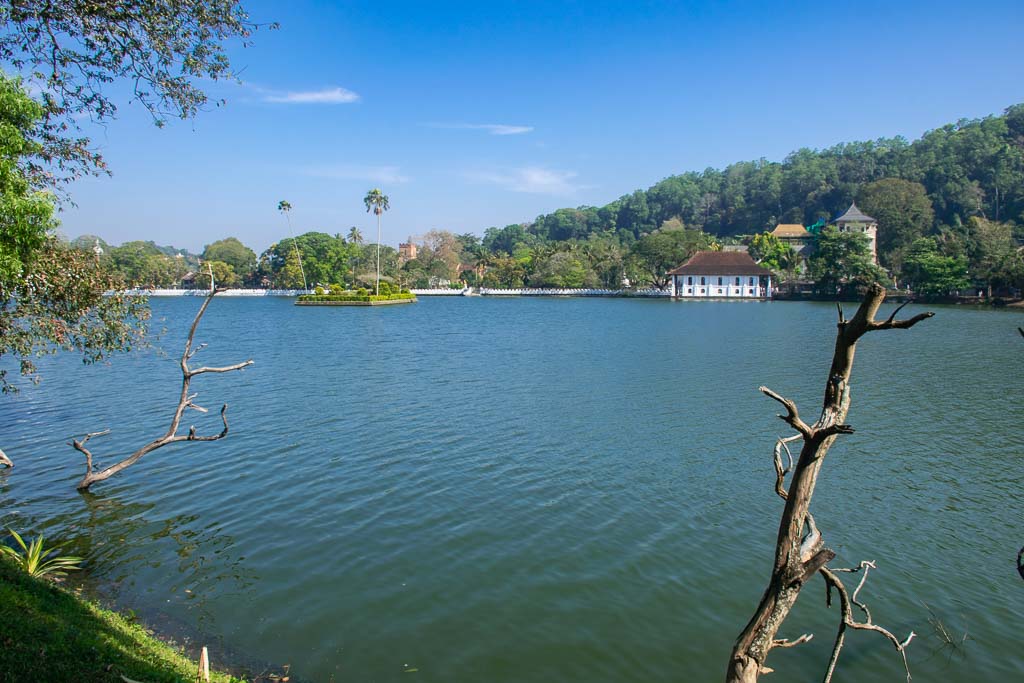
A nice place to start exploring Kandy is with Kandy Lake.
This large lake, nestled among hills, is really like the center of the city. With a pedestrian path circuiting the water, it’s a pleasant place to walk, despite the nearby traffic.
You walk below big shady trees and can watch the water monitors climb up from the lake. At the western end of the lake, near the city center, you’ll find a small promenade that is popular for getting photos.
Other than that, there aren’t many landmarks around the waterfront. One exception is the gleaming white pavilion of the Royal Baths, associated with the Old Royal Palace.
Temple of the Tooth Relic
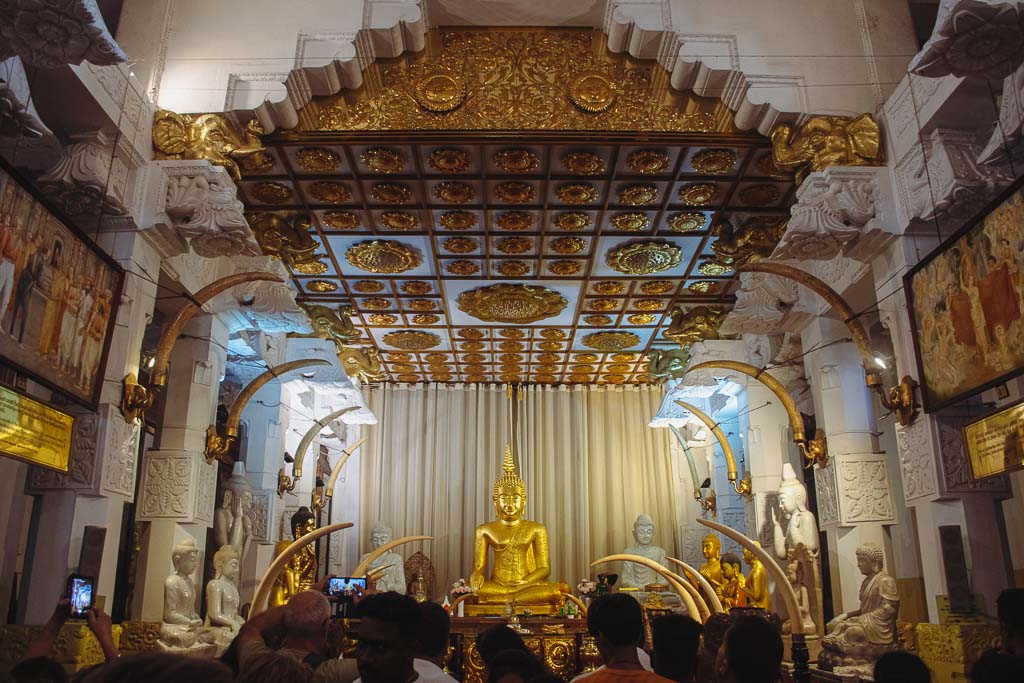
There’s no question that the most important Kandy attraction is the Temple of the Sacred Tooth Relic.
Known in Sinhala as Sri Dalada Maligawa, this Buddhist temple holds a relic of the tooth of Buddha. As you might expect, then, this temple is one of the most important Buddhist landmarks in Sri Lanka.
But I also visited in the lead-up to Medin Poya, a special March Buddhist holiday in Sri Lanka, so the temple was absolutely packed. Everyone could only move through the main part of the 2-story temple at a shuffling pace, squeezing to see the shrines.
My timing also meant I was there for one of the Thewawa rituals to watch the drummers and music. It’s an experience, but a little chaotic.
Tickets for most foreigners are 2000 LKR (~US$6.50 in 2025), bought through vending machines. This doesn’t include a guide or information, but you can hire them separately. I regret not having more information to really understand the significance of the temple while I was there, rather than reading about it afterwards.
Still, even on your own, you have so much to see. The painted walls of the Octagon, the elephant tusk motifs of the shrines, and the abundance of flowers all make this 16th-century site a must-see.
Old Royal Palace

The temple is found behind the fortified walls of the Old Royal Palace, also known as the Sacred City of Kandy.
This is Kandy’s primary historical attraction. From here, the Kandayan Kings ruled over Sri Lanka for almost 350 years before British colonization.
Look beyond the Temple of the Sacred Tooth Relic, and you’ll find plenty more to see in the palace complex. The moated walls around the palace are picturesque, as you can see. So too is the Magul Maduwa Audience Hall, a preserved example of traditional Kandayan architecture, an era prized for its woodwork.
Among the palace complex’s buildings, you’ll find the small Museum of the Tusker Rajah, about the ceremonial elephant that carried the Sacred Tooth relic during processions. Here you can also learn about Kandy Esala Perahera, the most famous festival of Kandy, held in August.
Head around to the back of the Temple of the Tooth, and you can also visit an overlooked museum on Kandy culture and history.
So, while visiting the temple is the main reason to come to the Old Royal Palace, you should explore the rest of the complex while there.
More Kandy museums

Temples aren’t the only reason that Kandy is a cultural destination. Also, home to plenty of museums, most found around the Old Royal Palace and Sri Dalada Maligawa.
While I’ve already mentioned several in the Royal Palace complex, you’ll find two more just outside the complex gate.
One is the International Buddhist Museum, which showcases art and information on Buddhism, with each room focused on a different country. Curious about Buddhism in Afghanistan or how temples look different between Japan and Laos? Then this is worth visiting, at least I thought so.
The other nearby museum is the modest Kandy National Museum. Here you can further explore the history and artifacts of Sri Lanka’s Kandayan period. However, while the International Buddhist Museum is included in the Sri Dalada Maligawa ticket, the Kandy National Museum is not. Paying another 600 LKR, while not much, means some people skip this.
Between the museums and the Old Royal Palace, expect to spend a few hours in this part of Kandy.
Red Mosque of Kandy
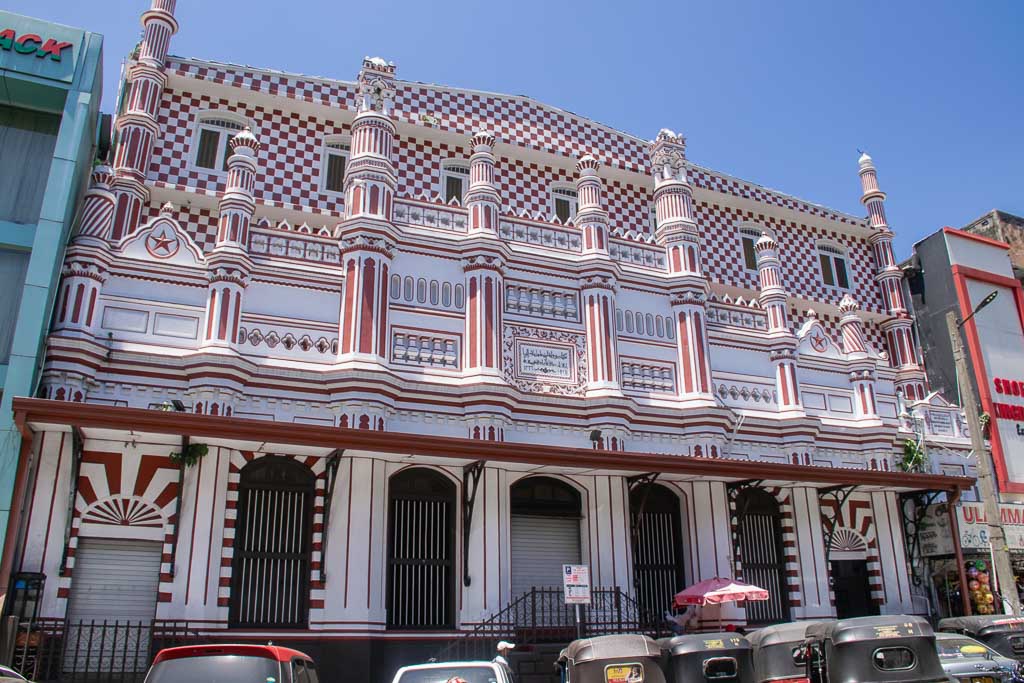
Colombo is home to Sri Lanka’s most famous mosque, but you can see a similar design in the Red Mosque of Kandy.
This mosque in the city center immediately stands out from the surrounding buildings. It bears an opposite pattern to the one in Colombo, as it’s checkered white-and-red, but is also just slightly less towering and grand.
It dates from 1913, so while it’s newer than many landmarks, it is another important local historical landmark.
You get an excellent view of the mosque from CAFE 1886, which is across the street.
Kandy Viewpoint

Look at all the hills around Kandy, and you’d suspect there are some good city viewpoints.
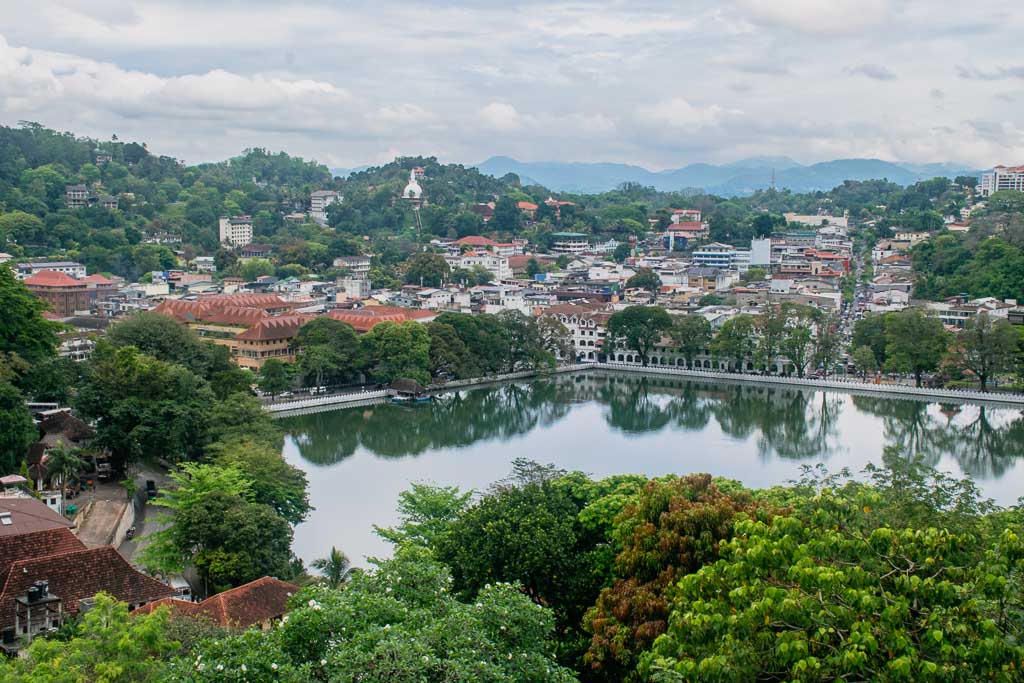
And thanks to the Kandy Viewpoint, you’d be right. I find it weird that this outlook has such a generic name, but it’s hard to find a free, public spot that has such a good view of Kandy.
Kandy Viewpoint is just up the hill from the Royal Palace Park, which is easy enough to reach on foot or tuk-tuk.
From it, you can see across central Kandy and spy all the landmarks that border Kandy Lake. The city’s layout makes it hard to see everything, but you can see a lot from this terrace.
Royal Botanic Garden

Even though it’s well outside the center of Kandy, don’t miss the Royal Botanic Garden.
I’m normally not one for attractions like this, but these gardens quickly impressed me with their scale and variety. Some areas look like a manor estate with pristine lawns, while other areas feel like quiet forests. Then there are the greenhouses, with cacti and special orchids only found in Sri Lanka.
There are even multiple avenues lined with towering palms that immediately made me think of somewhere like Hawaii. Not surprisingly, they’re a popular photo spot.
You can easily spend an hour walking around, taking photos, and admiring the diversity of nature here. Getting here is the greater challenge — order a tuk-tuk or visit as part of a city tour.
Asgiri Maha Viharaya

While the Temple of the Sacred Tooth is Kandy’s most famous temple, it’s by far not the only one.
Look up at the hills above the city center, and you can spot a white stupa among the trees. That’s the Asgiri Maha Viharaya, a Buddhist monastery and school.
The temple’s exterior isn’t what makes this place remarkable, though. Step up to its doors, and you’re met with incredibly detailed woodwork. Inside, it’s even more vivid, with carved panels below wrap-around frescoes, covering the entire interior, plus a wooden stupa in the center.
Besides its ornate beauty, the Asgiri Maha Viharaya monastery has deep roots. It serves as the headquarters for one of Sri Lanka’s main Buddhist orders and dates from the 14th century.
Sri Maha Bodhi Viharaya

The other main hilltop temple overlooking Kandy is the Sri Maha Bodhi Viharaya.
This Theravada Buddhist temple is easily spotted thanks to its towering alabaster white statue of Buddha meditating. For a few hundred LKR, you can explore the temple and climb up to its observation deck.
While I prefer the view from the Kandy Viewpoint, it’s nice to see the city from a different perspective. You really get a better sense of the mountains nearby from this vantage point.
There wasn’t much information to grasp at this temple; it’s more of a stop for photos and scenery.
