Disclosure: This post (probably) contains affiliate links. If you click on one, I may make a small commission. Of course, this will come at no extra cost to you and helps keep this site running.
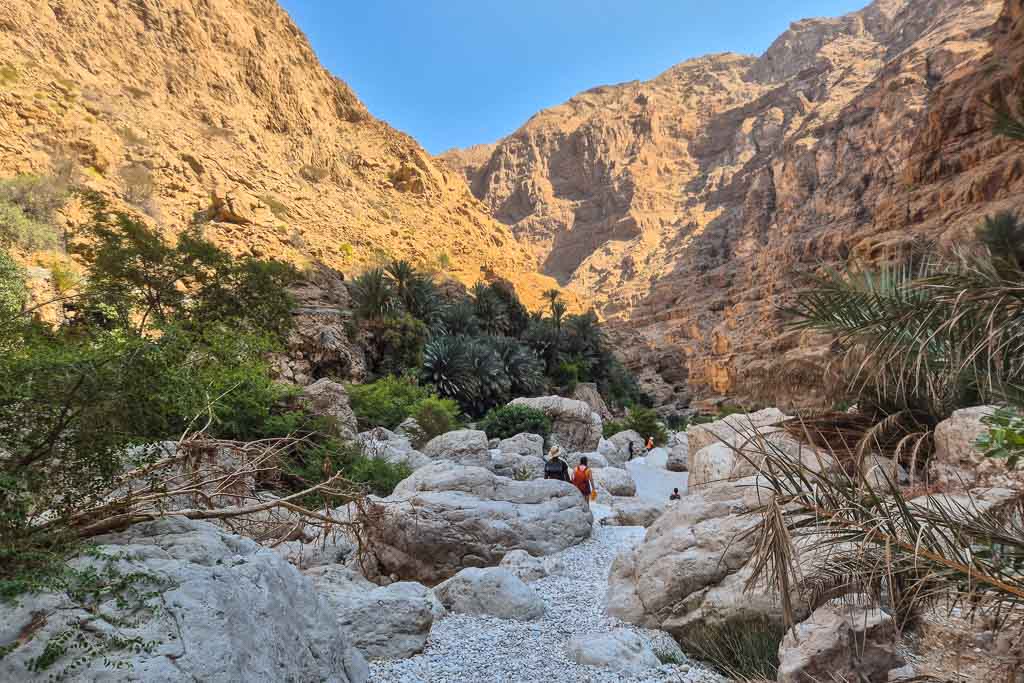
Visiting Oman is well worth putting on, and then ticking off, your bucketlist. This country on the edge of the Arabian Peninsula is a wonderful mix of welcoming, raw, diverse, safe, and beautiful in ways you can only appreciate in person.
After a week and a half in Oman, I can hardly claim to be an expert on the country. But every day and every interaction revealed a little more of this Middle Eastern country. Here are some things I think will help you plan an Oman trip and see why it’s worth doing.
1. How long to spend in Oman?
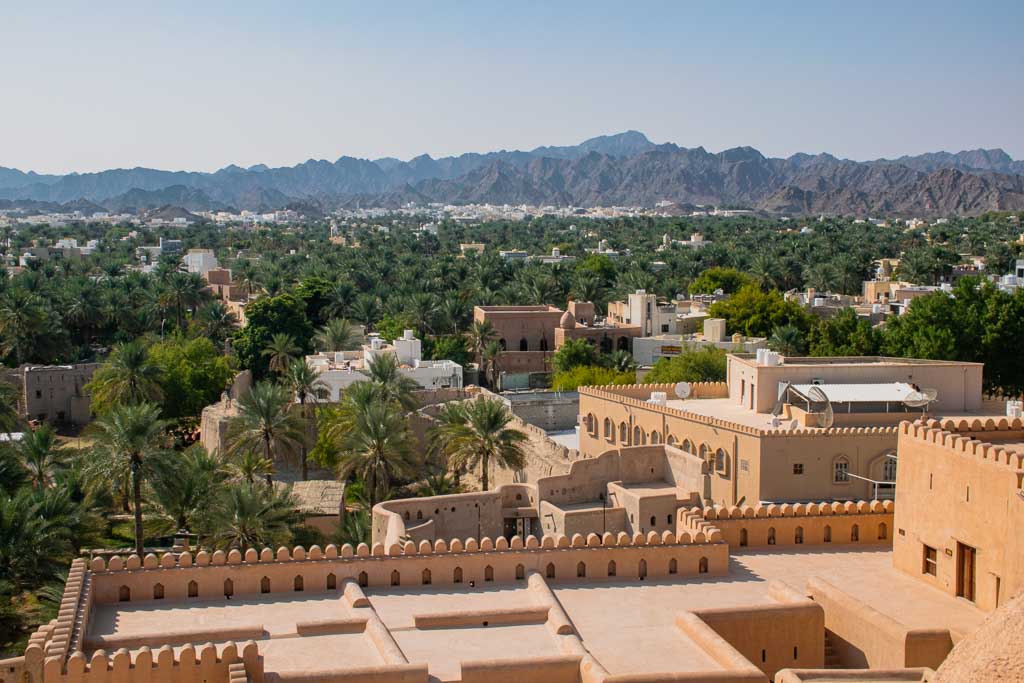
Nizwa
If you’re looking for a precise answer here, I’m going to disappoint you.
Because although this is the most common question, it really depends on you. But I can talk about the types of trip and their pros and cons.
For the stopover crowd — you won’t see much of Oman with just one day. You can fit in a nice city tour of Muscat, which gives you a taste, but it’s definitely not enough.
A few days in Muscat is better. You can see the city and then head out for a day trip or two. Day trips from Muscat really show you what Oman has to offer.
A week in Oman is excellent. That leaves plenty of time for sightseeing in Muscat, then take day trips or a road trip to see mountains, desert, and wadis.
With longer than that, say 1.5 weeks, it’s time to consider adding Salalah (or Musandam). A few days in Salalah offers a great contrast to Muscat and is often overlooked.
2. Getting to Oman
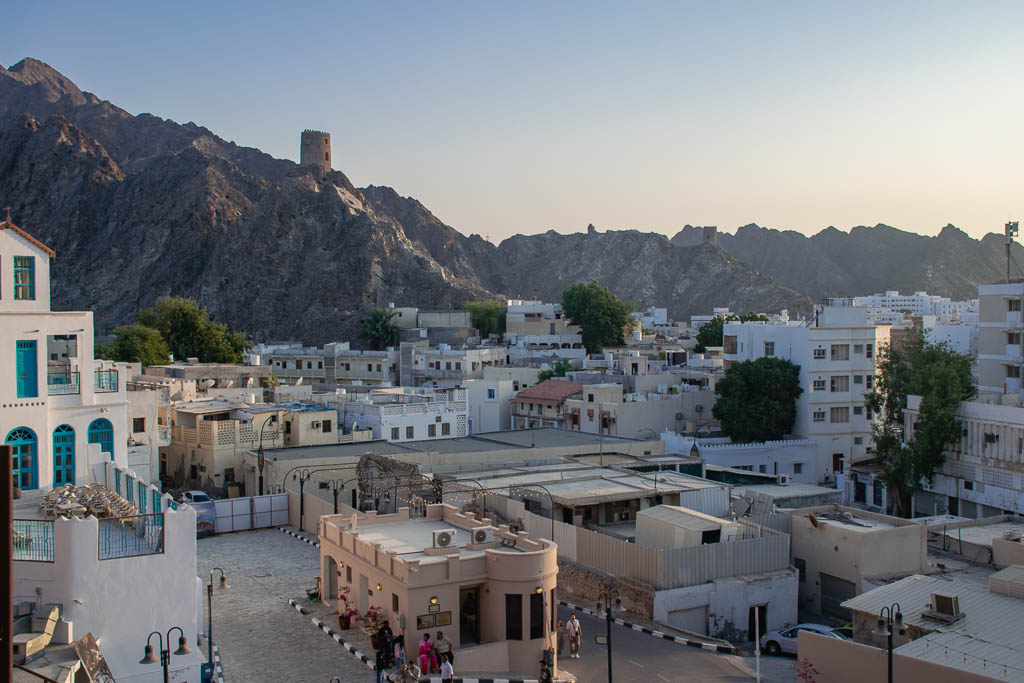
Muscat
Working out how to get to Oman can be pretty easy. You fly.
Muscat International Airport has routes across the Middle East and Asia, plus a few major European hubs, including Heathrow, Frankfurt, and Milan.
The national carrier Oman Air is the big one here, while most other airlines have a route or two.
If you can’t get a direct flight to Muscat, you’ll most likely need to transfer through the UAE or Qatar. This provides the opportunity to combine the trip with somewhere like Dubai, as we did.
But flying isn’t the only option. You can drive.
A national highway connects Muscat with the border just outside Fujairah in the UAE. The drive from Fujairah to Muscat takes roughly 3.5 hours, while from Dubai it’s closer to 5 hours.
Of course, that’s a long drive and raises issues like renting a car and taking it across borders. You’ll need to look into those details yourself.
I mention this route because you can also take buses to Oman. The Dubai – Muscat bus takes 6 hours, and I can’t vouch for the comfort level, but it’s a budget option.
3. Getting around Oman

Wahiba Sands
Your next problem after arriving in Oman is working out how to get around.
In cities, using Otaxi is a convenient way to get around. My one tip on using the app is that it won’t let you set some hotels as a pickup spot, because they want to sell their own transfers/taxis. In these cases, just set a nearby street corner as the pickup point and walk over when the ride is almost there.
Unfortunately, walking is not a convenient way to explore places like Muscat.
Beyond the historical area of Mutrah, the urban design isn’t pedestrian-friendly. But also, Muscat is very stretched out along the coast, so walking from one area to the next is simply too far, especially in hot weather.
Beyond the cities is a different story.
We decided to use tours to take day trips from Muscat and explore around Salalah.
Having guides show you around is a great way to interact more with the country and culture, plus you get to relax on the often long drives.
The other main option is to hire a car and drive yourself around. Managing some of the mountain roads around Jebel Shams could put your skills to the test. 4WD is necessary for mountain or desert driving.
Oman has some public transport, such as Muscat city buses and some basic intercity routes, including Muscat to Nizwa. We didn’t explore this at all.
Finally, take flights from Muscat to Salalah and Musandam to avoid long drives.
4. When to go to Oman
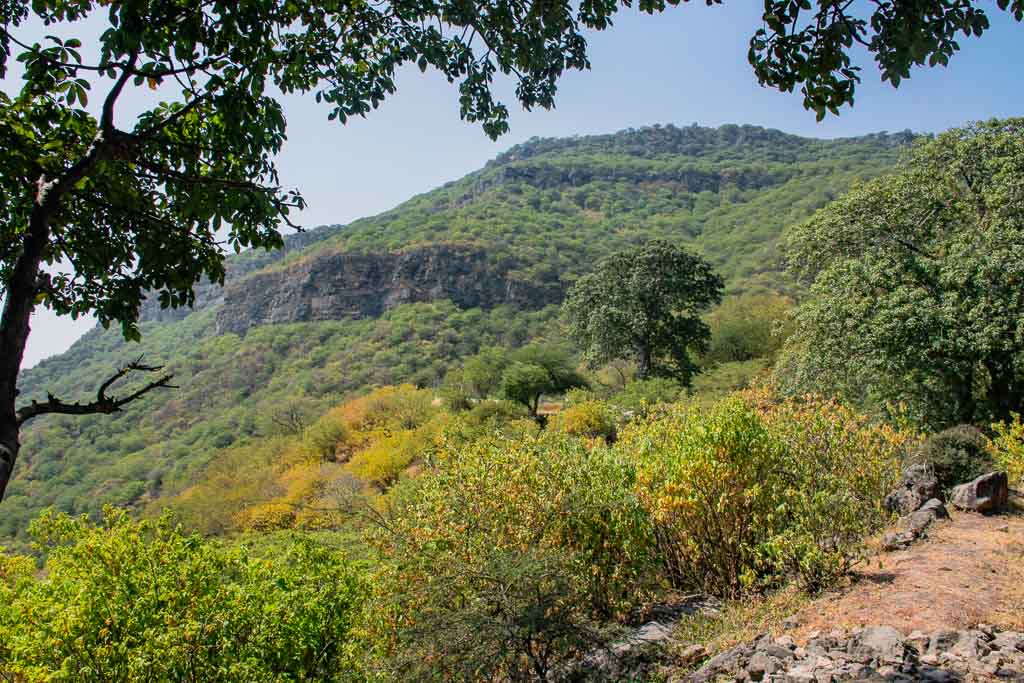
East of Salalah
Deciding when to visit Oman is relatively straightforward, except for a few notes.
For most of the Middle East, November to March is the recommended time of year, particularly the bookends of November and March. Rather than the intense heat of summer, the weather is cooler, which makes sightseeing much more enjoyable.
This recommendation fits well for visiting Muscat. We went in October, and it was still hot many days, 37-39C (99F-102F). Sure, that’s not summer hot, but you feel it all the same.
That heat quickly drops off if you travel into the mountains. Stay overnight at Jebel Shams, and you’ll be looking to put on more layers. I think it dropped to 7C (45F) the morning we were there.
What really messes with planning your Oman trip is adding Salalah to the mix.
Salalah is on the far side of the country from Muscat, with its own climate and seasons. You see, while the rest of the Arabian Peninsula swelters from June to August, Salalah enjoys its refreshing Khareef monsoon season.
In these months, Salalah enjoys mild temperatures, fog, drizzle, and lush greenery, showcasing a completely different side to Oman. We tried visiting Salalah in October, and it was hot and dry, but we still enjoyed the glimpses of the region’s green landscapes.
5. Budgeting and money in Oman
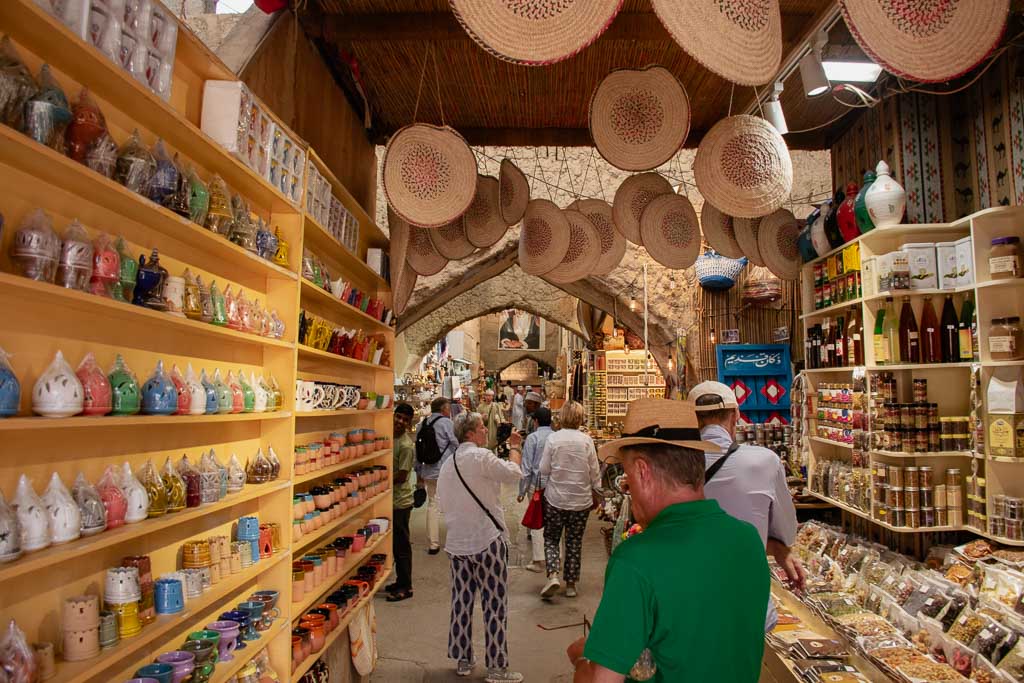
Nizwa Souq
Telling people how expensive a destination is feels just as hard as telling them how long to stay.
Personal circumstances, preferences, and more influence what you spend. But generally speaking, like a lot of the Middle East, Oman is not a cheap destination, but there’s wiggle room.
Attractions and activities are what hit your wallet hardest.
The price of many tours we took would be normal here in Australia, often US$100/€100 for a shared day trip. Attractions in Muscat were also a bit pricey, e.g., the National Museum costs around US$13/ €12 per person. Not Burj Khalifa insanity, but it gives you a sense of the cost.
Accommodation in Oman isn’t too expensive, with decent hotels for less than you’d pay in Australia. I did see some budget-friendly options in the US$50/€50 range, but I can’t speak to their quality.
Transport ranges from cheap short-distance taxi rides for a few US$/€ to the US$40/€40 airport transfer we took when arriving. Otaxi turned out to be quite cost-effective.
Food is where things get more affordable. Except for one or two meals at more upmarket restaurants, food was great value (by Australian standards), whether it was snacks and water at a minimarket or any of the local restaurants.
We took USD cash with us and exchanged it as needed, but generally paying by card worked well for many things. If you need cash out, NBO ATMs charged us no fees.
6. Omani hospitality
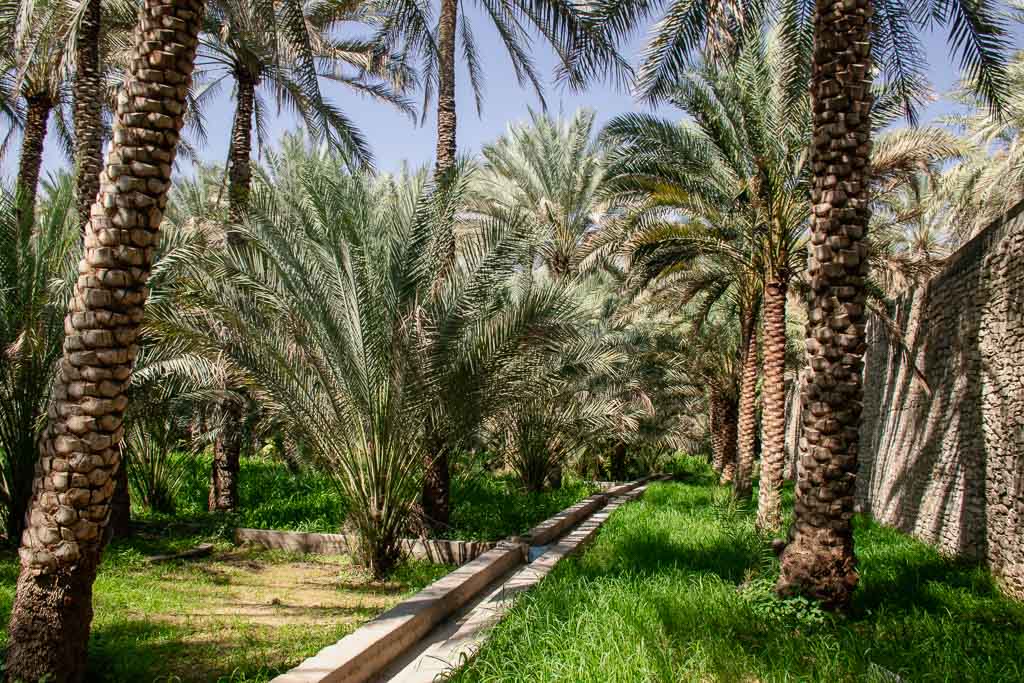
Date trees
Plenty of countries have a reputation for being welcoming to tourists. But Oman really prides itself on its hospitality, and we definitely felt it.
It helps that you have good odds of interacting with Omanis when you visit. Unlike some Gulf countries where migrant populations make up close to 90%, ethnic Omanis still make up a roughly 57% majority.
This makes it easier to observe and experience Omani customs, particularly the practice of offering dates and coffee in all sorts of situations. Typical coffee in Oman, Arabic coffee, is known as qahwa, and I got hooked on its light roast and strong hit of cardamom.
If coffee isn’t your thing, karak tea is also common; a strong, spiced black tea with sweetened condensed milk.
Generally speaking, Oman also felt like a comfortable place to be a tourist. Personal space feels respected, and people don’t hawk goods or follow you to sell you things. When people stopped to talk to us, it was out of genuine interest.
While that was my experience as a male tourist, I can’t speak for everyone. Across the tours, I did ask some of the young women what their experience was like, and they said it was overwhelmingly positive. A young Muslim woman said that she felt safer and more respected here than in the West.
This all ties into Oman’s reputation as being a safe place to visit in the Middle East.
7. What to eat in Oman
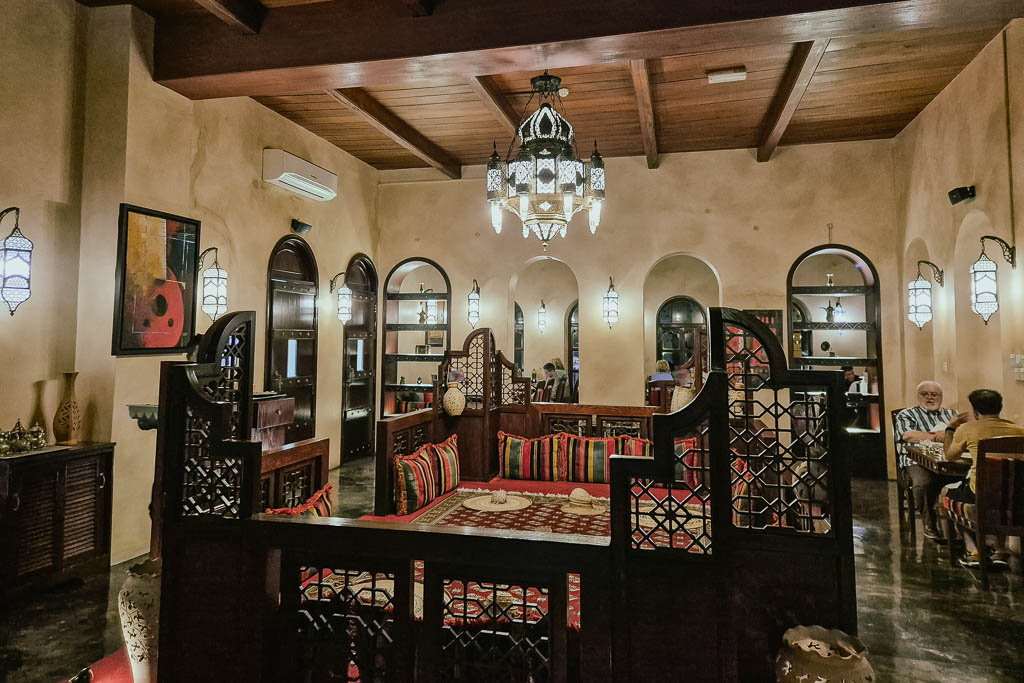
Visiting Oman, you may be excited to discover what Omani cuisine is like.
However, finding an Omani restaurant isn’t always that easy. They do exist — Bait Al Luban in Mutrah is a good one — but you do have to go looking for them.
You’re far more likely to come across restaurants from elsewhere in the Middle East, South Asia, or Turkey. I mean, Oman was my first time trying a Kuwaiti or Yemeni restaurant. The food is often still delicious, but it won’t necessarily be local, although dishes are similar between neighboring countries.
One of those dishes is majboos, a dish you find across the Arabian Peninsula. It’s a rice and meat mix, a little like biryani.
Shuwa, however, is sometimes considered Oman’s national dish. It’s slow-cooked meat, often lamb, and it’s delicious! Other dishes to look for include:
- arsiya — rice porridge with date sauce
- rakhal — a crepe-like flatbread
- qabooli laham — more lamb and rice.
Now, some elements of the country’s food culture are easy to find. Dates are a staple here — traditional breakfast here is often coffee and dates — and ridiculously delicious, with varieties from across the country.
Nizwa Market is a great place to explore your options, but you can also just pick up good dates from the supermarket. Just remember they’re high in sugar; I was told diabetes is on the rise in Oman.
Another Omani food that’s easy to come across is hawla. Dark and dense, this sugary sweet is usually heavily spiced and full of nuts. Take a Muscat city tour, and you’re bound to visit a hawla store, or find one yourself near Mutrah Souq.
8. A country with rich history
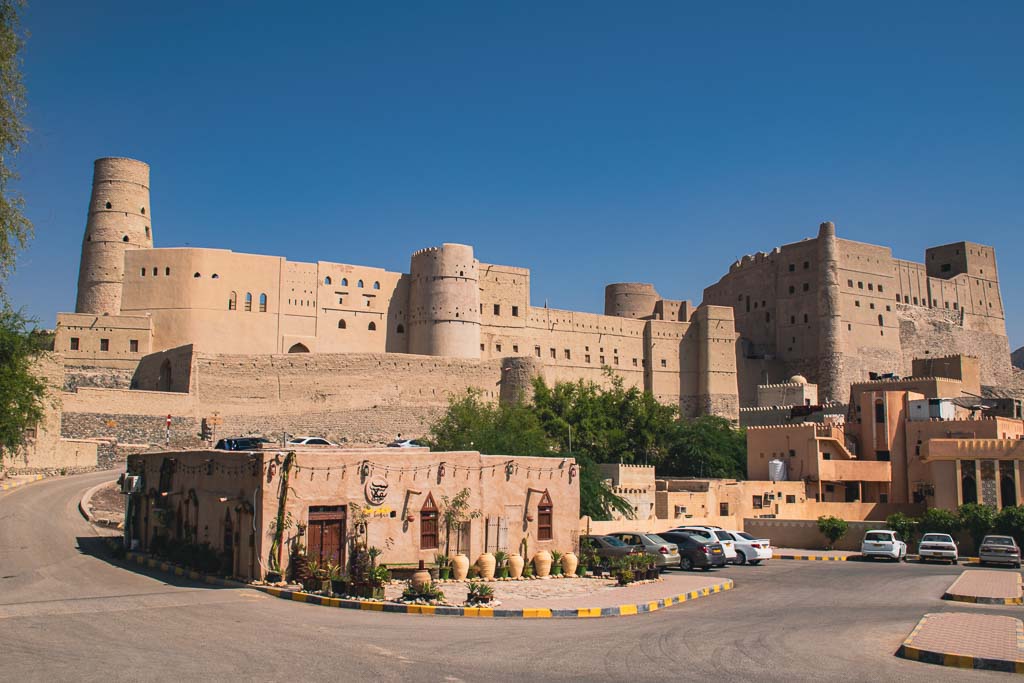
Bahla Fort
Did you know that Oman once controlled a vast empire? We’re talking as far as the modern-day UAE, parts of Iran, and even Zanzibar.
Well, me neither.
I think we can forgive ourselves for not knowing much Omani history. But Oman’s history is a compelling reason it’s an interesting country to visit.
And it’s not just one period either. You can look at its vast maritime empire, or its battles with the Portuguese, or the forts and castles around Nizwa used to fend off raiders/rebels/tribal factions.
Even just learning about the moving of capitals and the tensions or conflict between Muscat and Oman’s hinterland helps add to the picture.
One period you learn a lot about when visiting Oman is the country’s 20th-century transformation under Sultan Qaboos bin Said Al Said. It’s a great story of a country using its natural resources to improve its health, education, and culture – not just flashy infrastructure projects.
I realise not everyone prioritises a destination’s history when they travel, but I found that Oman had an interesting story to tell.
