Disclosure: This post (probably) contains affiliate links. If you click on one, I may make a small commission. Of course, this will come at no extra cost to you and helps keep this site running.
Muscat and nearby attractions are where people look when they travel to Oman, but that’s only one side of the country. Far across Oman’s deserts lies Salalah, a less well-known destination that offers a wildly different visitor experience.
What makes Salalah different is that it’s a surprising shock of green on the Arabian Peninsula. From its forest of coconut palm trees to its green hills and valleys, Salalah looks nothing like Muscat. Here’s my guide to visiting Salalah, including when to go and why visiting is worth it.
Best time to visit Salalah
For most of the Middle East, including Muscat, the best time to visit is in the region’s winter. This window runs from November to March, when the scorching sun loses some of its sting.
The peak season in Salalah, though, is the rare opposite. People flock to Salalah in July and August because of its unique microclimate, particularly tourists from the Gulf states. You see, Salalah enjoys a special monsoon season, the Khareef monsoon, that cools the city in July and August while the rest of the Arabian Peninsula swelters.
This monsoon season also brings rain, turning Salalah and the wider Dhofar region a lush green. These months bring out the beauty of many Salalah attractions, from the many springs and waterfalls to the beautiful Wadi Darbat.
If you want to see why Salalah is so different from Muscat or Nizwa, July and August offer the best example.
Unfortunately, this is also when Salalah gets busy. People from Dubai and Qatar regularly make the short trip to escape the summer heat and swim in Salalah’s fresh springs.
Adding Salalah to an Oman trip
Many tourists planning a trip to Oman plan around the best time to visit Muscat. Which means coming from around October/November to February/March.
This makes it hard to decide whether to visit Salalah on the same trip, since it won’t be cool and lush at this time of year.
Well, we wanted to see as much as possible on our October trip to Oman, so we visited Salalah out of season. Sure, it was hotter than in “summer” and much drier. But we still enjoyed sightseeing around Salalah and liked getting a broader sense of what Oman is like in one trip.
We skipped some attractions, such as Ain Razat and Ain Jarziz, since they dry up that time of year. But as you’ll see, places such as Wadi Darbat were still beautiful, and there are other things to do in Salalah, where the season matters less.
It may not offer the perfect Salalah experience, but I wouldn’t skip the opportunity if it’s your only chance.
Getting to Salalah
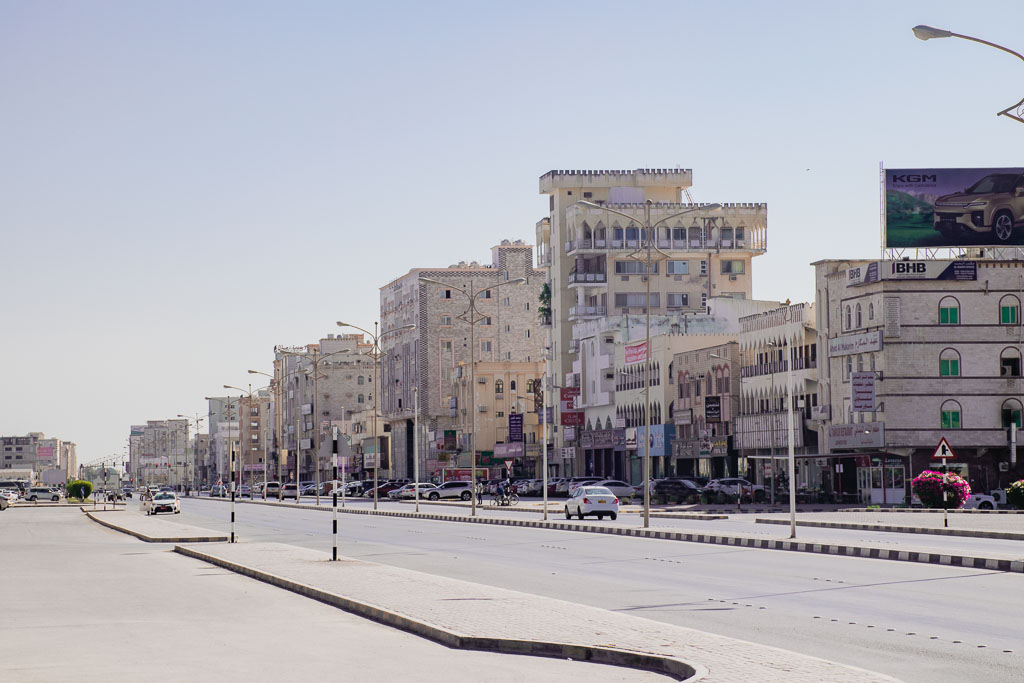
Salalah is on the far side of Oman from Muscat, close to the border with Yemen.
So getting to Salalah isn’t as easy as attractions such as Wadi Shab, which are just a day trip from Muscat.
Driving to Salalah is technically possible, in that there are roads from Muscat. But it is a 10+ hour drive, most of which is across the desert.
Flying to Salalah is less adventurous but much more reasonable. While flying from Muscat is the obvious option, you can also get semi-regular connections from Dubai, Abu Dhabi, and Doha.
As for getting around Salalah, the city is quite sprawling and not especially pedestrian-friendly. Use rideshares like Otaxi to get around the city, and take tours to explore beyond it.
Where to stay in Salalah
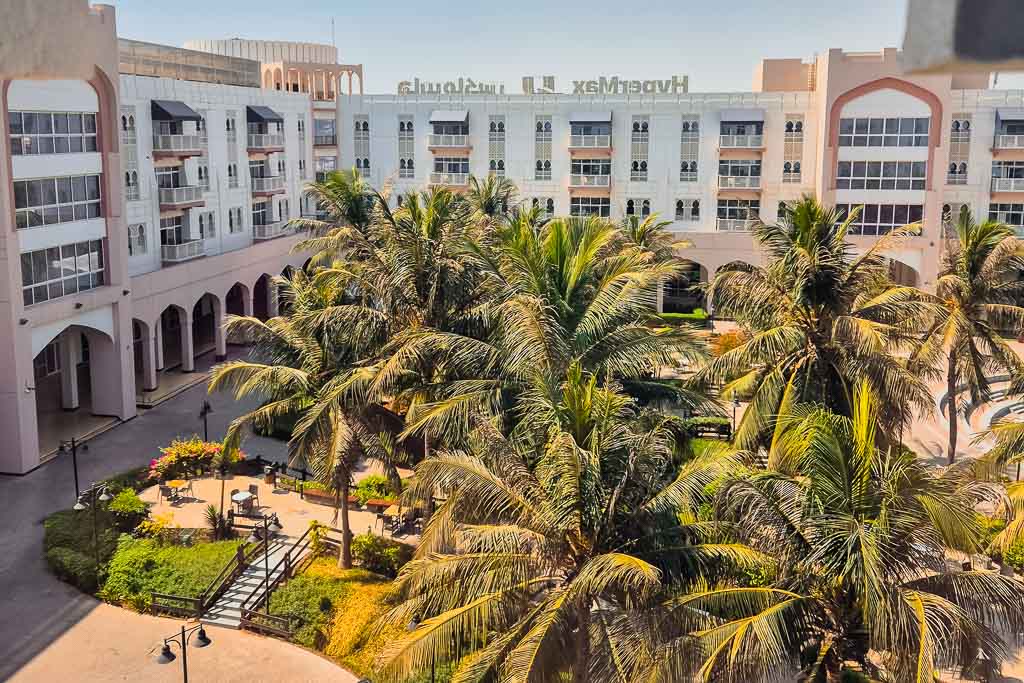
Salalah’s popularity among Middle Eastern travelers means it has plenty of accommodation options. Beyond the expected resorts and high-end hotels, you can also find affordable places to stay.
We stayed at Salalah Gardens Hotel, which was comfortable, convenient, and worth recommending. It’s attached to a mall with supermarkets, cafes, and restaurants, and there are even more restaurants nearby – Ayal Alfareej Restaurant was a favourite of ours.
While it’s not near Salalah’s attractions, most accommodations are only near one or two anyway. Hotels cluster around the Sultan Qaboos Mosque, while most resorts lie to the east by the beach, even further from downtown.
For other well-rated places to stay in Salalah, consider:
- Salalah International Hotel
- Crowne Plaza Resort Salalah
- Daar Al Maqam Suites Apartments
- Casa Di Legno Resort
Things to do in Salalah
To get the most out of visiting Salalah, you need to explore beyond just the city. A city tour of Salalah is a great start, but many highlights require you to head out and explore.
Even with a few days in Salalah, we didn’t do everything you can. We missed some attractions, including the town of Mirbat and the Khor Rori archaeological site. We also didn’t have time for tours to the western beaches, such as Fazayah Beach, or desert tours into the Empty Quarter.
Still, these are some great things to do in Salalah, even when visiting out of season.
Museum of the Frankincense Land
Dhofar, the region around Salalah, is famous for one thing really — frankincense.
Small frankincense trees dot its landscape, as Dhofar is one of the places on Earth where it thrives. Locals have harvested and traded its resin since at least the 3rd millennium BC.
People in the West know it as a gift from the Three Wise Men, but it’s widely used in religious services, medicinally, and as everyday incense.
Because of the rarity of frankincense and the deep local history around it, Dhofar is recognised as the Land of Frankincense UNESCO World Heritage site.
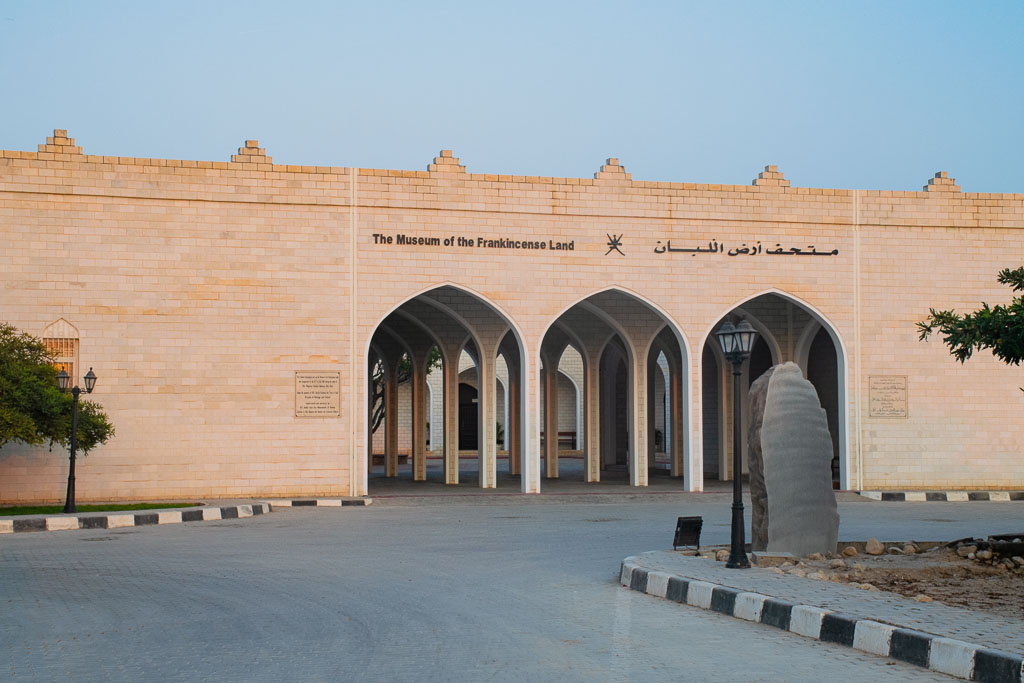
And just outside the city centre, you’ll find the Museum of the Frankincense Land.
This museum introduces you to the story of frankincense and how it ties into Oman’s long history of trade and Islamic faith. You also get to see a few frankincense trees opposite the museum, if you can’t get out to the groves of them at Wadi Dawkah.
Al Baleed Archaeological Park
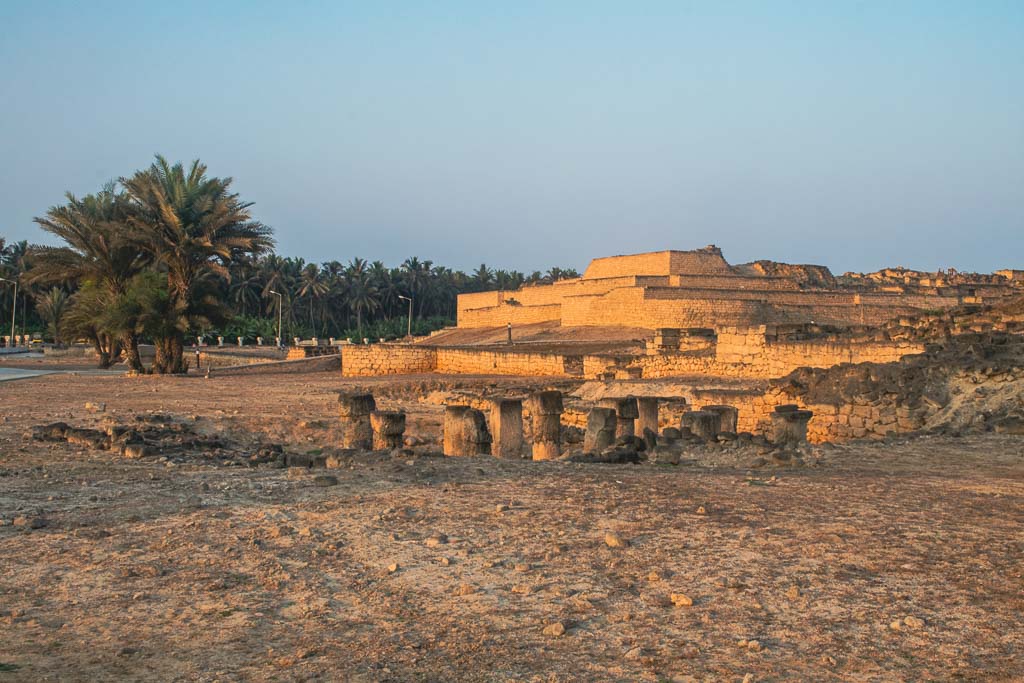
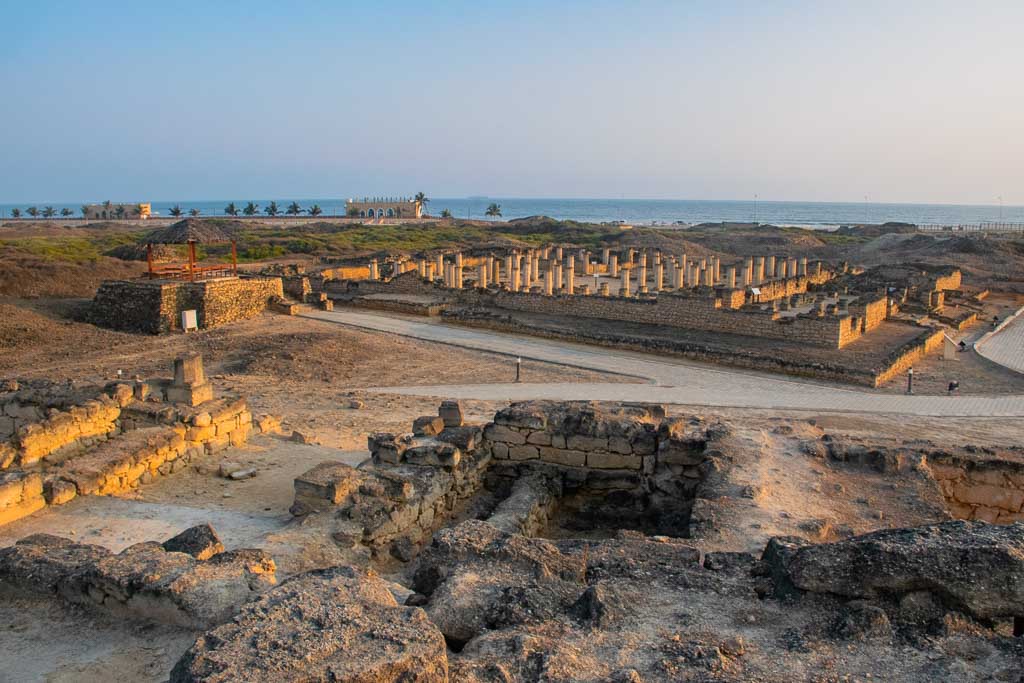
Sharing the Museum of the Frankincense Land complex are the sprawling ruins of Al Baleed Archaeological Park.
With the same ticket, you can explore the archaeological park after visiting the museum. Al Baleed was once a major commercial center, sometimes known as Dhofar, which eventually lent its name to the whole region.
Modern walkways lead you through the many ruins across the complex, from medieval mosques and cemeteries to the walls of Al Baleed Castle and Citadel. While the paths are easily accessible, some of the ruins are not.
If you can, climbing to the top of the castle is well worth doing for its views of the coast. What can you see no matter where you stand, though, is the thick forest of coconut palms and fruit trees outside.
We came in the late afternoon, and it was definitely worth it. The park was empty, the air was cooler, and the low sun gave the ruins a golden glow.
Alhafah Market
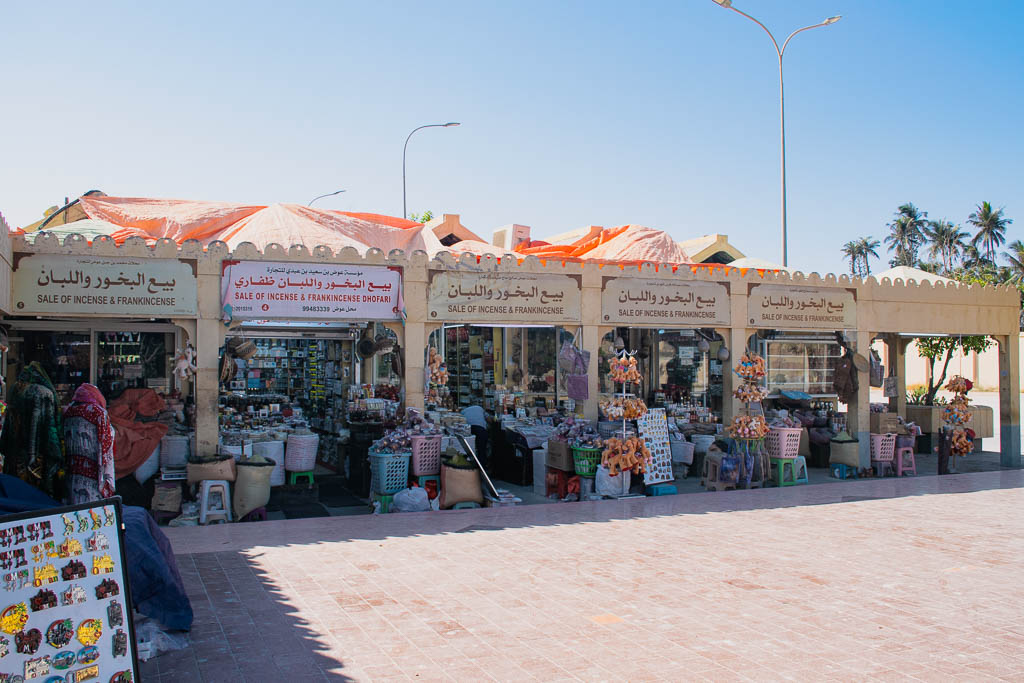
Closer to downtown Salalah, you have Alhafah Market.
It borders the Qasr al-Hosn Royal Palace by the beach, with an old souq and a modern shopping precinct.
The old souq specialises in frankincense, unsurprisingly, and is now completely aimed at tourists. Over in the new quarter, you find modern cafes, restaurants, boutiques, and more facing the Al Hafa Waterfront.
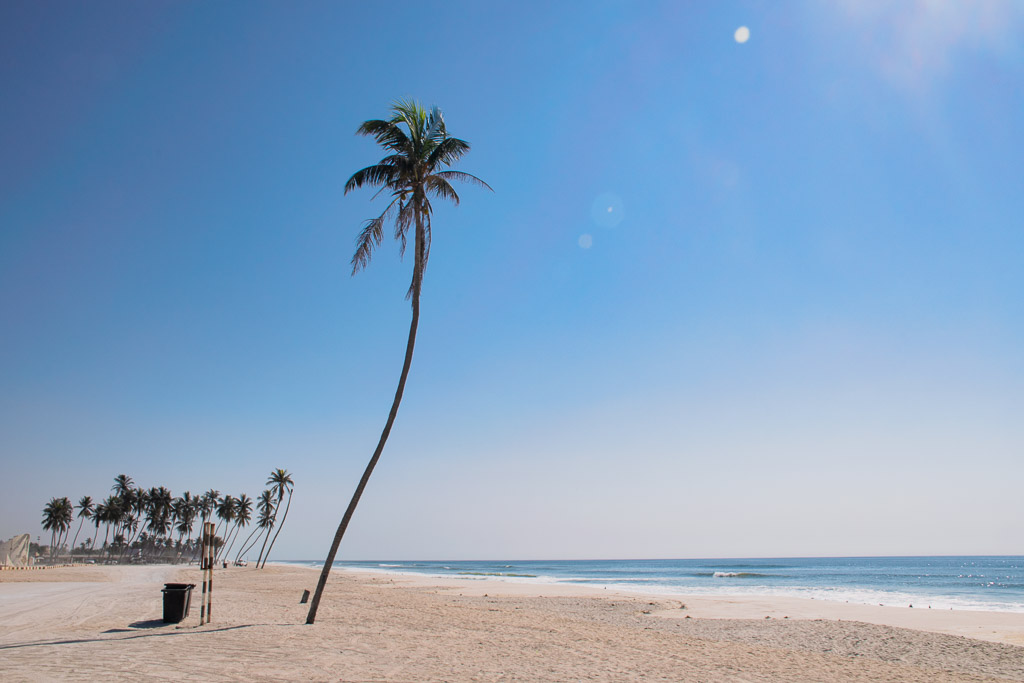
It’s just a short walk from the market to the local beach, a flat and wide strip of sand with a few towering coconut palms.
While everything is open during the day, it feels like a ghost town (at least in October). It will be much more lively in the evening, though, as all places are in the Middle East once the sun goes down.
Sultan Qaboos Mosque Salalah
If you’ve explored Oman a little, you likely know that Muscat’s Sultan Qaboos Mosque isn’t the only one.
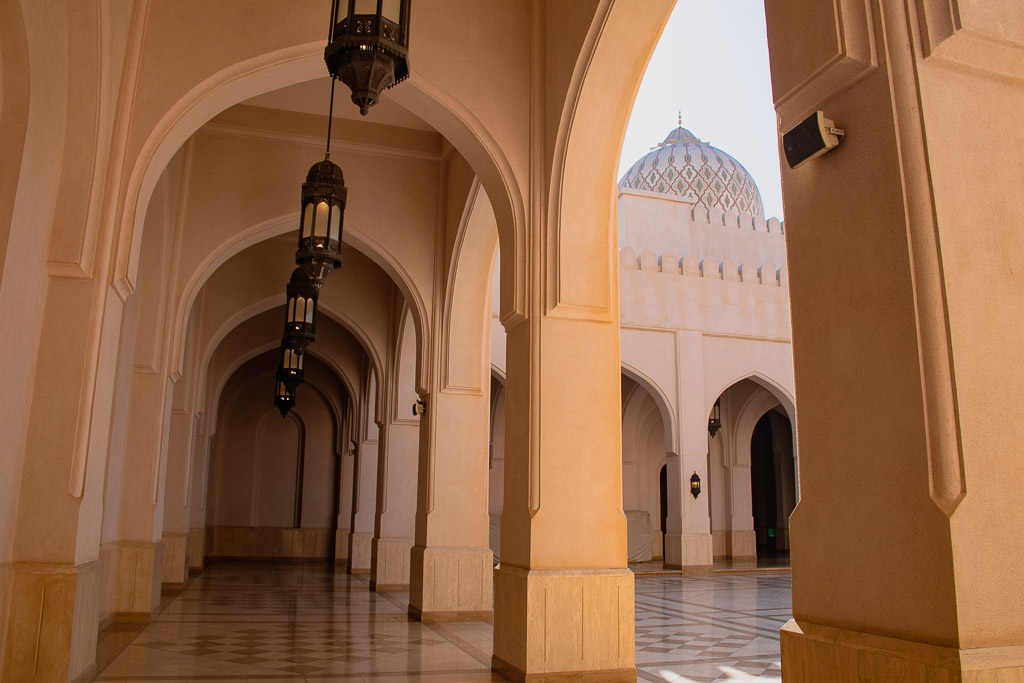
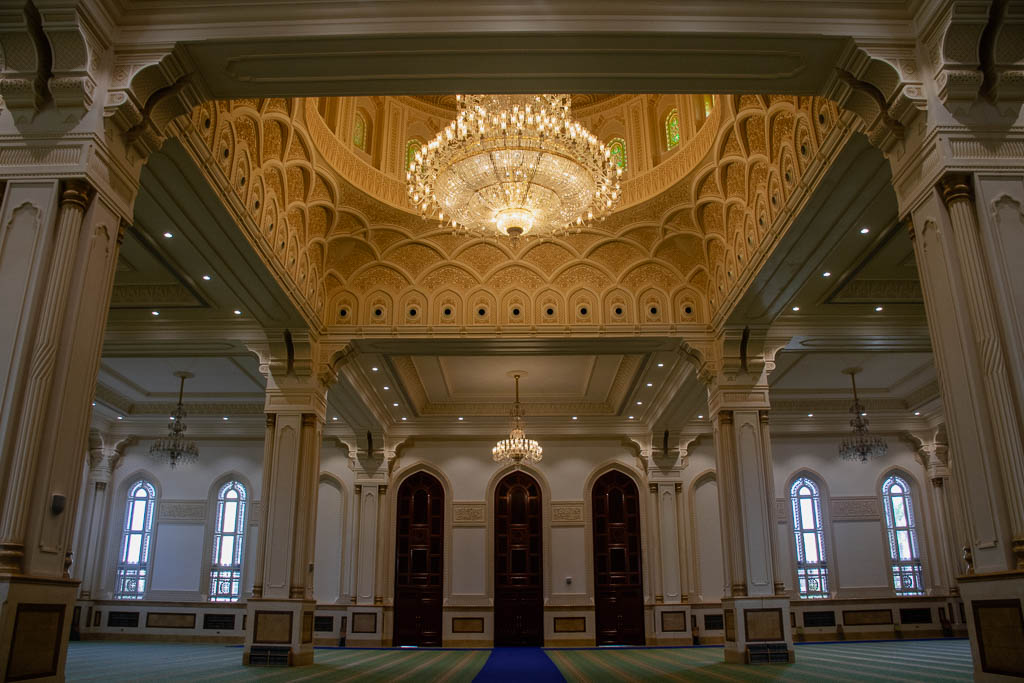
The Sultan had new mosques built across Oman, so we wanted to see what Salalah’s Sultan Qaboos Mosque was like. While it’s hard for any mosque to compete with Muscat’s, this one is still impressive to explore.
While there isn’t information on the build here, a look inside the prayer hall shows how much work went into its design. This has another fantastic chandelier, and the details in the dome are beautiful.
I do like that Oman freely opens its mosques to tourists, especially when so much effort has gone into their design.
Taqah
After that handful of attractions in Salalah, you need to turn your attention to things to do outside the city. A great way to combine several nearby places is with a tour east of Salalah.
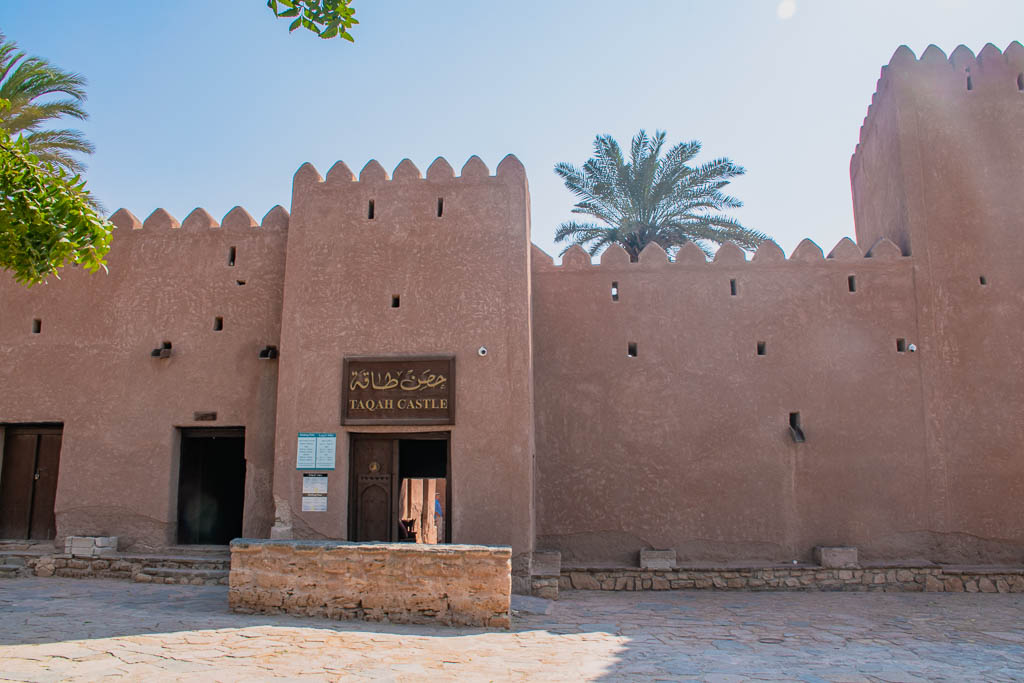
Taqah was our first stop, a small town right on the beach. I can see Taqah one day becoming a popular alternative to Salalah for a quieter seaside getaway.
Around Taqah, you’ll find a few small attractions worth stopping for.
One is Taqah Castle, a small castle once used as a residence and prison. Across from it, you can see a 150-year-old Omani home that now serves as a traditional hotel. Nearby, up a small hill, Taqah Fort is a museum and viewpoint overlooking the town.
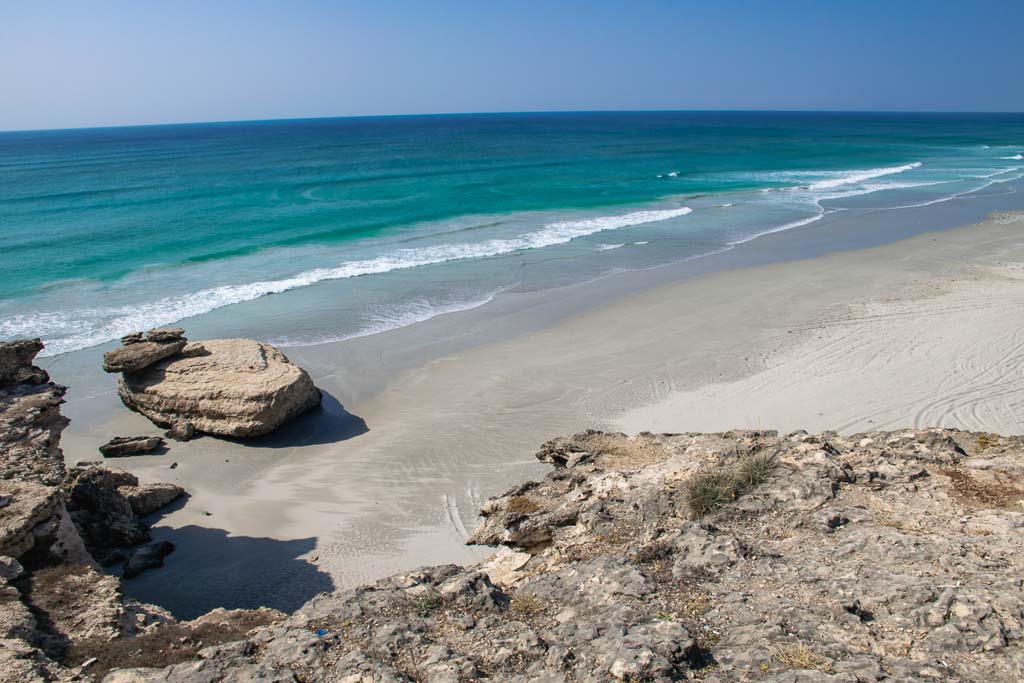
Finally, as you leave Taqah, you can stop at a local viewpoint on cliffs over the beach. It has an “edge of the world” feel, since there are really only small islands around the Maldives and Seychelles in the direction you’re facing.
Wadi Darbat
The highlight and most popular attraction east of Salalah is Wadi Darbat.
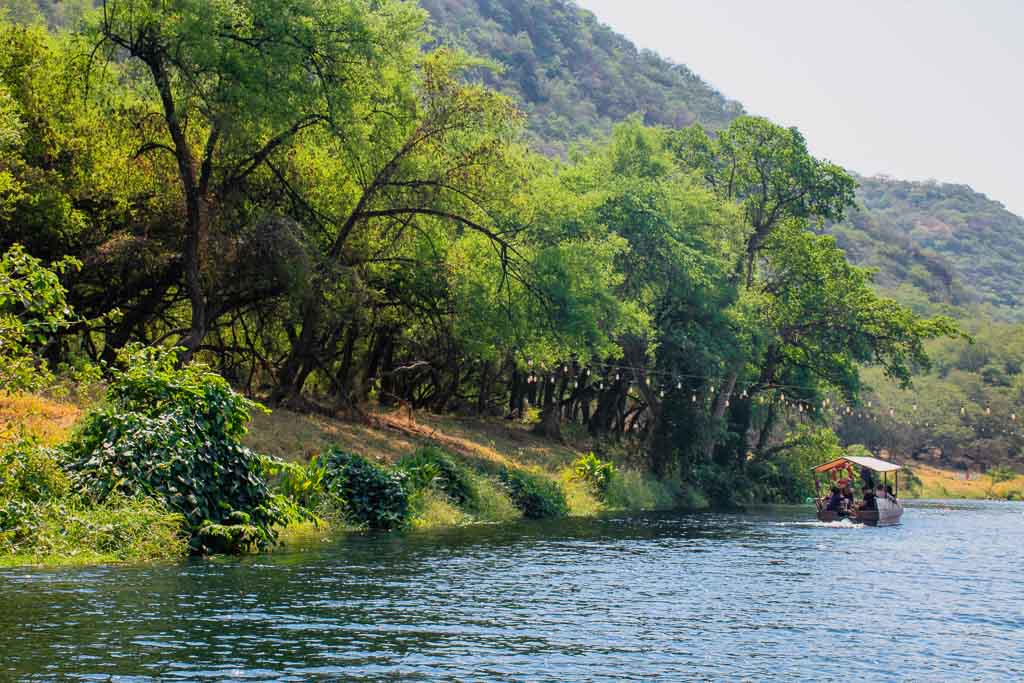
Unlike Wadi Shab, this is not a rocky canyon with a hint of greenery. Wadi Darbat is an open, green valley, known for its lazy river and waterfalls.
Because we were visiting out of season, the step waterfalls at Wadi Darbat had basically dried up (Google them to see how beautiful it can be). But everything was still quite green, so I can’t imagine how fertile and rich the valley must be in monsoon season.
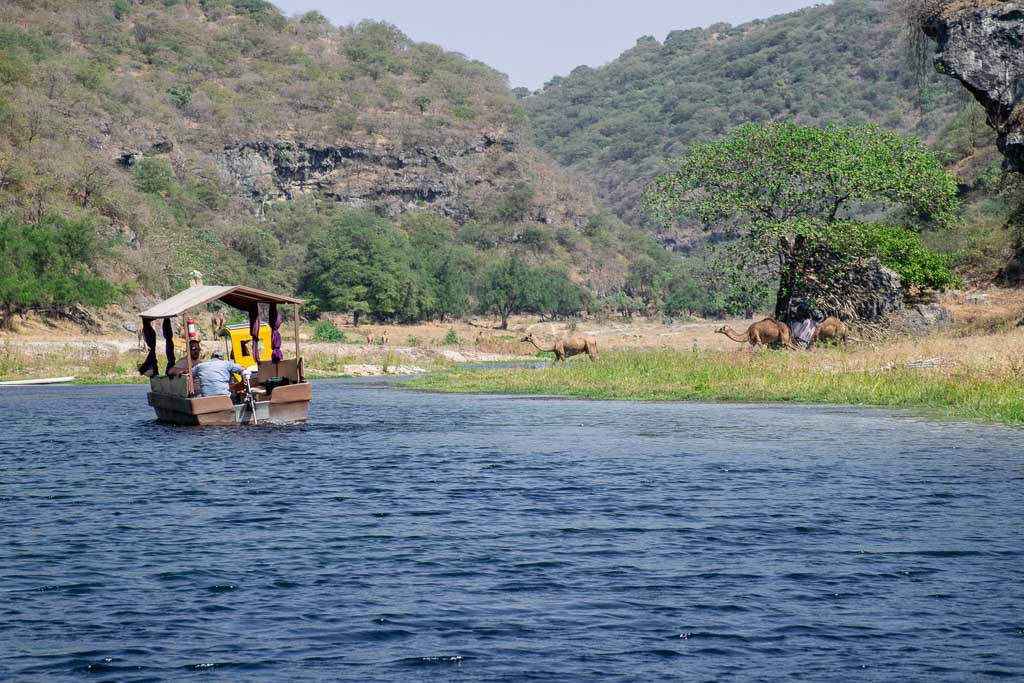
Luckily, there was still enough water in the valley’s river for us to take a gentle boat ride upriver.
As we puttered along, locals herded camels by the river, and we took in the greenery around. Our turnaround point was a local cave, where you can stop for a nature walk and see the cave up close.
Before this trip, I wouldn’t have believed you if you told me Oman could look like this. Visiting Salalah shows you a side of Oman you just don’t get from Muscat, Nizwa, etc.
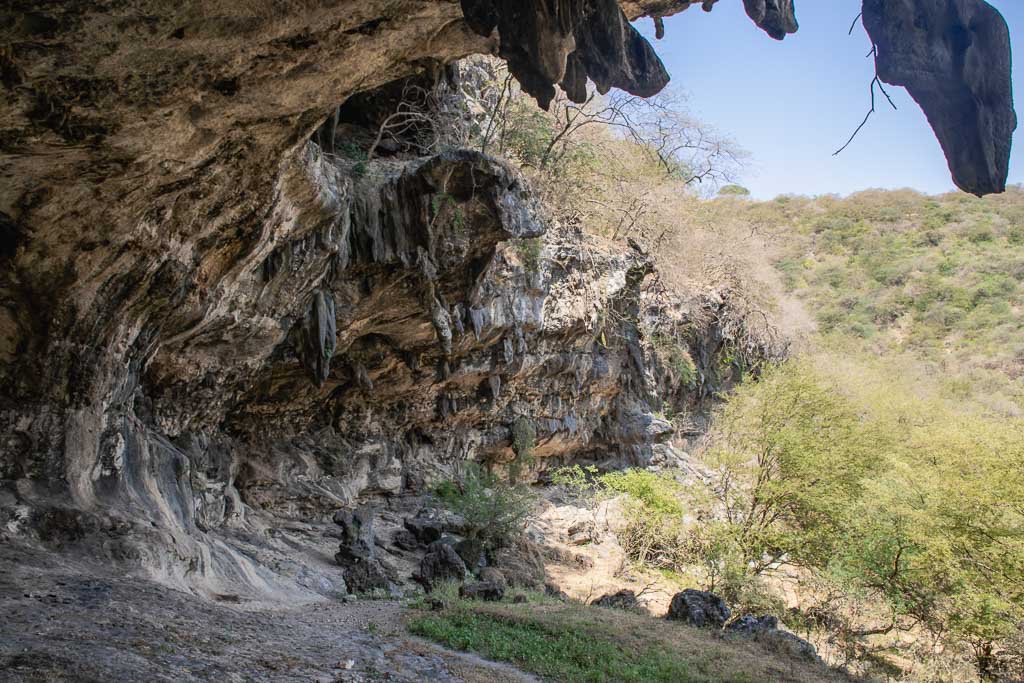
Tawi Atair Sinkhole
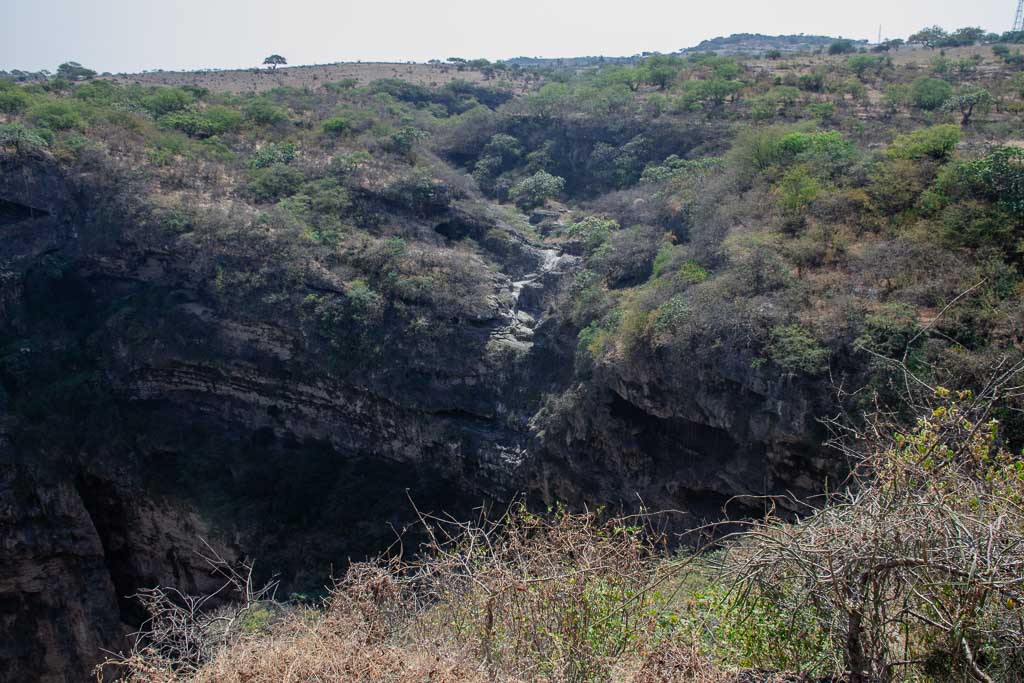
Driving up into the hinterland, we stopped at the Tawi Atair Sinkhole.
Calling this a huge hole in the ground isn’t me being unkind; that’s exactly what it is. You follow a short path down to a viewing terrace overlooking the sinkhole.
The area was a little overgrown, but I’m putting that up to being their off-season. You can clearly see a point on the far cliffs that would normally be a waterfall.
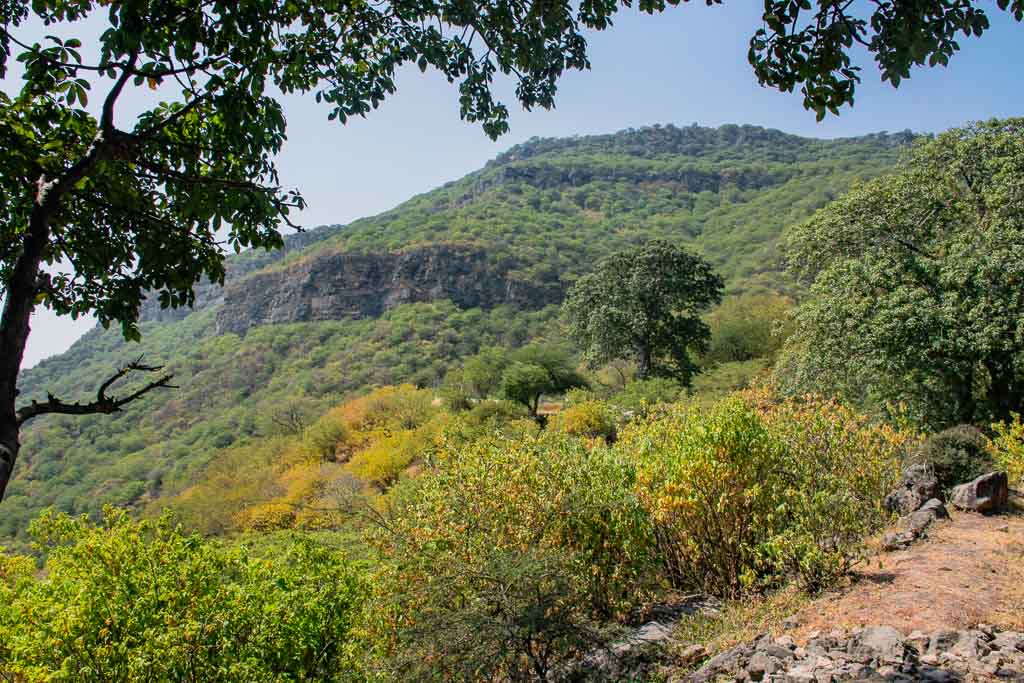
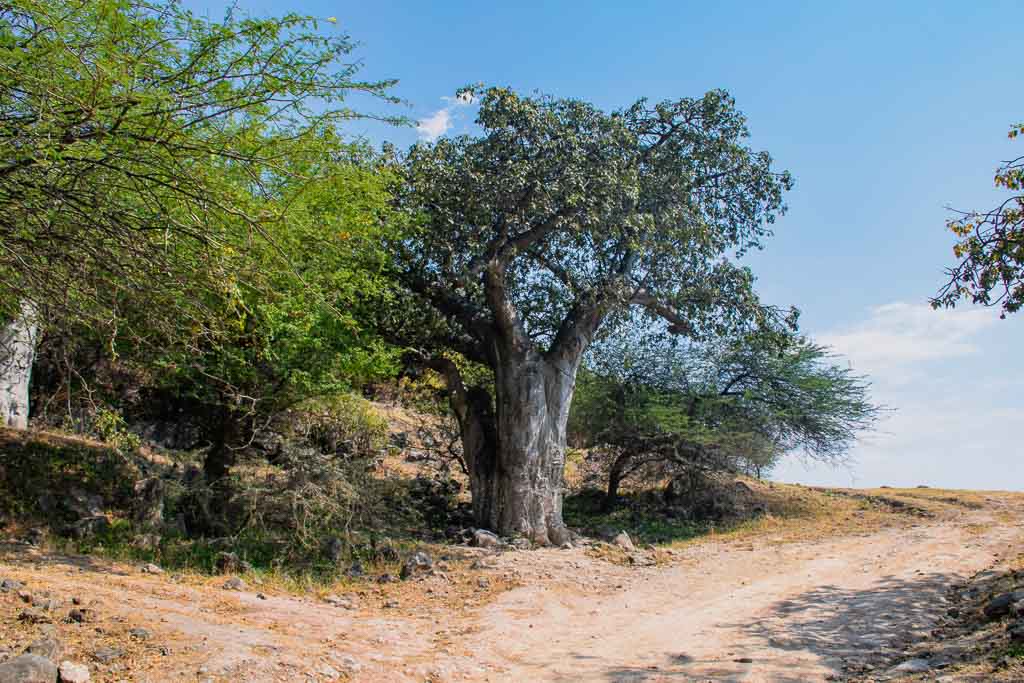
If you take the road coming from Gravity Hill (an “attraction” really not worth mentioning) to get here, then make sure you stop at the forest of baobab trees along the route.
Along with Australia, Oman is one of the few places outside of Africa where baobab trees are native.
The species here are known as African baobab, and they’re far chunkier than the famous ones in Madagascar. You can see plenty of them in the area, and I have to say they looked very healthy, large, and leafy.
Jabal Samhan
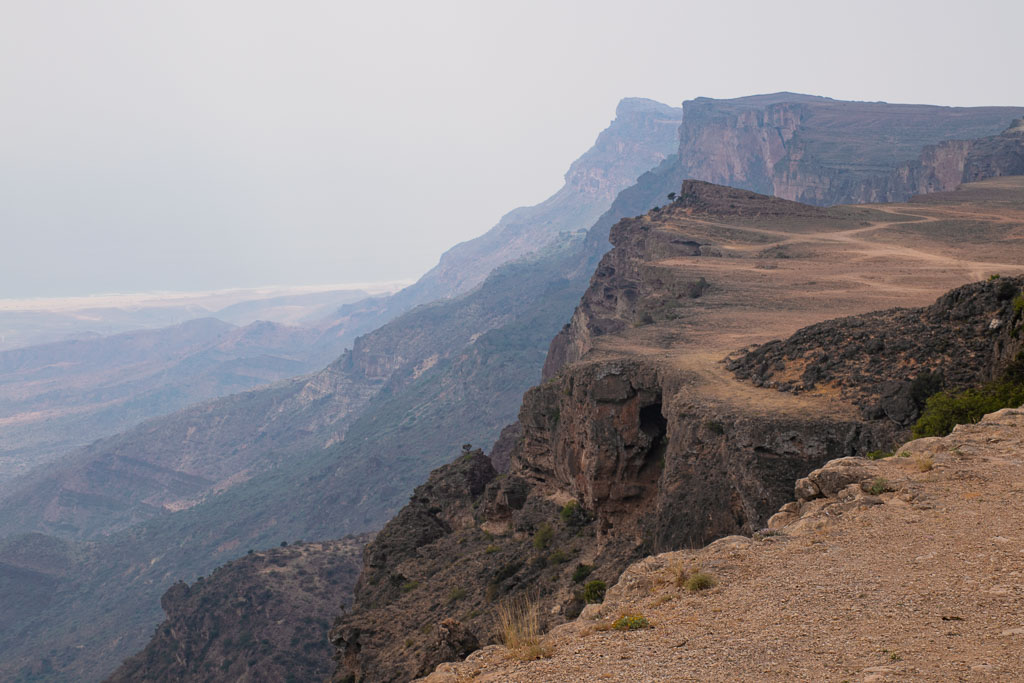
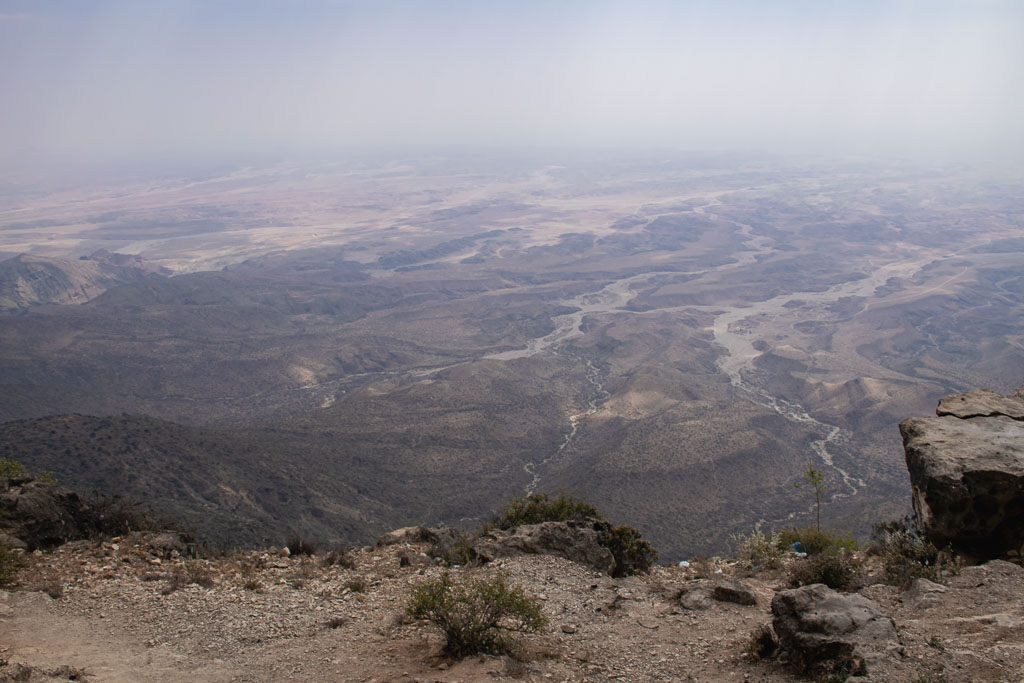
The farthest we got from Salalah on our tour east was the heights of Jabal Samhan.
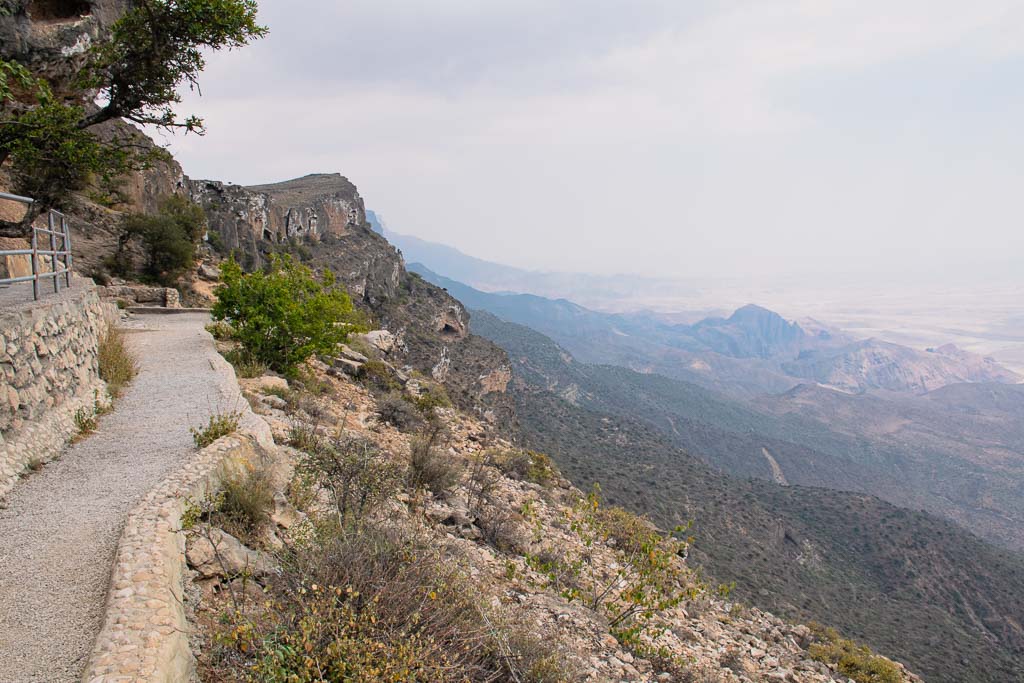
This mountain ridge sits atop cliffs that look down on an endless landscape toward the coast. With haze blurring the horizon, it really does feel like the nature reserve below stretches forever.
It’s important to understand that you climb a lot of elevation to reach the viewpoint. Jabal Samhan reaches 2,100 metres (6890 feet), and even though we didn’t reach its highest point, that’s still a huge change from Salalah at sea level.
Besides the scale of the view here, you also see a different landscape from earlier, as this area is much more arid. The landscape starts to get more of the barren rocky mountains you see at Jebel Shams, but there’s clearly still much more vegetation in the Dhofar Mountains.
I’ve read that this area is home to the critically endangered Arabian leopards, but your chances of seeing them are astronomical.
Dolphin watching
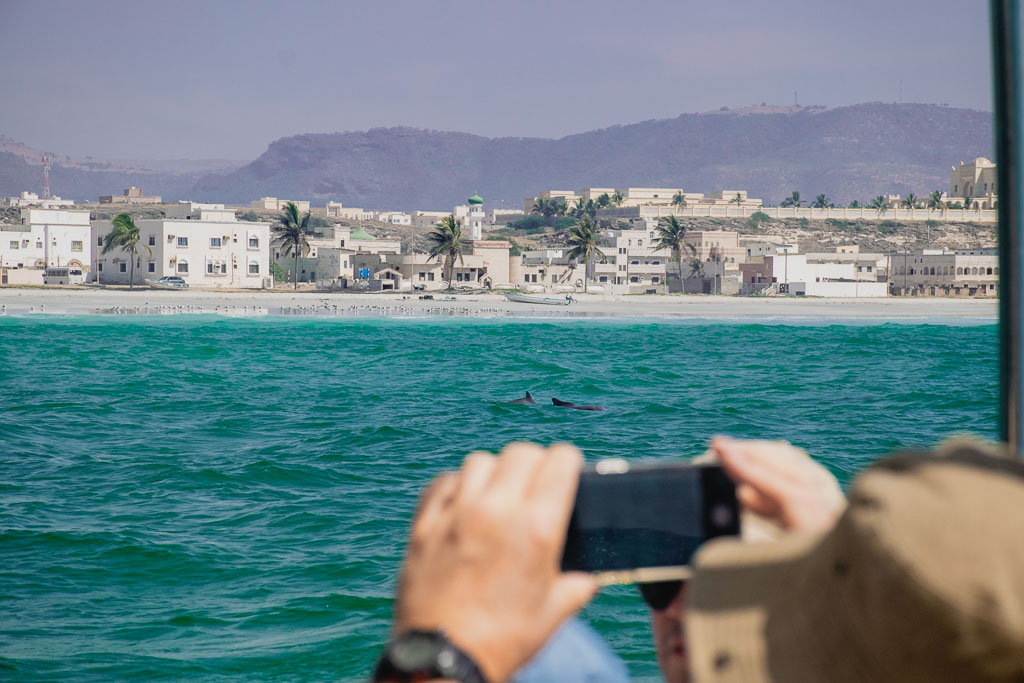
One last activity I recommend is a dolphin-watching tour from Salalah.
Following a newfound respect for Oman’s wildlife after snorkeling with turtles in the Ad Dimaniyat Islands near Muscat, we decided to add this tour the morning we left.
The small boat leaves from the marina at Hawana Resort and takes you out for a 2-hour cruise. You follow the coast east, which is nice on its own, seeing the beaches and distant mountains from the water.
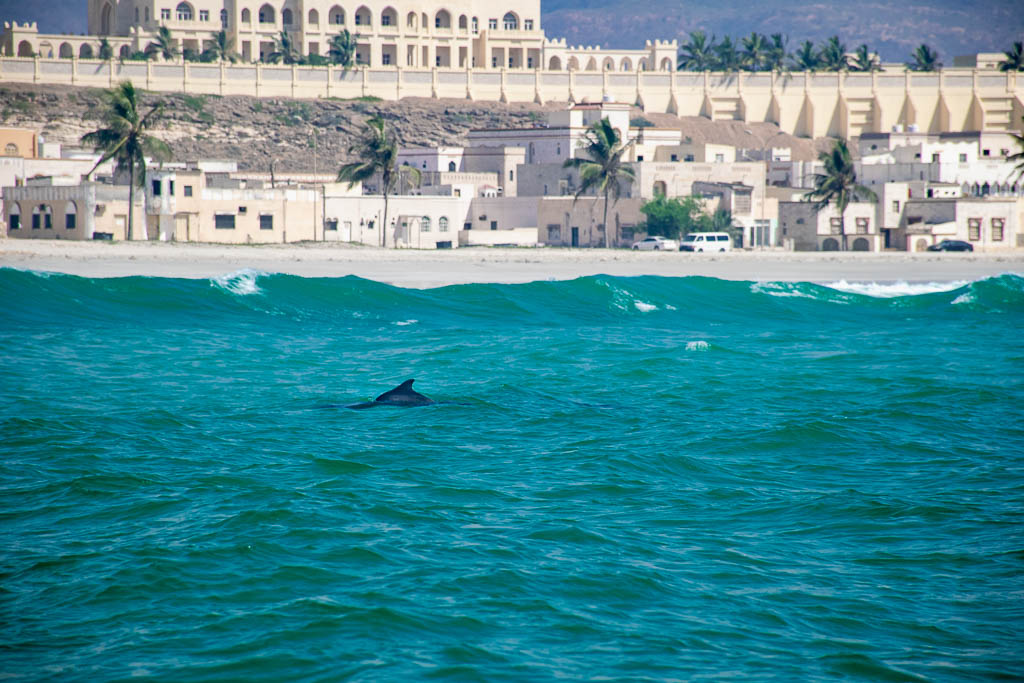
Around Taqah Beach, we saw a pod of dolphins appear. We floated there for a good while, letting them circle and play. I think there were at least four, popping up above the water frequently.
My only problem with this activity is that you can’t leave Hawana Resort using Otaxi. Instead, you have to head to the taxi stand and haggle a fare to get back to downtown Salalah.