Disclosure: This post (probably) contains affiliate links. If you click on one, I may make a small commission. Of course, this will come at no extra cost to you and helps keep this site running.
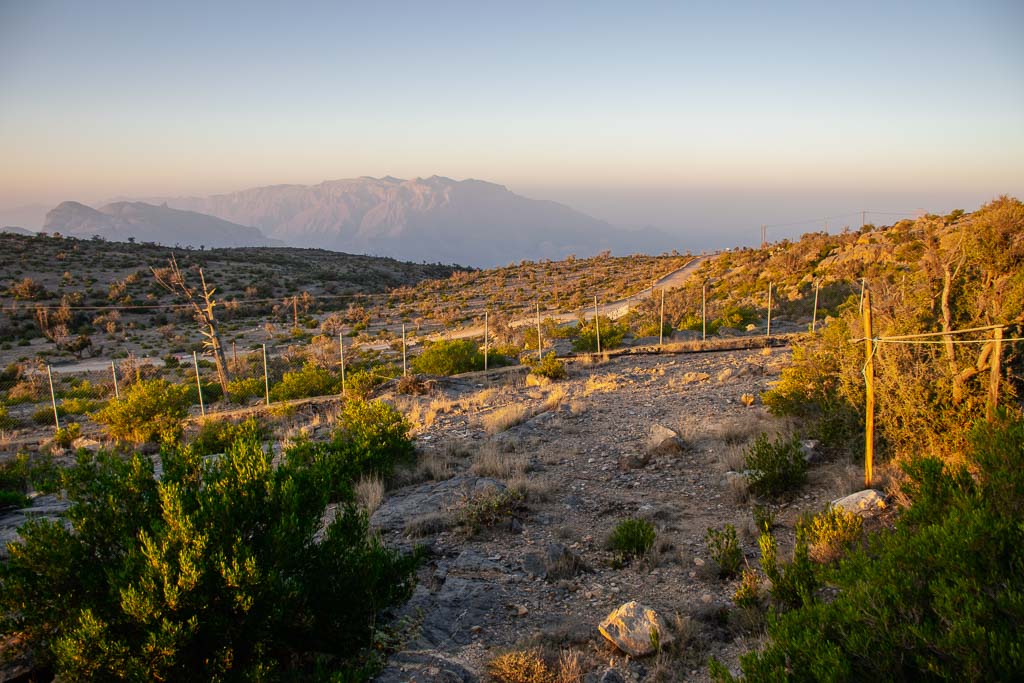
People often don’t realise just how mountainous the country of Oman is. Yes, it does have desert, but mountains dominate the north and create breathtaking landscapes like those around Jebel Shams.
The highest mountain in Oman and an increasingly popular tourist destination, Jebel Shams is a great place to visit to see Oman’s rugged side. Travellers tend to see it on a day trip, but this is what it’s like staying in Jebel Shams overnight.
Where is Jebel Shams?
Assuming you don’t know too much about this remote attraction, let’s first do a little introduction to Jebel Shams.
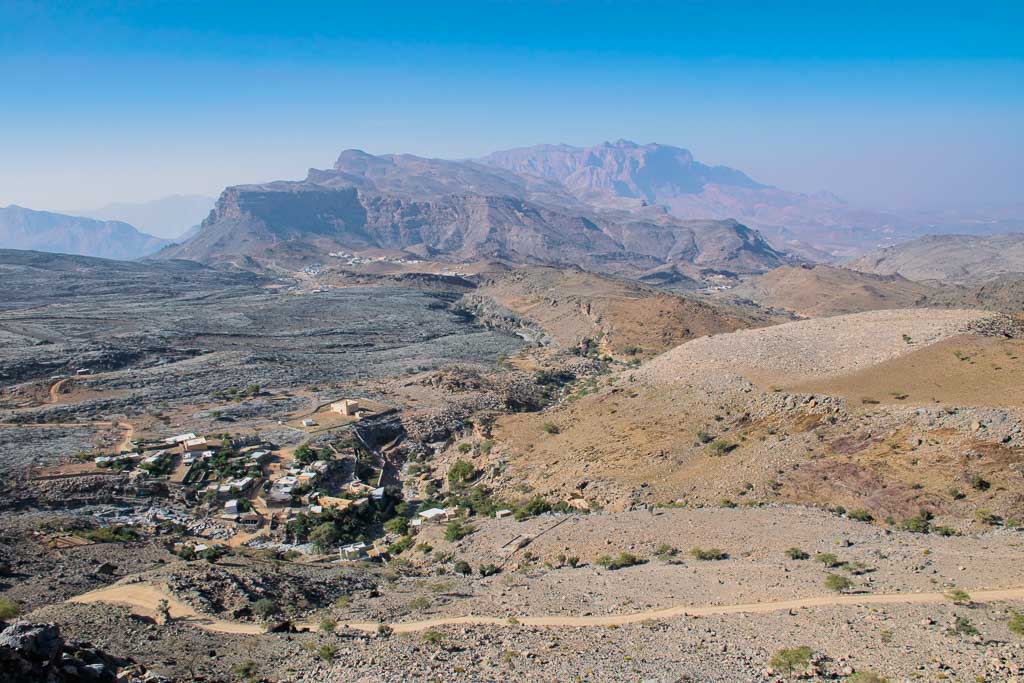
You’ll find Jebel Shams within the Central Hajar mountain range, southwest of Muscat and northwest of Nizwa. The mountain’s summit just peaks over 3,000 meters in elevation, although most tourist visits focus on lower sections of the mountain. You can only get near the summit by hiking, with the actual peak closed to the public.
If you’ve looked up exploring Oman’s mountains, you’ve probably come across the name Jebel Akhdar. Sometimes it seems like tours use the names Jebel Shams and Jebel Akhdar interchangeably, but don’t mistake the two.
Look at a map, and you can see that the two mountains are on different sides of the range. And they offer different experiences.
Jebel Akhdar translates as “Green Mountain”, as it’s lush, fertile, and has land suitable for orchards. Jebel Shams translates as “Mountain of Sun” because it is the first to catch the sunrise, and while it’s very high, it’s also relatively arid and barren.
How to get to Jebel Shams
With remote destinations such as this, there are really only two ways to visit Jebel Shams.
One is to drive yourself there in a rental car, but this isn’t as easy as it sounds.
The drive from Muscat to Jebel Shams is around 3 hours, and from Nizwa, 1.5 hours. But time isn’t the issue. It’s the quality of the mountain roads.
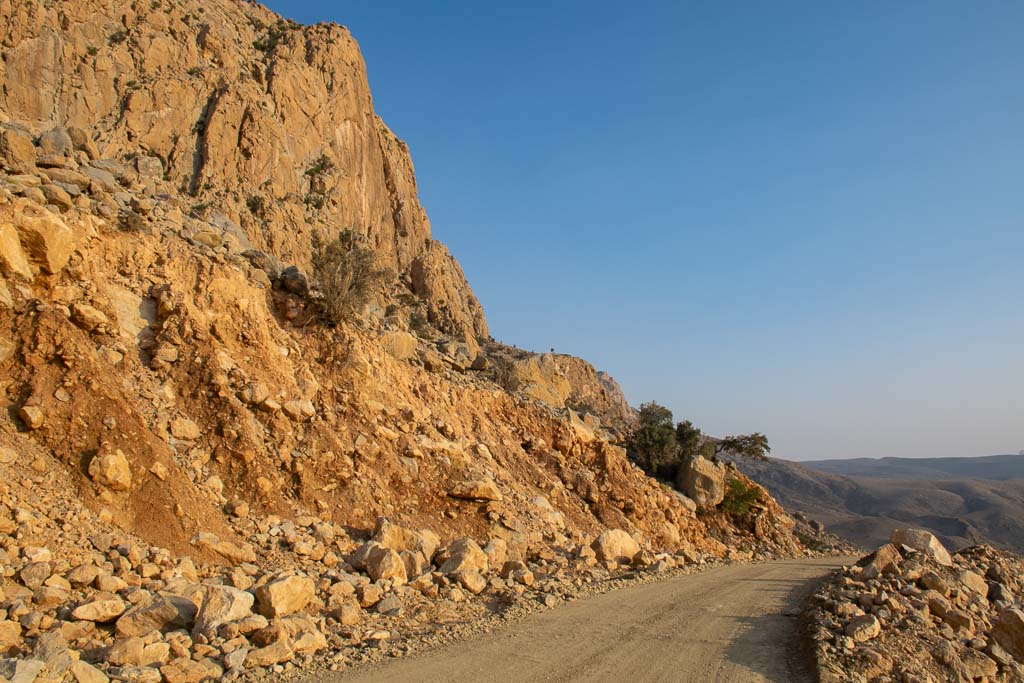
You shouldn’t do the trip without a 4WD vehicle and experience driving on rugged dirt roads. While the main road is good to a point, there were sections that were basically off-roading, with us jostled about inside the 4WD.
The more common approach is to visit Jebel Shams on a tour, as we did.
Most people come with a driving tour, usually combined with visiting Nizwa from Muscat. We took the overnight tour, but the day trip to Jebel Shams is more popular.
What it’s like staying in Jebel Shams
The benefit of taking an overnight tour to Jebel Shams is not just that you get more time to explore.
Staying up in the mountains at one of the various local resorts is an experience in itself. You get time to admire the views, experience the altitude, and even see just how cold it gets there after sunset.
We’ll get to the scenery later, as I want to focus on what it’s like up there.
Many of the mountain resorts and hotels sit quite high up, typically above 2000 metres elevation (6500 feet). If you’re coming from Muscat at sea level, that’s a noticeable shift.
If you know you struggle with altitude, make sure to hydrate, have ibuprofen on hand, or speak to a medical professional before going.
What’s more likely to affect everyone is how cold it gets up in the mountains. We visited in October, where we went from 37C (99F) in Muscat to around 5C (41F) overnight. Packing layers for a destination like Oman feels wrong, but you’ll be glad for them if you stay overnight at Jebel Shams.
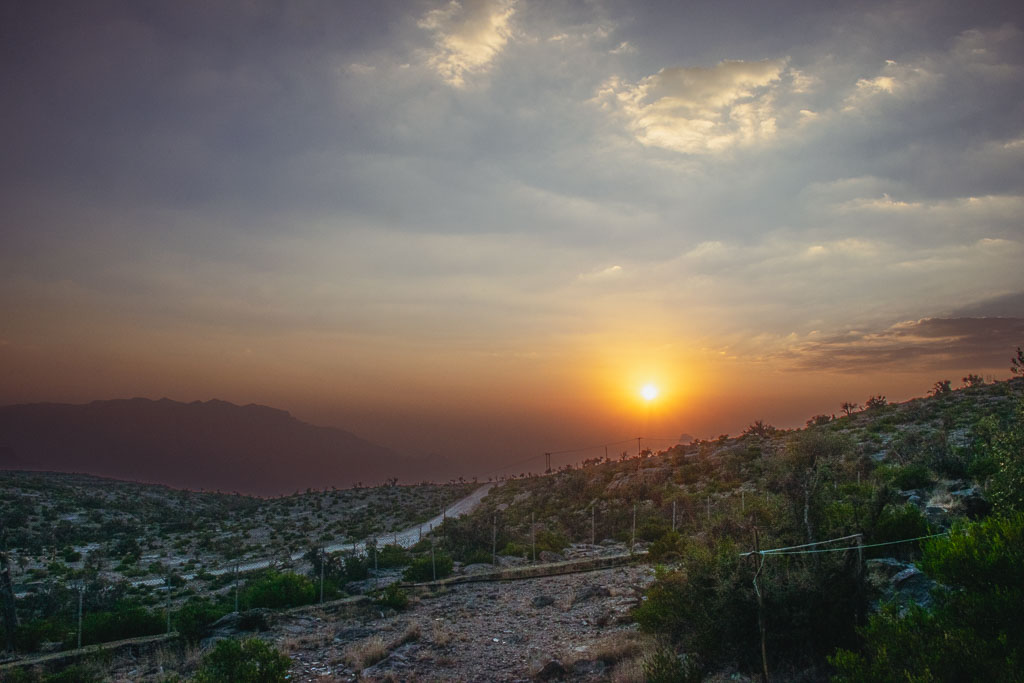
Finally, there’s the accommodation itself.
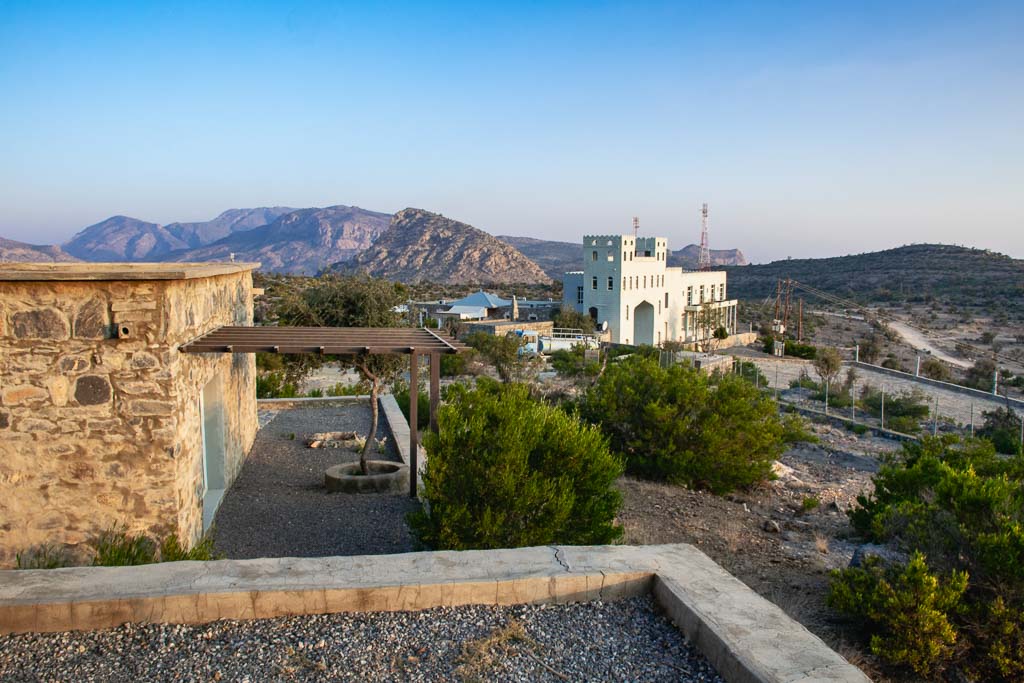
I can’t speak to other local resorts and hotels, since we only stayed at one, the Sunrise Resort. I would call it a mid-range resort, with fewer amenities than others I saw online, e.g., no Wi-Fi. But it was comfortable, with phenomenal views, and a nice dinner.
Our tour company booked us there because there was no availability at either of its first choices: Jebel Shams Resort or Sama Jabal Shams Resort. My advice is to book your tour well in advance, so that you have more choice.
If you’re traveling solo, I’d also look at Canyon Rest House Jabal Shams or Jebel Shams Sky, two highly-rated options.
What you see at Jebel Shams
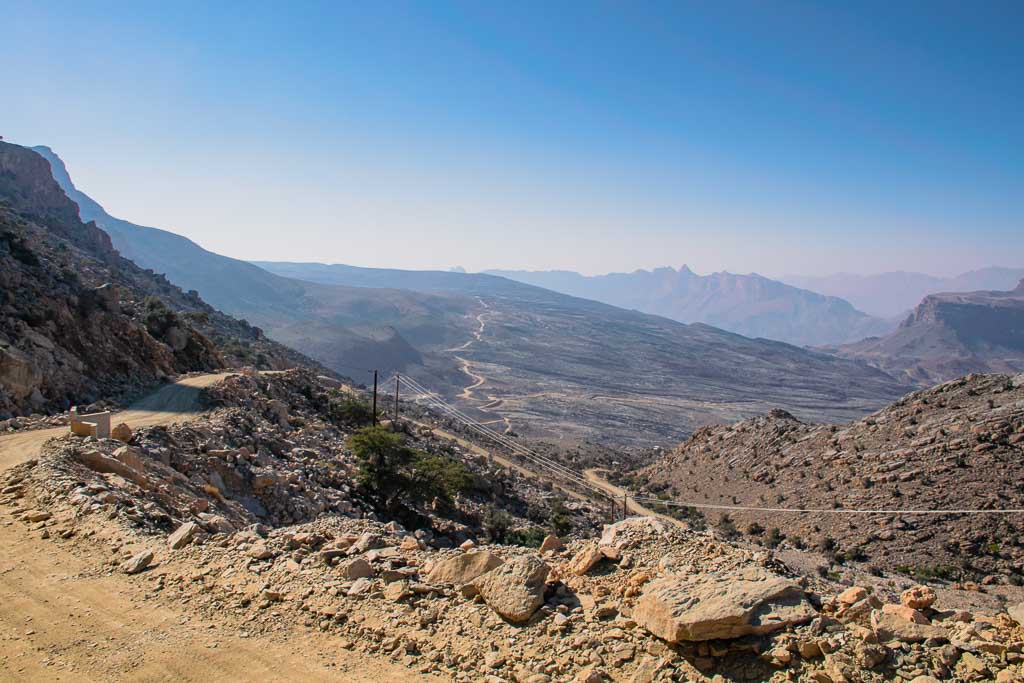
The other part of the experience of visiting Jebel Shams is the incredible scenery you see while you’re there.
While we did see some specific attractions in the area, many of the stops were just roadside breaks to get out and admire the view. If that was all you go to see of Jebel Shams, I still think the trip out would be worth doing.
If you enjoy raw mountain landscape that just rolls out before you, this is the place to go.
But I will highlight a couple of the main things we saw there.
Al Nakhur Canyon
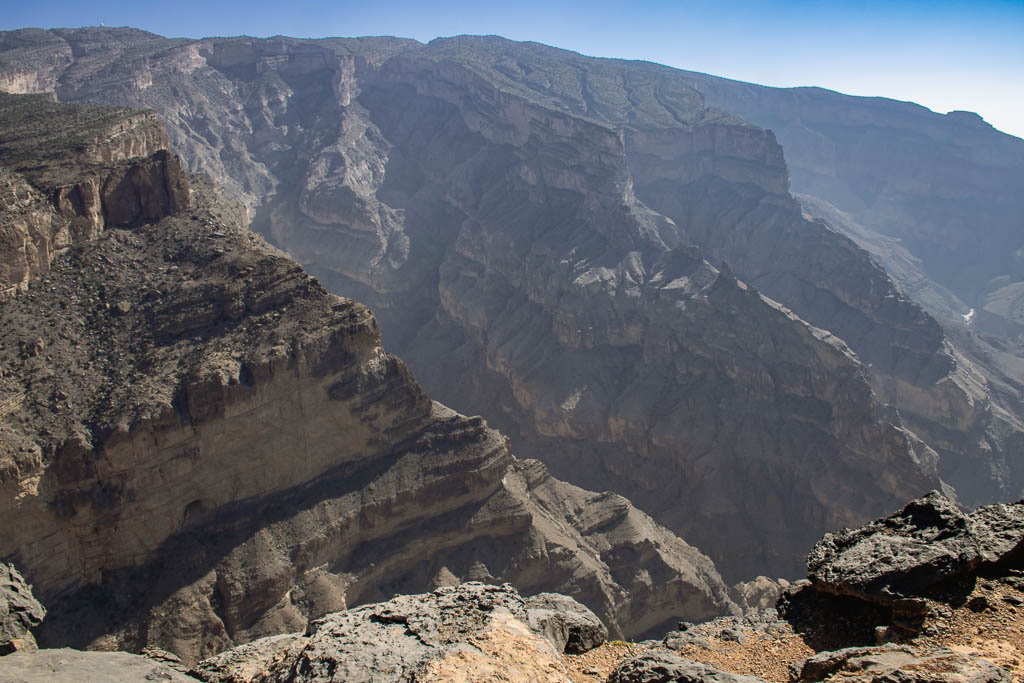
The biggest attraction at Jebel Shams is definitely Al Nakhur Canyon.
Often referred to as Oman’s own “Grand Canyon” or the “Grand Canyon of Arabia”, it’s exactly what you expect. A 1,000-metre drop and an awe-inspiring sight.
From a roadside viewpoint, you stand at the very edge of cliffs that plummet down into a huge canyon before you. It’s a hard place for photos to do justice to because of the landscape’s scale and abstract look. There’s no way to capture it all at once.
Please trust me when I say it’s worth the drive.
While we enjoyed the view, we didn’t do any of the hiking around the canyon. If you want to go into the canyon and explore, look into the Jebel Shams Balcony Walk.
It’s another experience I’d love to try if there’s ever a next time, and it’s now clear to me that Oman offers many hiking opportunities I want to return to explore.
Al Duwaheer Old Village
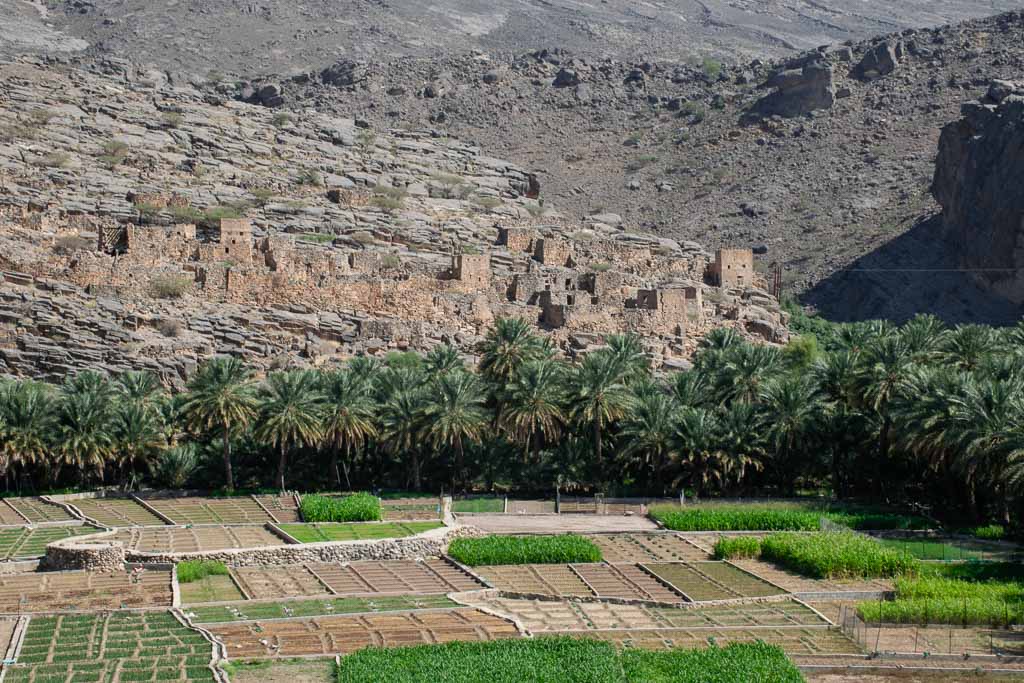
When driving up and out of the mountains, you’ll pass all sorts of villages, before and after Nizwa.
Occasionally, you see the ruins of old villages, full of abandoned stone or mudbrick homes. The Omani Government has a practice of moving people out of these villages and into modern settlements to improve local living conditions.
We saw one up close when we stopped at Birkat Al Mouz on the way to visiting Nizwa. And we saw the towers and occasional small clusters of homes elsewhere on the drive.
But nowhere provides such a clear view of an entire village as at Al Duwaheer. Sitting just above terrace farms in the dried-up river, its old buildings are clear to see, even though they do camouflage well with the terrain.
I suppose that’s an effective alternative to what many villages did, which was hide within forests of date trees, with just a watchtower visible above the tree line.
Sunset and sunrise
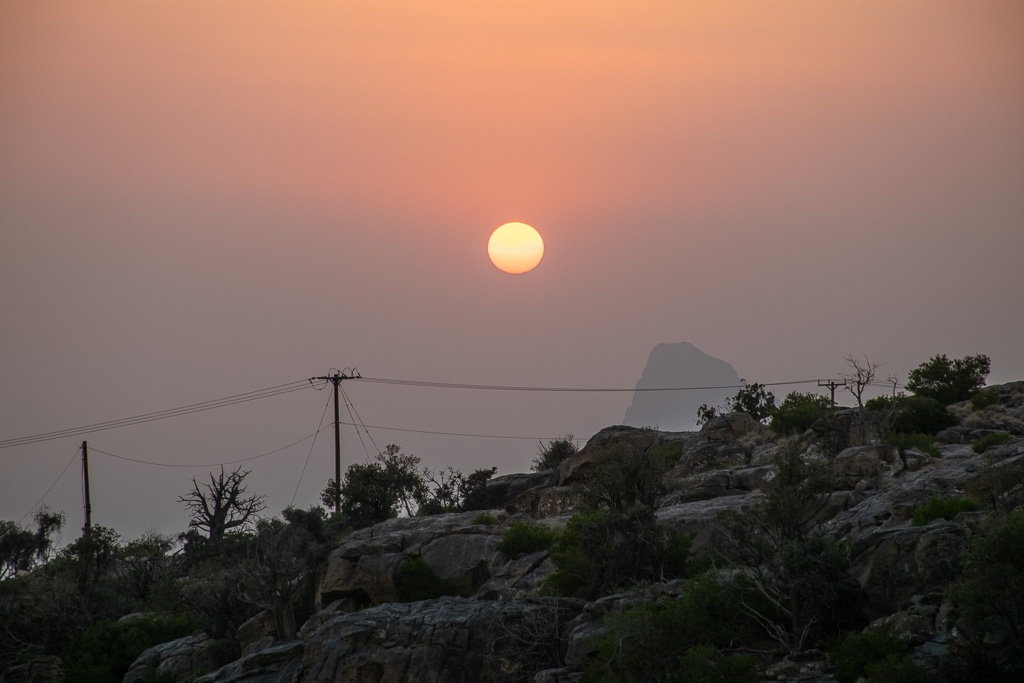
One of the big things you get to see with an overnight trip to Jebel Shams is both sunset and sunrise.
A major perk of being up in the mountains, particularly at our accommodation, was clear views both east and west.
We watched the sunset from our little villa’s terrace as it fell below the western edge of the mountains. The next morning, I went for a walk to find the best vantage point for sunrise.
What’s cool is that the sun basically needs to climb over the summit of Jebel Shams before you can see it. This makes for a strikingly sudden sunrise, with light finding gaps to break through the nearby ridgeline.

