Disclosure: This post (probably) contains affiliate links. If you click on one, I may make a small commission. Of course, this will come at no extra cost to you and helps keep this site running.
When visiting Oman for more than a day or two, you’re sure to start wondering where else to go beyond Muscat. If it’s history and gorgeous traditional scenery that you’re after, then you’ll be delighted with the things to do in Nizwa.
Capital of the Imamate of Oman for centuries, Nizwa is one of Oman’s most important cities, culturally and historically. That’s a big clue about the majority of what to do in Nizwa, but it’s far more compelling when you actually see what awaits you if you visit Nizwa.
Is Nizwa worth visiting?
Yes, Nizwa is one of the best places to go in Oman and is well worth visiting.
If Muscat offers the coast and culture, Nizwa delivers history and a sea of date palms among mountains. The two provide wildly different experiences, and it’s only by going beyond Muscat to places such as Nizwa that you get a real idea of what Oman is like.
While there are some forts around Muscat, the historical landmarks of Nizwa are considerably more impressive and interesting. Plus, Nizwa’s landscape is completely different from the capital’s, showing you another side of Oman.
You also don’t have to worry about reaching Nizwa, as you’ll soon see, it’s not hard.
Getting to Nizwa
Nizwa sits inland of Muscat, along one of Oman’s smoothest and best highways.
The drive from Muscat to Nizwa usually takes less than 2 hours, excluding stops and any traffic issues. If you’re doing a driving trip in Oman, this shouldn’t be an issue.
Not that you need your own car to reach Nizwa. The easiest way to reach the city is on a day tour from Muscat, which handles the transport for you. We visited Nizwa on an overnight tour to Jebel Shams from Muscat, stopping at Nizwa attractions on both days.
Private transfers from Muscat to Nizwa are possible, but certainly not cheap.
If you’re looking to save money, then taking a bus is your best bet. Mwasalat offers 1-2 buses per day at low fares.
Where to stay in Nizwa
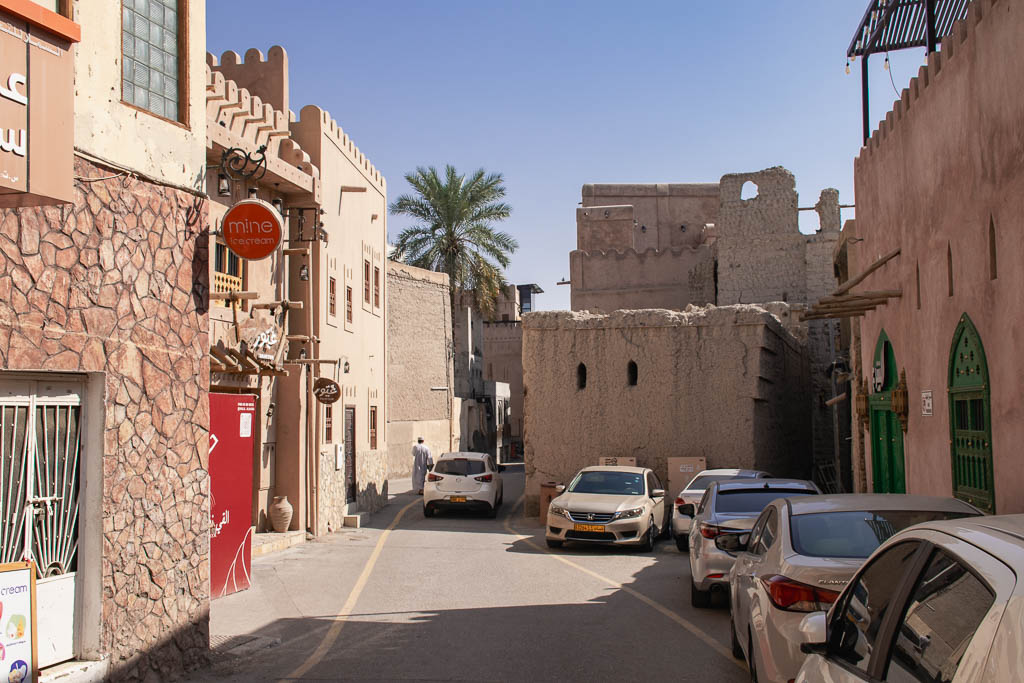
While I can’t offer personal experience on where to stay in Nizwa, I do know what to look for.
Accommodation isn’t a concern if you’re doing a day trip or staying in Jebel Shams or Jebel Akhdar. But staying in Nizwa is a good idea if you’re doing your own road trip in Oman or taking more time to explore the city.
Options in Nizwa stretch from the old town to places up and down the valley. But I think picking the old town area lets you enjoy how walkable this part of the city is.
Here are some well-rated places to stay in Nizwa:
Things to do in Nizwa
If you’re thinking about visiting Nizwa now, let me show you where to go when you do.
While I won’t show you all of the attractions around Nizwa, these places to visit in Nizwa are a good starting point. One attraction I’m aware of for next time is the Oman Across Ages Museum, which sounds quite something.
Here’s what to do in Nizwa when you go.
Birkat Al Mouz
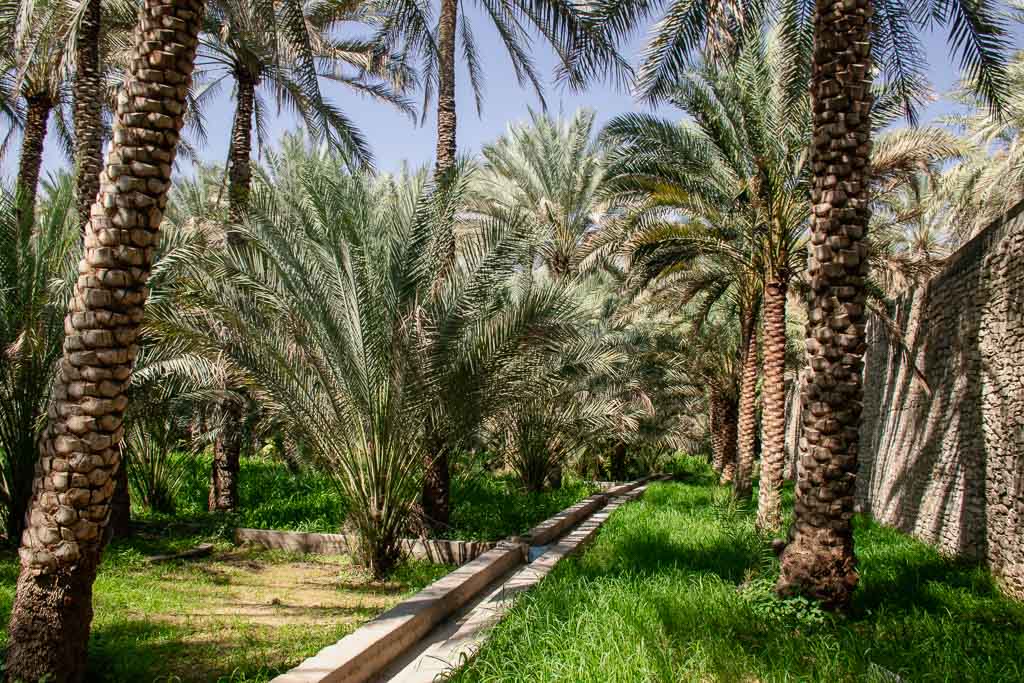
Before you even get to Nizwa, a good place to stop not far away is the old village of Birkat Al Mouz.
This village, a short drive from the highway, stands out from the rest of the roadside scenery for two reasons. One is the sudden patch of lush greenery it presents, the other the old homes hidden among it.
Most visits here start with a drive/walk through groves of date trees, a shock of green in a mostly dry and arid terrain. The groves owe their existence to Oman’s aflaj irrigation systems, an ancient agricultural technique that still yields incredible results.
The specific system in Birkat Al Mouz, Falaj Al-Katmeen, is one of five recognized as a UNESCO World Heritage site, giving you a chance to make it two UNESCO sites you see when visiting Nizwa.
Exiting the groves, you reach the village, where the homes start out modern and soon become historical mudbrick houses. We saw people working on fortifying some of the old town homes as we wandered about.
Nizwa Souq
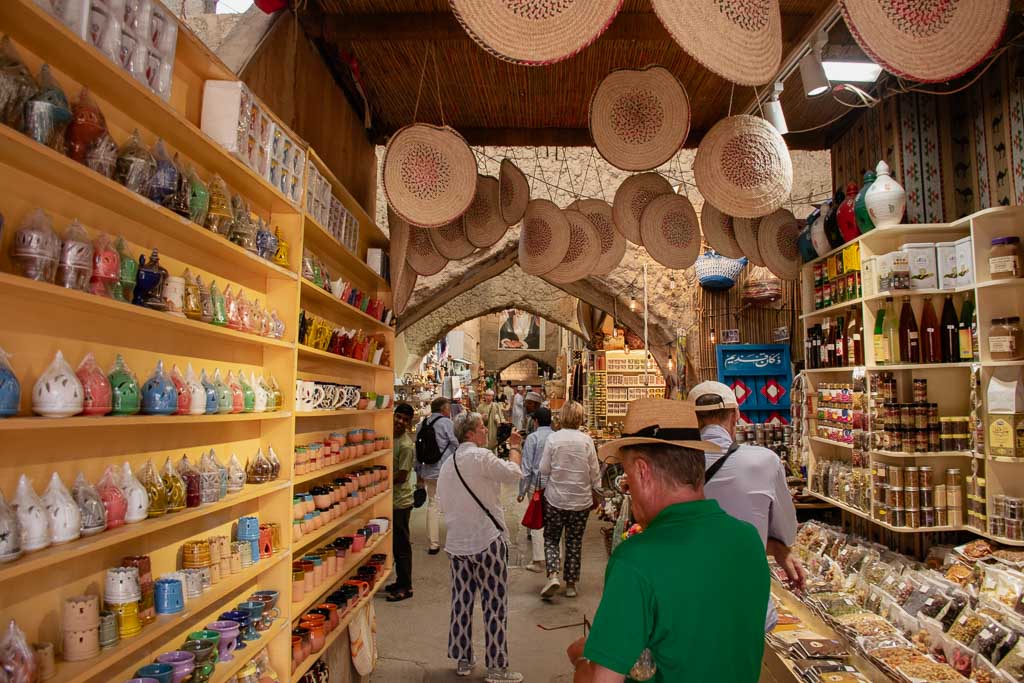
It’s never hard to find a souq in the Middle East, and in Nizwa, it sits right at the entrance to the city’s old town.
This market stretches across multiple buildings, with separate buildings for different products. One has meat, and another fish, but there’s also the central souq selling all sorts of produce and handicrafts.
I’d actually say that I thought it was larger and more interesting than the one in Muscat. The souq that most caught our attention was the date market at the southern end.
There, you can try and then buy all sorts of different types from across Oman. We picked some up here, and they lasted us through the rest of the week.
Nizwa Old Town
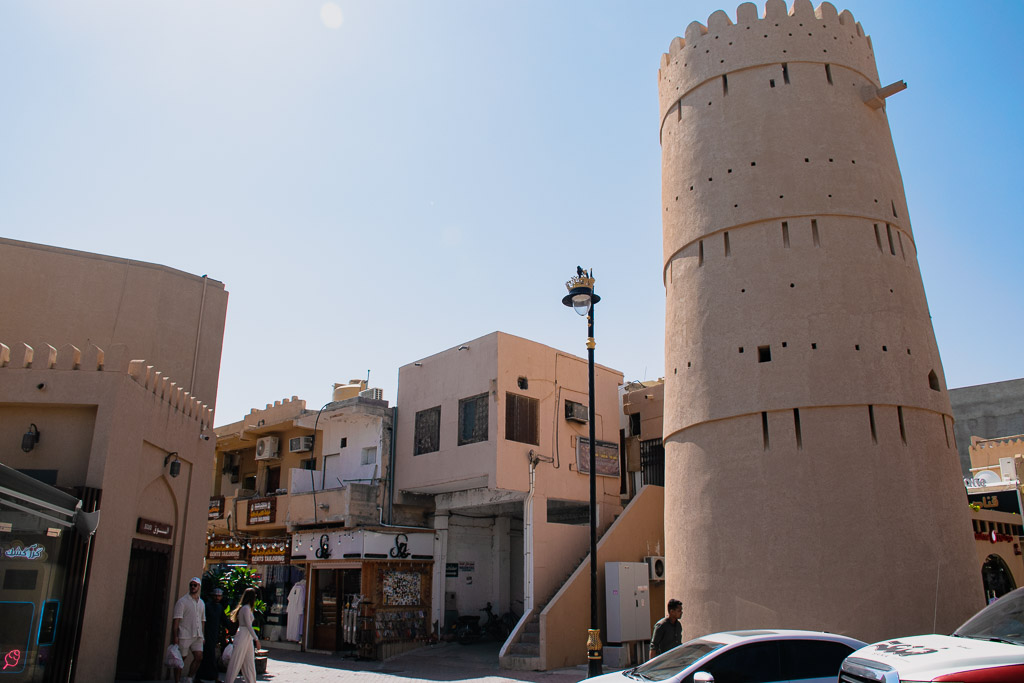
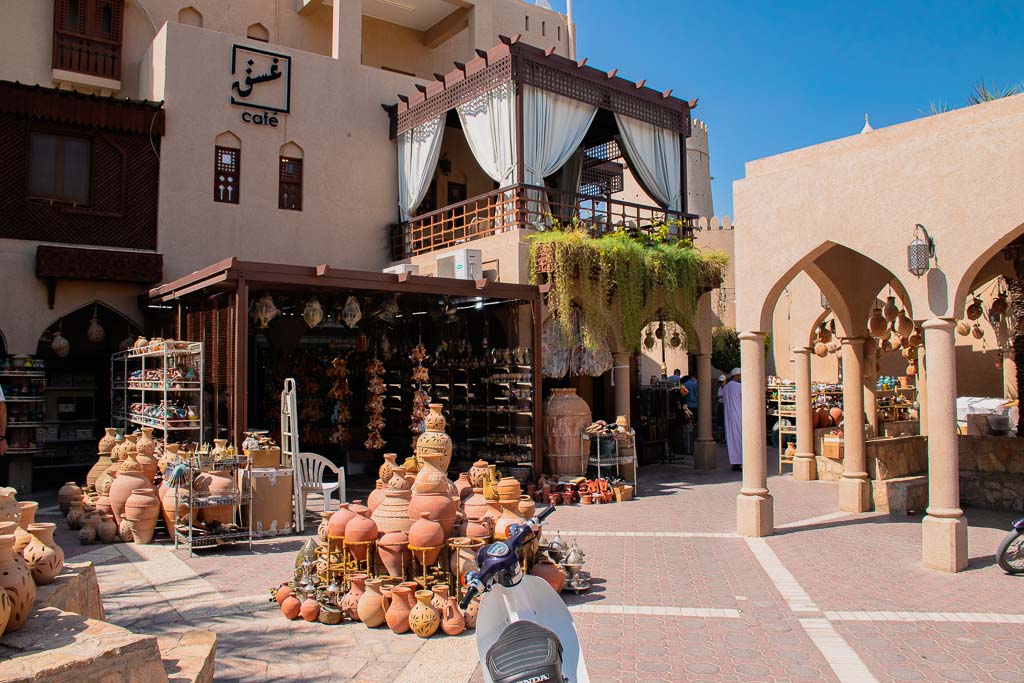
Step outside the souq and you’re in the streets of Nizwa’s compact old town.
It’s just a small pocket of the city, but it’s a nice, walkable area to explore. We didn’t have much time to wander around, just a brief walk after eating at one of the main restaurants in the area.
But from what I saw, it was a mix of freshly renovated homes and businesses, with hints of its age best seen in its gates and fragmented city walls. Apparently, you can climb some sections of the walls, but we didn’t.
I think one benefit of staying in Nizwa is that you’d have time to really explore this area. Particularly at times when it’s not too hot.
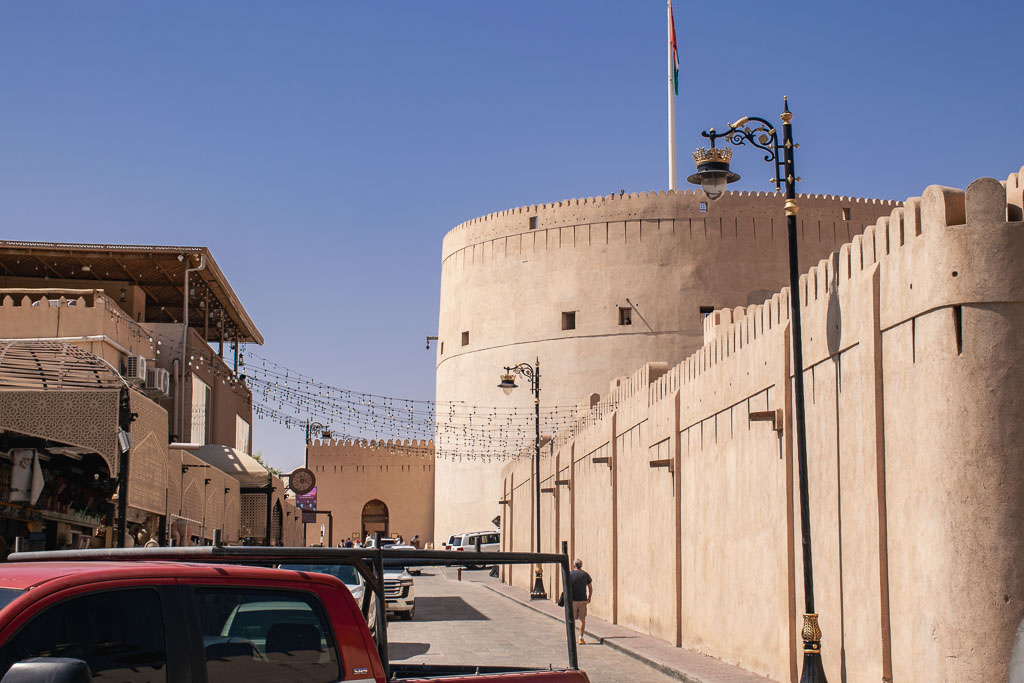
Nizwa Fort
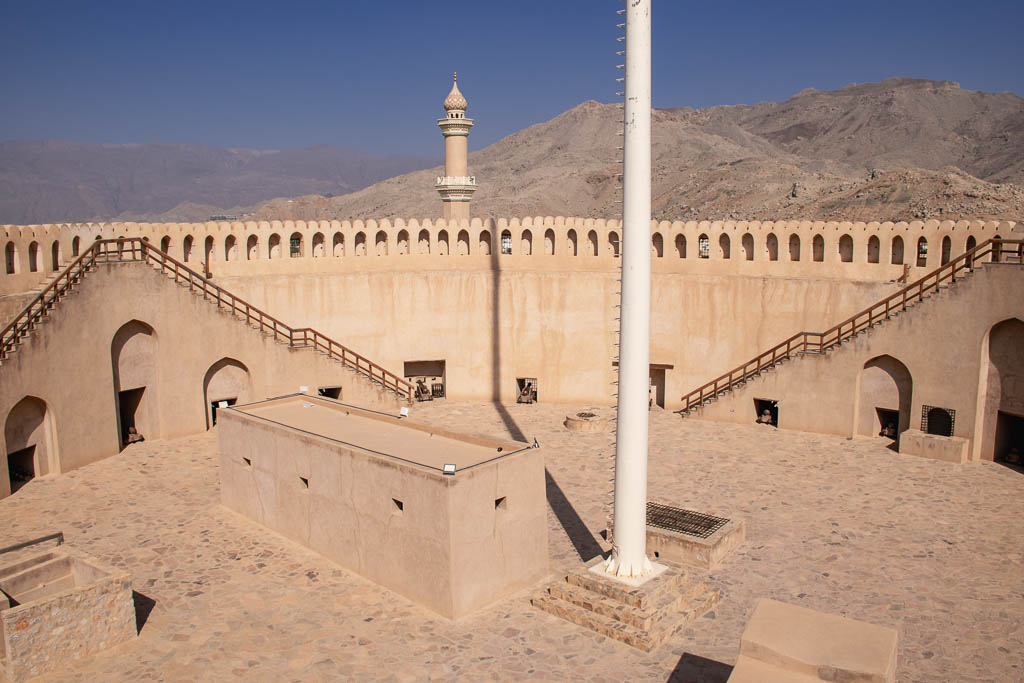
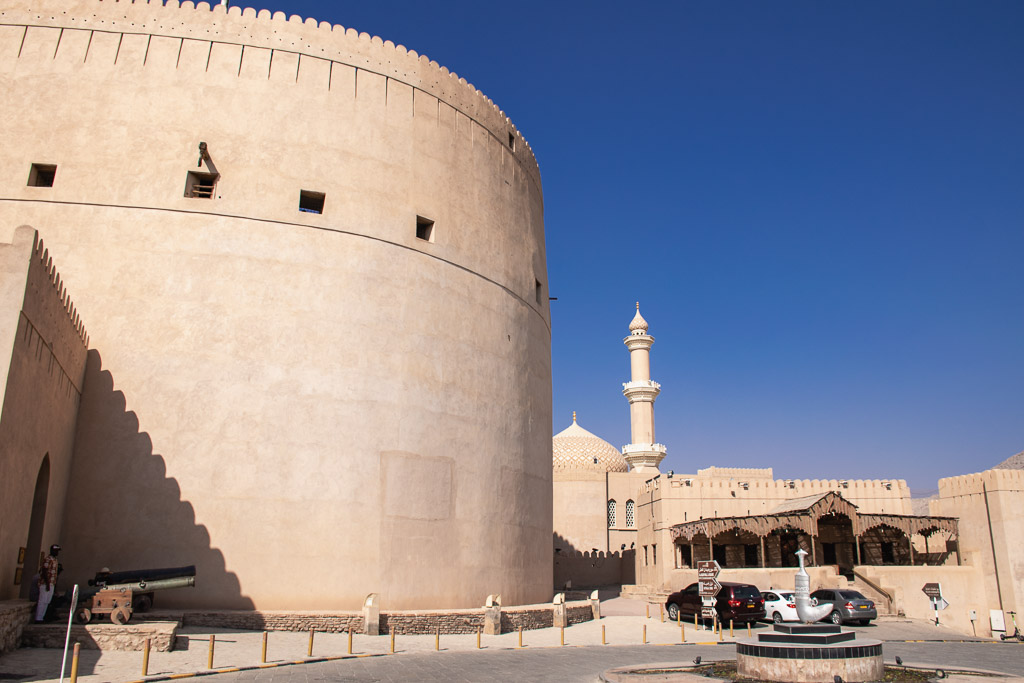
Just up the street from the Nizwa Souq, and hard to miss, is Nizwa Fort.
Walls stretch from the high oval-shaped tower that serves as the heart of the fortress. The local Imam built the fort in 1668, although there were fortifications in the area as far back as the 9th century.
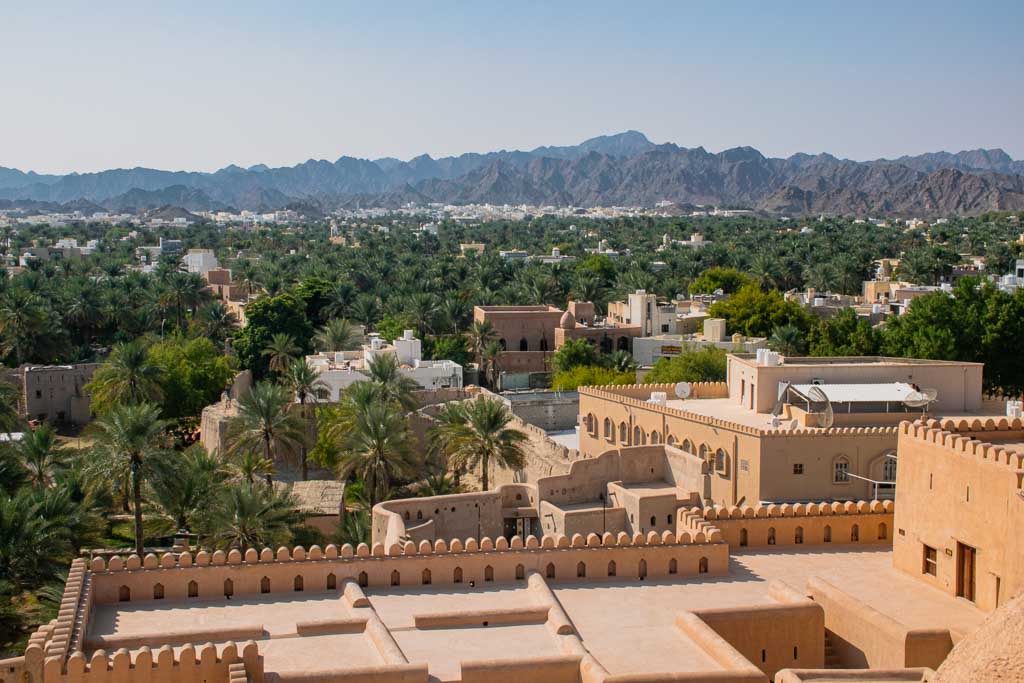
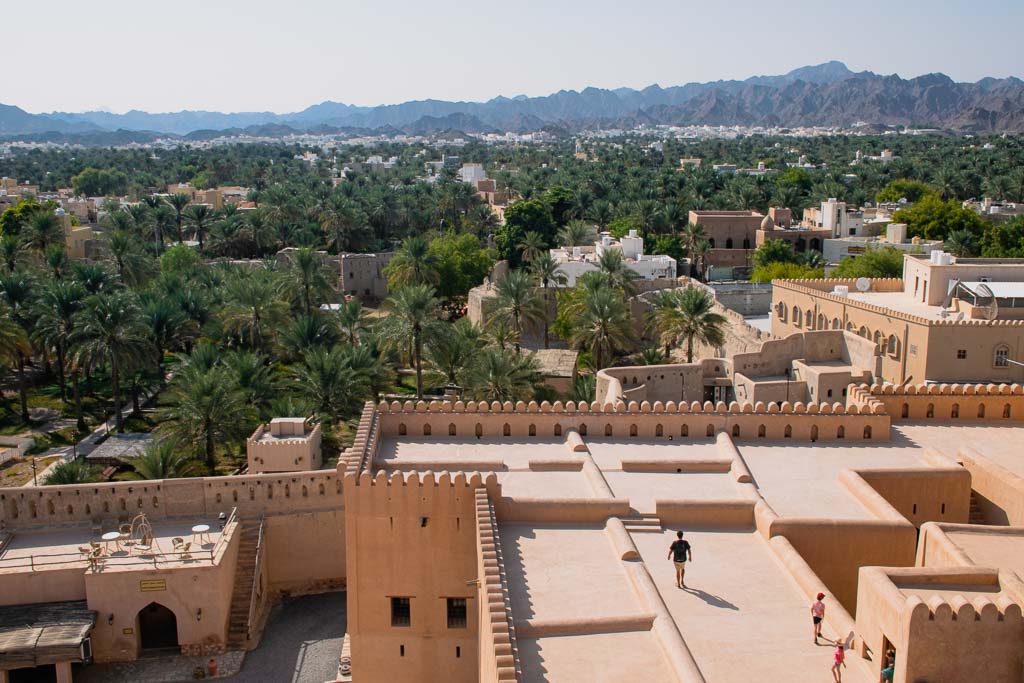
The main focus of a visit here is to visit the stronghold tower, where steps take you to the top of its walls. From the ramparts, you get clear views all around Nizwa.
I don’t think you’d ever appreciate how green Nizwa is without seeing this view. Plus, off in the distance, you see the mountains to the north and west. If you thought Oman was mountainous in Muscat, wait until you get out here.
Within the fort complex, you’ll also find the Nizwa Museum.
The museum isn’t huge, but there’s a lot of information to be read if you have the time. Exhibits detail the long history of Nizwa and how its mastery of irrigation and silvermaking allowed it to prosper.
There are also displays here on Oman’s broader fortifications, which come in useful for the next two Nizwa attractions that you should see. It’s not just how they built these towering forts, but why they protect these seemingly remote places.
Jabreen Castle
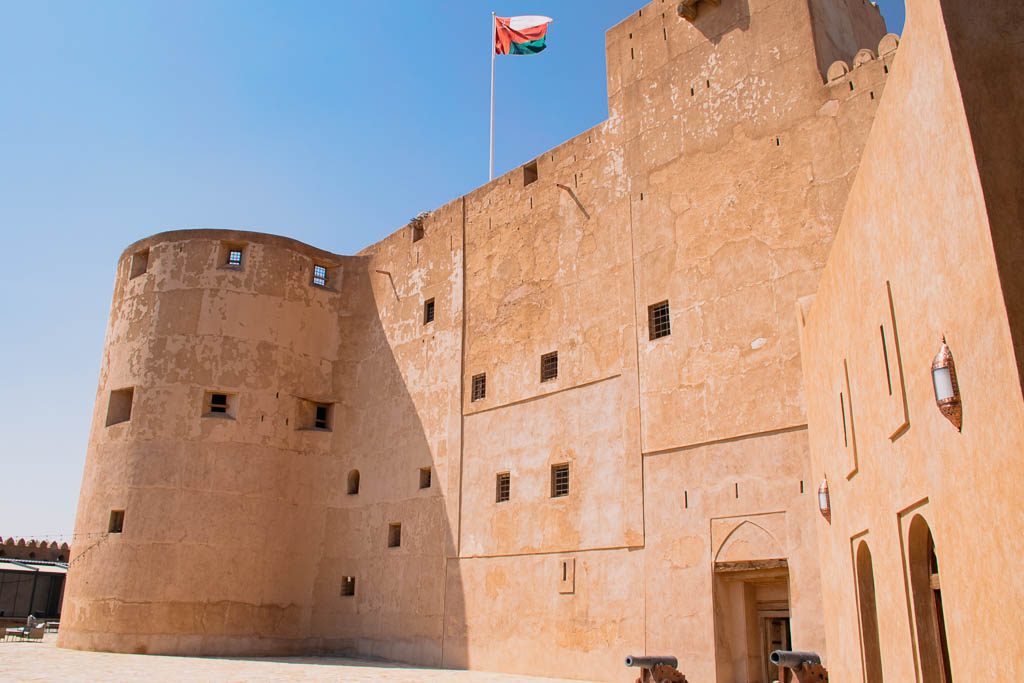
Roughly 30 minutes by car west of Nizwa stands Jabreen Castle. Of the fortifications around Nizwa, it was Jabreen Castle that I’d see the most photos of.
The same man, Imam Bil’arab bin Sultan Al-Yarubi, built Jabreen Castle and Nizwa Fort, and he made Jabreen his capital for 22 years until his death. This castle served as his palace, and his tomb lies within it.
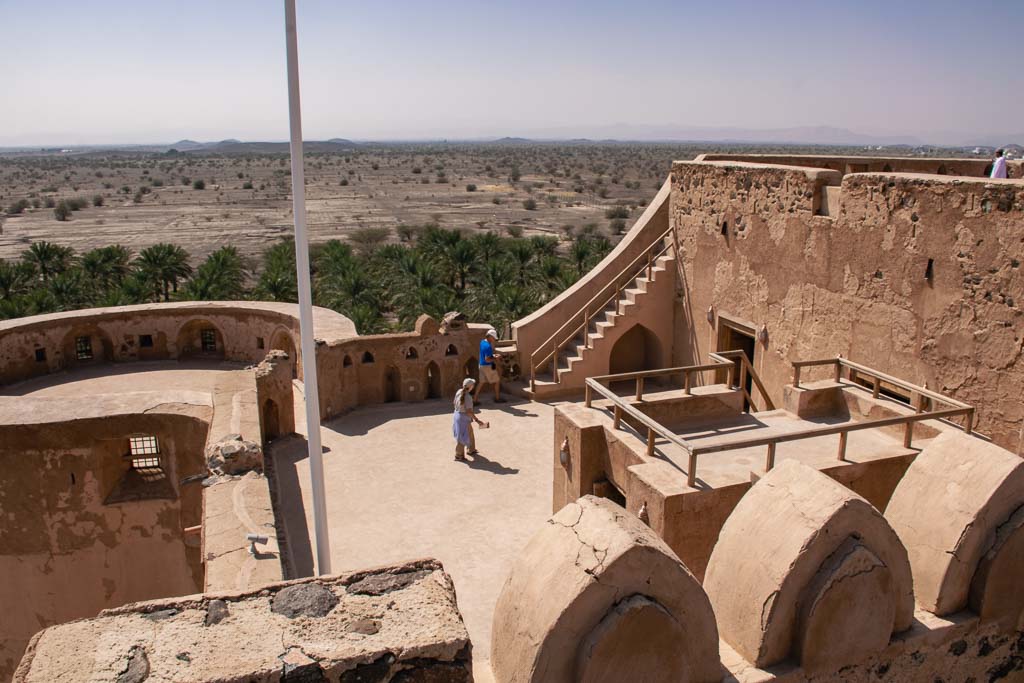
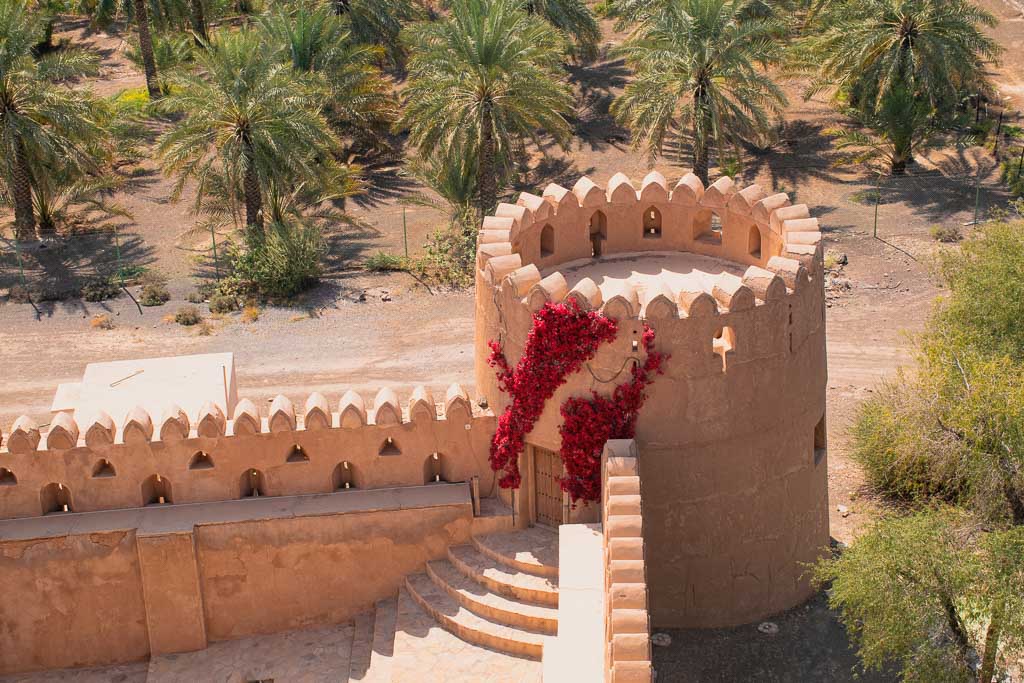
What sets Jabreen Castle apart from Nizwa Fort is that you can tour the different rooms and courtyards within it. You get a real feel for what life in the castle was like, going from libraries to dining rooms.
The museum displays here aren’t as extensive as those at Nizwa Fort, mainly focusing on the Imam and the castle’s history.
From the rooftop of the castle, you get views of the nearby date farms, but it’s quite a barren expanse beyond them.
Bahla Fort
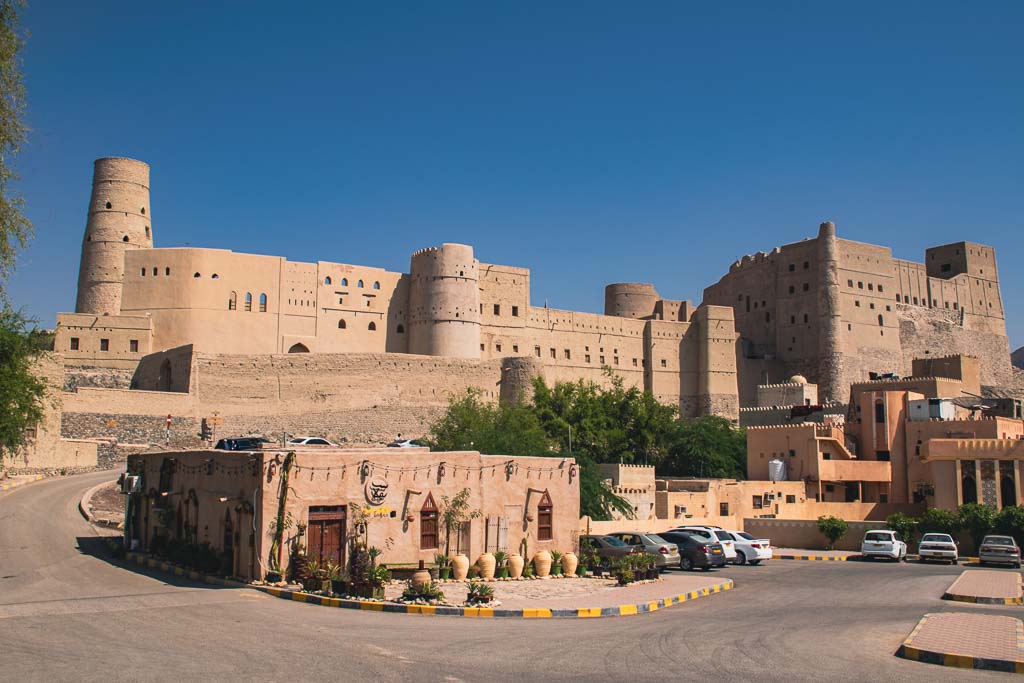
The last of the three major fortifications in the vicinity of Nizwa is Bahla Fort.
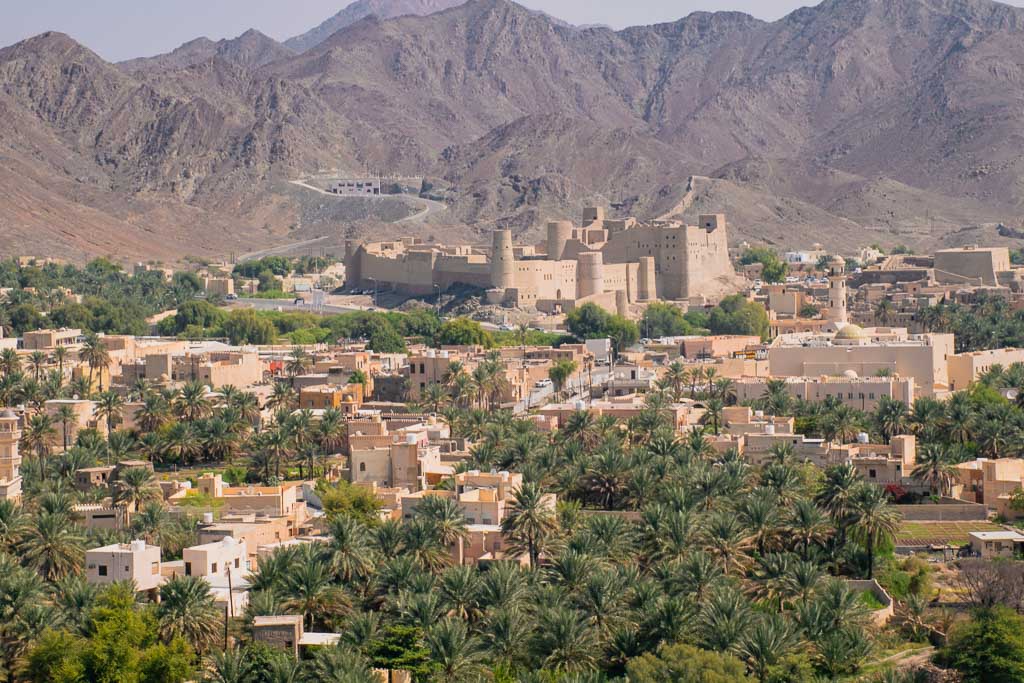
This huge fortress is the largest of the three and another UNESCO World Heritage Site. It’s the main focal point of the town of Bahla, which itself has crumbling walls around its outskirts.
Bahla Fort is older than Nizwa Fort and has undergone extensive restoration to keep it standing. There’s a great hilltop viewpoint near the Terrestrial Broadcasting Aerial that highlights its scale.
We simply didn’t have time during our trip to explore Bahla Fort; we chose to see the smaller Jabreen Castle instead. It can take 2-3 hours to fully explore the Bahla Fort.
I do feel bad for missing it, and it is definitely on the list for my next trip to Oman.