Disclosure: This post (probably) contains affiliate links. If you click on one, I may make a small commission. Of course, this will come at no extra cost to you and helps keep this site running.
Samarkand is the poster child for tourism in Uzbekistan. It’s the country’s most popular destination, combining a wealth of history with beautiful landmarks and a relatively central location within the region.
So most people don’t need convincing to come here the same way they do with visiting Tashkent. What you do need is a list of priority things to do in Samarkand to make sure you get the most out of visiting.
Getting to Samarkand
Part of why Samarkand is so popular is that it’s not hard to add to an Uzbekistan itinerary.
That’s because it’s a middle stop on the common route from Tashkent to Khiva, with both Tashkent and Bukhara only 2-3 hours away by train.
And taking a train to Samarkand is the most popular way to go. You generally have a bunch of different trains each day, including the Afrosiyob fast train, although Afrosiyob tickets are notoriously hard to get.
Book train tickets as far in advance as you can. If you run into trouble with the official Uzbek railways site, try their app, which I had better success with. After that, try 12Go, although prices may be higher.
Buses and taxi transfers are also available, but they can add hours to the journey.
When arriving at Samarkand Station, know that it’s a long way from the city center. Use Yandex rideshares to get from there to your accommodation. Taxi drivers tend to crowd station exits in Uzbekistan, so if you don’t mind risking a steep fare, that’s a quick alternative.
Where to stay in Samarkand
Tashkent Road
Finding a place to stay in Samarkand isn’t the issue. Choosing one option from all the choices is the challenge.
Staying close to Samarkand’s historical center, near Registan Square, is a popular choice for convenience. But expect to pay more for good hotels and guesthouses here than for less central alternatives.
You might find good value a little farther away in the cluster of accommodation down near the Gur-i Amir Сomplex.
I stayed at Vasiev’s west of the historical center—a somewhat modern area of the city, mostly because it was affordable. And while it was comfortable, it was but a bit of a walk to the main sights in Samarkand.
Other well-rated places to stay in Samarkand include:
What to do in Samarkand
Visiting Samarkand is mainly focused on history, culture, and architecture. Sure, you can take a traditional breadmaking class to add some variety, but basically all the city’s highlights are historical (and photogenic!).
You’ll find enough to do in Samarkand to fill two days, so don’t try to rush it in just one. If you can, a third lets you add a day trip, maybe to Shahrisabz or over to the Seven Lakes in Tajikistan.
While I’m going to take you through the first things to do in Samarkand, many are included in this walking tour — which I went on. Taking a tour helps you learn more about Samarkand as you go and elevates the attractions from pretty sights to real cultural landmarks.
Gur-e-Amir, Amir Temur’s Mausoleum
Gur-e-Amir
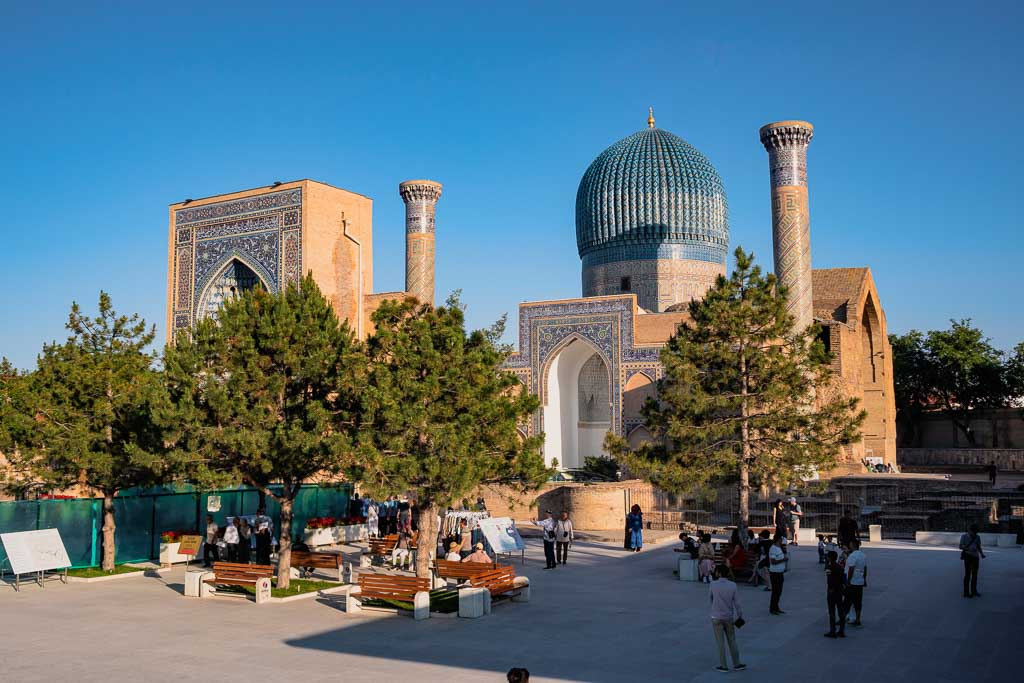
A memorable starting point for sightseeing in Samarkand is the Gur-e-Amir complex on the south side of the historical complex. Most main attractions in Samarkand fit on a fairly straight line, with Gur-e-Amir at one end.
Gur-e-Amir is the mausoleum of Timur, probably the most important person in Uzbekistan’s history.
Known as Amir Temur in Uzbek and Tamerlane in Western countries, Timur founded a Central Asian dynasty and ruled an empire that stretched to Turkey, Georgia, Iran, and Pakistan. It’s almost impossible not to learn about Timur when visiting Samarkand or Uzbekistan, so I won’t go into too much detail.
Samarkand was the capital of his empire, and after he died fighting to the north, his subjects brought him back and buried him here.
All of this goes to say that the mausoleum of Amir Temur is an incredibly important landmark. And the monument is appropriately richly decorated, inside and out. For a small fee, you can enter its beautiful gate and step inside the mausoleum.
The actual tombs of Amir Temur, some sons and grandsons, and importantly his mentor, are all interred in a chamber beneath the mausoleum. However, seeing their headstones and the Islamic architecture inside is worth it.
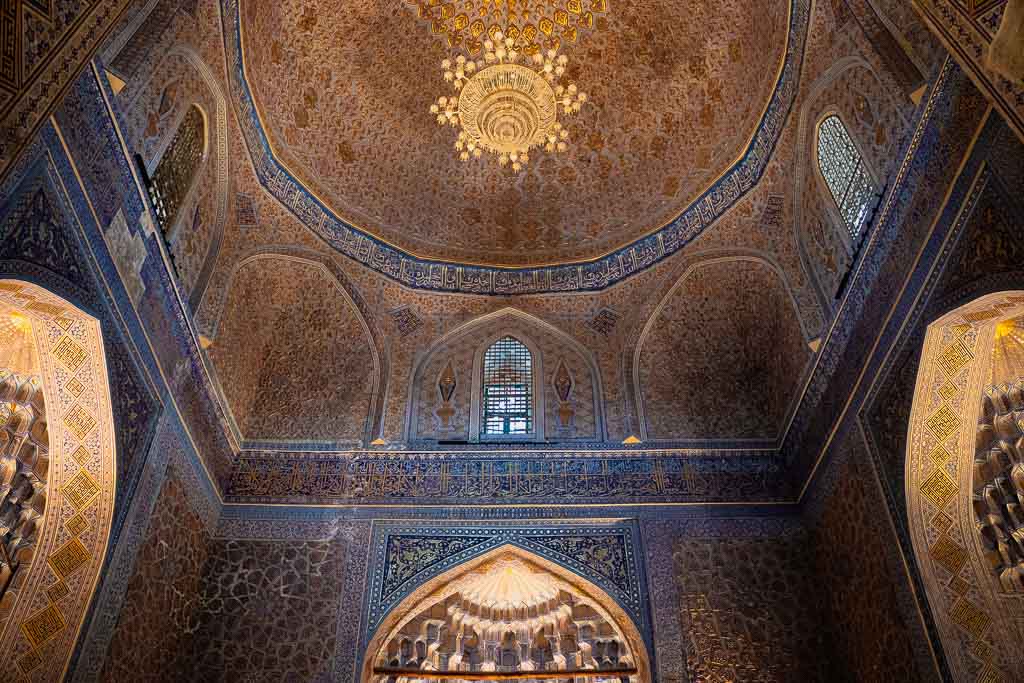
Amir Temur’s Mausoleum
Registan Square
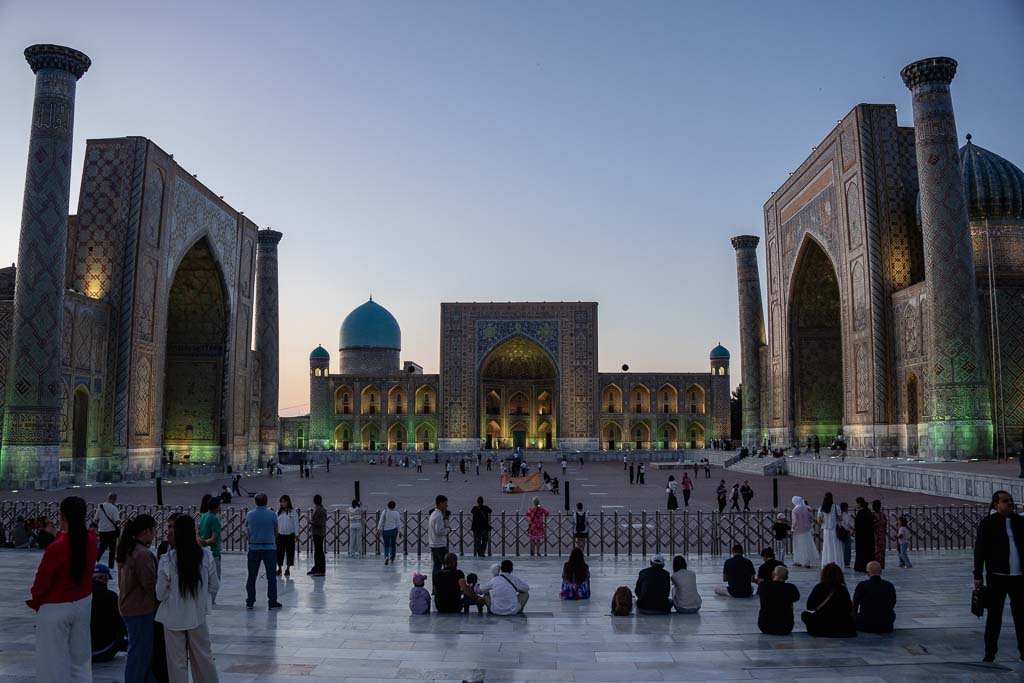
Registan Square
Walk for 15 minutes from Gur-e-Amir towards the historical center, and you reach Registan Square, Samarkand’s most famous landmark.
Standing on a stepped observatory, visitors and locals alike enjoy a view of this immense square from its open fourth side. The other three are dominated by stunning madrasas, historic Islamic universities.
This square offers maybe the best look you’ll get of Islamic architecture in the city, simply because the madrasas are so large and each is decorated differently, giving you so much to take in.
It’s free to enjoy the view from the observatory, but you’ll need a ticket to enter the square and the madrasas. If you’re like me, you’ll underestimate how long you spend just sitting and admiring the view.
Part of what makes Uzbekistan’s architecture unique is that it incorporates animal-like figures in the design, something that’s rare in Islamic architecture. We were told that some examples, such as in Bukhara where you see a phoenix-like mythical bird, were tolerated because they depicted fictional creatures rather than real creatures.
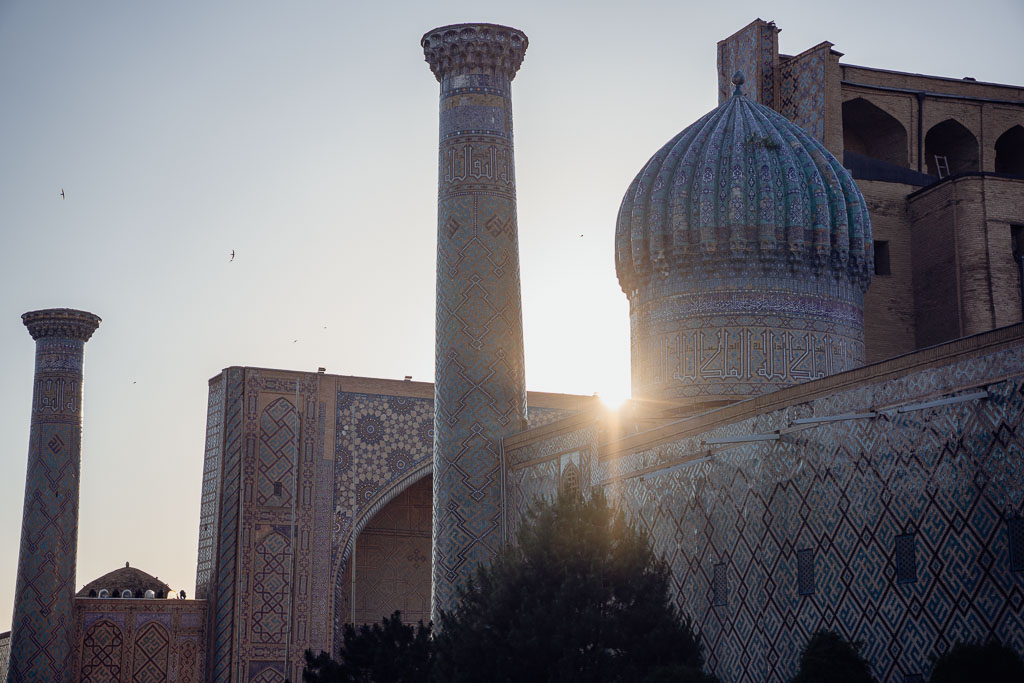
I’m not sure how the lions/leopards on the Sherdor Madrasa below fit into that, but the lion and rising sun image is a common Persian element and is also the symbol of Samarkand.
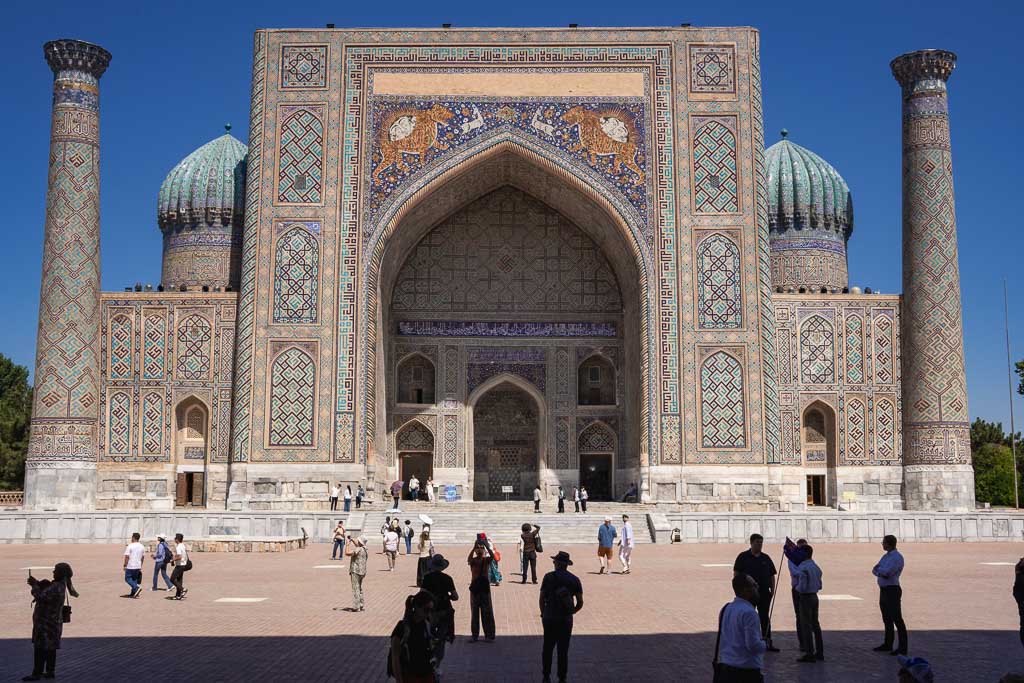
Sherdor Madrasa
The Samarkand Madrasas
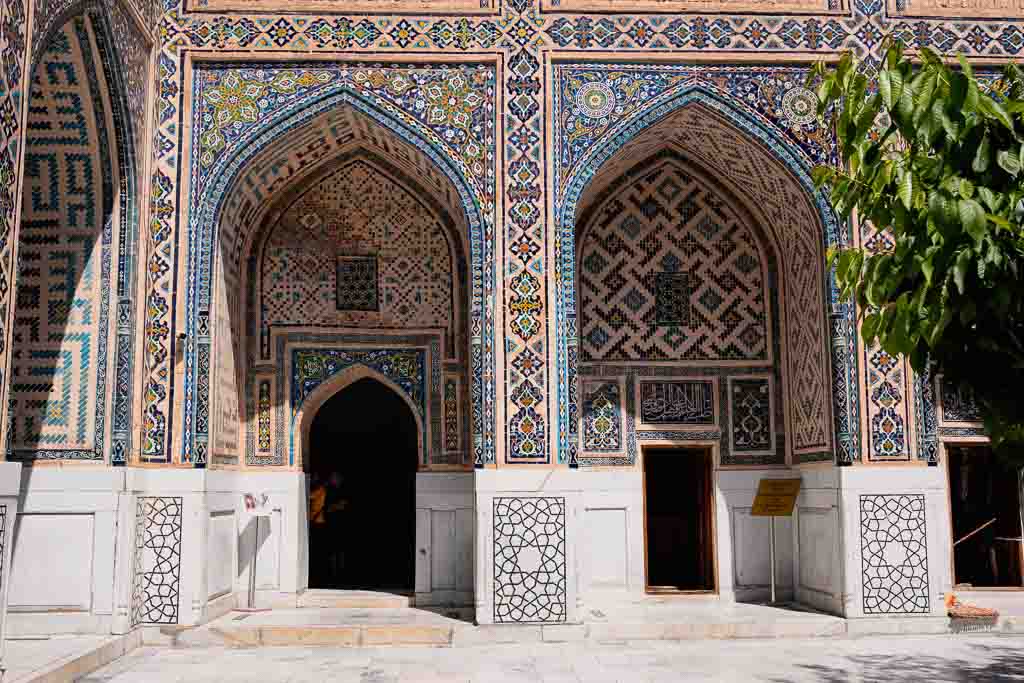
Ulugh Beg Madrasa
Taking in the view of Registan Square from outside or inside the square stops people in their tracks. But that’s just the start, as there are also three madrasas in the square to explore.
Now, if you’re on a walking tour of Samarkand, you won’t have time to visit the madrasas at first. Just return to the square after the tour and pay to visit then. It may be busier in the afternoon, but the later light is a perk.
Going from west to east clockwise, the three are the Ulugh Beg Madrasa, Tilya-Kori Madrasa, and Sherdor Madrasa. It’s also a good order to explore them in.
Ulugh Beg Madrasa is the oldest, dating to around 1420, while the other two came along in the 17th century. Contemporary rulers built them to support not only religious studies but also science, medicine, and astronomy.
At each madrasa, you’ll see a big, brilliant facade, then an entrance to its inner courtyard.
Alcoves and balconies, still gorgeously decorated in tiles, run around the outside of the courtyard. These were once the quarters where students lived, like a college, but are now often fitted out as shops. At the center of each courtyard, you’ll find small shady gardens, offering a break from the heat.
The two newer madrasas have a little more to see. Tilya-Kori Madrasa has an attached mosque, with the staggering roof you see below.
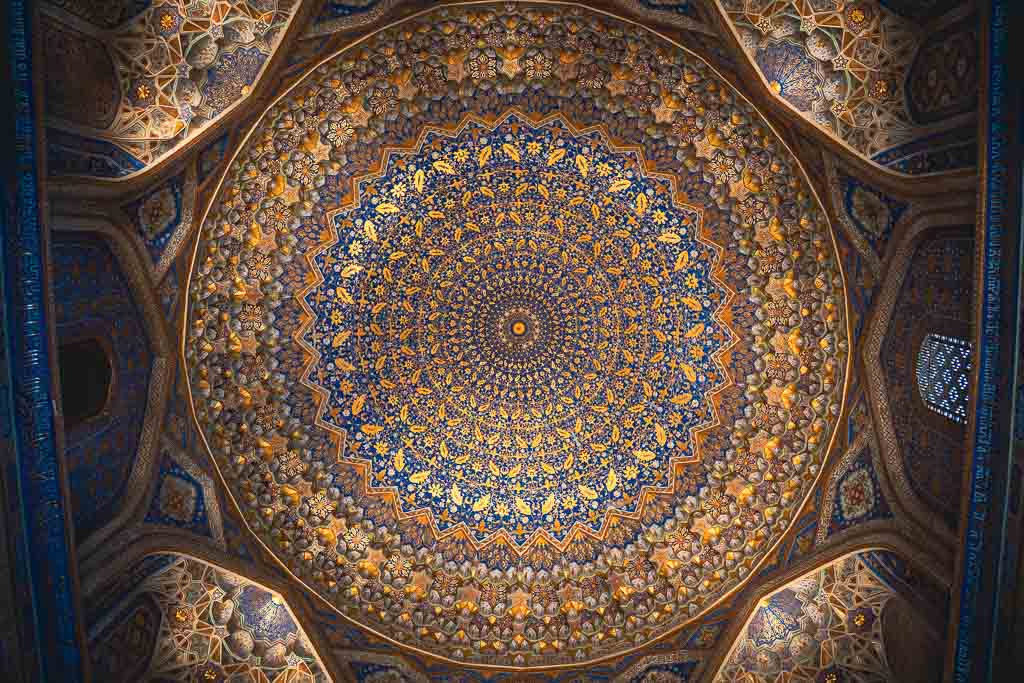
Tilya-Kori Madrasa Mosque
Bibi-Khanym Mosque
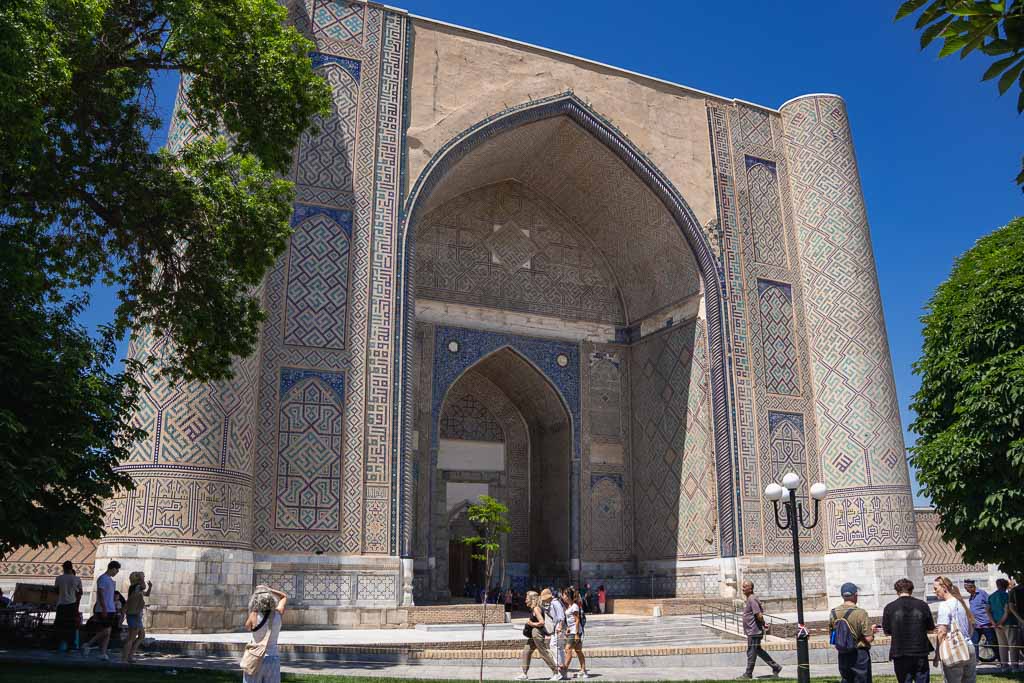
Bibi-Khanym Mosque
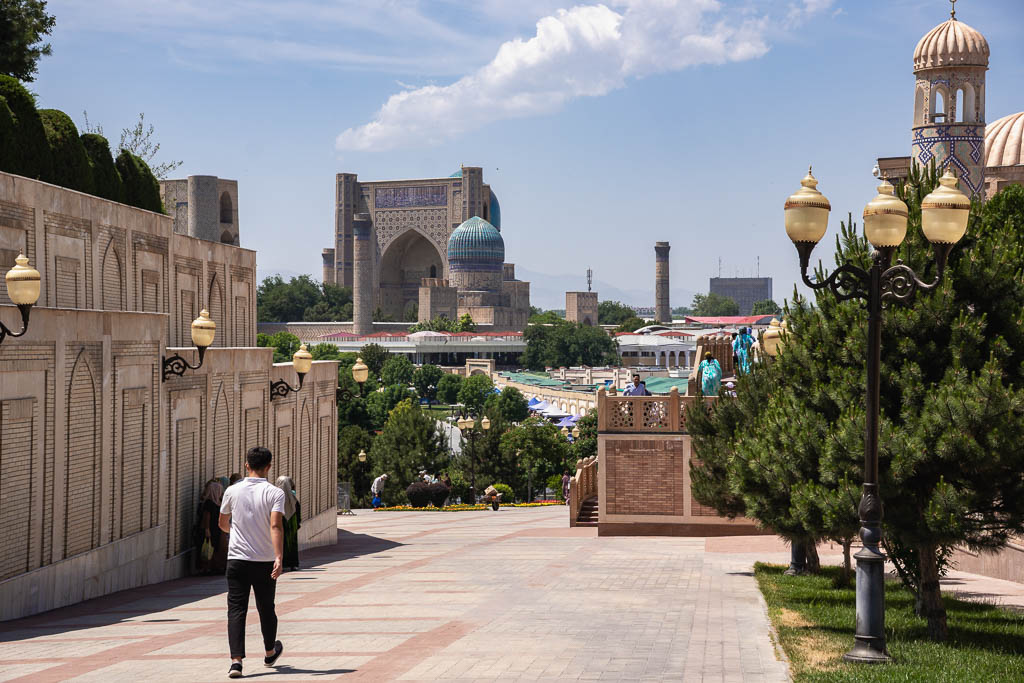
Tashkent Road is a long, mostly pedestrian street that runs from Registan Square through historic Samarkand.
While the road isn’t much on its own, it leads to major local attractions, starting with the Bibi-Khanym Mosque.
From the front, you might mistake it for another madrasa, but this massive landmark is a 15th-century mosque dedicated to his chief consort and wife, Saray Mulk Khanum, also known as Bibi Khanym.
Saray Mulk Khanum was a direct descendant of Genghis Khan (explaining the “Khanum”) and carried great influence in the court and empire, even after his death. You’ll find her mausoleum opposite the mosque.
While Bibi-Khanym Mosque looks quite grand now, that’s only after decades of restoration work. Earthquakes and neglect left it a towering ruin until the 20th century.
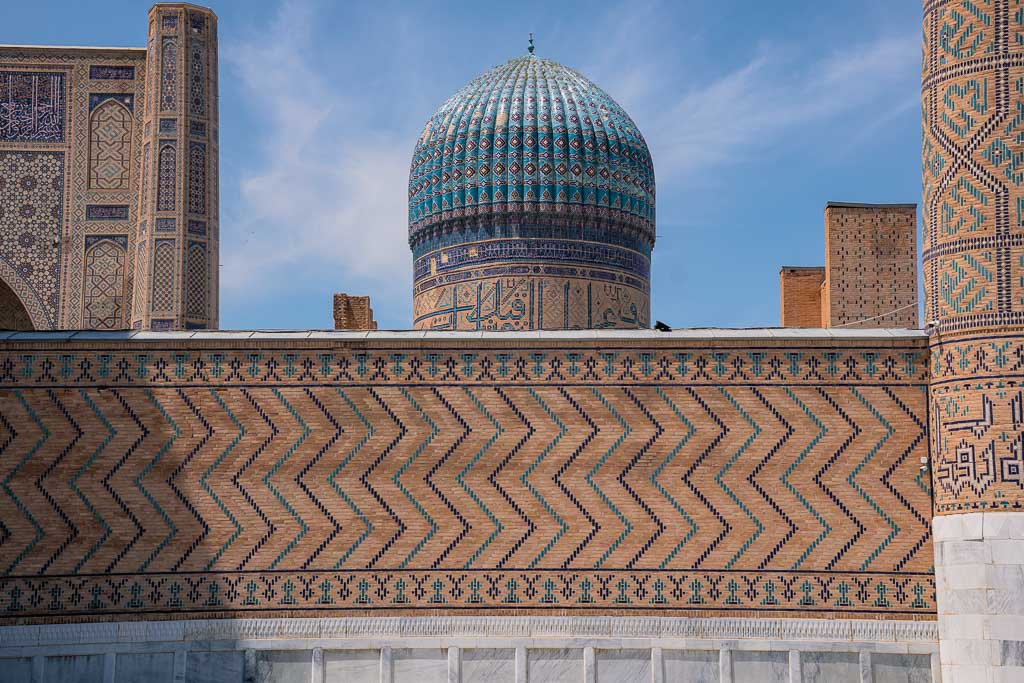
Bibi-Khanym Mosque
Hazrat Khizr Mosque
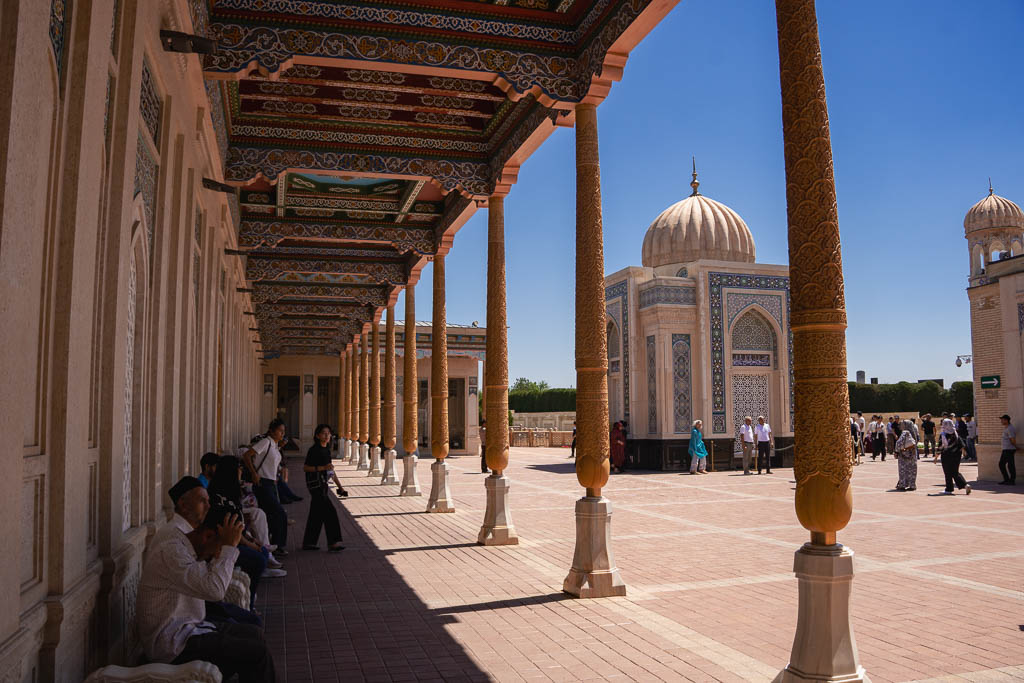
Hazrat Khizr Mosque
Continue to follow Tashkent Road, past Siyob Bazaar and across the overpass, to reach the Hazrat Khizr Mosque.
This is not an ancient landmark, but rather a beautiful 19th-century mosque, built over the remains of an ancient one destroyed during the Mongol invasion. Rather than large tiled facades, this mosque is memorable thanks to carved woodwork and ornately painted portico and balcony rafters.
What draws many Uzbek visitors to this specific mosque, besides its beautiful balcony and design, is the Islam Karimov Mausoleum.
Islam Karimov was Uzbekistan’s first president and the leader who declared the country’s independence in 1991. After his death in 2016, his mausoleum was added to the mosque.
Beyond the mosque’s vibrant details, its terraces offer a view back to the heart of Samarkand. From here, you really get a sense of the scale of the Bibi-Khanym Mosque as it dwarfs everything around it.
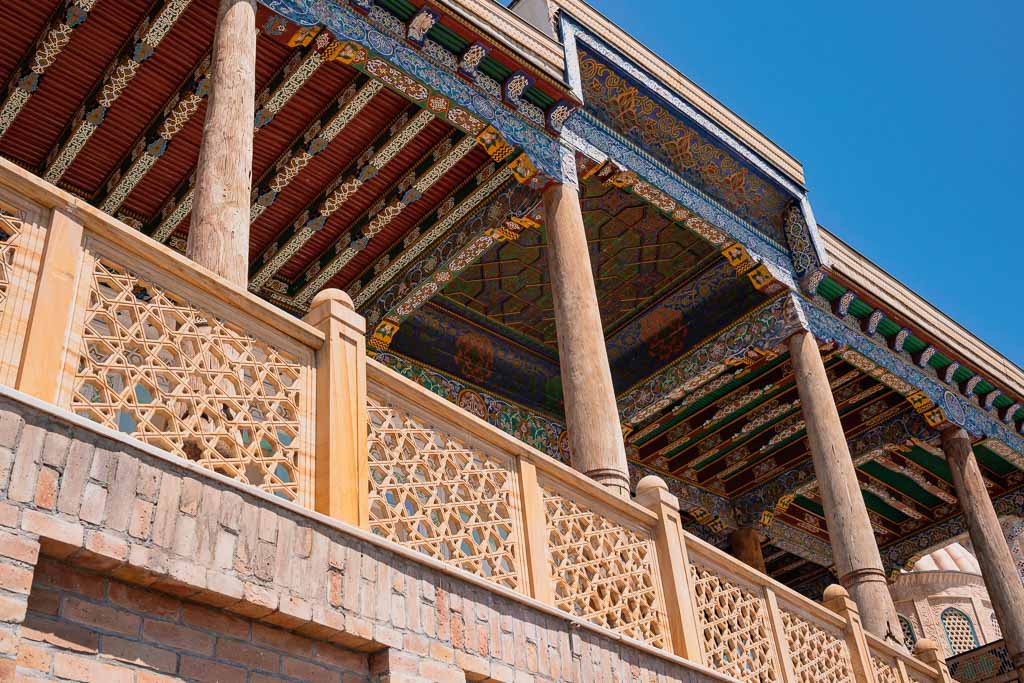
Hazrat Khizr Mosque
Shah-i-Zinda Necropolis
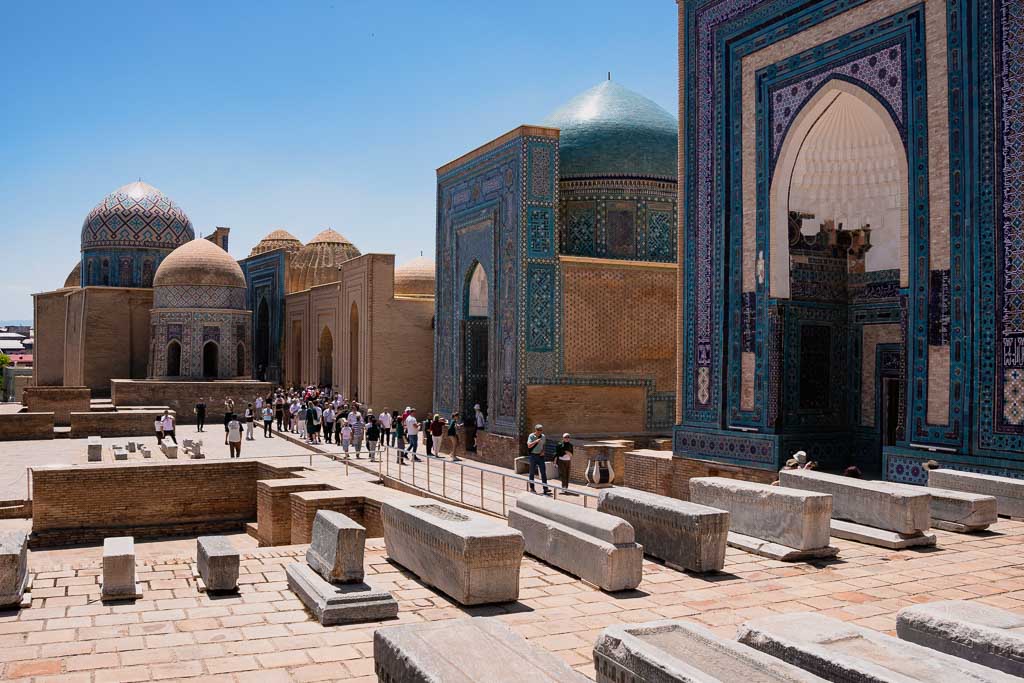
Shah-i-Zinda
Just down the hill from Hazrat Khizr Mosque, you come to Shah-i-Zinda, a common favourite of visitors to Samarkand.
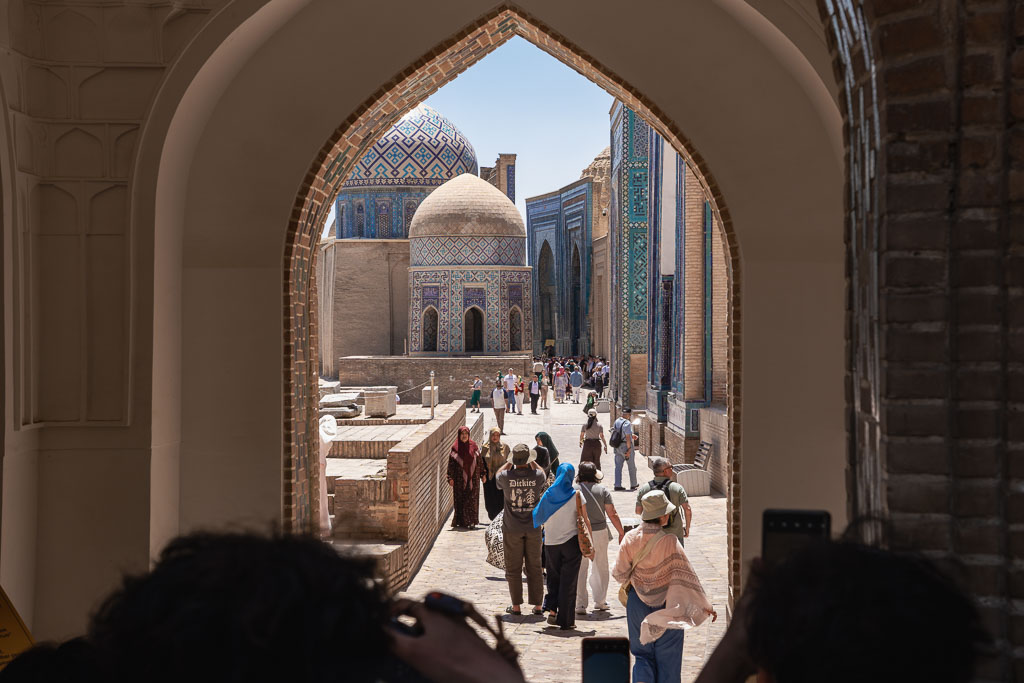
After Registan Square, this is the attraction you most see in photos, as people love taking photos here among the tiled tombs. Often, the staging makes the photos look like they’re from regular city streets; the reality is very different.
Shah-i-Zinda is a necropolis, a collection of grand mausoleums for important figures, and the occasional mosque. Walking around, you can read who is entombed (often scholars, military leaders, or their families) and who designed the mausoleums. But really, this is a place to look at architecture and take photos.
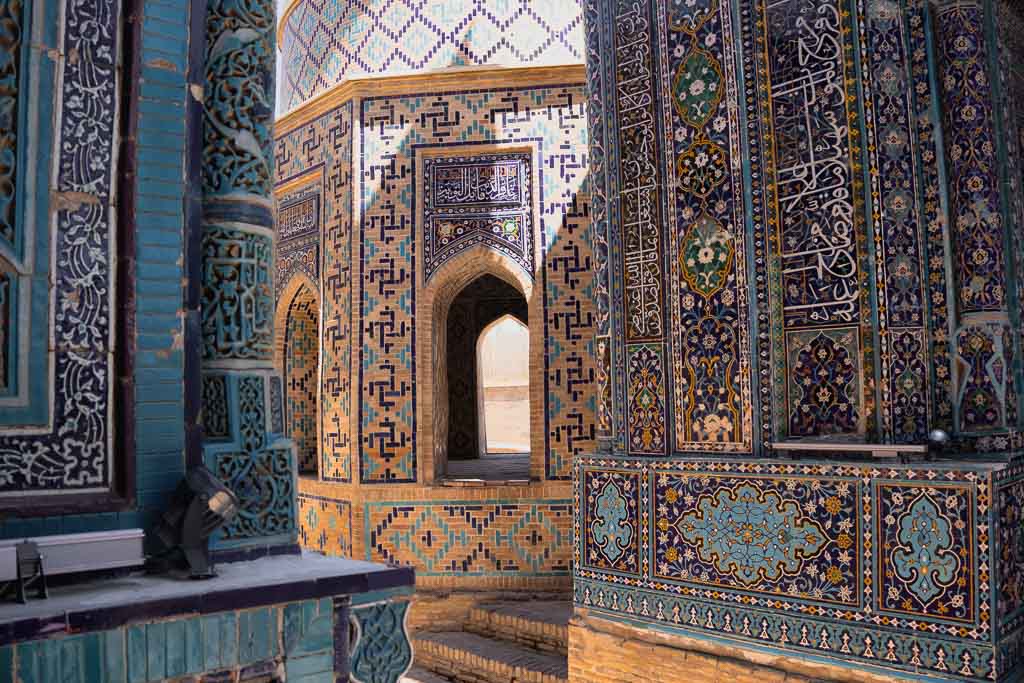
That might sound shallow, but once you see the wall-to-wall mosaic tiles here, you understand why people can’t resist taking photos.
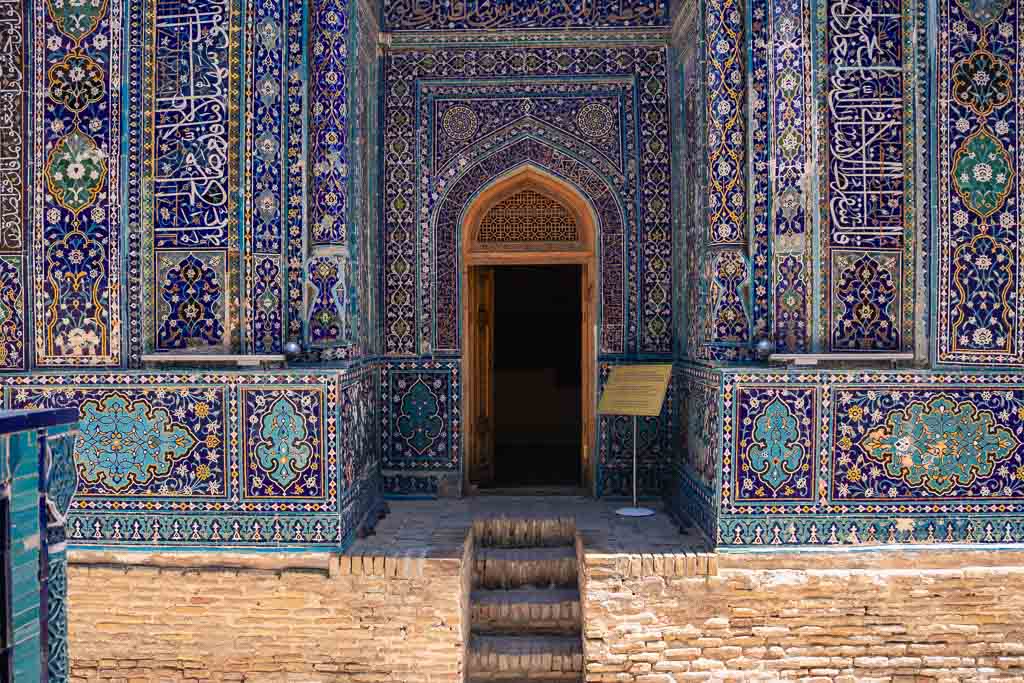
Many attractions in Samarkand are about scale, but Shah-i-Zinda is all about the fine details. No two mausoleum designs are the same, so the sea of blue tiles never gets dull or repetitive. Then there are the interiors, with gorgeous muqarnas and ceilings decorated to the umpteenth degree.
There’s no doubt this is the place you’ll come away with the most photos. Allow plenty of time to visit here – you’ll regret trying to rush it.
Afrasiyab Museum
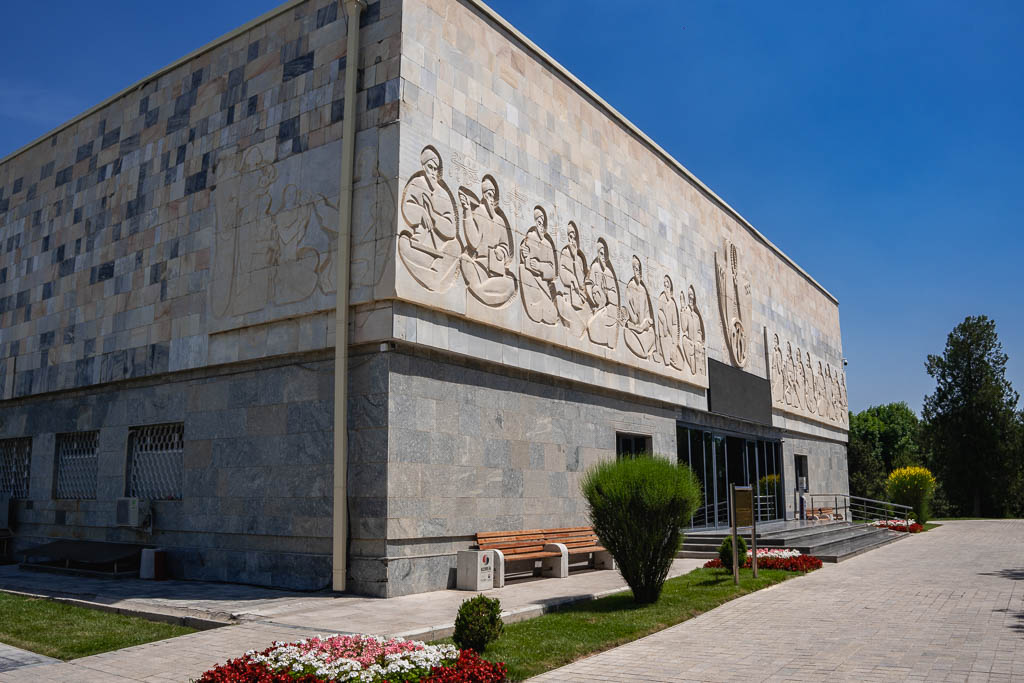
Afrasiyab Museum
Information around Samarkand is mainly limited to guides, information boards, and a small exhibition in one of the Registan madrasas.
The best place for information I came across, besides the upcoming Ulugh Beg Observatory, was the Afrasiyab Museum. I’d argue Tashkent’s museums are a better introduction to Uzbek history, but in Samarkand, this is the place to go.
The Afrasiyab Museum is attached to the huge Ancient Afrasiyab archaeological site, a huge lumpy landscape with the remains hidden throughout it. You can explore the site, but the interesting stuff is in the museum.
Across three floors, this museum explores Samarkand’s history, from the end of Afrasiyab in the 8th century through to the arrival of the Mongol forces under Genghis Khan in 1220.
Its centerpiece is a large wraparound mural, the Afrosiab mural, found in a 7th-century Afrasiyab palace. It also includes information on Zoroastrianism in Central Asia before the arrival of Islam, which I knew little about.
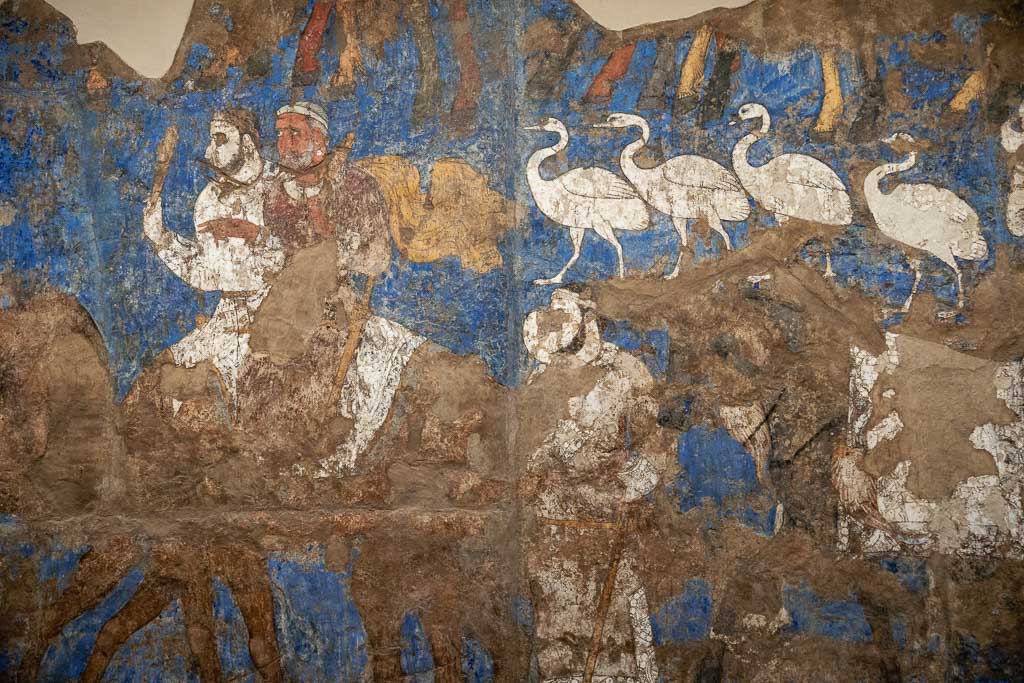
Afrasiyab Museum
Ulugh Beg Observatory
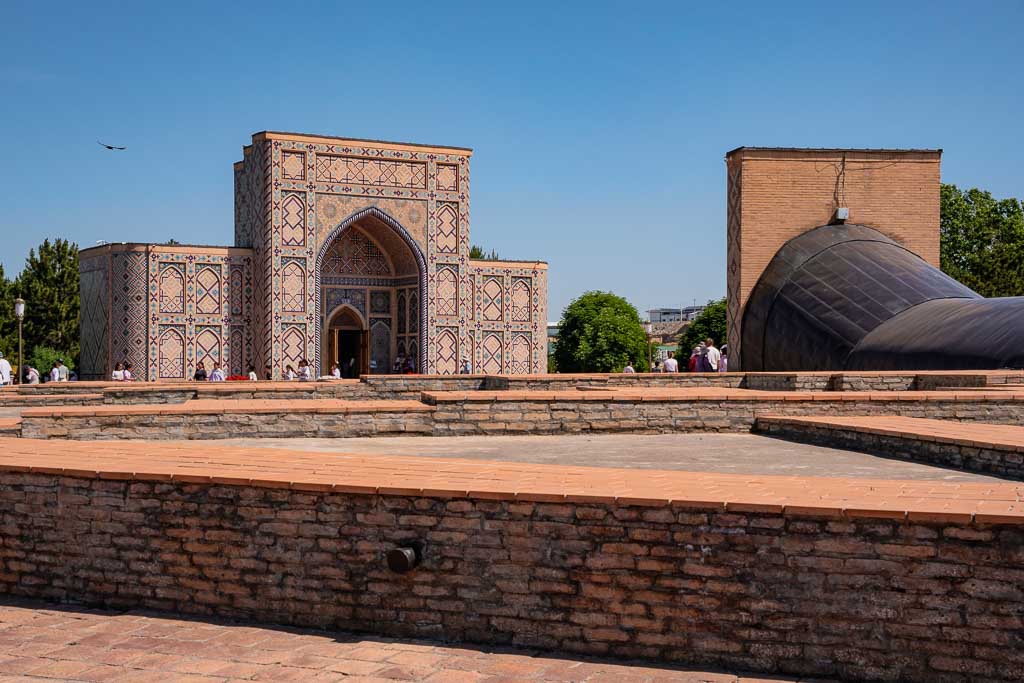
Ulugh Beg Observatory
For history of a different flavour, there’s the Ulugh Beg Observatory.
Ulugh Beg was the grandson of Amir Temur and a later Sultan of the Timurid Empire. And he was fascinated with astronomy.
If you recognize the name, that’s because one of the madrasas on Registan Square was built by and named after Ulugh Beg.
But he didn’t just build madrasas around Uzbekistan; he also built his own observatory and astronomy school, and was a skilled mathematician and astronomer.
The observatory was destroyed several decades after it was built, but a buried section of its huge quadrant was uncovered in the 20th century and is still visible today.
Besides the observatory, you’ll find a museum that details the life of Ulugh Beg and his family connections to Amir Temur. But it also explores his impact on astronomy, as astronomers for centuries referenced his astronomical tables in their own work.
Learning about Samarkand’s connection to astronomy was an unexpected and interesting detour (including seeing a display refer to a famous astronaut as the Russified “Edvin Oldrin”).
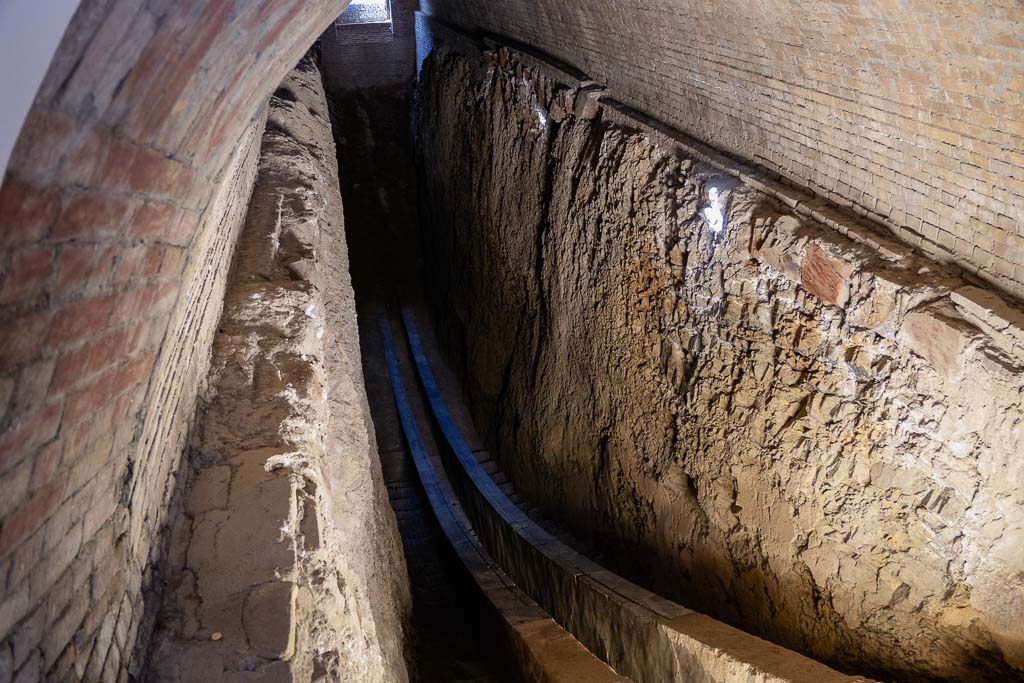
Ulugh Beg Observatory
Central Park and Bul’var
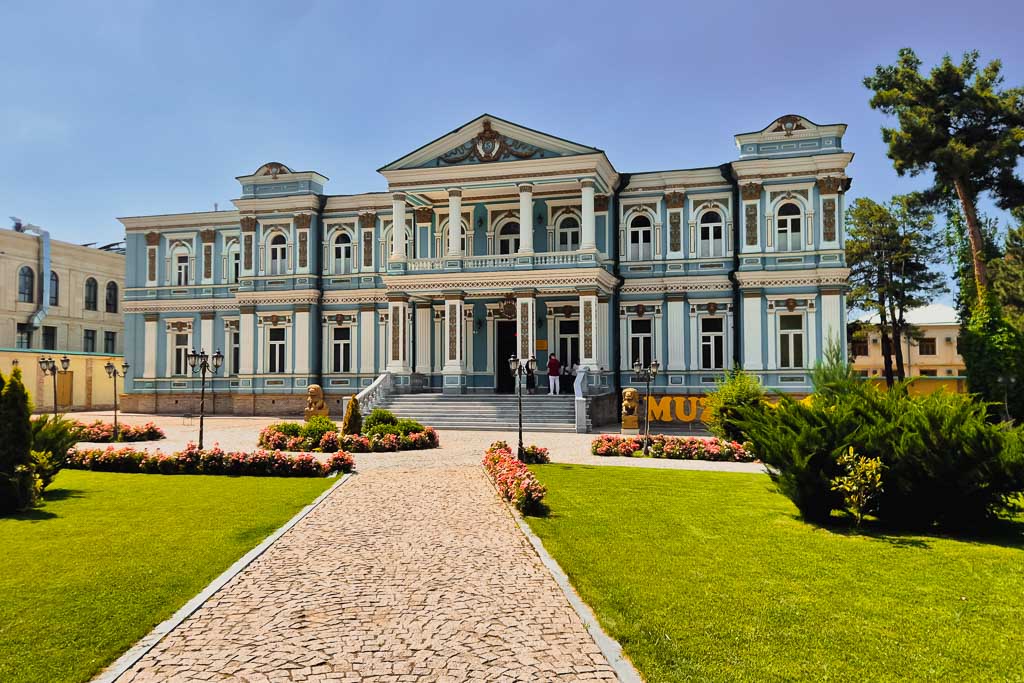
Museum of Friendship between Uzbekistan and China
With all the Islamic architecture and historical landmarks, it can be nice to take a break and get some fresh air.
For that, I recommend Central Park and/or the Bul’var boulevard. These two green, leafy spaces are away from the historical center, although you will see a huge Amir Temur Monument at the top of the Bul’var.
What’s nice about walking around here is that it gives you a more regular slice of life in Samarkand. Rather than fellow tourists, you mostly see students and locals passing through, so it feels less like an open-air museum.
The only real tourist attraction that caught my eye here was the Museum of Friendship between Uzbekistan and China. That’s mostly because it’s in a mansion with classical European architecture, reminding me more than anything else of Kadriorg Palace in Tallinn.
Re-explore Samarkand at night
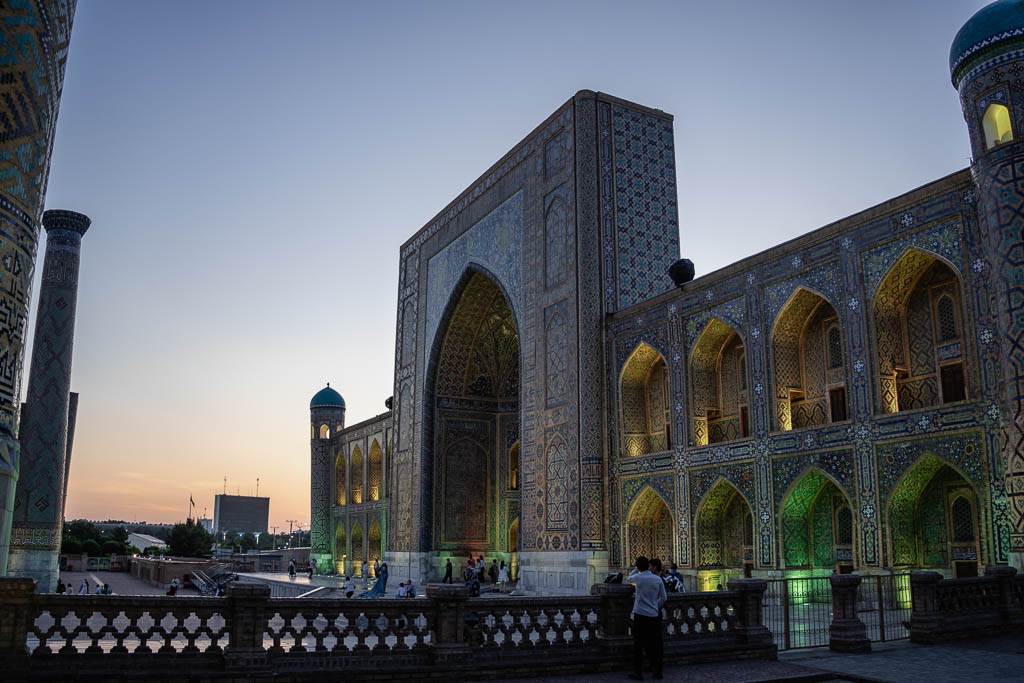
Tilya-Kori Madrasa
After a day or two of exploring Samarkand, you’ll have seen a lot. But if you have the energy, or find a restaurant nearby, it’s worth returning to Registan Square around sunset.
Not only does a glowing sky add to the view, but I think the madrasas look even better illuminated at night. They’ve chosen green lights to illuminate the square, and it has such a magical effect.
However impressive it seemed before, seeing the square at sunset/dusk/night will have you stopping and staring all over again.
