
Disclosure: This post (probably) contains affiliate links. If you click on one, I may make a small commission. Of course, this will come at no extra cost to you and helps keep this site running.
You’ve no doubt heard of Belgium’s main tourist destinations, such as Brussels, Ghent and Antwerp. But what about the small city of Tongeren, way out in far-east Limburg, which vies with Tournai for the title of oldest city in Belgium?
Visiting Tongeren quickly became a goal of mine once I learned it was once a major Roman settlement in this part of Europe. Discover why exploring this remarkable Roman history isn’t the only reason why this small, out-of-the-way city is so worth visiting.
Getting to Tongeren
Probably the biggest drawback of visiting Tongeren is getting there.
Lying in the country’s far east, Tongeren is much closer to Liege and the Netherlands than most popular Belgian destinations.
Taking the train is often the best way to get around Belgium, and it works here too. However, it’s a longer trip than most; taking under two hours from Brussels and over 2.5 hours from Ghent. Prepare for a long day trip if coming by train.
Your other option is to rent a car and drive there. This shortens the trip to just over an hour, and is definitely more convenient if you want to explore more of this side of Belgium.
Where to stay in Tongeren

While we did a day trip to Tongeren, there’s no reason why you couldn’t stay a night if it’s convenient or you want more time there.
Because Tongeren isn’t huge and isn’t on Belgium’s main tourist routes, accommodation options are relatively limited. Most options are vacation rentals, but well-rated hotels and apartments include:
Things to do in Tongeren
Don’t let the effort of visiting Tongeren put you off, though. As you’ll soon see, the attractions in Tongeren make the trip well worth it. Tongeren is also a good place to go for typical Belgian food and beer, whether it’s lunch at the Casque Cafe or a drink at Bazilik or the quaint Herberg De Pelgrim.
Here’s what to do in Tongeren to enjoy your trip there.
Gallo-Roman Museum of Tongeren

So what’s the story with Tongeren? Well, the easiest way to start is with the Gallo-Roman Museum of Tongeren.
This impressive museum has everything you need to learn all about the city and the region’s history. And I mean all of its history, as the museum spends considerable time even covering the region’s pre-Roman history.
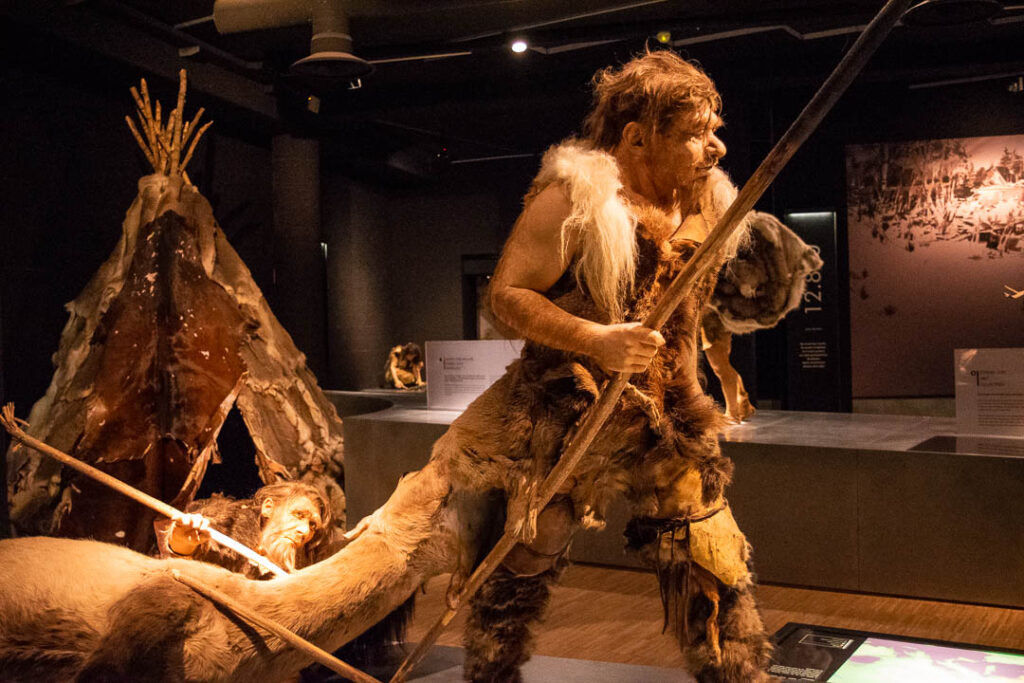
Well before you start reading about the Romans, the museum explores the lives of the Neanderthals. From there, it moves on to the advent of farming and the formation of societies. All of this unfolds organically to set the stage for the main event: the arrival of the Romans.
The start of the region’s Roman history is closely linked with the local Eburones tribe that lived here in Tongeren and who fought with the Romans. One name pops up over and over again: Ambiorix, from the museum’s dedicated short film about him to the statue standing proudly in the city’s main square.
Ambiorix was King of the Eburones and led the tribe to defeat Julius Caesar’s army in 54 BC, killing 8000 soldiers in a devastatingly successful ambush. Naturally, Caesar retaliated, forcing Ambiorix into hiding and ceding control of the region to the Romans. The people of Tongeren still celebrate this defiance today.
The Roman section covers the Tungri tribes, a clear link to the city’s modern name, plus the area’s Romanization and the settlement of Atuatuca Tungrorum, the city that would one day become Tongeren, in 10 BC.
Exhibits explain the city’s strategic importance, how it grew from a military settlement into a luxurious residential one, and how, with official city status, it earned city walls.

Entry to this vast, multi-level museum with English information on demand costs 7€ for the permanent exhibits.
We easily spent 1.5 hours taking in all the engaging yet heavily detailed exhibits the museum had to offer. Admittedly, we did hurry towards the end as lunch drew near. Families with young children will be pleased to know the museum has interactive displays, and they seemed quite popular when we visited.
Roman walls

The most obvious remnant of the Roman settlement when visiting Tongeren is the number of stone walls that have survived from those days.
Two types of Roman walls in Tongeren: the low fence-like mound of rocks and the large fortifying walls.
We walked the wrong way around, it seems, missing some of the most complete sections of the fortifying walls before succumbing to the bitter winter weather.
But we did manage to encounter some low stretches of moss-covered wall to the west of the city centre along Cottalaan, as well as clear remains of what must have been towers.

On the far side of the city, we found ourselves at the Roman Temple site, which is effectively a life-size replica with information.
Down some stairs from there, you’re able to see some of the larger, more impressive stretches of ancient walls. Unfortunately, we failed to reach some of the best-preserved sections on the north side of the city.
Tongeren historical centre

Although the biggest draw of visiting Tongeren is undoubtedly its Roman history, there are things to see in Tongeren, too.
Venture into the city’s Grote Markt, and you’re near a fair share of worthwhile sights, from the city’s rather understated Town Hall above to the far more exceptional belfry on the Tongeren Basilica of Our Lady.
Yes, yet another UNESCO-recognised Belgian belfry like the ones in Tournai and Mechelen ticked off the list. What was a nice surprise was the festive decorations on display inside the church, complete with nativity scenes, which were perhaps even more remarkable.

Besides Roman remnants of the city’s fortifications, several medieval towers have survived.
Mostly, these remains seemed to pop up here and there, like in the middle of a median strip on a major road. Probably the most notable of the medieval ruins, though, is the Moerenpoort on the city’s eastern side, easily found when exploring the next attraction of Tongeren…

Tongeren Begijnhof

Once I learned that Tongeren had its own begijnhof, much like Leuven, Mechelen and plenty of other cities, I knew I had to go.
No two beguinages have been alike during my visits, and sure enough, the Tongeren Begijnhof was different again.
I think this was the first beguinage I’ve visited where some homes had front gates and private front gardens. The beguinage also lacked the uniform colour palette found in some other Belgian beguinages, instead alternating between clearly renovated homes and buildings that could use some of that same love.

After exploring the small beguinage, the cold was starting to creep in under our coats again when we found Herberg De Pelgrim. In a small building that couldn’t look more cosy, this little inn didn’t house pilgrims at all, despite what its name suggests, since they weren’t allowed within the beguinage.
Still, one look inside its door and we knew we had to come inside and get a drink. Rather than a warm drink, I had to try Tungri, a tasty local beer from Tongeren.
Tongeren Antiques Market

When planning our visit, my friend learned that Sundays were a good day to visit Tongeren. That’s because the city hosts a particularly popular antique and flea market.
And the first thing we saw when we arrived outside the station was its sprawling market.
Lining the pedestrian street that leads to the centre of the city, everything imaginable was out for sale, all sitting in front of many of Tongeren’s 40 antique stores. Tongeren’s obsession with the past runs deep, it seems.
Which historic destinations in Europe have you visited in the hopes of thoroughly learning about its past? Have you heard of ancient Tongeren before? Please share your thoughts in the comments below.

This article is now available as a mobile app. Go to GPSmyCity to download the app for GPS-assisted travel directions to the attractions featured in this article.

3 comments
Interesting to learn more about the pre-Roman history and the massive defeat of Caesar! It always amazing me how far the Romans got and the impact they had everywhere! Thanks for linking up with #TheWeeklyPostcard, David!
I wouldn’t have expected to find a Roman wall in Belgium. It’s amazing to see how far the Roman Empire extended. I guess I should have known that (if I paid better attention to my history teacher). #TheWeeklyPostcard
Can’t believe I’ve never heard of Tongeren! I love visiting ancient Roman sites everywhere! Quite a long trip for the small Belgium, but I´d love to visit anyway #TheWeeklyPostcard