
Disclosure: This post (probably) contains affiliate links. If you click on one, I may make a small commission. Of course, this will come at no extra cost to you and helps keep this site running.
Ghent is one of Belgium’s most beautiful cities and a favourite destination of mine there. And that’s not just because I have friends there who have shown me around extensively. There’s just so much to do in Ghent thanks to the way the city combines moody Gothic architecture with food, nightlife, and a thriving student culture.
I think many travellers are surprised with how much they love visiting Ghent. They expect Bruges to sweep them off their feet, but Ghent is another highlight of visiting Flanders with a spectacular old town and idyllic waterways. With this detailed guide full of places to visit in Ghent, including both obvious and unusual attractions, you won’t have any surprises.
Is Ghent worth visiting?

Let me put your mind at ease if you have any doubts about visiting Ghent. Yes, Ghent is worth visiting, whether you’re travelling around Belgium or looking for a city break getaway. And I do think the city has something for most types of travellers.
If you can, I recommend spending at least two days in Ghent to have time to explore. But if you’re short on time and staying somewhere like Bruges or Brussels, a day trip to Ghent is better than nothing. Those short on time should focus on the attractions at the top of the list, as those are the classic Ghent attractions.
How to get to Ghent
Like most places in Belgium, getting to Ghent isn’t hard. Ghent is located in the northwest of Belgium, not far from the other places you’re likely to be visiting, e.g., Bruges, Brussels, Antwerp, etc.
Travelling by train in Belgium is easy and effective, particularly when going to Ghent. You can get to Ghent within 30 minutes from Bruges and Brussels, and within an hour from Antwerp. It’s not exactly cheap, but it’s convenient.
To save money, look at getting to Ghent by bus. Intercity buses can be cheaper than going by train, and sometimes aren’t that much slower either. Airport shuttle buses are also the best way to get to Ghent from Brussels Airport and Brussels South Charleroi Airport.
I’d only advise renting a car for Belgium if you’re going to be exploring widely. Having a car gives you freedom and flexibility, but comes with the hassle of finding parking.
How to get around Ghent
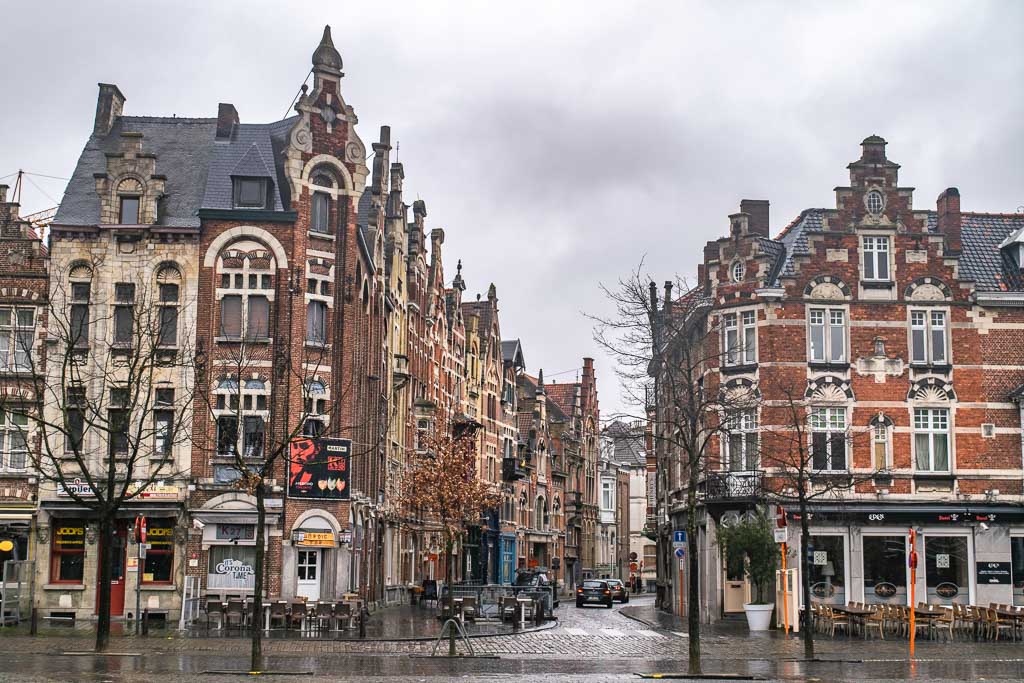
Most of the time, getting around Ghent is pretty easy. Walking or cycling is an easy way to explore the main sights in Ghent, as so many are located together around the historical centre. Even areas like Patershol and Het Zuid are easy to get to this way.
Ghent’s trams provide the main way to get around the city easily beyond the dense centre. Taking the tram is especially useful for getting from Gent-Sint-Pieters train station to the centre. The gent-Dampoort train station and the Flixbus station, unfortunately, don’t have a convenient alternative.
You can buy tickets for Ghent trams in various ways, from old-fashioned paper tickets to an app and contactless card. Tickets are valid for 1 hour.
Where to stay in Ghent
Because Ghent is one of Belgium’s largest tourist destinations, expect to find a vast range of accommodation options to choose from. I highly recommend booking in advance if you’re planning to visit Ghent in the summer, as the city can get booked up quickly. I learned that the hard way.
When booking a place to stay in Ghent, aim to be up in the historical centre. Don’t worry too much if you’re across a canal from the very centre, as getting about is easy. I don’t recommend staying down near Gent-Sint-Pieters station as the nearby park is said to be a bit dodgy at night.
If you’re looking to save time planning a visit, here are several highly-rated places to stay in Ghent to book without hassle:
Useful Ghent tours
While I had friends to rely on and enjoy exploring on my own otherwise, that’s not true for everyone. Whether you’re short on time, like local guidance, or don’t know where to start, tours can make sightseeing easier and more rewarding.
Popular activities for sightseeing in Ghent include:
- 50-Minute Medieval Center Guided Boat Trip
- Guided Walking Tour
- Guided City Tour with Food and Drink Tastings
- Guided Urban Bike Tour
- Small-Group Chocolate Tour with a Local Guide
Best places to visit in Ghent
With all the logistics out of the way, let’s look at all the fun things to do in Ghent that you should add to your sightseeing itinerary. Many of these attractions are located in the historical centre and will be included on a Ghent walking tour worth its salt. Spend your first day working your way through this list and end the day with a well-deserved Belgian beer or jenever.
1. Gravensteen Castle
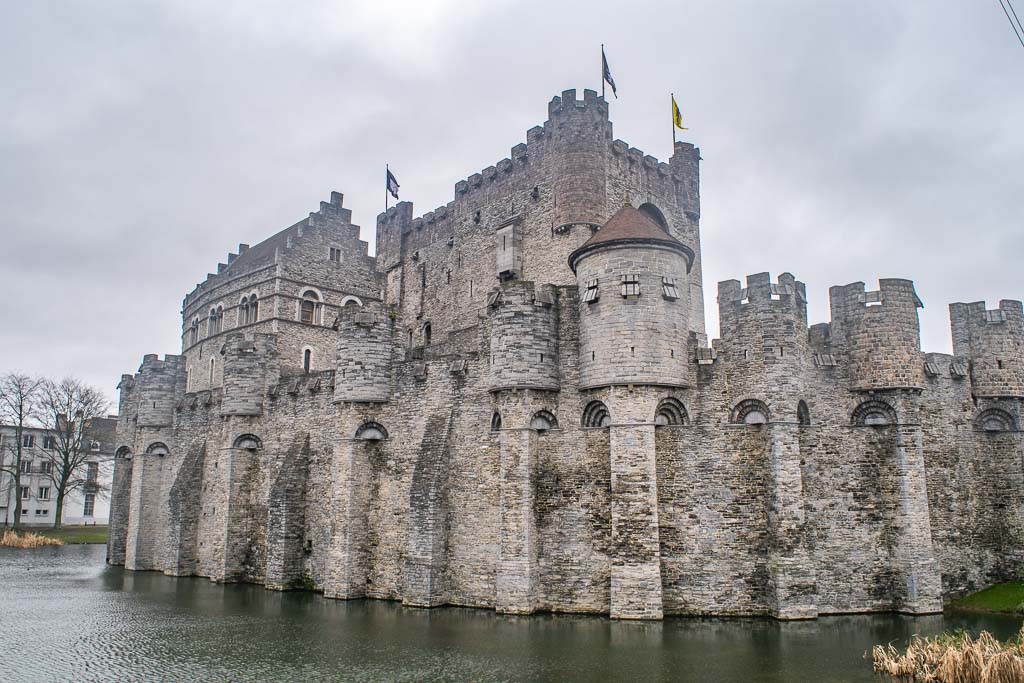
Let’s start with a castle and a pretty cool one at that. Curbed by the Leie River on two sides, the small but mighty Gravensteen castle rests in the north of the city centre. With its strategic location by the river, fortifications have existed on the site of Gravensteen since the 10th century.
After a fire destroyed the previous castle, the castle’s current look came about in 1180 under Count Philip of Alsace. A visit to the castle takes you through the castle grounds and interior, all the way up to the keep roof for views across the city.
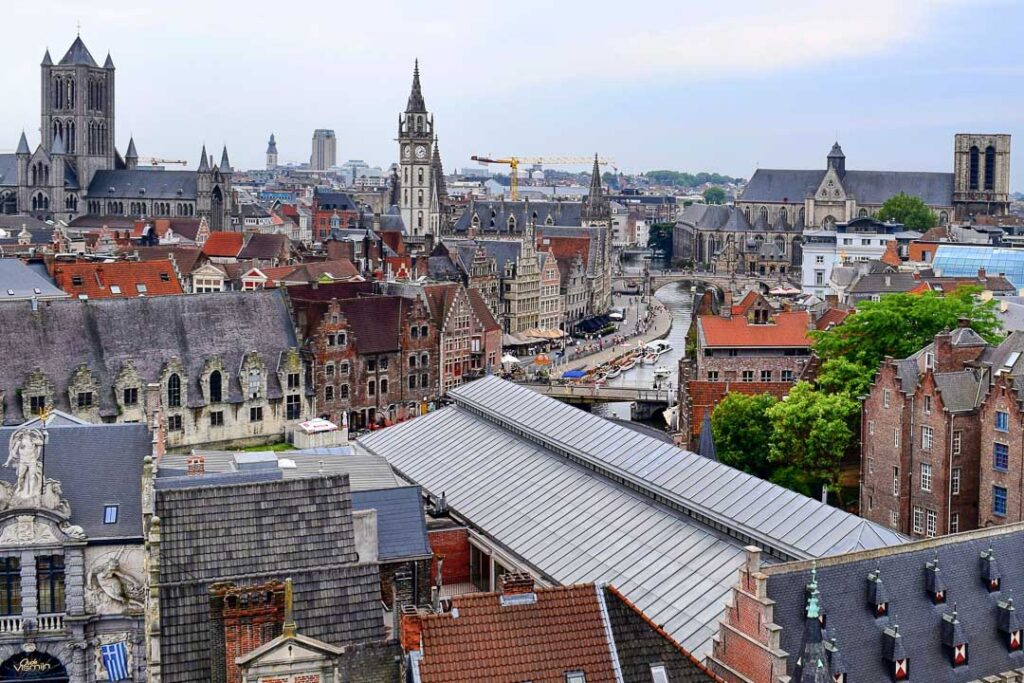
2. St. Bavo’s Cathedral

When you visit Ghent, there’s no missing St Bavo’s Cathedral. Once a small chapel, this immense gothic church underwent grand expansions in the late Middle Ages.
The current gothic architecture was unfinished however when it was made the diocese cathedral in 1559. It was in St Bavo’s Cathedral that famed local son Emperor Charles V was baptised in 1500, although renovations prevented his funeral from being held there as well.
Finished in 1569, modern renovations on the cathedral tower have recently just finished, proving work is never done on buildings like this. Inside, you’ll see artwork from famed artist Peter Paul Rubens and a renowned altarpiece by Hubert and Jan van Eyck.
3. St. Nicholas’ Church
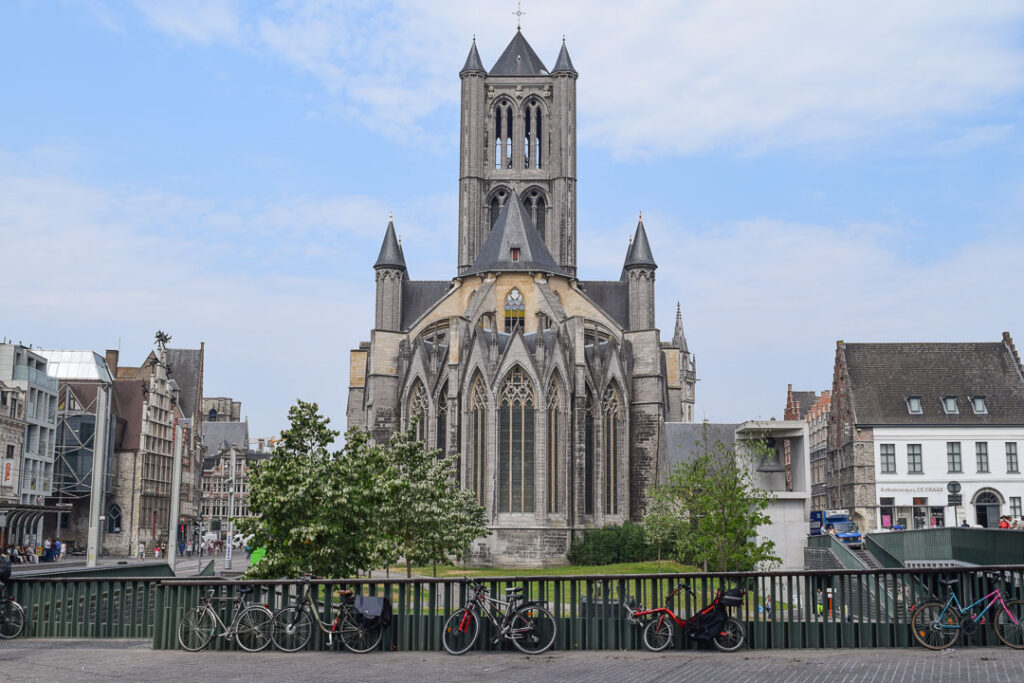
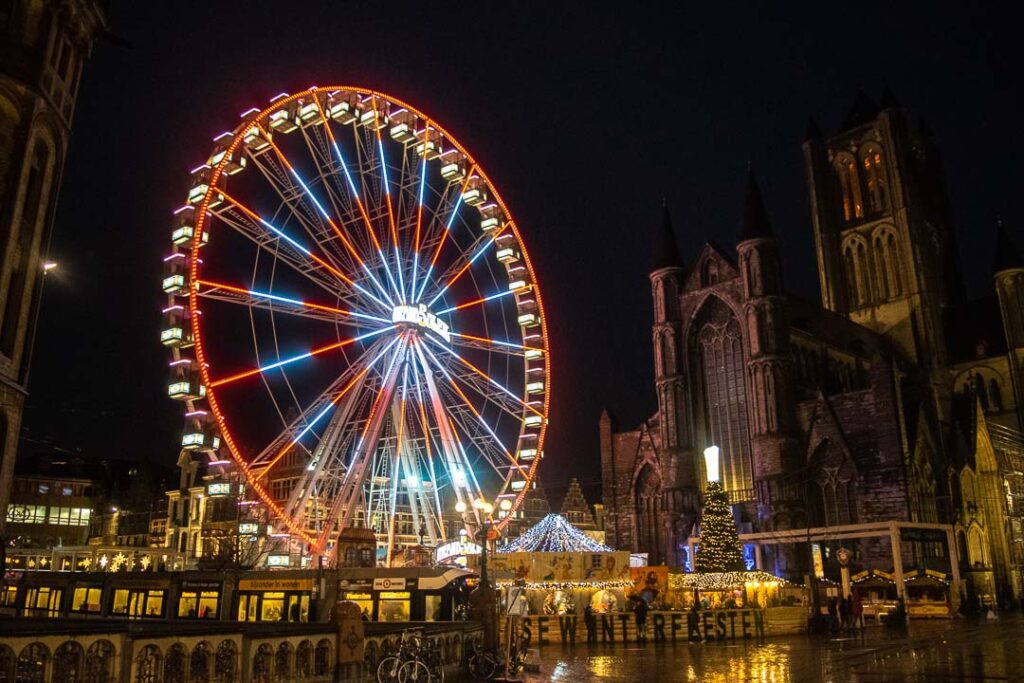
Only a short walk across the city centre from the Cathedral is one of the city’s most noticeable landmarks, St Nicholas’ Church. A gigantic gothic church dating from the 13th century, its distinctive form can be spotted from around the city.
Highlighting the importance of carillon aka bell-ringing in Belgium, you can see Ghent’s most recognised bell, the Roeland Bell, sitting by the church. After all, this was the sight of the town bells before the construction of the Ghent Belfry.
4. Ghent Belfry

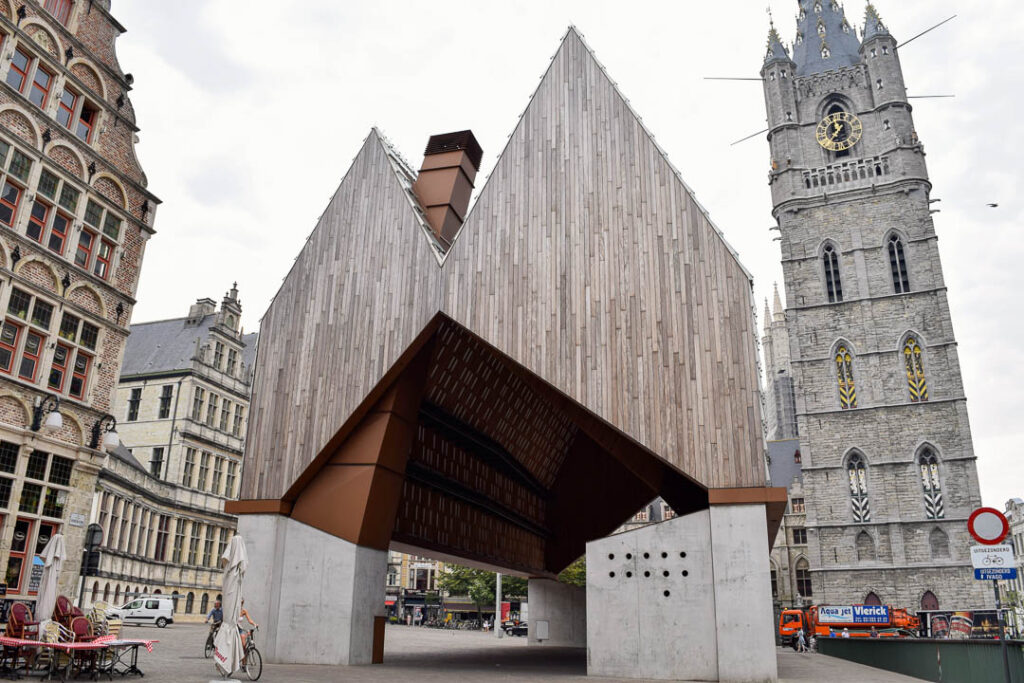
Belgium is renowned and recognised for its belfries and belltowers, and the Ghent Belfry is no exception. Standing proudly in the very heart of the city, this belfry is one of the many Belgian belfries entered on the UNESCO World Heritage list. At 91 metres and dating from the 14th century, it’s fair to say that the Ghent skyline would look incomplete without it. Topped with a golden dragon, visitors can climb the stairs of the belfry for some great city views, although I’ve yet to do so.
5. Ghent City Pavilion
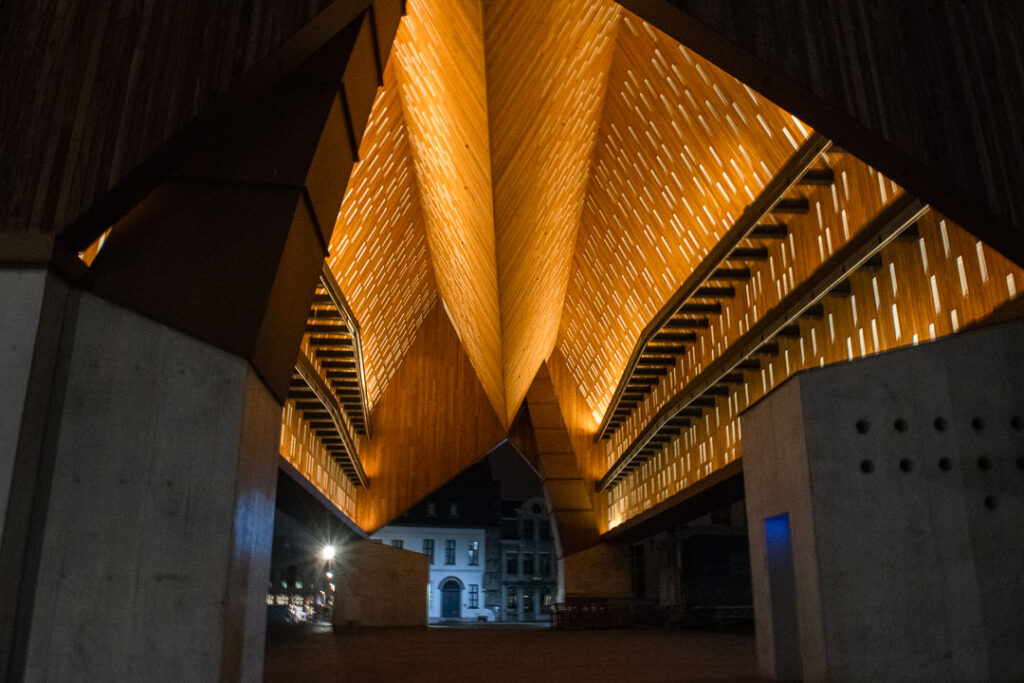
A fascinating modern addition to the city centre, the City Pavilion or Stadshal has transformed the Poeljemarkt Square. Constructed in 2012 as part of a city revitalisation project, this barn-shaped cover sits between many of the city’s main landmarks. At night, light flits through small slots in the ceiling to phenomenal effect.
6. Ghent Town Hall
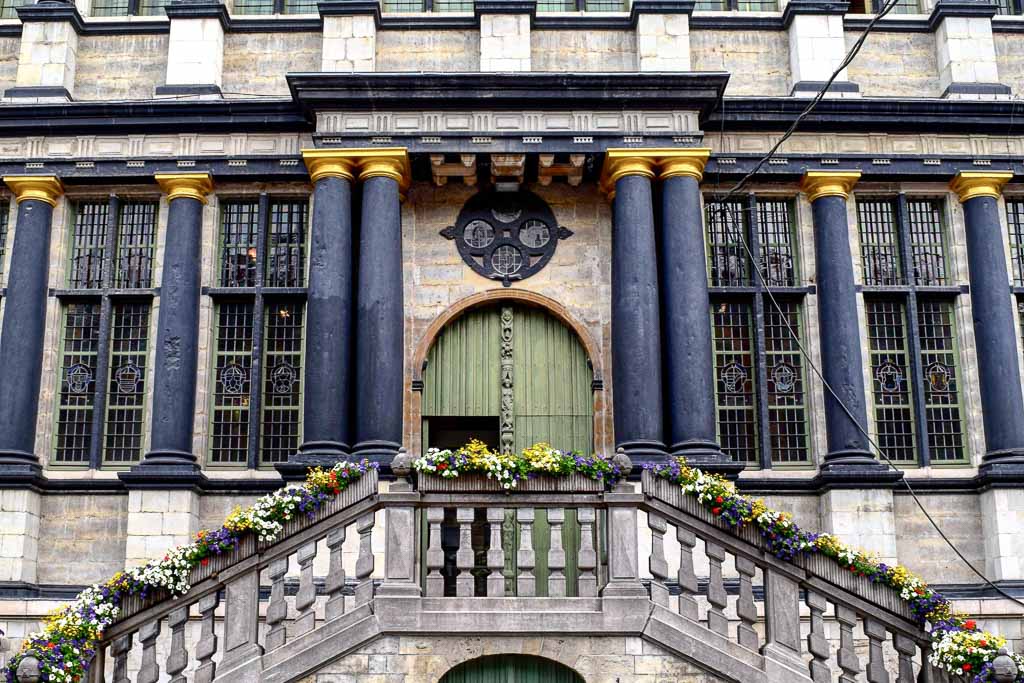
Yet another curious architectural landmark is the Ghent Town Hall. While the main Renaissance facades of the building are simple but grand, the rear Gothic facade is an elaborate work of art. It’s not uncommon to see wedding parties emerging from the hall, which was the reason for my first visit. If you get the chance, try to head inside as the decor and artwork are utterly beautiful.
7. Old Post Office

A brilliant building wedged between Korenmarkt Square and the riverfront, the Old Post Office has an interesting past. The building went through a redesign as part of the preparations for the 1913 World Exhibition held in Ghent. Its elaborate architecture and cute clock tower now house a shopping centre. While it may not be as old as the rest of the city, I still think it’s one of the more interesting things to see in Ghent.
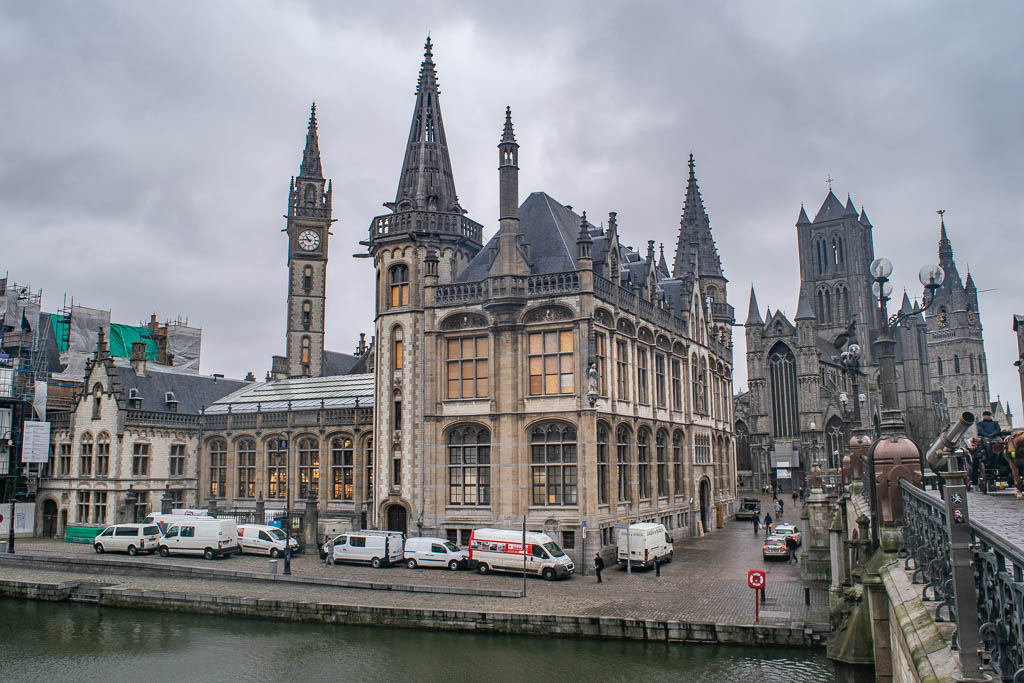
8. Sint-Michielsbrug Bridge
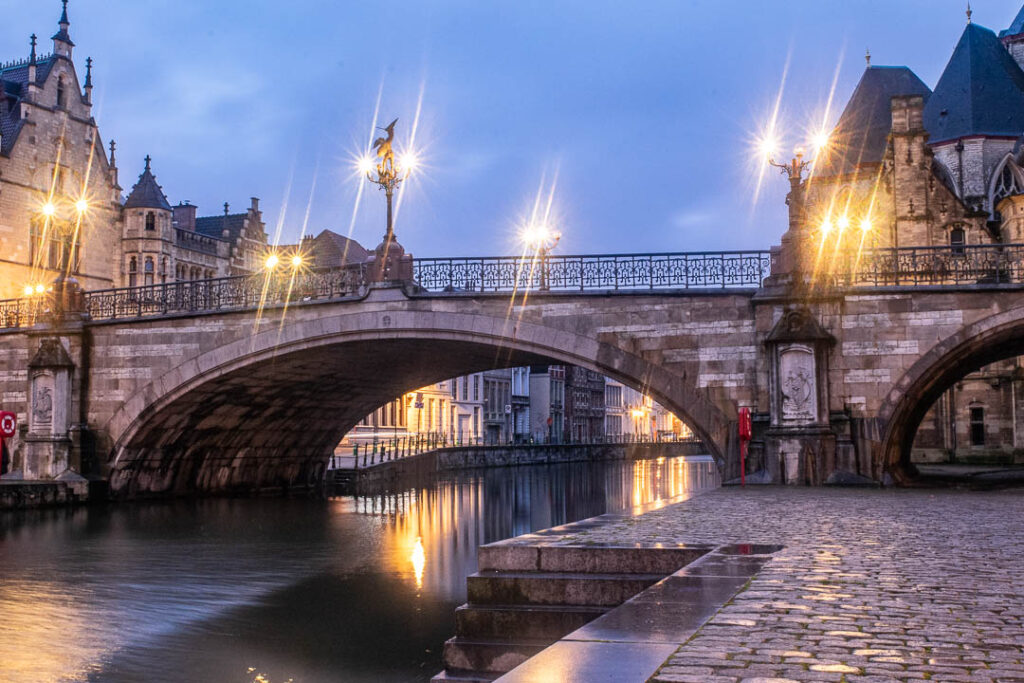
Of the many bridges that cross the various waterways of Ghent, none is more impressive than Sint-Michielsbrug or St Michael’s Bridge. Named after St Michael’s church next door, this bridge is beautiful from every angle.
From the bridge, you can look along the Leie River, which you can also admire flowing under it from below. But it is perhaps looking along the bridge to the city centre that you’ll find the most recognised view of St Michael’s Bridge.

9. Leie Riverfront

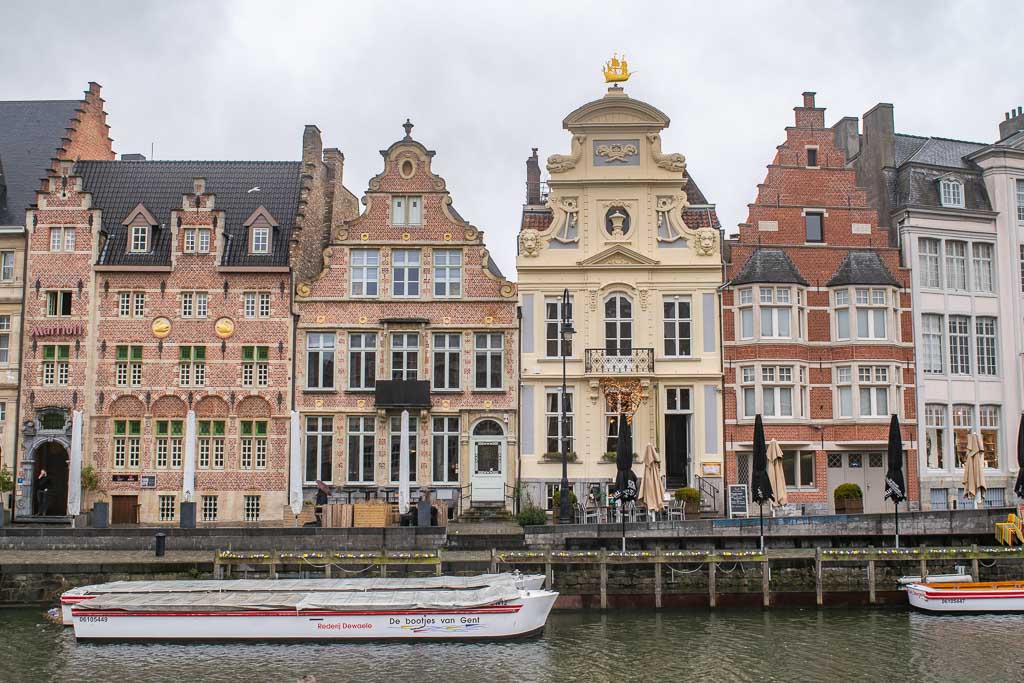
Flowing throughout Ghent, the Leie River is and has been the lifeblood of the city. The most popular stretch of the riverfront though is at Graslei and Korenlei, two quays in the centre with some truly picturesque waterfront.
Lining both sides of the water are plenty of gorgeous historic buildings, not to mention bountiful outdoor seating areas that come into their own in summer. Whether you see it by land or by boat – going on a boat cruise is one of the most popular Ghent things to do – this is one part of the city not to miss.
10. Groot Vleeshuis
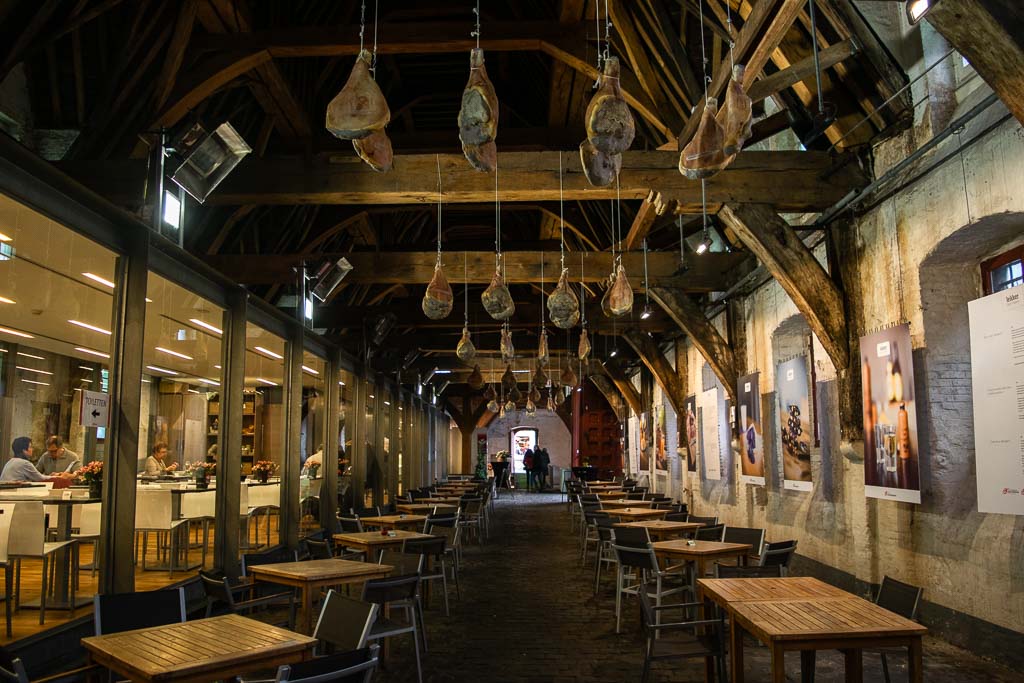
Dating from the 15th century, the Groot Vleeshuis or Great Butcher’s Hall was a sizeable indoor meat market. What remains of the hall now is some eye-pleasing architecture and you’ll only find a few hams hanging from the rafters as a reminder of its past. The hall now serves as a centre for East Flemish regional products, including a restaurant serving regional cuisine.
11. Lieve Waterfront
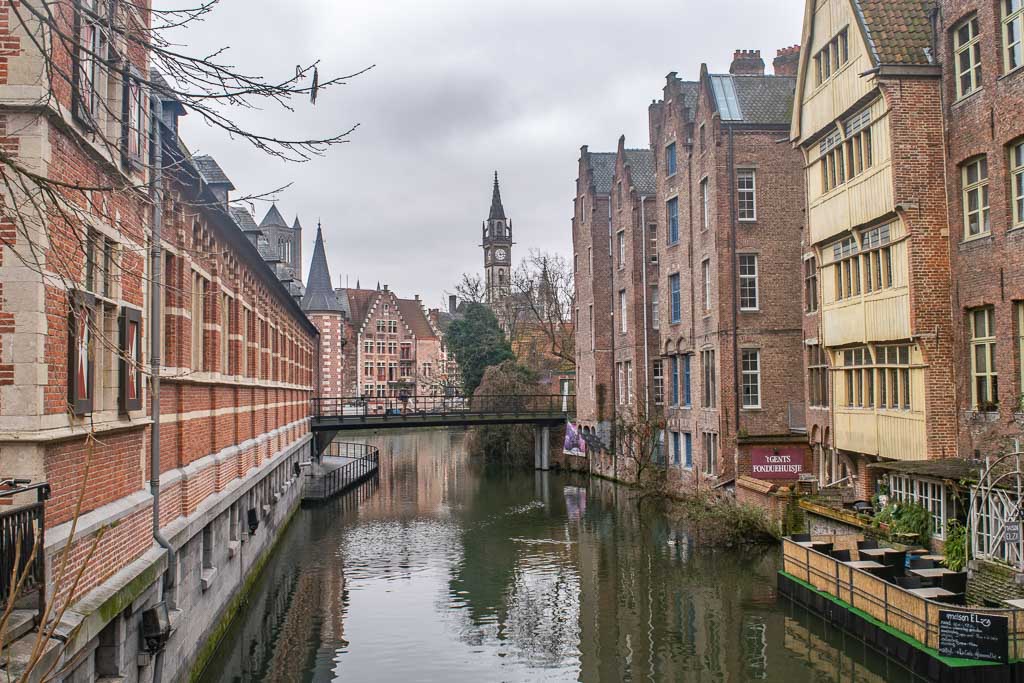
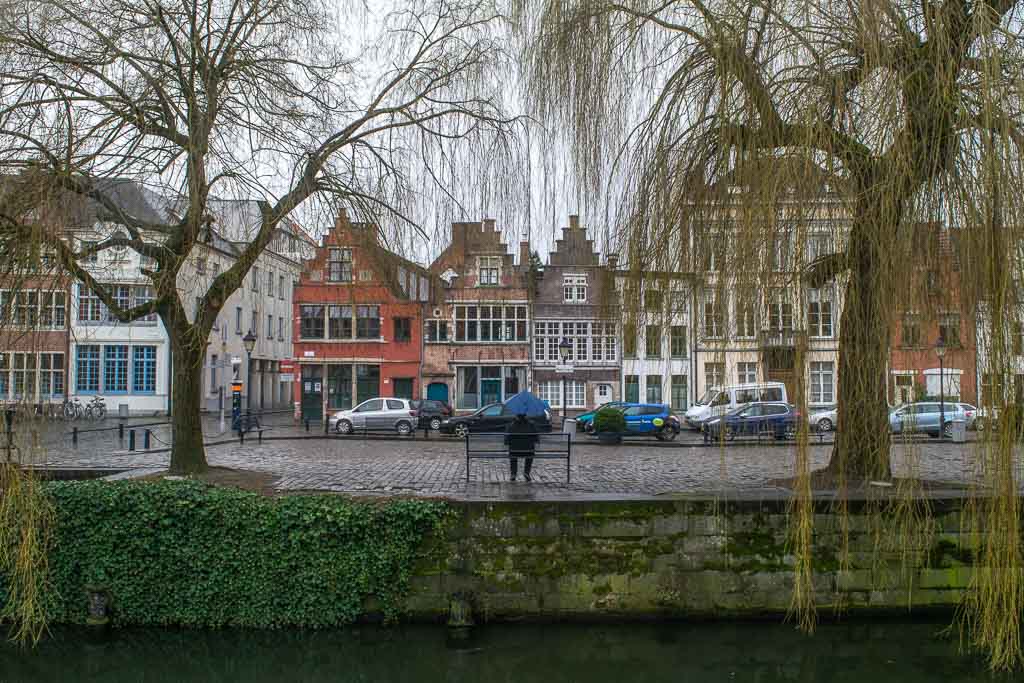
While the Leie is the main waterway of Ghent, it’s not the only one in the city. Just as scenic as the Leie is the Lieve canal, which was used to unload goods and produce arriving by water. A nice and quiet area, walking along the Lieve takes you past ornate buildings and dreamy willow trees.
12. Streets of Patershol
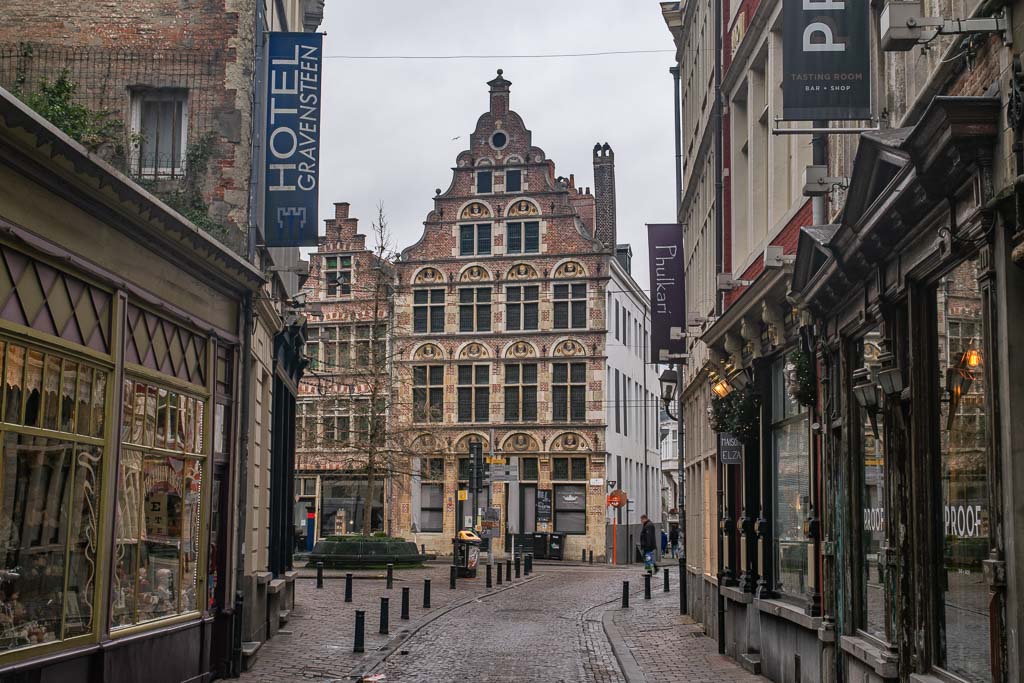
North of the city centre lies the neighbourhood of Patershol. For those looking for charming cobblestone streets to stroll down, this is the area to do it.
Littered with traditional old houses, this neighbourhood has barely changed for centuries unlike areas closer to the centre. I’m led to believe the area was in quite a bad way in the 90s, but has since gentrified and now hosts a vital portion of Ghent’s restaurant scene.

13. Vrijdagmarkt

While the city of Ghent has many squares to visit, the Vrijdagmarkt is not one to miss. This market square is lined with gorgeous architecture, from traditional Flemish houses to the more distinctive look of the Bond Moyson building. Lining the square are plenty of beer cafes, restaurants and pubs, making this a great place to come on a rainy day, which happens a bit in Belgium.
14. Duivelsteen
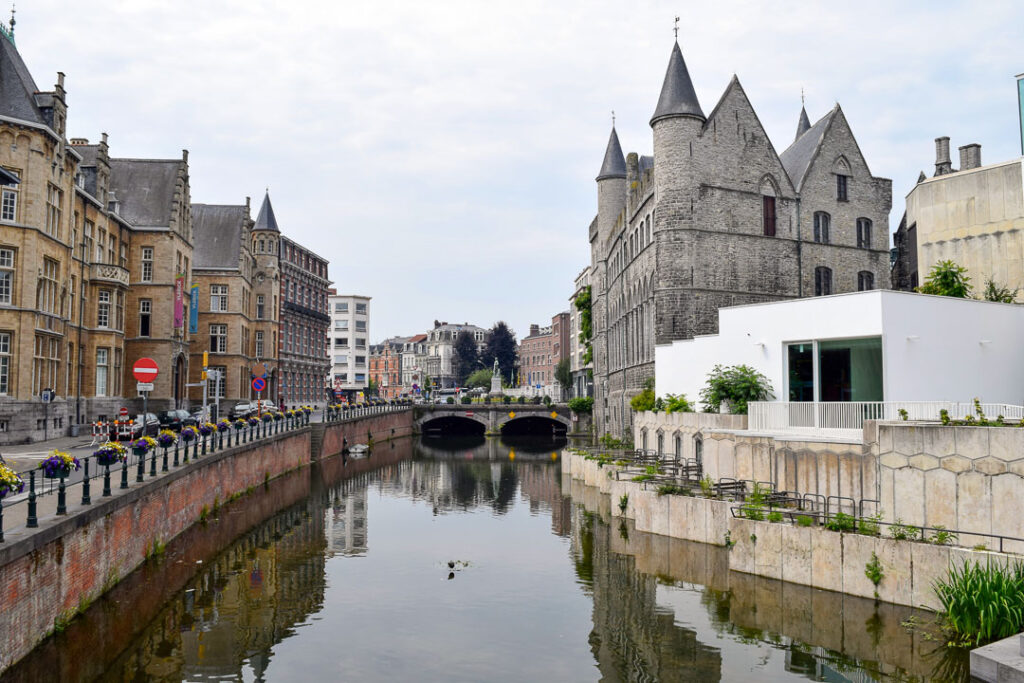
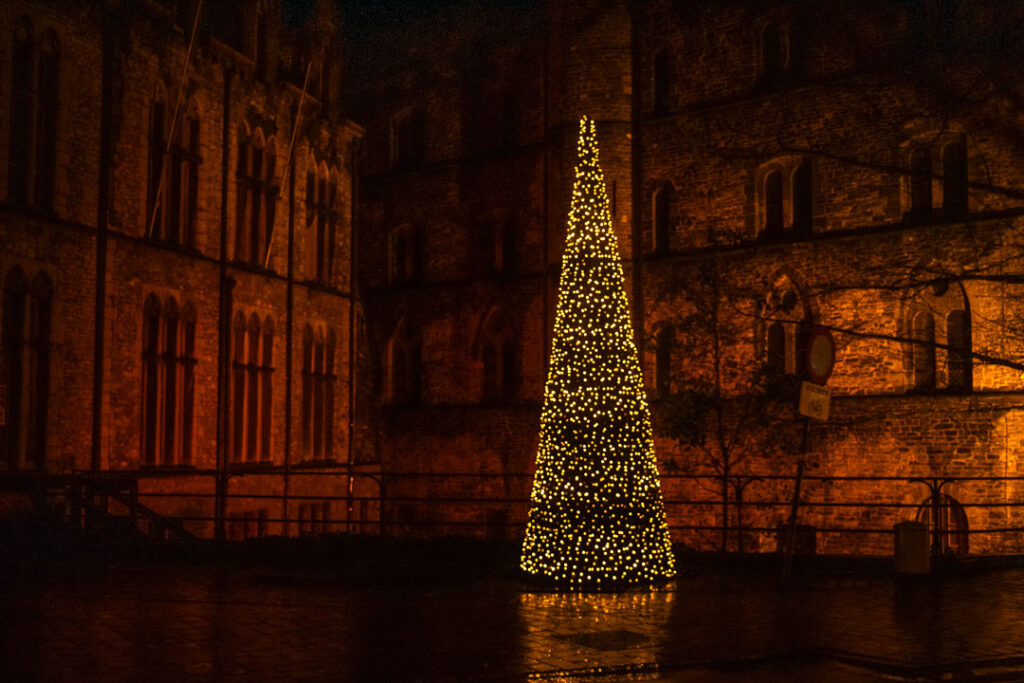
Similar in style to the Gravensteen castle on the far side of Ghent, Duivelsteen castle has a far more sinister twist to it. For starters, Duivelsteen translates to the “Devil Castle”, as it was named after Geeraard Vilain who was nicknamed “Geeraard the Devil”. Since it was built in the 13th century, Duivelsteen has had many functions, including as a prison and an insane asylum. Just try walking past the castle at night when it’s bathed in an eerie orange glow. Spooky!
15. Rabot Tower
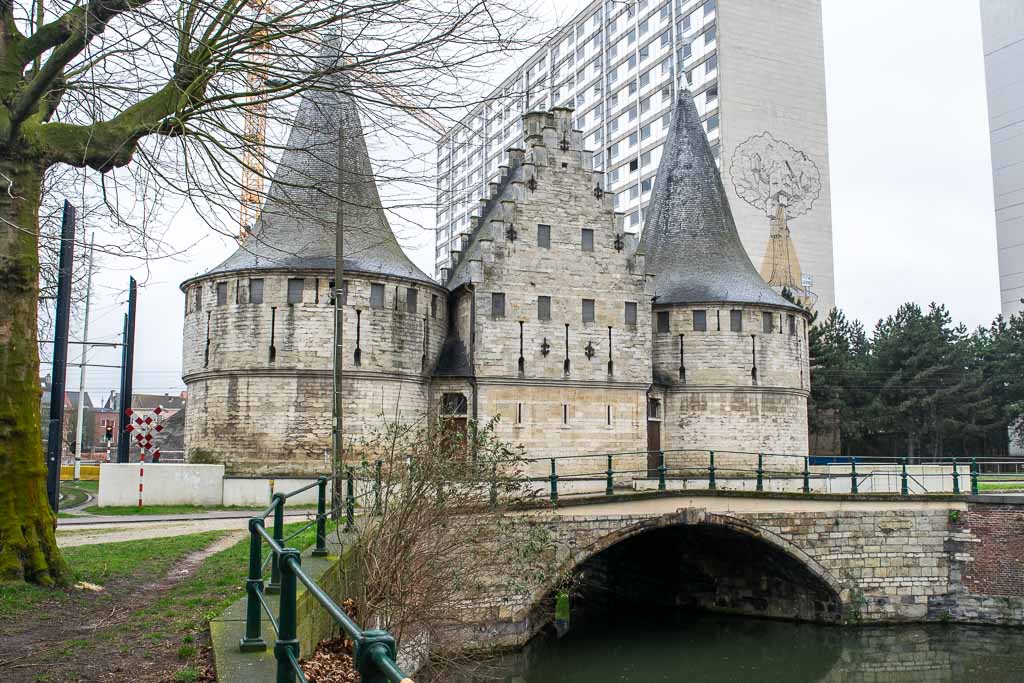
You won’t see much hint that Ghent had city walls when walking around the centre of Ghent. But there is a reminder of Ghent’s old fortifications at the Rabot Tower on the northern end of the Lieve Canal.
The city built the tower after the failed siege by Maximilian of Austria in 1488. Yes, you’ll need to travel a bit out from the centre to see it, but it’s an important historical reminder.
16. St Peter’s Church and Abbey
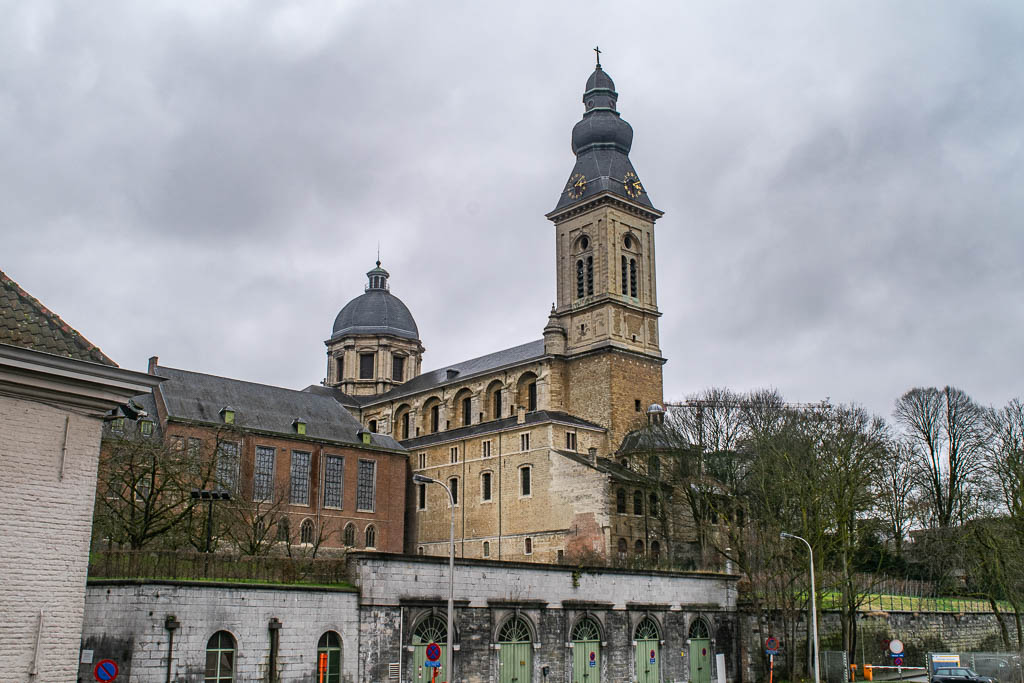
In the city’s south among much of the University Campus lies Our Lady of St Peter’s Church and St Peter’s Abbey. Yet another immense church in Ghent, Our Lady of St Peter’s Church differs from others due to its Romanesque architecture. Next door, you’ll find St Peter’s Abbey, home to serene cloistered gardens. Well worth the walk to find something a little different than the city’s gothic centre.
17. Het Pand University Gardens

While only a stone’s throw from St Michael’s Bridge, the gardens of Het Pand are a secluded, little-seen part of the Ghent University Campus. Hidden within a courtyard, the elegant gardens are surrounded by quaint window shutters and traditional architecture. It’s a rare green space in Ghent’s centre and quite a lovely one at that.
Unusual things to do in Ghent
Now, let’s get to some of the Ghent attractions you’re less likely to find in most Ghent blog posts. One of the benefits of visiting friends who live in Ghent is that they like to share their local knowledge. They’ve shown me or recommended so much to do in Ghent, but I think these things to do are some of the more obscure.
18. New Ghent Library
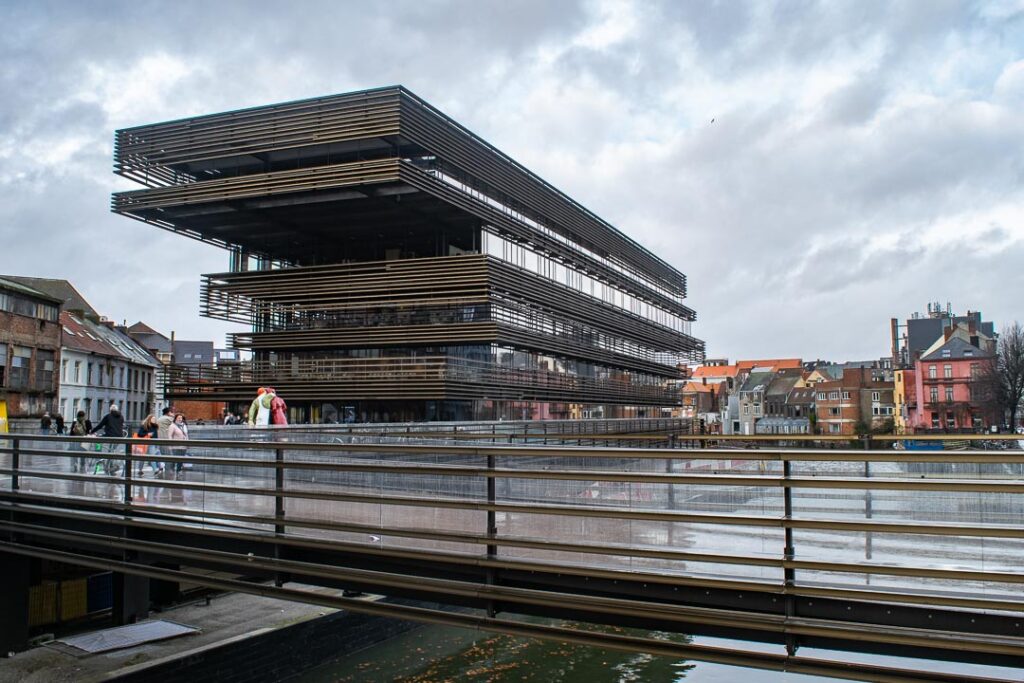
A very new addition to the city of Ghent, the new city library is sure to be a real hit with its modern design. Only unveiled in March of 2017, the De Krook public library is a vast improvement over the old city library. The building has already won architectural prizes for its incredible design. The library building hosts not only the usual library services but also a cafe, study rooms and the offices of several institutions.
The new library was part of a revitalisation project for this stretch of the Muinkschelde Canal. I expect it will become a popular outdoor space in summer. From the upper floors, you can also score a pretty great view of the church towers and the belfry of the city, but be careful to not disturb people. It is a library after all.
19. The Troll Pub
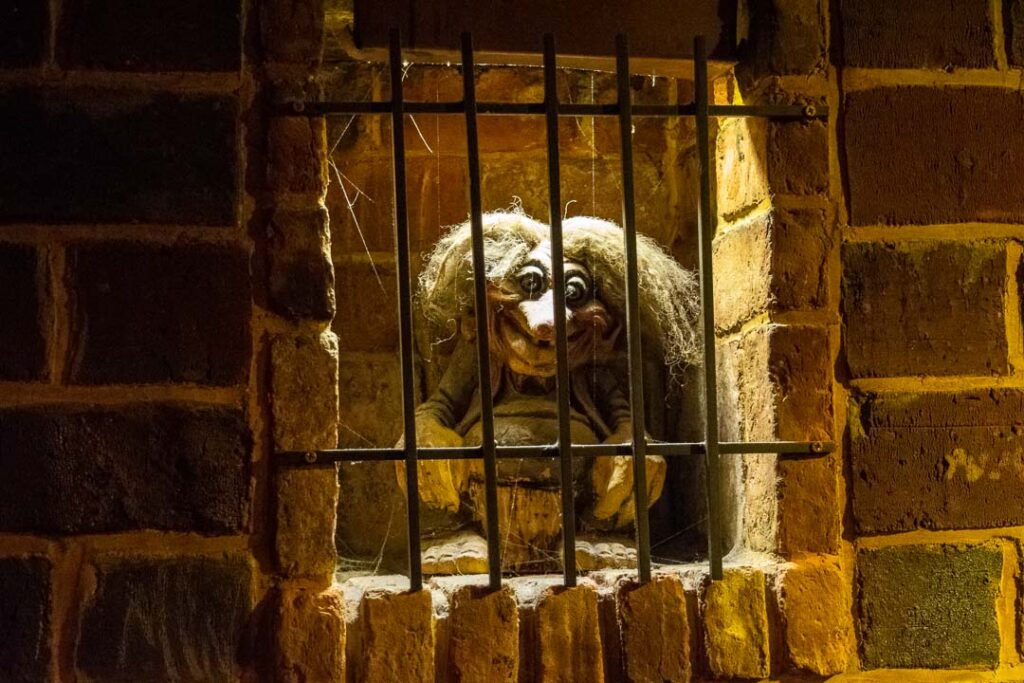
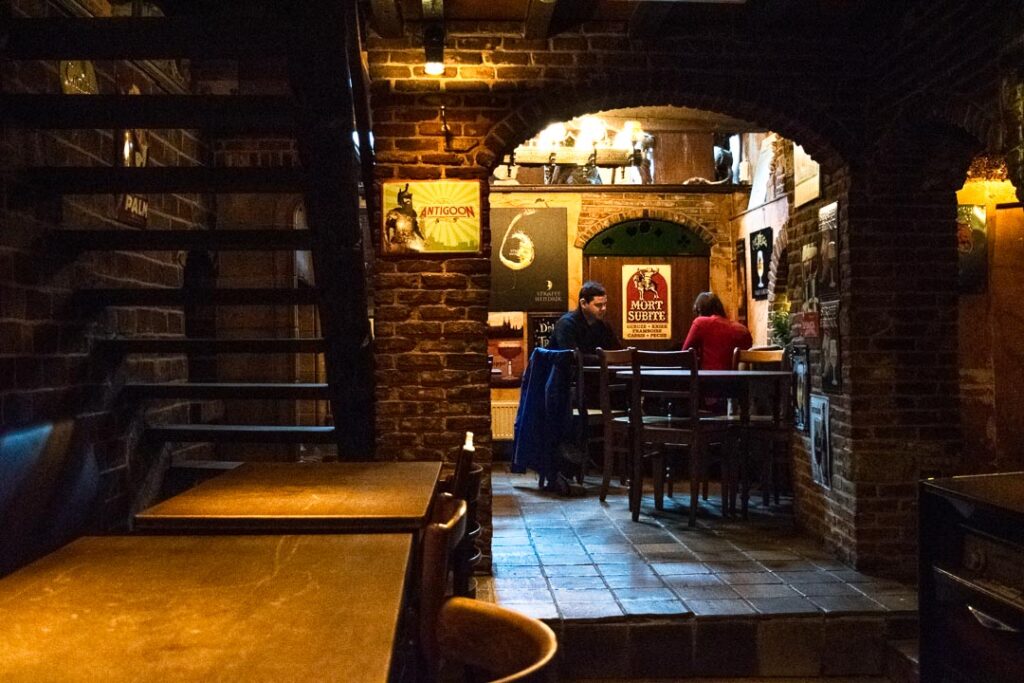
Go to Ghent and you’re spoiled with choice when it comes to bars and beer cafes. I mean, it’s Belgium. One of the more idiosyncratic pubs in Ghent is Trollekelder, which basically means the Troll Cellar. So it should be no surprise then that this pub is decorated with a whole bunch of funny little trolls. While the decor may seem a little kitsch at first, the three-storey pub quickly warms on you.
Like most Belgian pubs you can expect table service, as well as a great long beer list to choose from. But since you’re at a troll pub, why not at least try a Cuvee Des Trolls tripel beer? Strangely, despite both being troll-themed, there’s no other connection.
20. Ghent Begijnhof
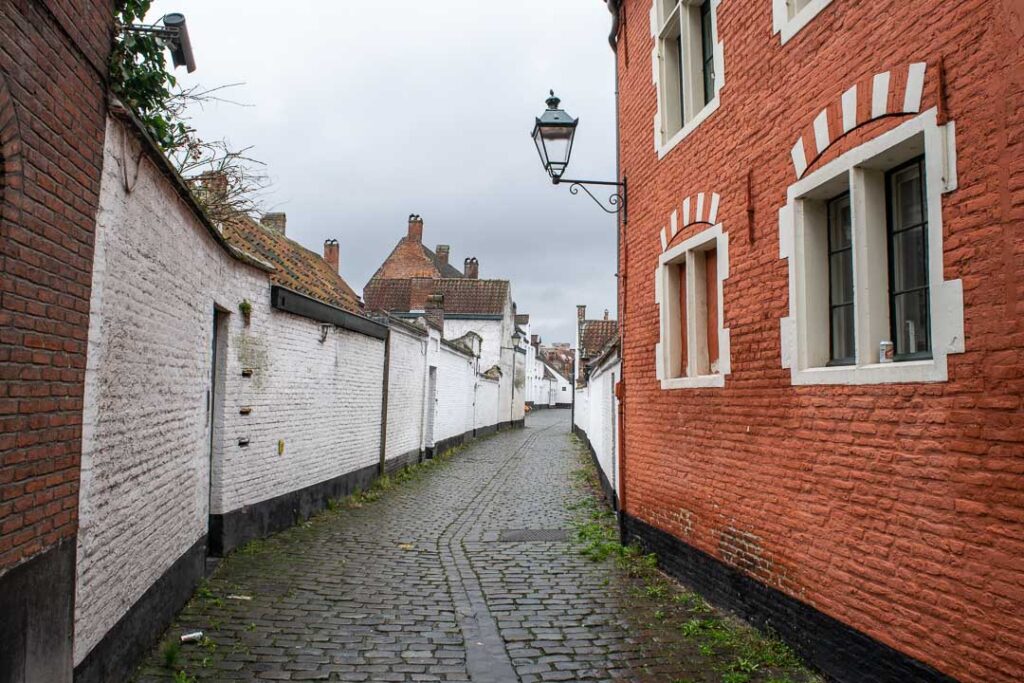
Before I visited Belgium, I’d never heard of a beguinage before. Known as a begijnhof in Dutch, a beguinage was essentially a community for religious single women, whether unmarried or widowed.
These beguinages are quite distinctive in Belgium, because of their close-knit streets and buildings, all made from brick and often painted collectively the same. While the best-known beguinages in Belgium are probably in Bruges and Leuven, the Saint Elisabeth Begijnhof of Ghent is less well-known.
East of Gravensteen castle, the small neighbourhood is decked with boldly painted brick houses and the humble atmosphere you find in all beguinages. Although it’s only a few hundred metres from common tourist spots, chances are it’ll be pretty quiet. It’s a place to get some beautiful photos, not to mention it’s culturally intriguing.

21. The Toilet Roll
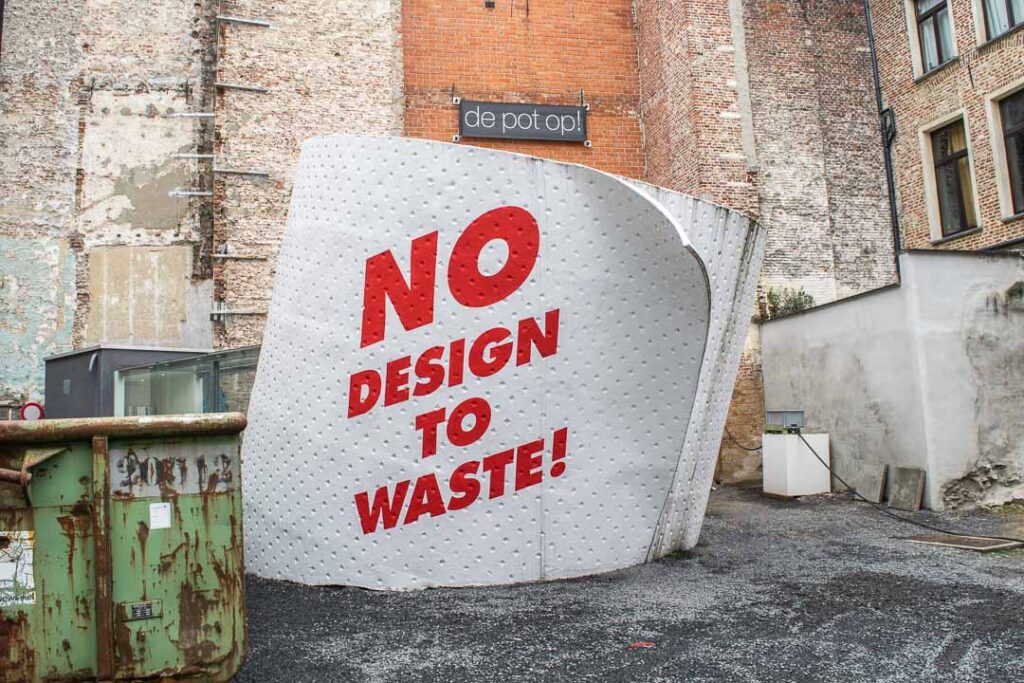
Of all the ways for a museum to grab the attention of potential visitors, a giant toilet roll out the front is kind of unusual, but likely effective. And that’s what passers-by will see when they pass the Design Museum of Ghent.
The story behind the toilet roll, as I understand it, is one of protest against the local government. Basically, after being denied an extension by the local authorities, the museum decided to harness the Belgian sense of humour to get back at them. The result – a giant toilet roll art installation over a new toilet wing where the extension was meant to go.
To sum up the museum’s feelings towards the local government, you can see the phrase “De Pot Op” mounted above. The basic sentiment of this saying is “Go to Hell” although there’s some Dutch wordplay involved, which piles on to the passive-aggressive message of the scene. The expansion has since been approved and possibly may be starting in 2018, so check it out while you can.
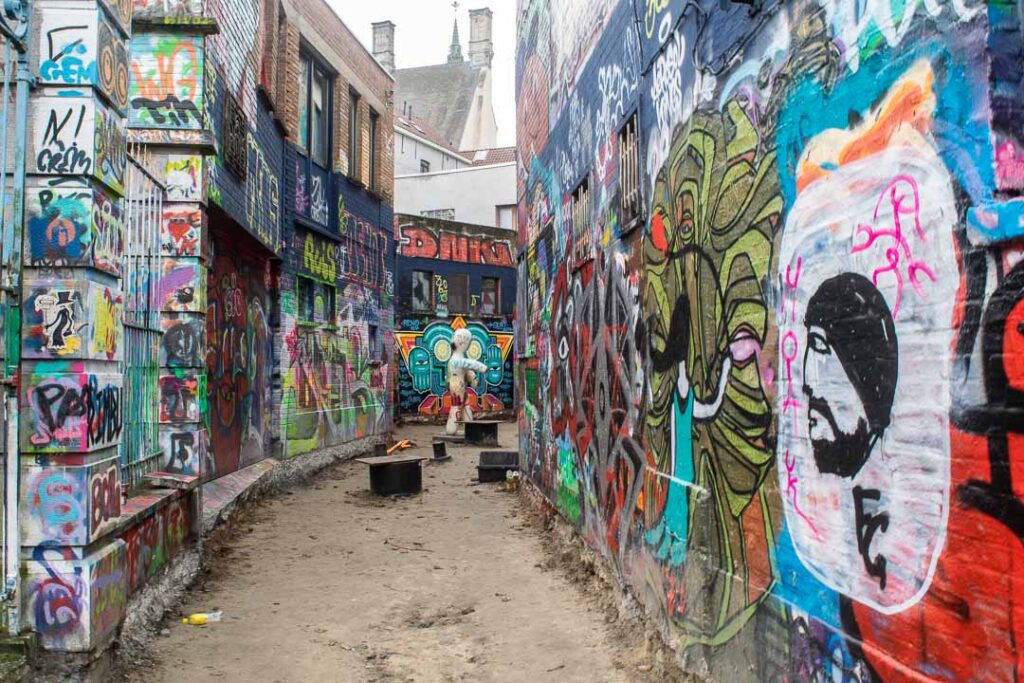
22. Graffiti Street
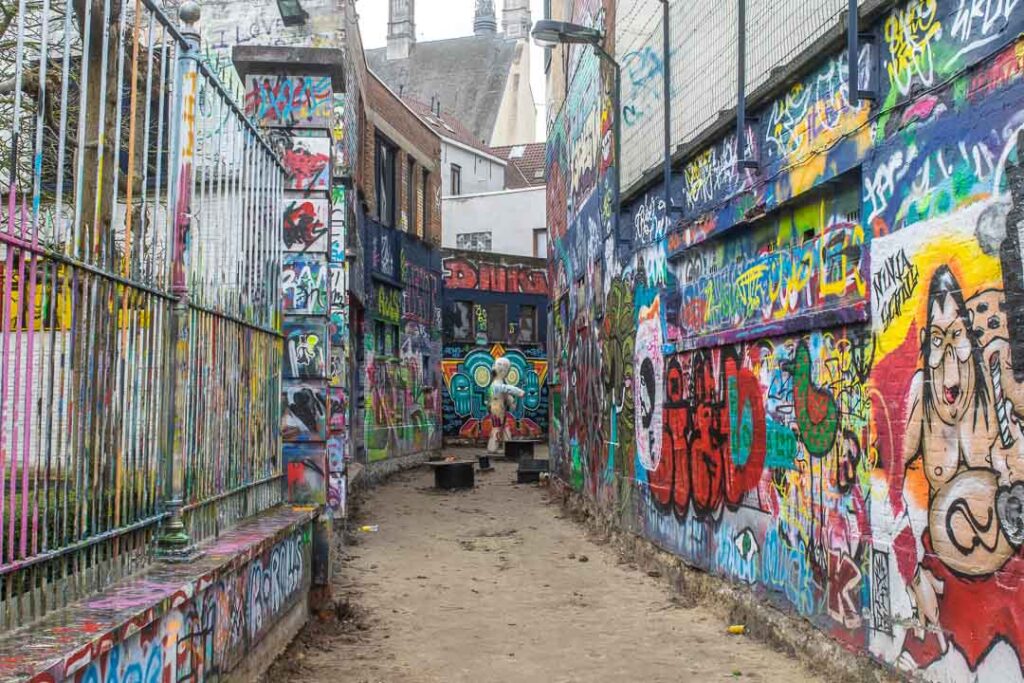
If there’s a chance to find some street art in a city, I’m all for it. Although there are some pieces around town, I was fully unprepared for Graffiti Street. More of an alley than a street, Werregarenstraat cuts between several streets of the city centre of Ghent. All down the alley, you’ll find wild and wonderful graffiti and street art, if you can find it.
23. The Steyaert Architect Building
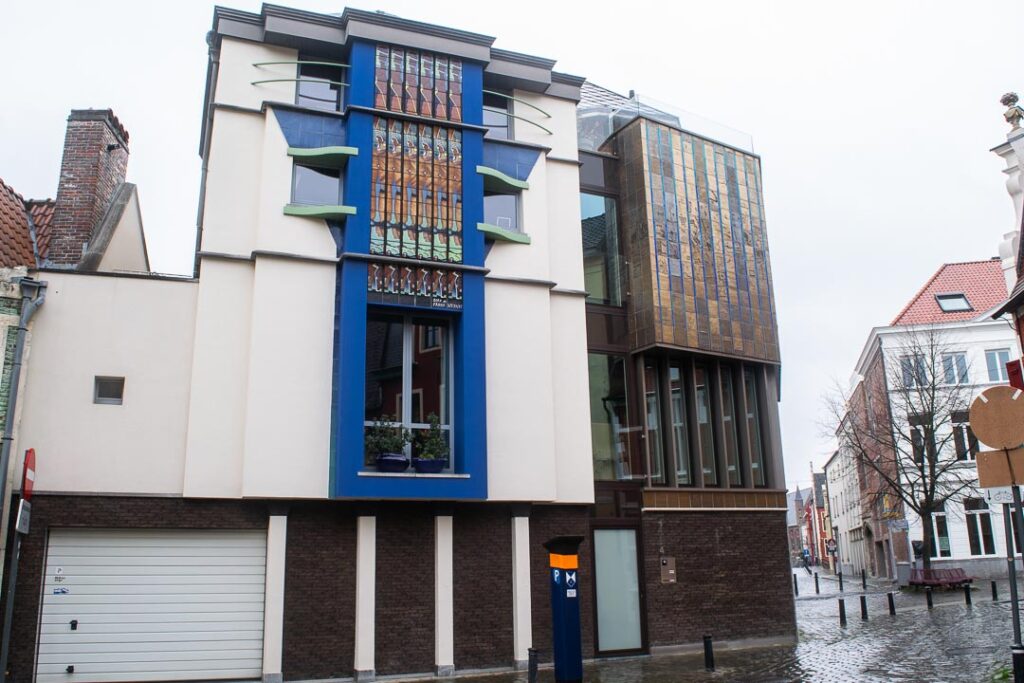
This last choice as one of the most unusual Ghent sights may just appeal to me, but I’m going to include it anyway. Although truly enchanting, much of the architecture of Ghent is fairly predictable, which isn’t a bad thing. However, when I was shown the above building designed by Dirk and Frank Steyaert on Prinsenhof, I was well and truly surprised.
Surely no one expects a striking modernist building in the backstreets of somewhere like Ghent. And yet, there it was. When trying to find out more about this building, I learned that this architect/artist pair also have a gallery that is equally as eye-catching.
Related Articles
To learn more about planning a trip to Ghent, Flanders and Belgium, take a look at these other Belgium blog posts:
- What to Do with One Day in Brussels, Belgium
- 15 Great Things to Do in Antwerp, Belgium
- A Lengthy Sightseeing Guide to Leuven, Belgium
- The Many Compelling Things to See in Ypres, Belgium
- Visit Mechelen, A Quintessentially Belgian City
- Truly the Best Cities to Visit in Flanders, Belgium
- 9 Things to Know Before Visiting Belgium
If you’ve visited before, where were your favourite Ghent sightseeing spots? For those that haven’t been yet, which of these sights in Ghent would you visit first? What do you think of these unusual Ghent sights? Please share your thoughts in the comments below.

This article is now available as a mobile app. Go to GPSmyCity to download the app for GPS-assisted travel directions to the attractions featured in this article.

2 comments
So excited to go soon but I’m assuming the weather in Feb will also be a bit gloomy! Will definitely try to go up the Belfry Tower! No pin though? Let me know when you have a pin so I can save it!
Pins are ready now Lori!