
Disclosure: This post (probably) contains affiliate links. If you click on one, I may make a small commission. Of course, this will come at no extra cost to you and helps keep this site running.
When you think of popular European capitals, the city of Sofia is probably a little way down the list. The capital of Bulgaria isn’t especially well-known, but it does see its fair share of tourists as they travel through the Balkans. I’m sure that most people who visit Sofia, they’re aware of at most one or two things to do in Sofia unless they’ve done their research.
With my return trip to Bulgaria, I had the chance to spend a lot more time in Sofia while visiting Bulgaria. The city didn’t make a glowing impression on me the first time around, but that likely had more to do with me than the city. Sightseeing in Sofia with a fresh set of eyes, I feel like I appreciate this complex Balkan capital a lot more.
You probably don’t have the time for two visits to Sofia to have a good experience here. So use this guide to Sofia to cut right to the city’s highlights and make the most of your visit.
Is Sofia worth visiting?

While you’ll find all the reasons why Sofia is worth visiting below, let me just give you the quick answer here of yes. Not only is Sofia the capital of Bulgaria and the easiest place in the country to visit, it’s a complex cultural hub. There aren’t many better places to get to Bulgaria, in part thanks to the many things to do in the city. It’s also a good base for exploring more of Bulgaria as you’ll see when we get to the day trips from Sofia. So yes, visit Sofia if you get the chance.
How to get to Sofia

Before you can worry about what to do in Sofia, you first need to get there. If you’re coming from far away, the obvious answer is to fly into Sofia Airport, not that I’ve ever done this myself. Budget airlines including Ryanair and Wizz make up most of the flights to Sofia.
To get to Sofia from nearby countries, the international bus connections from Belgrade, Bucharest, and Skopje are likely to be most useful. Just expect them to be long journeys. Speaking of long journeys, you can also travel to Sofia by overnight train from Istanbul, which was how I arrived on my recent visit. It’s an older train with middle-of-the-night border checks, but it’s an experience.
When travelling to Sofia from elsewhere in Bulgaria, bus is still the go-to option. Buses only take a few hours from Plovdiv and Veliko Tarnovo, but it’s a much longer bus journey from the Black Sea coast.
Sofia train station is at the northern end of the city and the Sofia Central Bus Station is right next door. Domestic buses leave from the main bus station, while international ones leave from the parking lot between the train station and bus station buildings. The other important bus station to know is the Sofia Yug (South) Bus Station, where some buses leave from, including the bus to Borovets.
How to get around Sofia
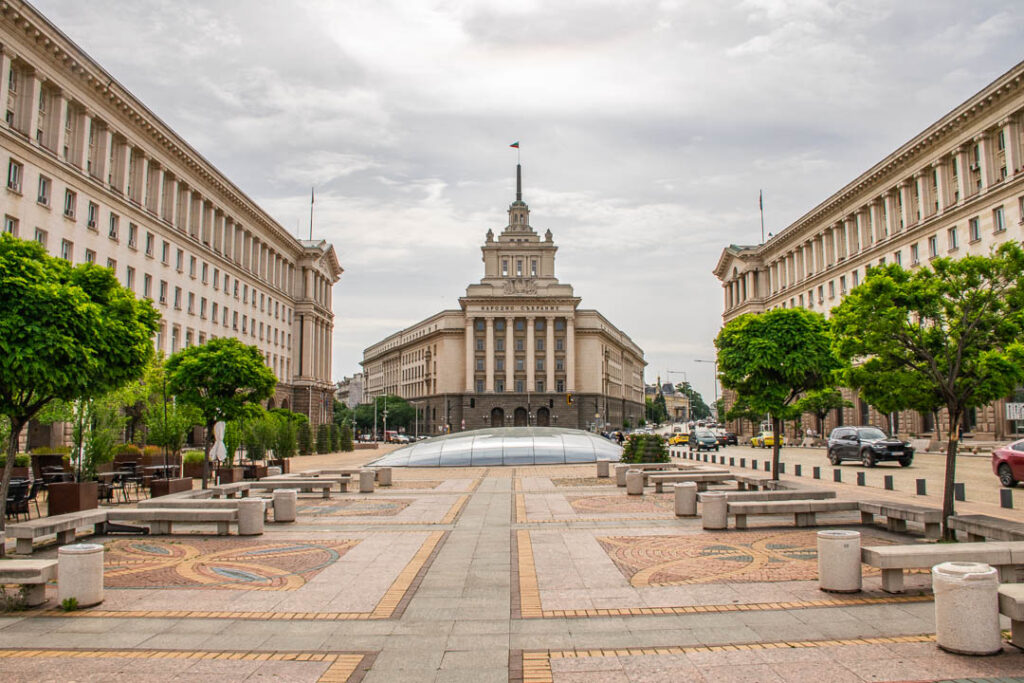
Tourists will be glad to hear that getting around Sofia is easier than it seems. Sure, if you’re in the historic centre, you can walk most places without it taking too long.
However, Sofia is home to quite a comprehensive public transport network of trams, buses, and metro lines that cover the city. Trams run through the main city streets and I’ve never had reason to use them. To me, the metro has been the most useful option for getting around Sofia, while buses have helped with reaching outer attractions such as the Socialist Art Museum and Boyana Church.
For the Sofia metro, two useful stations to know are Serdika and NDK. Serdika has two metro stations which is very useful as you have access to three metro lines, the M1, M2, and M4. NDK and NDK2 also provide access to two metro lines, M2 and M3.
Tickets are the same for all public transport in Sofia. They use the modern system of contactless debit/credit cards, with fares calculated automatically. This means you really don’t need to worry about it if you have a credit card with no harsh currency conversion fees like the Wise card.
How many days do you need in Sofia?
Struggling to decide how to long to visit for your first time in Sofia? Well, that’s okay and it’s fairly understandable. I’d say from experience, two days in Sofia is a good start for seeing the city’s sights. However, I’d actually recommend three or more to allow time for day trips so that you can experience more of Bulgaria. This will always depend on your other plans and level of interest of course, just don’t make the mistake of underestimating the city at all.
Where to stay in Sofia
An interesting thing about Sofia is that there are places to stay right across the city centre. A general rule of thumb is that the closer you go to Vitosha Boulevard in the city’s south, the more expensive accommodation gets. But even by the bus station and train station in the north there are some high-end hotels.
On my most recent trip I stayed around Lavov Most between the historical centre and bus station. This area has quite a few budget/mid-range hotels, including the Hotel Leda and Hotel Lion Sofia, where I did stay. If I had to pick from the two, I’d recommend Hotel Leda, as it was quieter and a little more modern.
As for other options, some of the most highly recommended places to stay in Sofia are:
Things to do in Sofia
With the logistics of your Sofia trip covered, let’s get into the best things to do in Sofia.
Start with the historical centre
A nice way to start your sightseeing in Sofia is just to head to the dead centre of the city. The reason that’s a good idea is the historical centre of Sofia is full of attractions and landmarks to check out. Whether you explore on your own or with a walking tour, this area offers a good introduction into Sofia’s religious and cultural heritage.
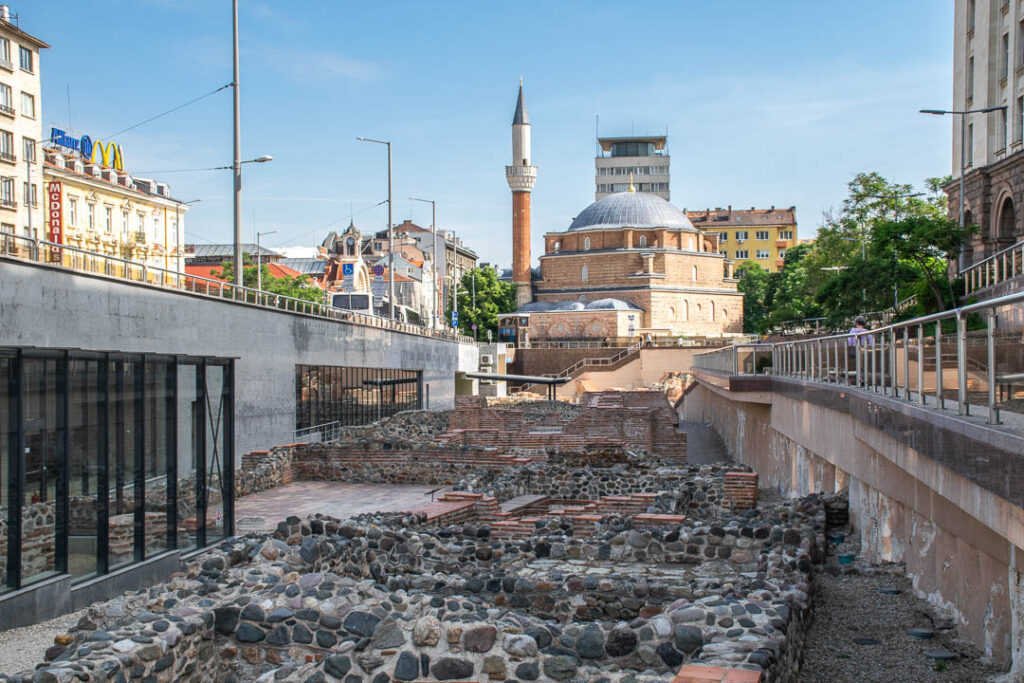
In the area around Serdika metro station, you’ll find important places of worship for three different religions. There you can see the Banya Bashi Mosque, the Sofia Synagogue, and the Saint Petka Church, all in the space of one city block.
You’ll also find some interesting symbolic landmarks in this part of Sofia. For one, there’s the gleaming golden Sofia Monument of St. Sofia, which has a complicated history and significance. Then there’s the Regional History Museum, which sits inside a former bathhouse, highlighting the city’s wealth of natural mineral springs. And of course, you can find lots of brutalist architecture that reflects the changes to Sofia in the 20th-century.
Check out the Ruins around Serdika
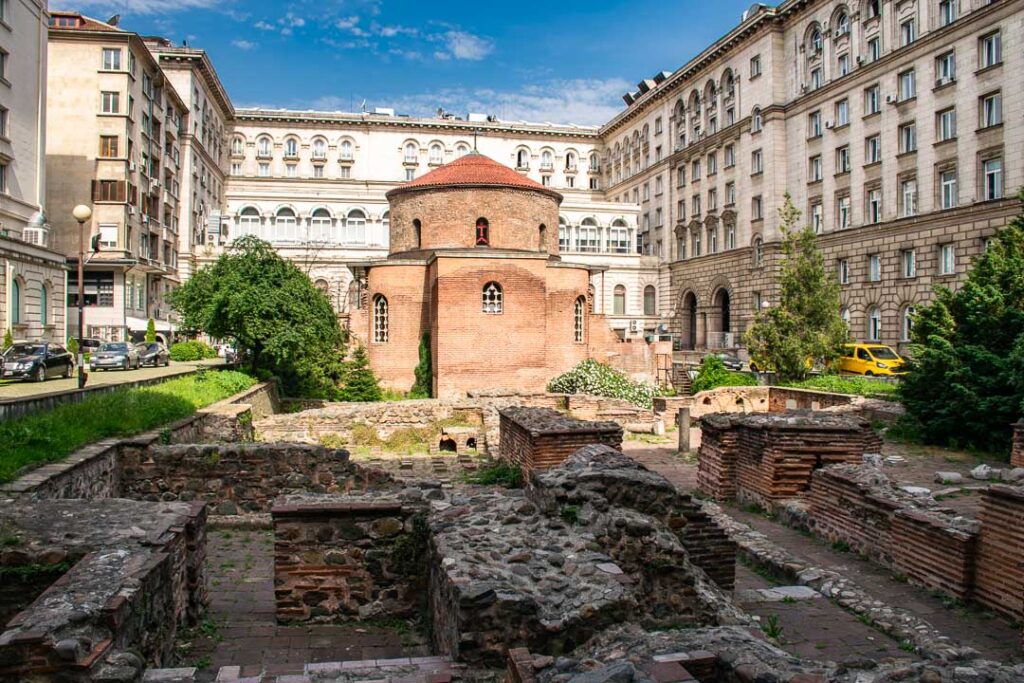
Among these attractions in the historical centre of Sofia, there are two more that I’d like to point out. Both are ruins covered or surrounded by contemporary buildings, showing a city trying to honour its ancient history but also not letting it get in the way either.
The first is the Serdika complex that’s actually part of the Serdika II metro station. Roman ruins were discovered while building the metro station here, including an amphitheatre partly located inside the Arena di Serdica Hotel. These ruins are free to explore, even the ones inside the hotel.
Not far away you run into a similar scenario at the St. George Rotunda Church. Boxed in by high brutalist buildings, parts of the complex around this church are from the 4th century. It’s considered Sofia’s oldest building and while its medieval frescoes were preserved, the features of the Ottoman mosque constructed here not so much.
Visit St. Alexander Nevsky Cathedral

There’s really no debate on this one, the St. Alexander Nevsky Cathedral is the attraction that Sofia is best known for. This is the place that all tourists make a beeline for and it doesn’t take a genius to see why. The green and gold exterior is very eye-catching and the interior is incredibly detailed and ornate. It’s also yet another free thing to do in Sofia.
But here’s the reality check. The cathedral is located in the middle of a roundabout and often has cars (even coaches) parked in front and around it. During my recent visit in 2023, there was also construction on most sides. The reason that’s an issue is that to get the cathedral fully in frame, you need to get back from it and then you have scaffolding, dumpsters, etc. in view. I’m forever impressed by people who get clear photos of this building.
While you can visit inside for free and explore as you like, taking photos costs a fee. You’ll also need to pay to visit the Alexander Nevsky Crypt Icon Museum off to one side of the cathedral.
See the St. Sofia Church

With so much attention on the St. Alexander Nevsky Cathedral, I’m sure many people walk right past an equally important church, the St. Sophia Church. This church was built in the 6th century, back when Sofia was known by the Roman name Serdica. It was because of this church that Sofia got its new name in the 14th century.
Where as the St. Alexander Nevsky Cathedral is very shiny and impressive visually, this is a much more humble building. Step inside the St. Sophia Church and you can see how old and worn down is by comparison. But you feel the history.
It served as a various important place of worship for well over a millennium, and even when it was first constructed was built over ancient burial structures.
Admire the Ivan Vazov National Theatre
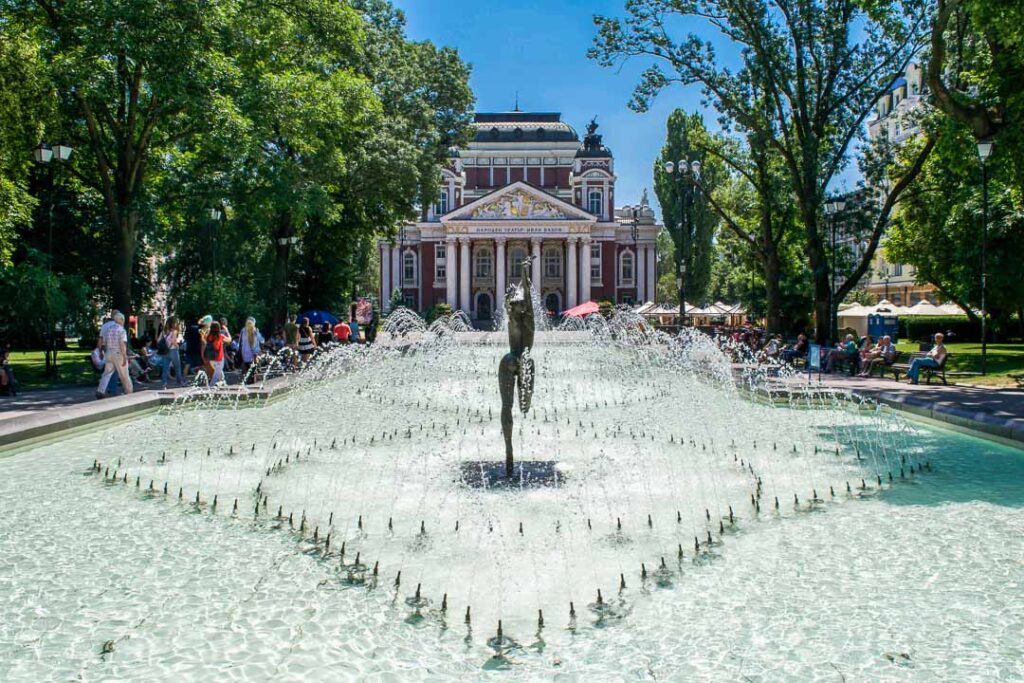
If you’ve expected Sofia to be bleak and wall-to-wall concrete, walking around some parts of the city centre may have confirmed that impression. But you’re guaranteed to see another side of Sofia and have a more even-handed feel for the city if you head to the Ivan Vazov National Theatre.
This gorgeous neoclassical theatre is one of the prettier landmarks in Sofia. That’s even more the case when viewed from across the fountain of the City Garden directly in front. You don’t need to see a performance to appreciate this Sofia theatre, but it does host multiple each daily.
Make sure to look around while here as there are other elegant buildings on the corners around the theatre that show what Sofia may have been like before parts of the city turned grey.
Find Sofia Street Art

Street art is increasingly becoming a popular thing for tourists to look for in destinations. What’s interesting about street art in Sofia is that it comes in two forms.
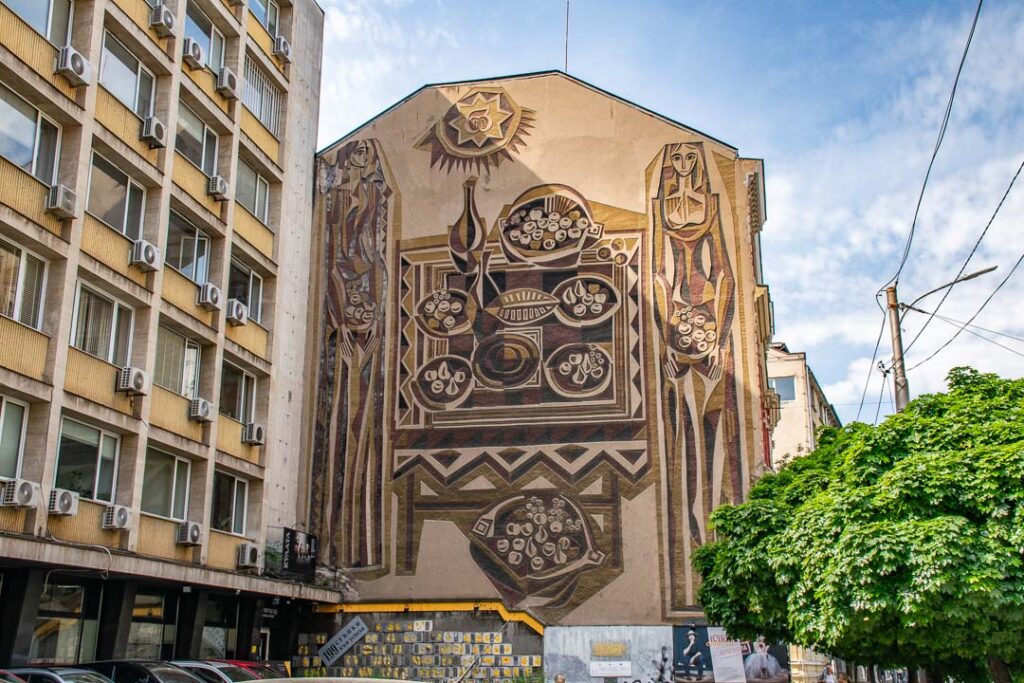
You get the modern murals you find in many cities these days, but you also come across sgraffito from the city’s communist days. I distinctly remember seeing the sgraffito on my first visit and it being something I hadn’t really seen before.
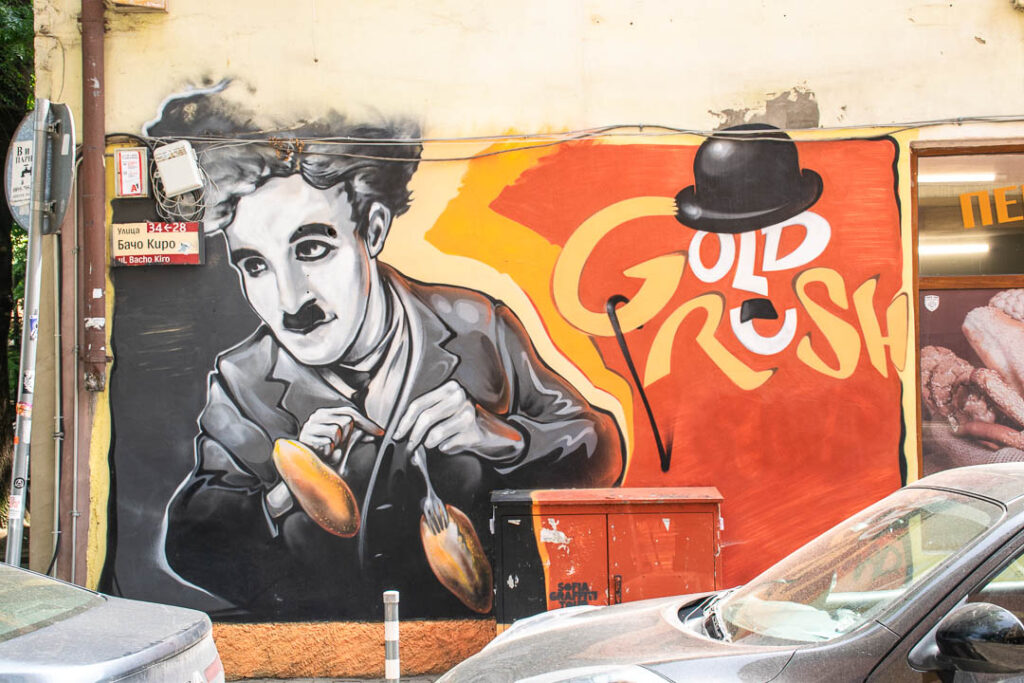
There seem to be many more of the regular types of murals today, both than there used to be and compared to the communist era ones. There are few murals in the area near the Serdika metro stations, but there’s a whole lot along Bacho Kiro street. To find more Sofia street art, you can use this guide from local experts.
Relax at Sofia cafes
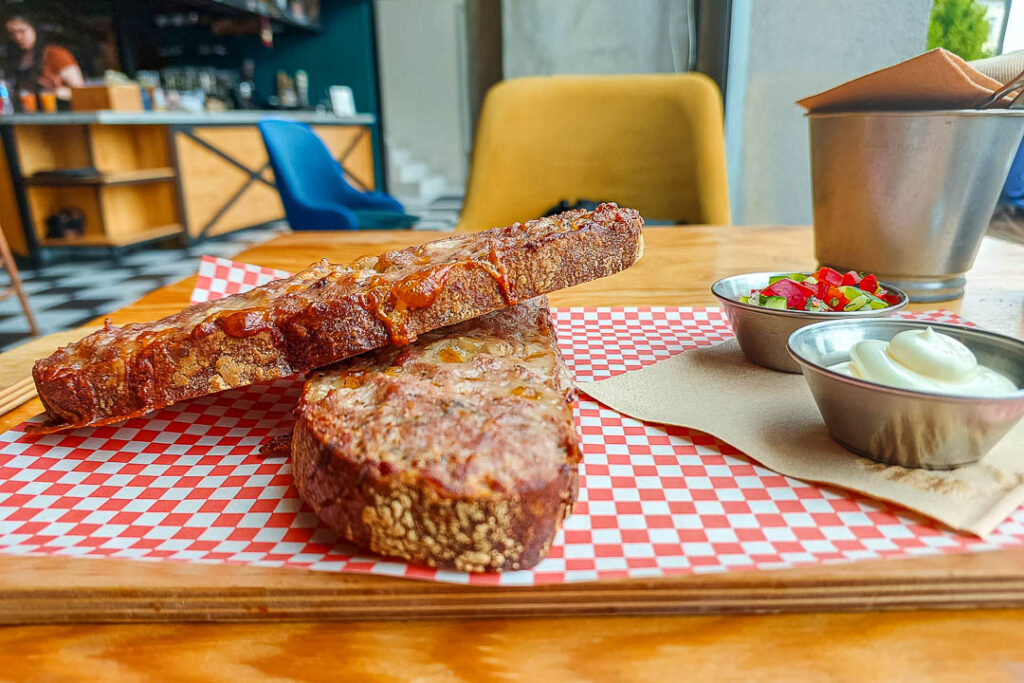
One thing that I feel like changed a lot between my two trips to Bulgaria 7 years apart was Sofia’s coffee scene. Perhaps it wasn’t as widespread or noticeable last time, but I didn’t have to look far this time for good cafes in Sofia.
Yes, there are healthy volume of chain coffee shops and cafes around the city (Green Deli Cafe was a favourite). But there are also quite a few independent coffee shops in the city centre too. They seem to gravitate to student areas, especially the city’s north east near the street art I’ve mentioned.
Two places I really enjoyed were Altruist and Barista Coffee and More, both for the coffee and the atmosphere. Over near the Lion Bridge (Lavov Most) there’s also Cafe 1920, where I got food once or twice. Would recommend them all, although for digital nomads after somewhere to work, I’d suggest Barista Coffee and More.
Learn at the National Archaeological Museum
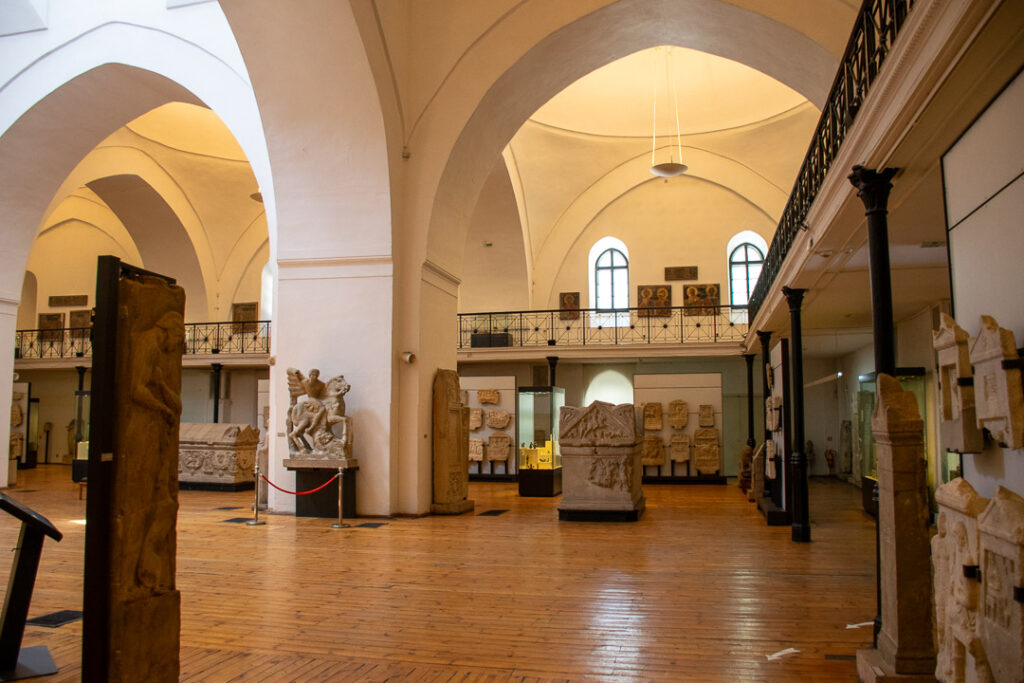
As good as sightseeing is to learn about the history of Sofia, you’re likely to get more out of a museum like the National Archaeological Museum. This museum isn’t overly large, but it has enough on display to occupy you for at least an hour. Entry is currently 12 BGN, which may seem high, but you should look at it as supporting the museum’s work.
Exhibits trace the region’s history from prehistory to the Middle Ages, but many of its most prized artefacts are from the Thracians. These include the Vulchtrun and Lukovit treasures, with various gold and silver items, including an ornate funerary mask.
Go to the Museum of Socialist Art
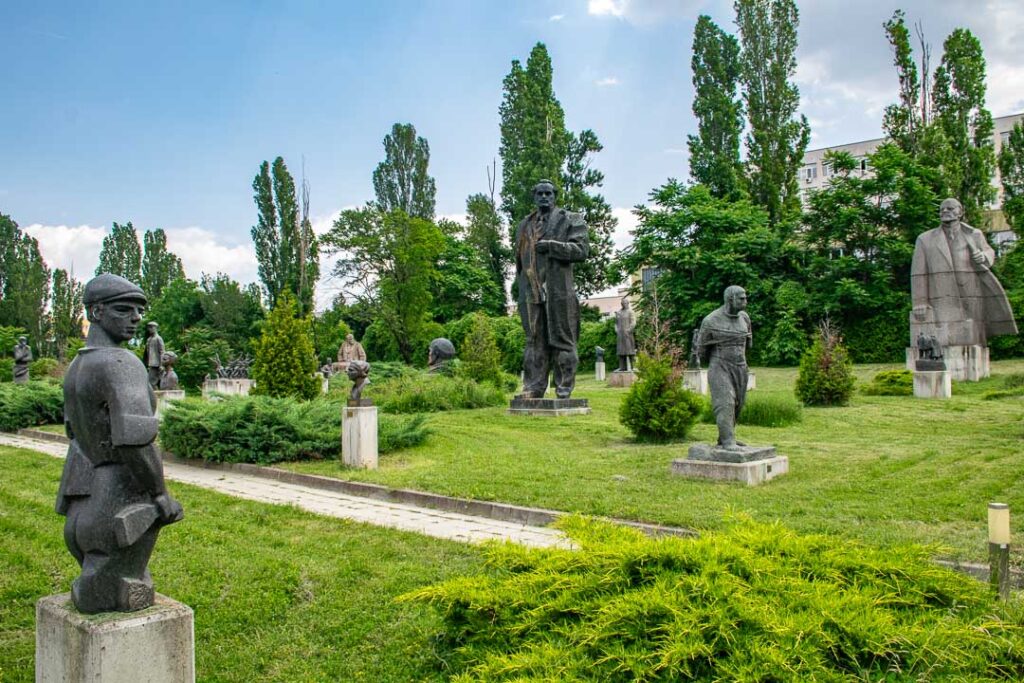
Sofia has quite a few museums, many of which I’ve yet to visit, such as the National Museum of Military History. But one I couldn’t miss out on was the Museum of Socialist Art. Located out from the city centre in the neighbourhood of Iztok, it may seem an inconvenient Sofia attraction to visit. Admission is 6 BGN as of 2023.
But if you have an interest in Sofia’s history during the communist period, it’s a good place to go. The main attraction here is the museum’s garden that is full of statues and monuments from this period in history, including plenty of Lenins and working class figures. During my first Sofia visit some of the last communist landmarks were still in the process of being taken down. Nowadays, this seems to be the best place to see any.
I should warn you that this museum doesn’t really have much in the way of “exhibits” beyond the garden. There is a small screening room where a staff member eagerly invited me to watch a period documentary. While it was interesting to a point, I didn’t see the end as it just kept going and going. Basically, come for the garden or you’ll probably be disappointed.
Walk to the Boyana Church and Waterfall
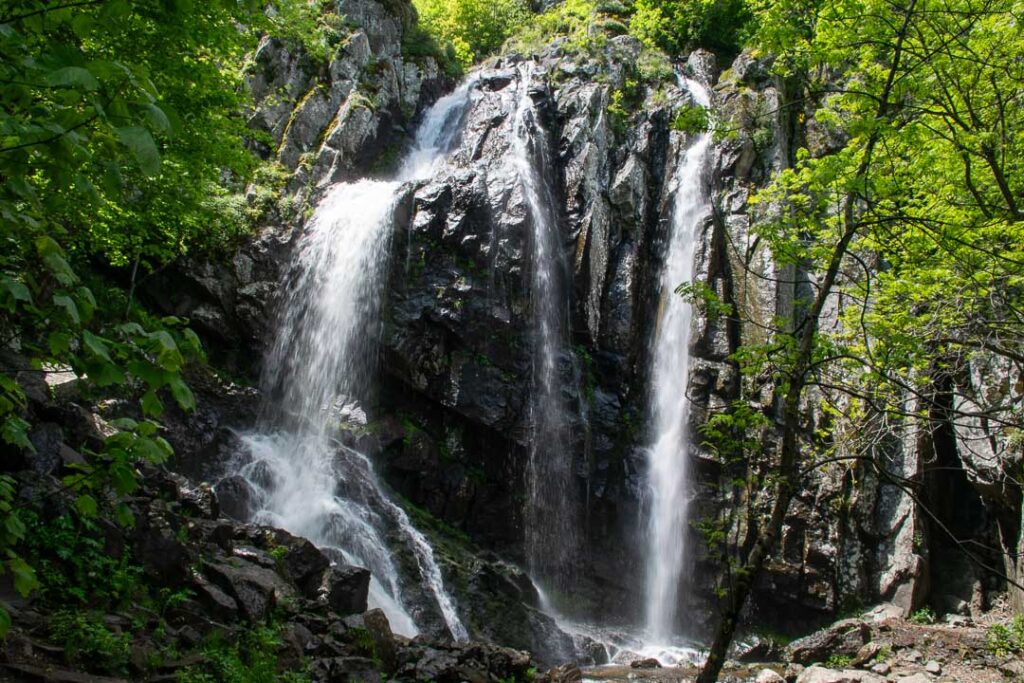
Vitosha is the mountain directly south of Sofia and is a landmark you get used to seeing as you explore. What you can’t see from the city though is that there are several attractions in the Boyana neighbourhood on the lower parts of the mountain.
The most famous landmark in Boyana is the Boyana church, a UNESCO World Heritage Site and celebrated part of Bulgaria’s heritage. While it looks quite humble from the outside, the interior of this small orthodox church is covered in frescoes. It may not have the largest frescoes or be the grandest church, but few can compete with its age. The oldest part of the church is from the 10th century and the complete frescoes from the 13th century.
Just up the road from the church you find the tree line for Vitosha and a trailhead leading up the mountain. You can hike all the way up the mountain or go visit the Dragalevski Monastery, but my goal was to hike to the Boyana Waterfall. It’s considered a 2-hour return hike, but I may have taken a little longer. Regardless of how long it takes, it’s a nice option to escape the city and see a pretty waterfall.
To reach Boyana, take the metro to the Vitosha station, line M2. From there take the 64 bus from outside the Paradise Centre in the direction of “Tsentar PO Higiena”.
Day trips from Sofia

Sofia is an extremely useful hub for tourists to Bulgaria. Even though it’s way out in the country’s west, it has good access to lots of major destinations and attractions. This, plus good infrastructure for tourism, means you have some great options for fun day trips from Sofia.
Rila Monastery, a gorgeous orthodox monastery in the mountains, is the most common day tour and I can now say I see why. This should be one of your priorities for day trips, and you can even pair it with the Seven Rila Lakes for some hiking and mountain views.
Another place that works well as a day trip from Sofia is the Belogradchik Rocks. Off on its own over a mountain pass, the fortress and rock formations here are quite spectacular. Interesting, you could go even farther and do a day trip to Plovdiv. I’d personally recommend spending longer in Plovdiv if possible, but if time’s scarce, a day in the city is worth it.
Travel tips for visiting Sofia

What else is there to say really about Sofia? I liked visiting the city a lot more the second time around, probably because I explored more widely.
I think June is a great time to visit Sofia, as you get nice weather without it being too busy. Previously, I went to Sofia in July and it was pretty hot and much busier. This isn’t a destination that’s getting overrun like some European capitals, but June felt like the perfect balance.
One last recommendation for food in Sofia is Skarabar, a casual Balkan grill restaurant near the St. Alexander Nevsky Cathedral. Good food, nice portions, friendly staff, and it was reasonably priced.
What other things to do in Sofia would you recommend to visitors? What is your favourite thing about Sofia? Please share your thoughts in the comments below.
