Disclosure: This post (probably) contains affiliate links. If you click on one, I may make a small commission. Of course, this will come at no extra cost to you and helps keep this site running.
When planning a trip to Uzbekistan, people usually focus more on the country’s Silk Road destinations. Visiting Tashkent, on the other hand, is sometimes seen as a necessary hassle, as it doesn’t offer the same well-preserved historical cityscapes.
But don’t think of time in Tashkent as wasted. You can get a lot out of exploring the country’s capital with the right mindset. Here’s why Tashkent is so worth visiting and why I wouldn’t skip it when visiting Uzbekistan.
How to get to Tashkent
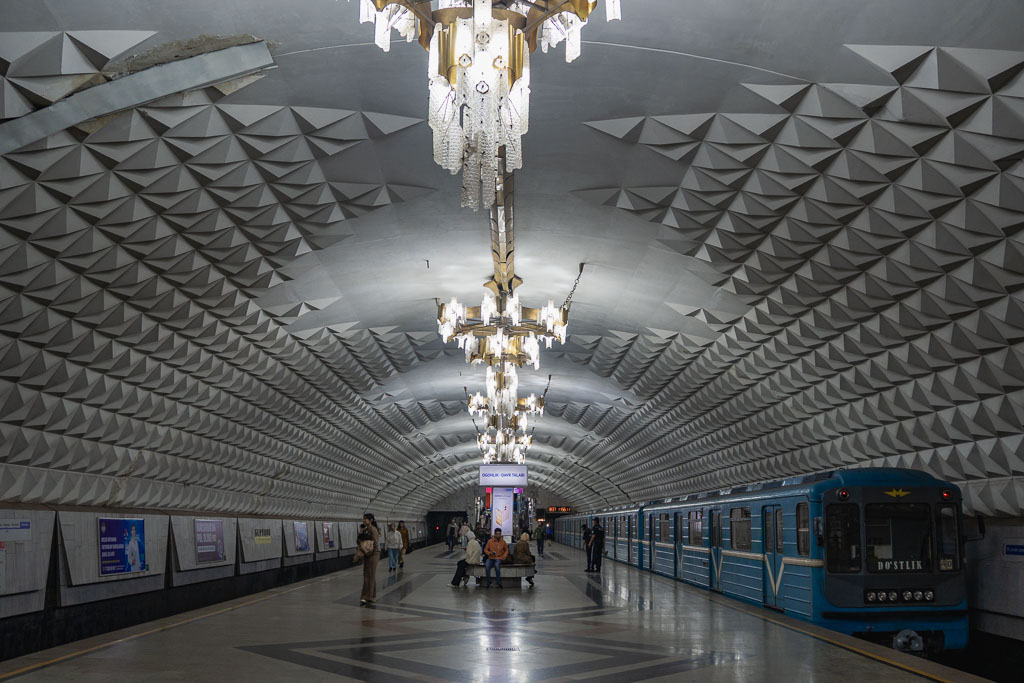
Beruniy Station
A big reason so many travellers pass through Tashkent is that it’s the main gateway to Uzbekistan.
Unless you’re already travelling in Central Asia, you’re probably flying into the country through Tashkent. It’s no Singapore or London, but you can find plenty of flight connections to Tashkent; not just with Uzbekistan Airways, but also major carriers, including Chinese and Middle Eastern ones.
Plus, getting from Tashkent Airport to your city hotel is super cheap using a rideshare app like Yandex Go.
If you’re already in the region, train and bus are your best bets to reach Tashkent.
Trains connect Tashkent with Uzbekistan’s main destinations, plus Shymkent and Almaty across the border in Kazakhstan.
You can also take buses to Tashkent from Kazakhstan and Kyrgyzstan. But the train rides are already pretty long as is.
Of course, there are always the multi-stan tours with Intrepid, G Adventures, etc., if you want a hands-off trip.
Where to stay in Tashkent
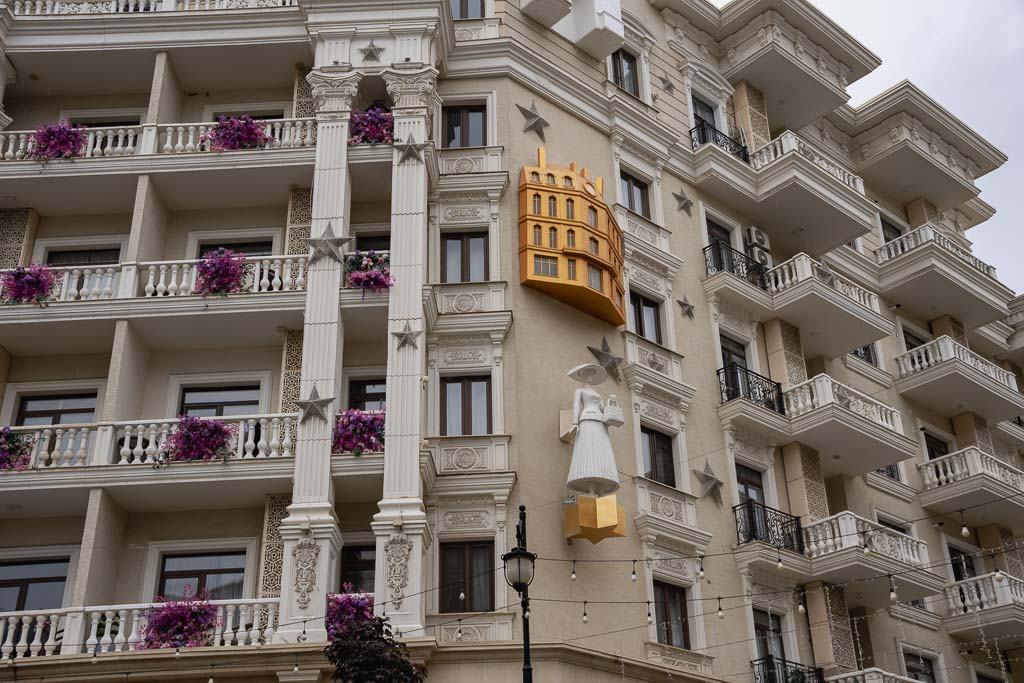
One of my biggest challenges when planning to visit Tashkent was working out where to stay.
There are many places to stay in Tashkent, and they’re usually quite affordable. The problem is that accommodation is spread right across the city, with no obvious one area to stay in.
My best advice is to try to stay near a metro station, even better if it’s one on two lines. Otherwise, try to use Amir Temur Square, Chorsu Bazaar, and Seoul National Park as a vague boundary.
I split my stay between Art Deluxe Hotel and Grand Art Premium Hotel, both near Mirabad Street, a road with lots of restaurants. Both are affordable but comfortable, although they’re right at the limit for walking to the nearest metro. Art Deluxe Hotel had the better breakfast, and Grand Art Premium Hotel had a much bigger room.
For more ideas, these are other well-rated places to stay in Tashkent:
- Farovon Tashkent Boutique Hotel
- Harris Hotel Spa&Fitness
- LOTTE City Hotels Tashkent Palace
- City Centre Hotel
Why Tashkent is worth visiting
I think part of the problem is that people don’t know what to do in Tashkent. Many of my reasons to visit Tashkent relate to city attractions, so I’ll try to cover that too as I go.
Of course, you can always join a local walking tour, and they’ll show you the best places to go in Tashkent. But let me first convince you to spend some time here. And that’s without even mentioning the day trips from Tashkent, such as Chimgan and Charvak Lake or over to Khujand in Tajikistan.
Tashkent’s Museums
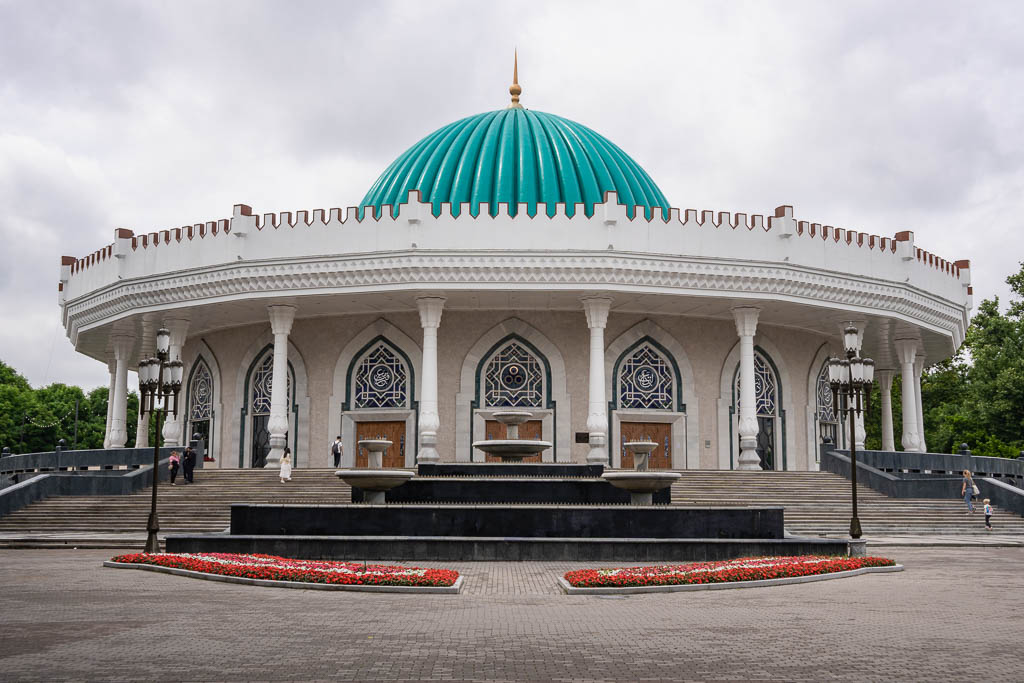
State Museum of the Temurids
One of the best things to do in Tashkent is to visit the city’s museums.
Other destinations in Uzbekistan may feel like open-air museums, but Tashkent is actually where you’ll find many of the country’s best museums. Yes, you can learn a lot on guided walking tours, but nowhere did I learn more than at Tashkent’s museums.
Tashkent has many museums, and even with a few days in the city, you won’t cover them all. See some of the main ones, though, and you’ll be glad you visited Tashkent.
To me, the best museum in Tashkent is the State Museum of the Temurids, and not just for its design, inside and out.
The museum has all the information you need on Amir Temur, also known as Tamerlane, a historical figure you’ll meet many times in Uzbekistan. But it also has a lot of information on the country’s entire history, and that context will serve you well in Samarkand, Bukhara, and Khiva.
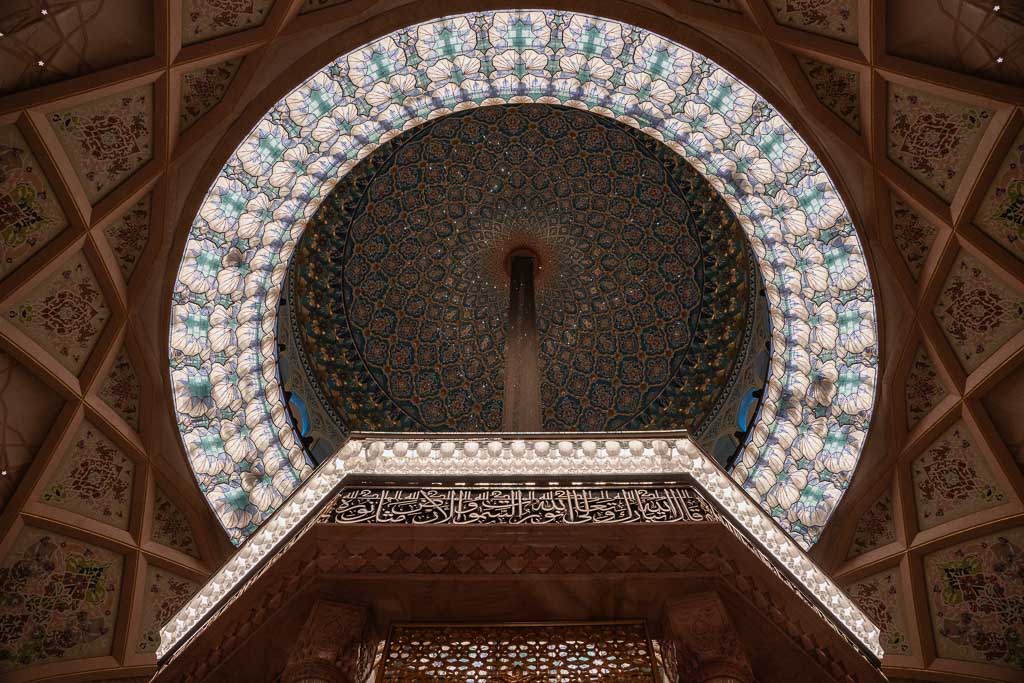
Quran Hall of Islamic Civilization Center
Another good museum in Tashkent is the Museum of Applied Arts. If you’re interested in textiles, architecture, and exquisite craftsmanship, this will be a real treat.
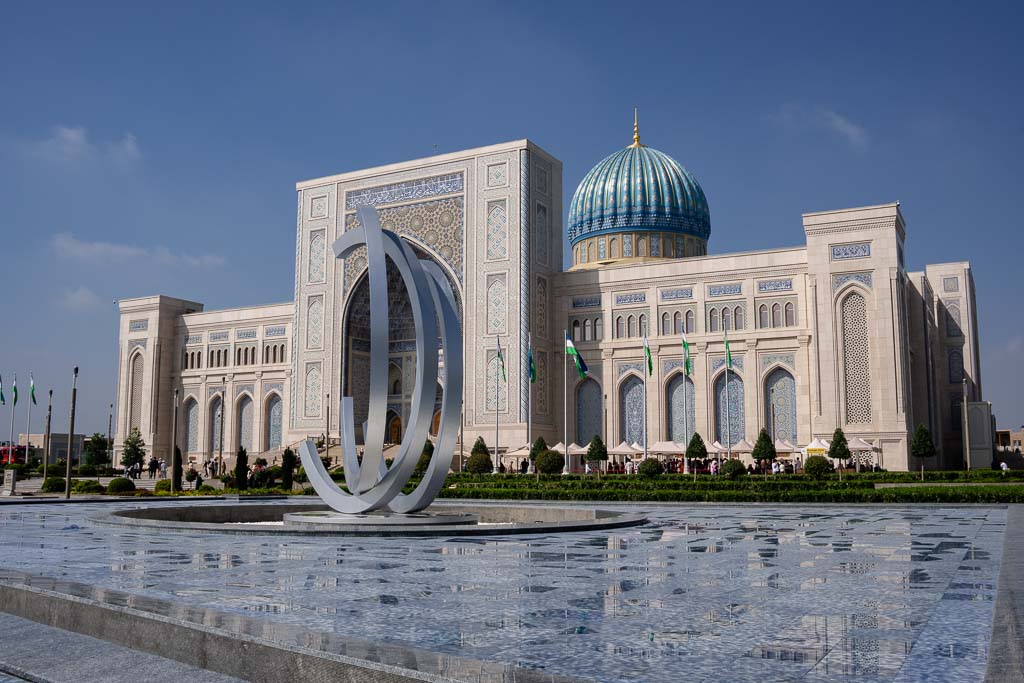
But the new star attraction is the impressive Islamic Civilization Center. This huge museum, built to look like an old madrasa, is both beautiful and full of things to see.
Despite its name, it covers much more than just Islam; the tour takes you through Uzbekistan’s history again, mixing treasured artifacts with huge displays and audiovisual experiences. I just wish you could explore independently and take your time.
The big moment at the Islamic Civilization Center is the Quran Hall. This incredibly detailed hall houses the Samarkand Kufic Quran from the 8th/9th century, a rare, well-preserved ancient manuscript. But it’s the special light show inside that will surely blow you away.
Besides the Islamic Civilization Center — which is great, but expensive for Uzbekistan — Tashkent’s museums are moderately priced and all worth visiting.
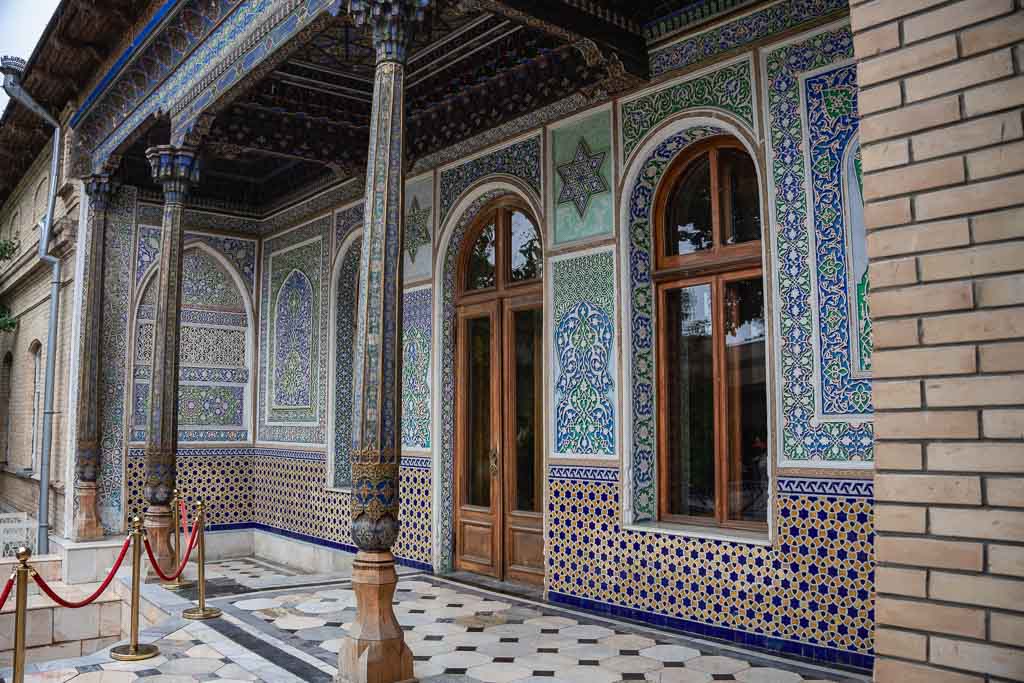
Museum of the Applied Arts
The scenery of Old Tashkent
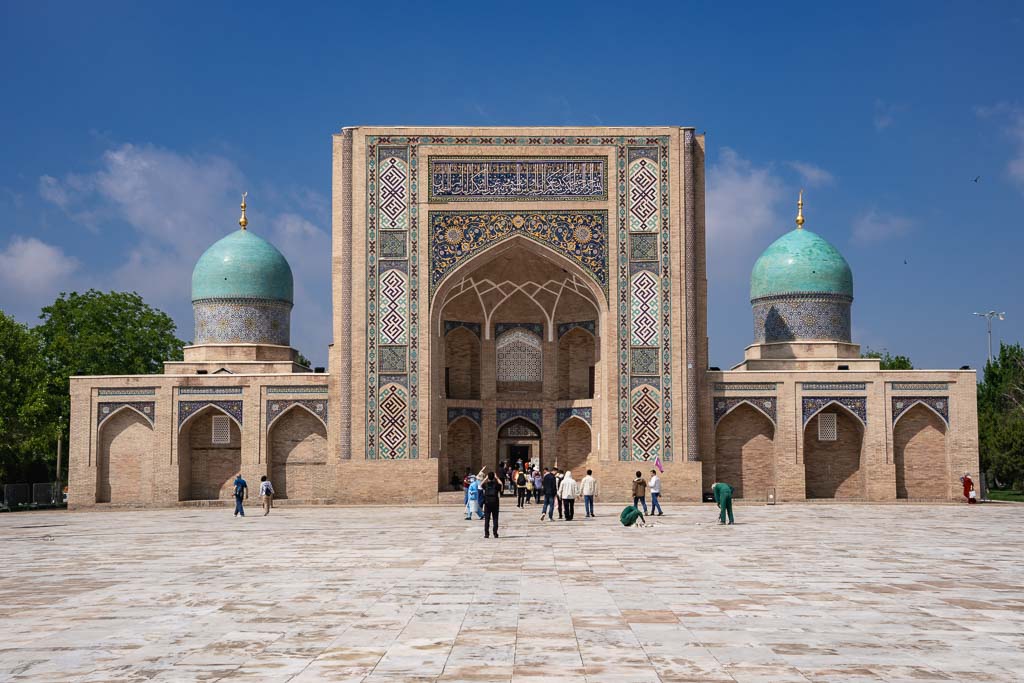
Barak Khan Madrasa
While people go to Bukhara and Samarkand for their historical centers, they don’t expect the same from Tashkent.
But don’t be misled into thinking Tashkent has no scenic old areas to admire and photograph, especially around Old Tashkent.
Although the Persian architecture of the Islamic Civilization Center in Old Tashkent is modern, you can find genuine historical landmarks nearby.
Within the Hazrati Imam Complex, you can find buildings such as the Barak Khan Madrasa and the Muyi Muborak Madrasa, which date from the 16th and 19th centuries. They offer a small taste of the beautiful landmarks found around the country.
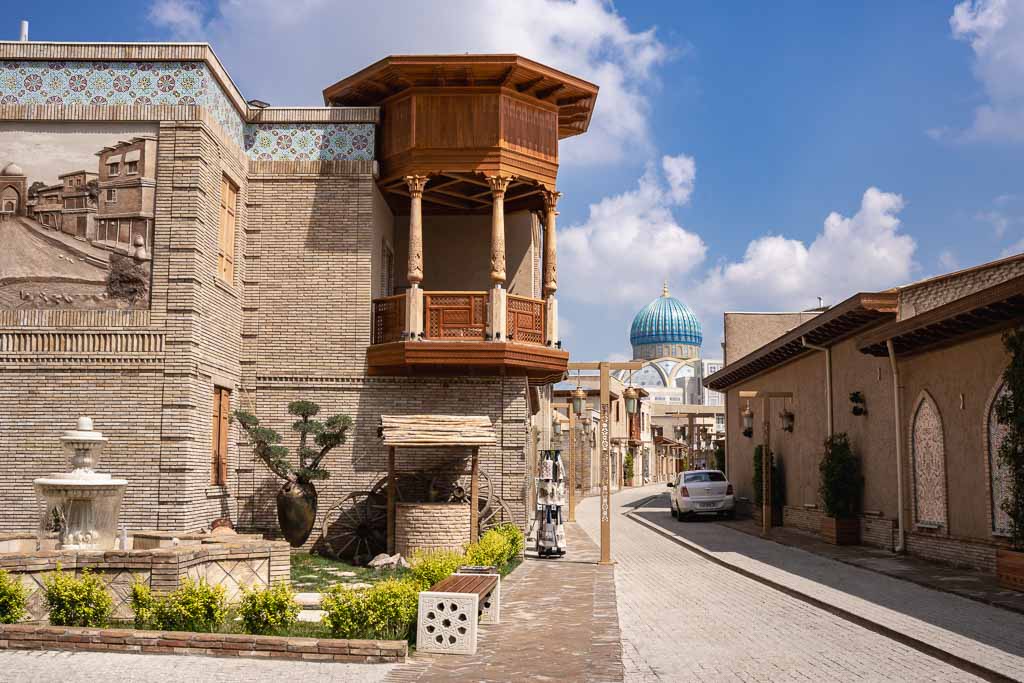
Zarkaynar Street
Another place to go in this part of Old Tashkent is Zarkaynar Street. This old street is undergoing a revival and shows visitors what walking through Old Tashkent once felt like.
From murals on the walls to the little canal down the middle and the many shops around it, Zarkaynar Street is a picturesque glimpse into the past.
The Metro stations
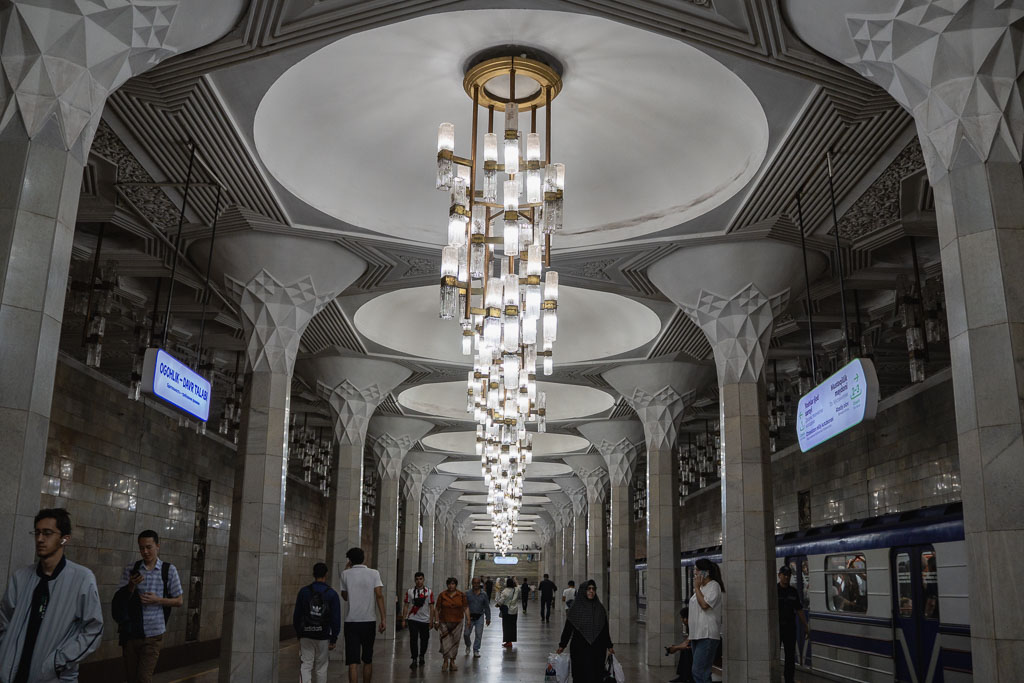
Mustakillik Maydoni
Possibly the most famous attraction in Tashkent to international travellers is the city’s metro stations.
Sounds a bit odd, right? Well, I have to admit that it was the thing I most wanted to see before visiting Tashkent.
That’s because the city put a lot of effort into giving many of its metro stations unique Soviet-era designs. Stepping onto their platforms often feels like a time warp, especially when you see an older train as well.
You can find Tashkent metro tours and guides detailing where to see the best stations. I’ll just share my favourites: Mustakillik Maydoni, Beruniy, Kosmonavtlar, Alisher Navoi, and Gafur Golom.
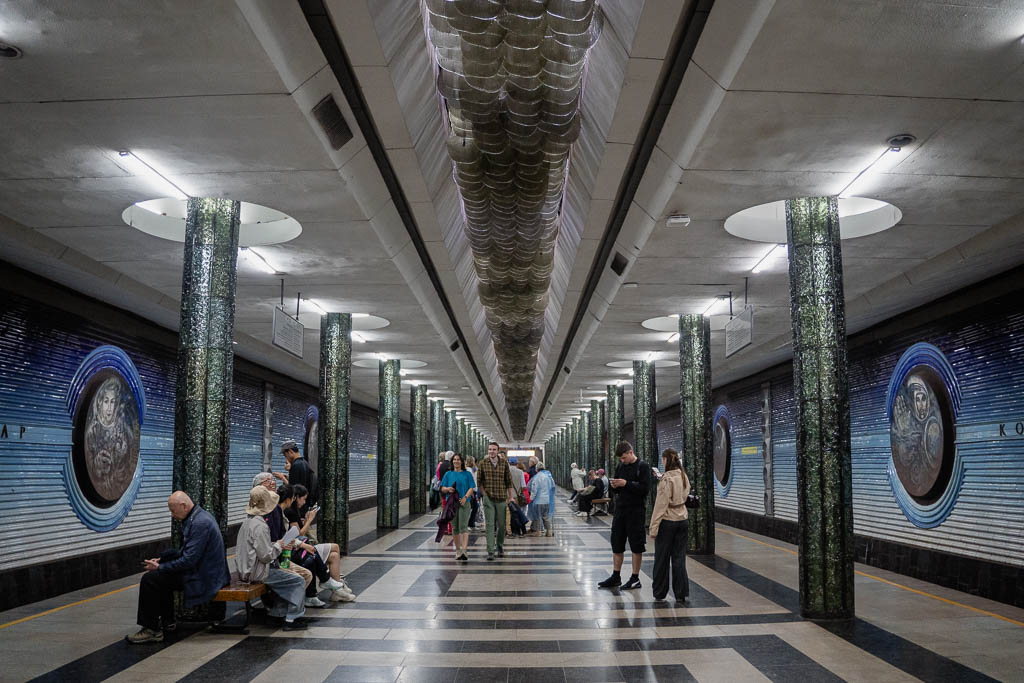
Kosmonavtlar
If you have the time, you can spend hours checking out each metro line. Plus, transport in Tashkent is very reasonably priced, so it’s a cheap activity.
I believe the city used to prohibit photos in the metro, but that’s no longer the case, which is good news for visitors. Just try not to get in the way of commuting locals while you do.
Modern Uzbekistan
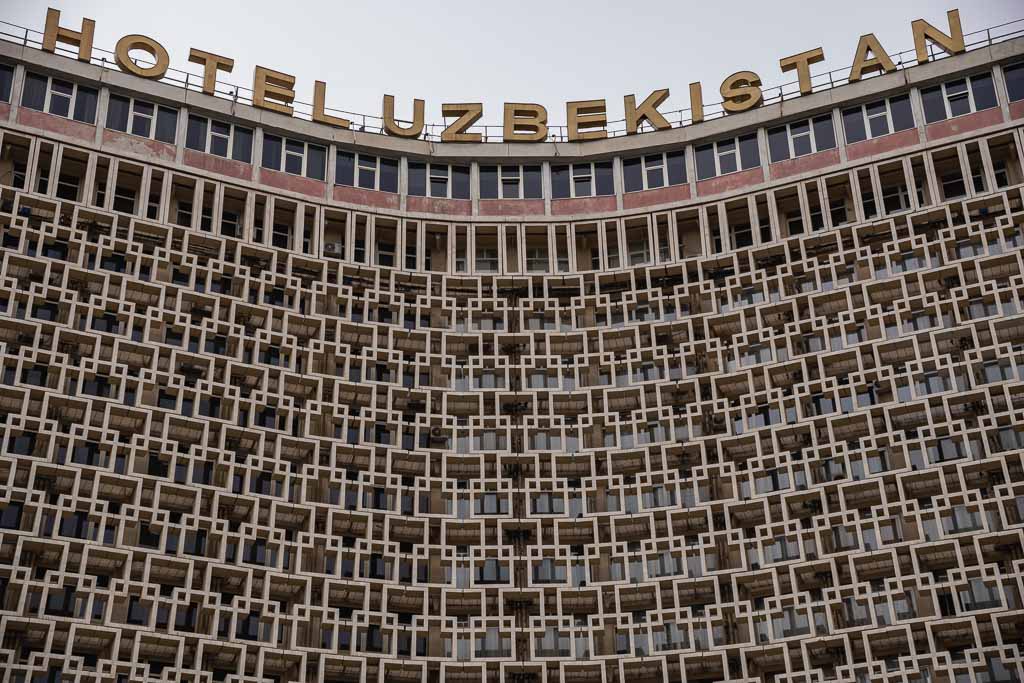
Tashkent’s metro stations are only one example of what makes Tashkent stand out.
When you visit Bukhara, Khiva, and Samarkand, you see and explore history from centuries ago. But those cities don’t give you much insight into the last hundred years of history or what Uzbekistan is like now.
Tashkent shows how the 20th and 21st centuries have shaped the country. It may not be as pretty as Uzbekistan’s Silk Road history, except maybe the metros.
That doesn’t mean the city isn’t interesting to look at. You can find some great Soviet-era brutalist architecture around Tashkent, including the massive Hotel Uzbekistan.
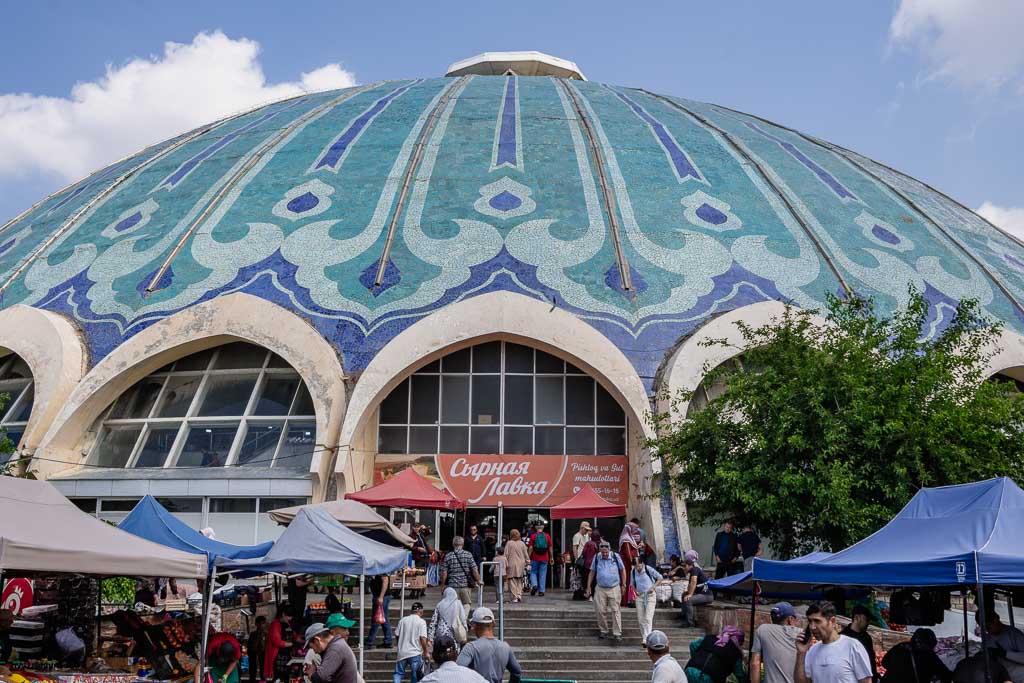
Chorsu Bazaar
Tashkent also offers attractions that show slices of modern city life. You can visit Chorsu Bazaar, the city’s sprawling market surrounding its large domed meat market.
Its modern equivalent is only two metro stops away over at the Tashkent City Mall. While it’s not too remarkable on its own, it sits across from Tashkent City Park, a large park with fountains and evening illuminations.
I’ll touch on food in Tashkent in a moment, but the dining area around Fountain “Milan” is another hint of local life, an upmarket one, certainly.
Visiting Tashkent shows you more down-to-earth sides of Uzbekistan you might otherwise miss.
An introduction to Uzbek food
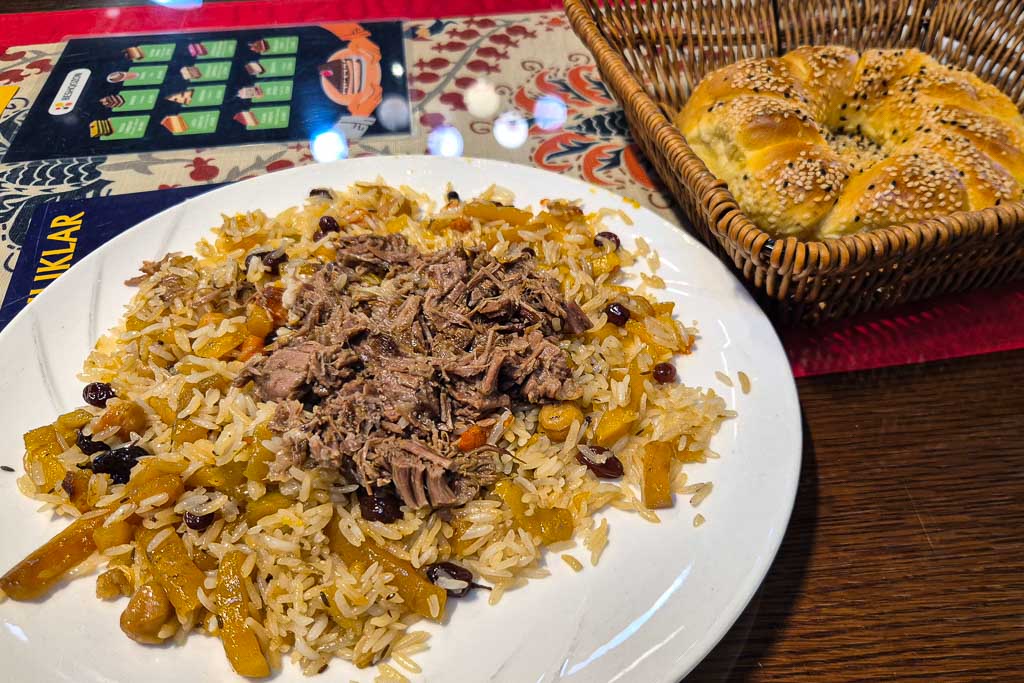
Wherever you go in Uzbekistan, you’ll eat well if you enjoy meat and bread.
Tashkent is a good place to learn the ropes of Uzbek cuisine, offering your first taste of staples such as plov, somsa, and maybe laghman. Then, try regional variations as you explore the country and decide what you prefer.
You can try all sorts of pastries at Safia, a nationwide bakery chain I quite like, but my recommendation for a nice Uzbek restaurant is Afsona Tashkent City.
Tashkent is also a great place to try the food of the city’s different migrant communities. Eating tasty Korean, Vietnamese, and Georgian food around Mirabad Street was nice at the end of the trip, after weeks of non-stop Uzbek food.
I always like exploring restaurant options in former Soviet countries because the common cuisines are vastly different from most Western countries.
