
Disclosure: This post (probably) contains affiliate links. If you click on one, I may make a small commission. Of course, this will come at no extra cost to you and helps keep this site running.
Hiroshima is most famous for one terrible moment in history. But with my first visit to the city, I didn’t want my entire visit to focus solely on that. So, I was delighted by the opportunity to take a Hiroshima food tour with Arigato Travel and experience another side of the city.
Before visiting, I didn’t know what to expect from Hiroshima’s food scene. I just trusted my guide, Ami, and learned a lot about the city’s local delicacies and culture. Here’s my review of their Best of Hiroshima Food tour and why my experience slightly differed from normal, thanks to the Golden Week Festival.
Touring with Arigato Travel

Unless you’re already familiar with Arigato Travel, it might help if I explain why I chose to explore Hiroshima with them.
They are a Japanese tour company with tours across many parts of Japan that introduce visitors to Japanese culture through local food experiences.
Sometimes, food tours can be an easy way to try a bunch of local food, but they fail to take you beyond what’s on your plate. That’s not an issue with Arigato Travel; my guide, Ami, used the food as an entry point to show me various aspects of Japanese culture, including how regional the country can be.
As you’ll see, my visit to Hiroshima coincided with a major event in the city. While that changed some things, having a guide who could answer questions and explain the culture behind it was invaluable.
Hiroshima specialties
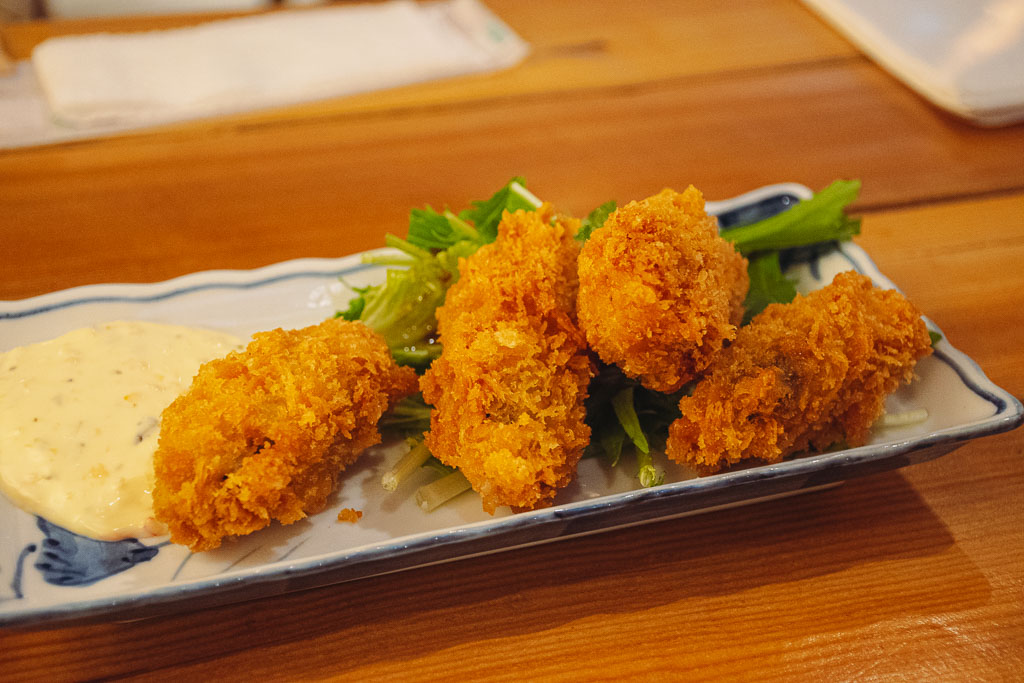
After a gentle walk in the city center, Ami brought me to our first food stop, a craft brewery.
This was a surprise following my craft beer tour of Osaka, but beer was just part of the reason for visiting. Yes, we did order some delicious craft beer and matcha lemonade (delicious), but the focus was on the pub snacks at the venue.
One of Hiroshima’s main specialties is oysters. The city produces roughly 60% of all of Japan’s oysters, making it an understandable local delicacy to try.
I’ve enjoyed excellent oysters in the past in places like Bruny Island, but what was new for me was trying deep-fried oysters. The combination of the texture of oysters inside a crunchy batter had me uncertain what to expect, but I was pleasantly surprised by how it all came together, especially with Japanese mayo to lighten their rich taste.
While trying the oysters and a dish served with “onsen tamago”—translated as “hot spring egg” or a soft poached egg—we talked about local specialties.
One place I filed away for next time was the historic sake breweries of Saijo Sake Brewery Street in Higashihiroshima. It is apparently both scenic and offers a chance to really dive into the world of sake, something I haven’t really done much of yet.
Finding Miyajima snacks
With drinks drunk and food eaten, it was time for a walk to burn it all off.
The first stop was a little puzzling at first – a random street corner in the city center, with a lone vending machine in front of us.
Now, Japan loves its vending machines, and I’ve seen all sorts in the past, including ones that have hot pizzas.
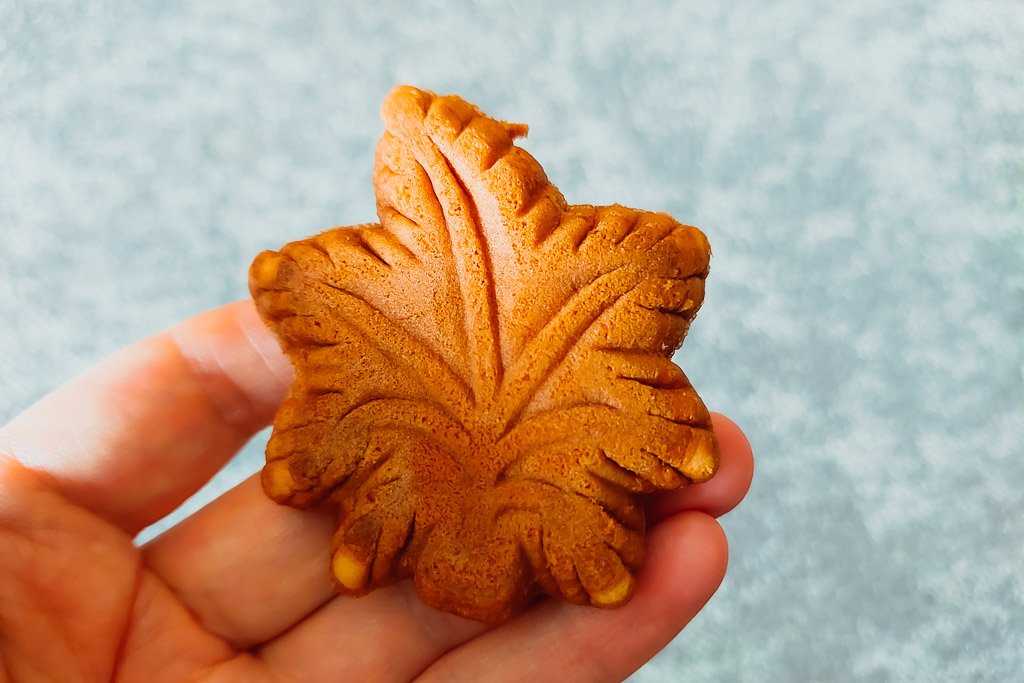
But this vending machine was devoted to momiji, a soft cake shaped like a Japanese maple leaf from the nearby island of Miyajima. While I had heard of these common souvenirs, I didn’t realise you could also get them in Hiroshima, let alone from a street corner vending machine.
Momiji come with all sorts of fillings; red bean is the typical option, but you can also find custard, lemon, matcha, and more.
The machine was low in stock, so we instead headed to a nearby souvenir store packed with them. As part of the tour, you get to pick out a couple to take home, which is a nice little touch to remember the tour.
But this souvenir store has another interesting feature: an oyster vending machine. Yep, a second-themed vending machine where you can get fresh or deep-fried oysters. Incredible!
Golden Week Festival food
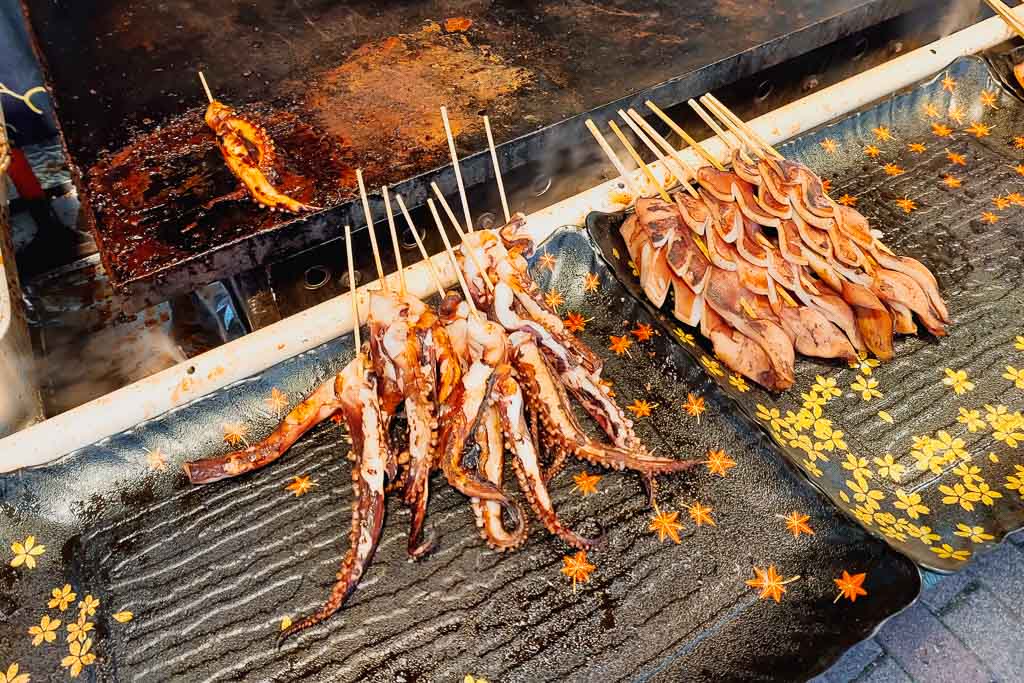
Visiting Hiroshima at the start of May meant seeing the city as it celebrated Golden Week.
What makes this week special is that there is a cluster of holidays around the start of May, and people in Japan regularly use the week to travel around the country. You’re much more likely to encounter a lot of Japanese tourists in tourist destinations during Golden Week.
The stakes are raised even higher in Hiroshima at this time with the annual Hiroshima Flower Festival. For several days, concert stages liven up the Peace Memorial Park, and Peace Boulevard is closed off for a street food fair.
So, with all of this going on while I’m taking a Hiroshima food tour, it only made sense to make the most of having a local guide show me around. I don’t really know what I missed from a regular tour to experience this, but these sorts of opportunities are not to be missed.
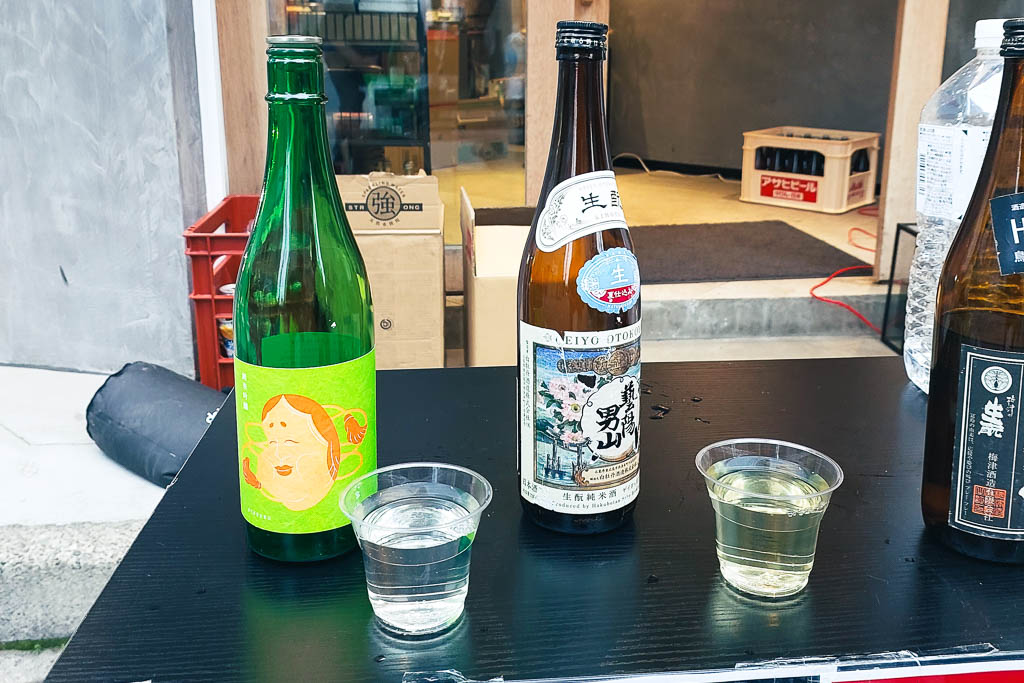
Walking from stall to stall, we picked up grilled squid, fried fish, and baby castella—a delicious snack of sweet sponge balls similar to Madeira cake. Nearby, we also found a bottle shop selling glasses of sake as part of the festival, and had two glasses of Hiroshima sake.
But as I said before, the focus wasn’t just about the food and drink. Ami clued me in on how Hiroshima celebrates Golden Week and some of the signs I’d seen of Children’s Day, one of the holidays that make up Golden Week. If you’ve seen large carp streamers blowing in the wind, Koinobori, these are set up by families, with specific colors for each family member.
I won’t get too in the weeds about it, but you can really explore Japan’s changing social dynamics through it if you choose to.
Hiroshima okonomiyaki
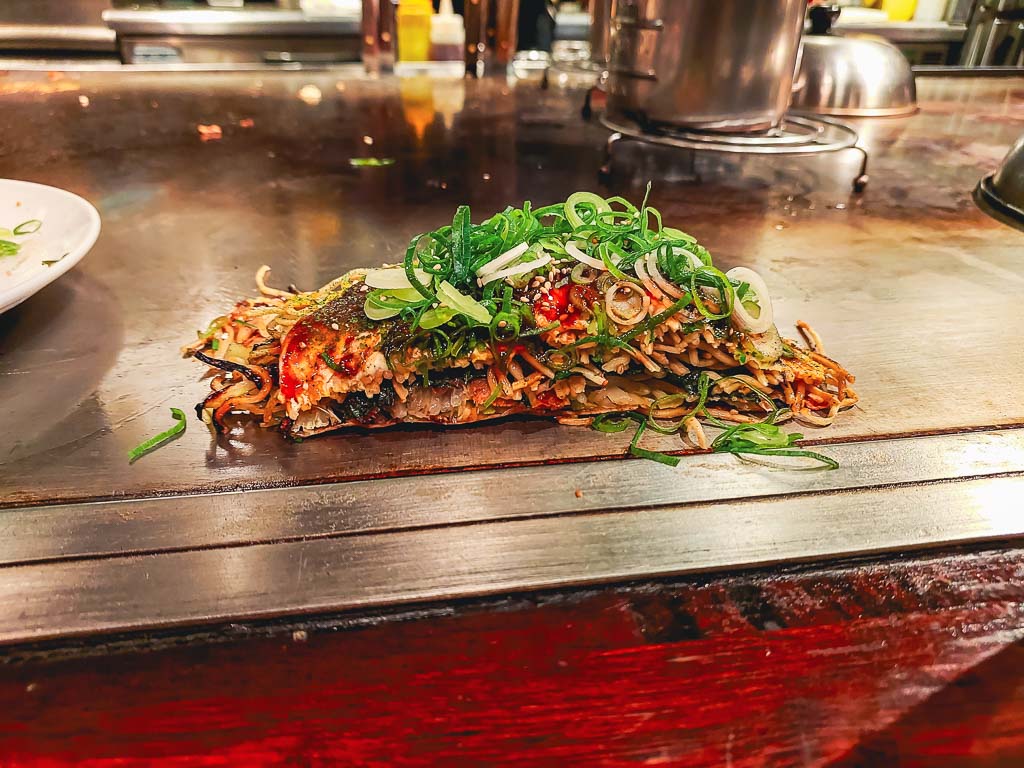
The main course of the tour, both figuratively and literally, was going to an okonomiyaki restaurant.
Hiroshima-style okonomiyaki is probably the city’s most famous dish, not least because it’s quite different from Osaka-style, which is often what many tourists’ first try.
In Osaka, they make this pancake-like dish with a lot of wheat flour, and it has quite a dense mixed-batter texture under its source and toppings. However, the approach in Hiroshima is more of a layer-by-layer style, with a thin amount of batter, and they introduce yakisoba noodles, completely changing its overall texture.
While trying the different styles is one thing, a big part of the experience is seeing the dish prepared in front of you. Okonomiyaki is cooked at a teppanyaki restaurant, where the chef prepares the dish in front of you on a large iron griddle. Now, Americans may be familiar with this style of cooking from hibachi restaurants, but in Australia, they’re not common, so this was my first time experiencing something like this.
During my trip I had okonomiyaki twice, and as I was able to compare the two quite easily, I have to admit, I prefer the Hiroshima-style okonomiyaki to the Osaka style.
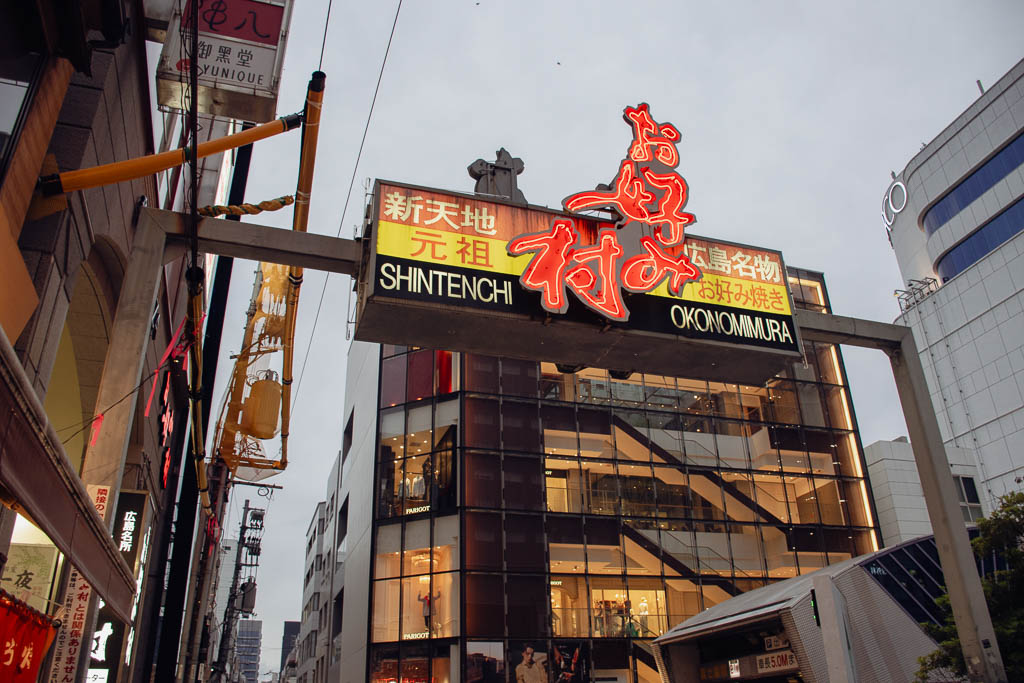
Okonomiyaki is a very popular dish in Hiroshima; it’s believed there are over 2000 okonomiyaki restaurants across the city. There’s even an “Okonomiyaki Village” full of these restaurants in the city.
With so many options, choosing the right place and navigating the ordering process can be daunting for some. Taking a guided tour lets you just enjoy the food and experience, without worrying about all that. For instance, because of the festival, many of the main restaurants were totally booked out. But I didn’t need to worry about that as Ami had it all organized.
Why take the tour?
If there’s any doubt left, let me be clear that I had a great time on the Best of Hiroshima Food tour.
It wasn’t just that I was totally full by the end, or that I tried multiple local signature dishes. I got to enjoy these, plus a local festival, with someone else navigating it all, organizing it all, and explaining local culture and customs, so I could better appreciate Hiroshima as a city.
Being hands-off for an evening was a real luxury for someone who normally has to plan everything themselves.
I really enjoyed visiting Hiroshima overall. But a big part of that is because this tour made me feel like I understood it better than when I first arrived.
*Disclosure: I took this Arigato Travel tour as their guest. As always, opinions are completely and genuinely my own.
