Disclosure: This post (probably) contains affiliate links. If you click on one, I may make a small commission. Of course, this will come at no extra cost to you and helps keep this site running.
Look at photos of Japan and one place that is sure to show up is the island of Itsukushima, which tourists better know as Miyajima. It may be one of many islands floating off the coast of Hiroshima, but it’s the only one with the recognizable view of a traditional Japanese torii gate floating in the water.
Eager to see this for myself, a day trip to Miyajima from Hiroshima was a core part of my plan for visiting Hiroshima. And even though I was more prepared than usual, I learned a lot about visiting through the things that went right and wrong. Improve your odds of a good trip to Miyajima by learning from my experience with this article.
Why do a day trip to Miyajima?
Visiting Miyajima is usually a priority for people travelling to Hiroshima.
The island offers one of the most iconic views in Japan, its floating torii gate, partially submerged below the water. That sight might be the headline, but there are many more things to do in Miyajima that make it worth visiting. You’ll soon see what I mean.
The next question that naturally arises is how long you should spend there. A day trip to Miyajima from Hiroshima is the most common approach, as you can comfortably fit the island’s highlights in one day.
Some people choose to stay on Miyajima overnight to experience its ryokan and have more time to explore.
What I wouldn’t recommend is trying to fit both Hiroshima and Miyajima in one day. You need at least half a day at Miyajima, which doesn’t leave much time for the many things to do in Hiroshima.
See what I managed with my Miyajima day trip and decide for yourself if that’s enough time.
Tips for visiting Miyajima Island
Many people look forward to their time visiting Miyajima. For that reason, I plan to help you make the most of your visit rather than tell you exactly what to do.
Giving you a precise itinerary to follow also has some setbacks, as several factors can change the experience for each and every visitor. Below are the details to help you organize your day trip and know what you need to look out for.
The ferry to Miyajima

To make your day trip to Miyajima from Hiroshima, you first need to get there.
You’ll need to take a ferry to Miyajima to visit this island. They leave from the Miyajimaguchi Ferry Terminal, southwest of the city.
Get to the ferry terminal by train on the Sanyo line to Miyajimaguchi Station or the Miyajima Line light rail to Hiroden-Miyajimaguchi Station.
Taking the light rail is cheaper, but takes over twice as long. And yet, it may be more convenient if you’re staying farther from Hiroshima Station, such as downtown.
Once you reach the ferry from Hiroshima to Miyajima, you have a choice of two different companies to get there. There’s very little difference, other than the JR West ferry is included in the JR Pass/Regional Pass, so don’t stress over this unless using a rail pass.
After a short ferry crossing, you touch down on the island. If you pay with an IC card or a regular ticket, a return trip in 2025 is 500 yen, including an entry tax. Travellers who use a JR Pass will need to pay the 100 yen entry tax upon arrival, as it hasn’t been automatically collected with their ferry ticket.
Visiting Miyajima’s Otorii and shrine
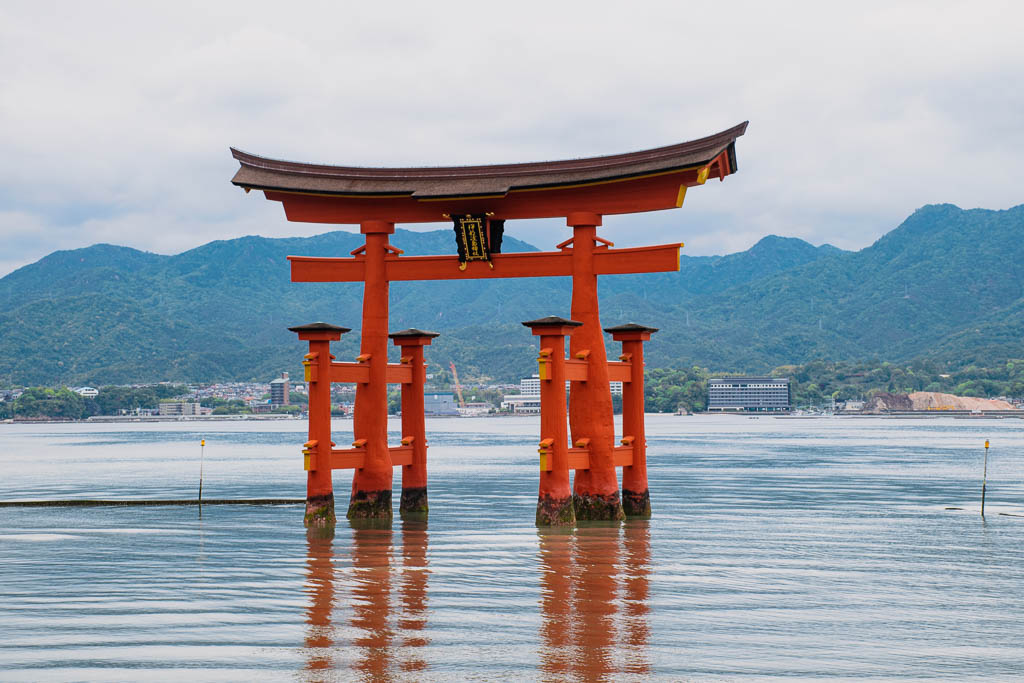
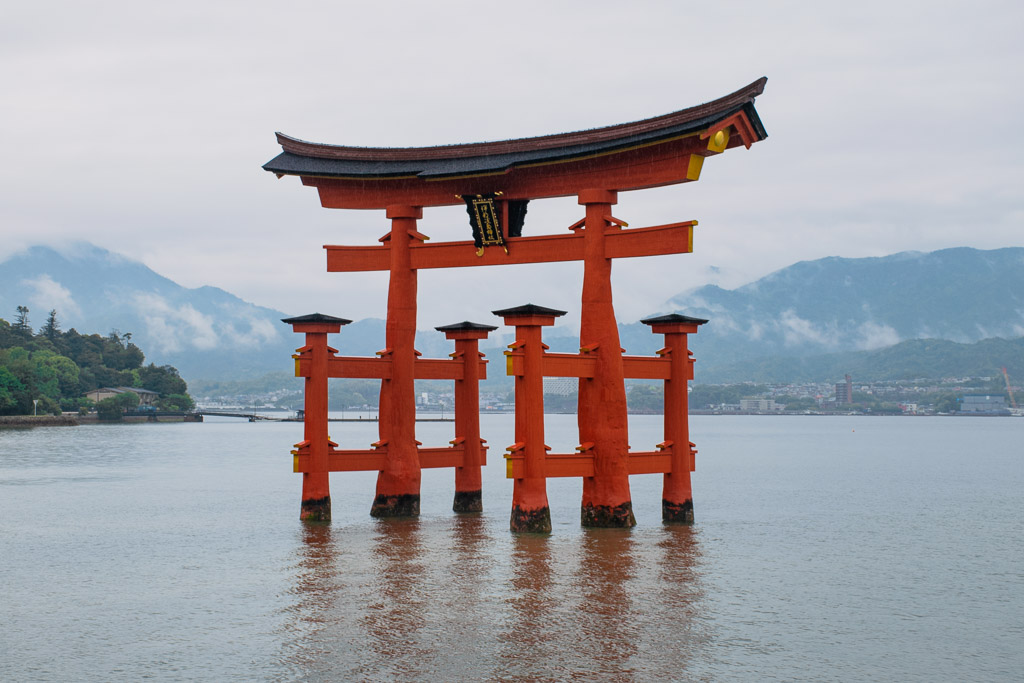
After arriving, your instinct may be to rush straight for the island’s most iconic landmark, the Miyajima Torii Gate, known as O-Torii.
This might be a good idea, but it really depends on a few things.
The main factor is the tide. With a very low tide, you’ll be met by mud all around the torii gate (you can even walk out to it), while a high tide creates the iconic floating look.
It’s best to check the tides in advance to time your visit. Walking to the viewpoints of the gate doesn’t take long from the ferry terminal, maybe 10 minutes. So, if in doubt, go check.
The gate still looks impressive when the water level is a little lower, as you can see from my photos, as the tide times weren’t in my favour. It’s hard to get a bad photo here.
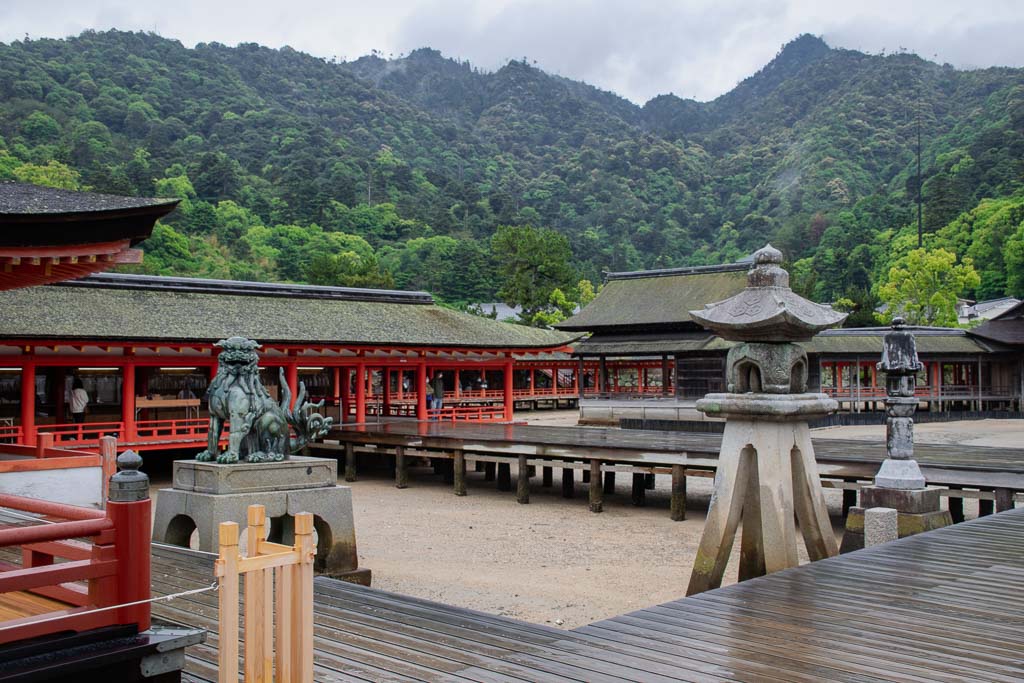
The other attraction affected by Miyajima’s tides is the Itsukushima Shrine. This is the important 12th-century Shinto shrine that the gate belongs to.
Much of Itsukushima Shrine is set up over the water. I hadn’t realised the extent of this before visiting. As you need to pay 300 yen to enter, the timing of your visit here is even more critical.
I bought my ticket only to find mud flats below the boardwalks around the shrine. The shrine itself has some interesting elements and a great view of the torii gate, but I definitely picked the wrong time to go.
Ultimately, when visiting both of these attractions, you’re at the mercy of the tide and may need to be patient.
One final remark. You get very little information on Itsukushima Shrine when visiting. If that matters to you, I’d suggest hiring a guide to go with you.
Other places to visit on the island

The problem with Miyajima having one famous attraction is that people often don’t know what else there is to do there.
But even just the process of visiting the torii gate and the Shinto shrine will show you several other landmarks.
Outside the shrine, you have the Daigan-ji, a small Buddhist temple, as well as the Itsukushima Shrine Treasure Hall (exhibits inside aren’t well-suited to foreigners). Another street over is the more popular Miyajima History and Folklore Museum, which I regret missing.
On a small hill overlooking the Shinto shrine is the Senjokaku Pavilion, a large wooden hall with faded art, a pagoda, and views of the immediate area.

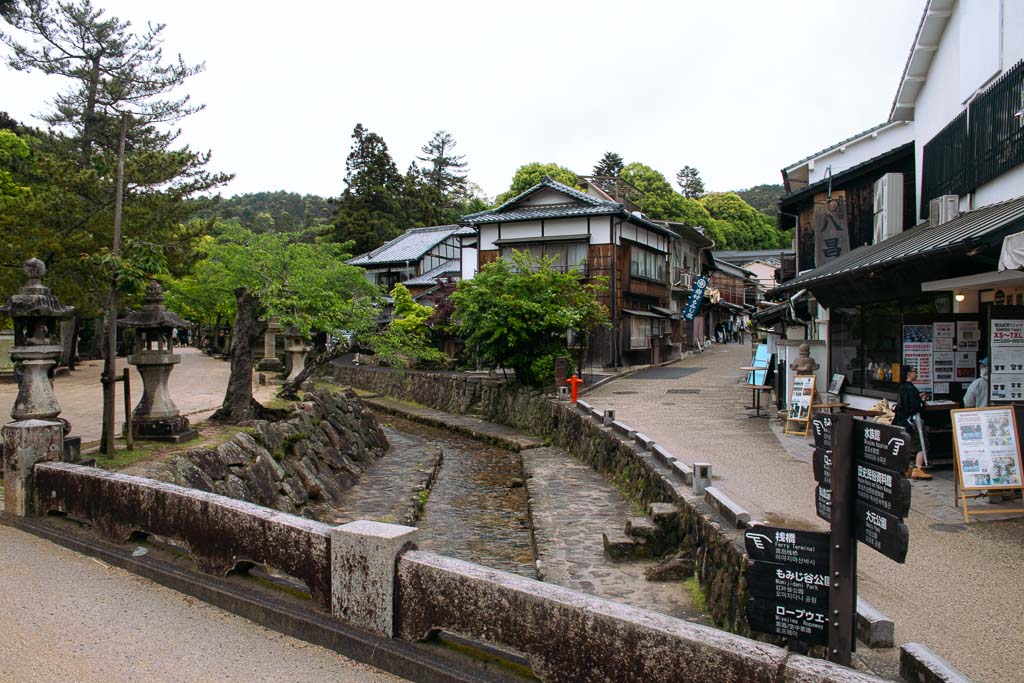
When arriving in Miyajima, you’re likely to walk along Miyajima Omotesandō Shopping Street. Early in the morning, it doesn’t look like much, but make sure to come back later.
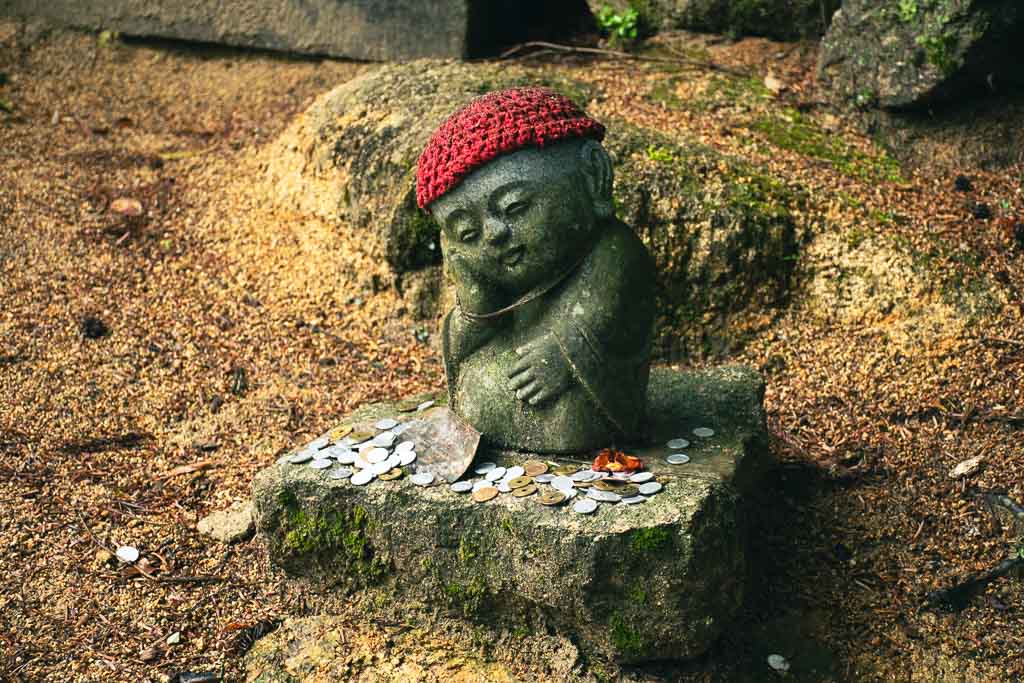
Deeper into the island, there are other temples and shrines you can look for, such as the Daisho-in Temple, with its army of red-hatted statues, known as Jizo.
What to buy on Miyajima
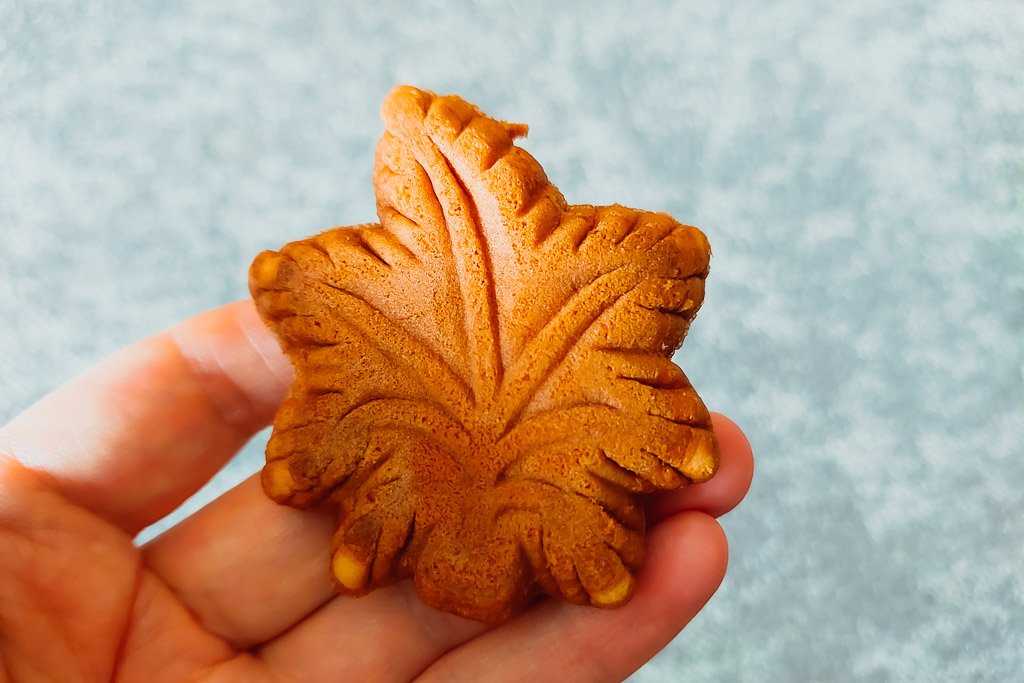
Miyajima Omotesandō Shopping Street and its many options spring to life in the late morning.
While you will find various souvenirs among their offerings, most of the best things to buy on Miyajima are food. The two most famous are momiji manjū and oysters.
Momiji manjū are a soft cake in a maple leaf shape, filled with various things, the most common being red bean paste. They’re everywhere around Miyajima, as well as at stores around Miyajimaguchi on the mainland.
As for oysters, they’re farmed in the bay around the island. Many shops sell oyster shere, typically served grilled or deep-fried.
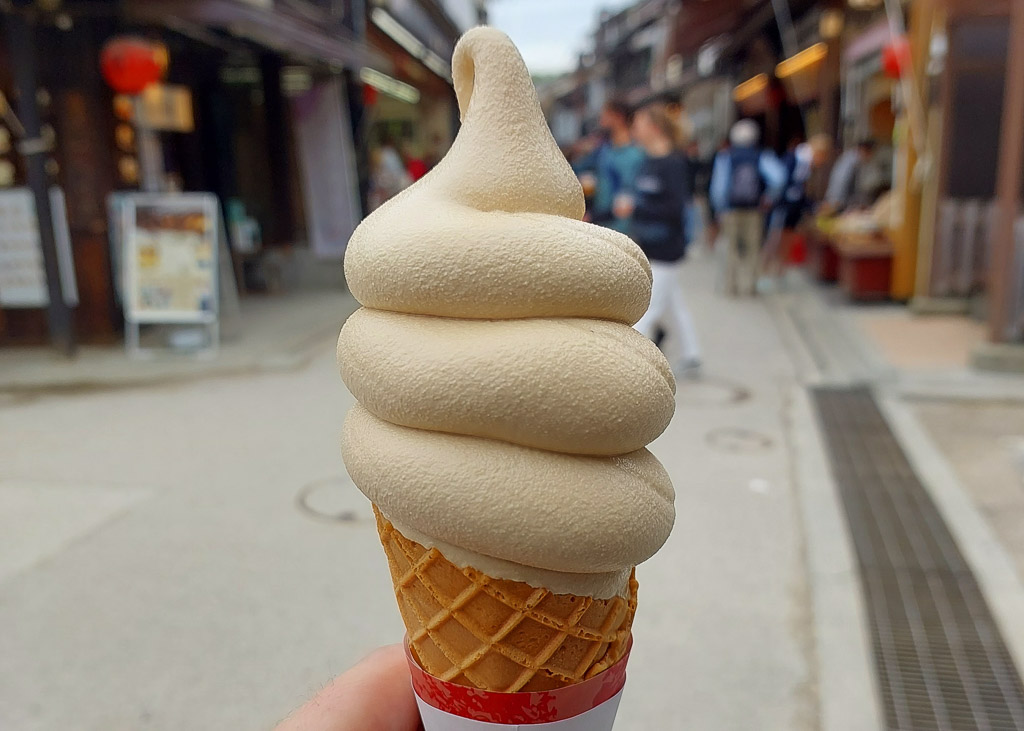
Those might be the classic Miyajima snacks to get, but they’re not all you can try.
Less predictable foods I came across while getting street food in Miyajima include fantastic coffee ice cream, ice cream sandwiches, fried food, grilled meat, and much more.
Whatever you choose to eat, mind the local deer wandering around, as they will expect a bite if they see it.
And, if you miss out on anything, know that for many of these foods, you can also experience them on a Hiroshima food tour.
Visiting Miyajima’s observation points
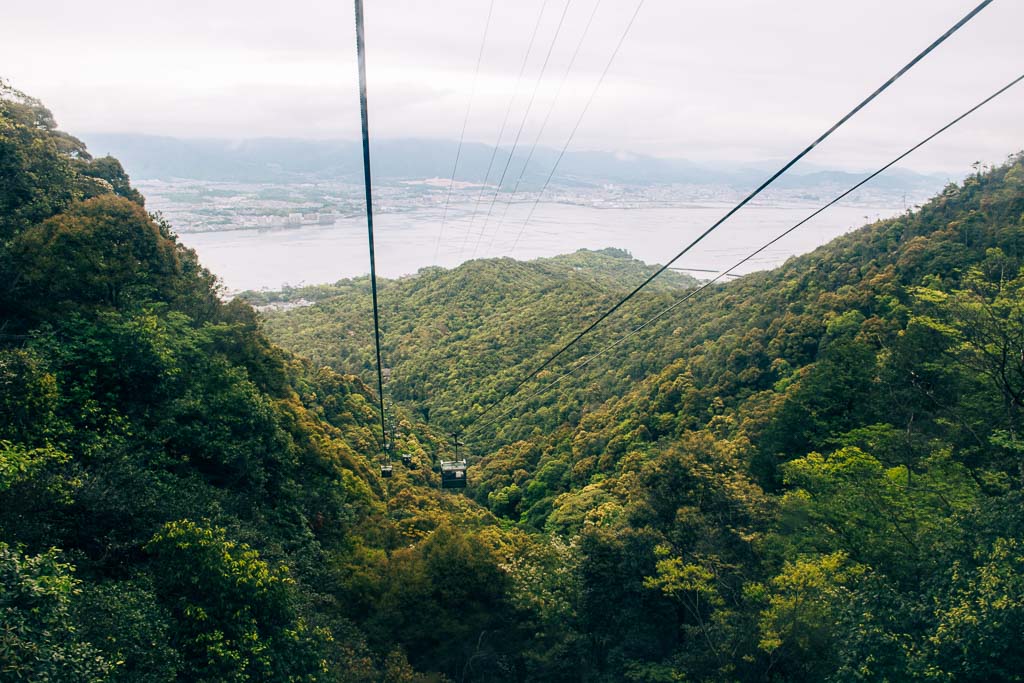
You might not realise it until you’re on the ferry to Miyajima, but the island is highly mountainous.
The waterfront area of Miyajima is where most tourists explore, but for sweeping scenery, you need to head up to the island’s observation points.
There are two ways to get way up to the top of the island: the cable car or hiking.
Most people take the Miyajima Ropeway, which is already a bit of a walk from the waterfront, sitting at the top of Momijidani Park. But that beats the 2-hour hike each way it takes to reach the top of the mountain.
Return tickets for the ropeway are 2000 yen, and even as a budget-conscious traveller, I think they’re worth it.
Now, timing your trip up is important. When I first arrived on the ferry, the island’s upper regions were covered in cloud. But by going up closer to noon, the rain had cleared, allowing me to see the view.
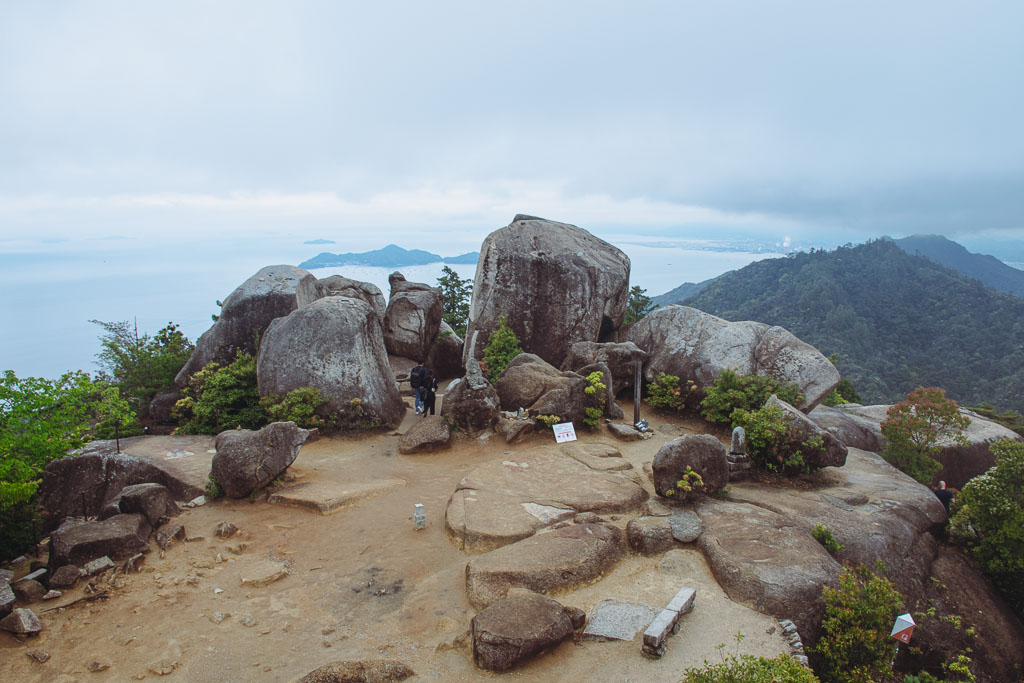
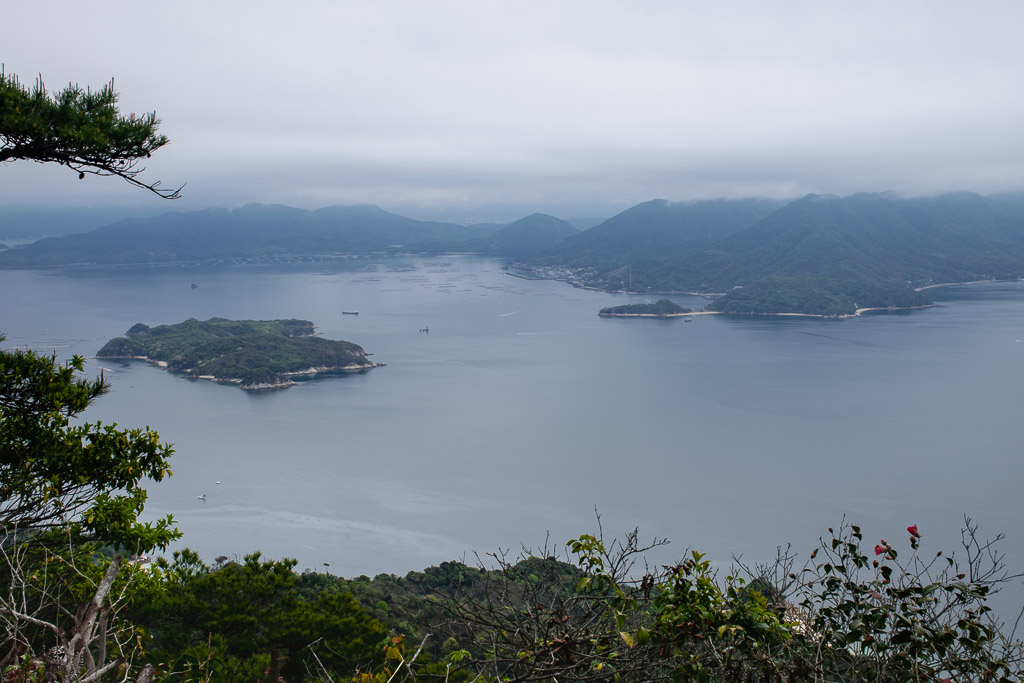
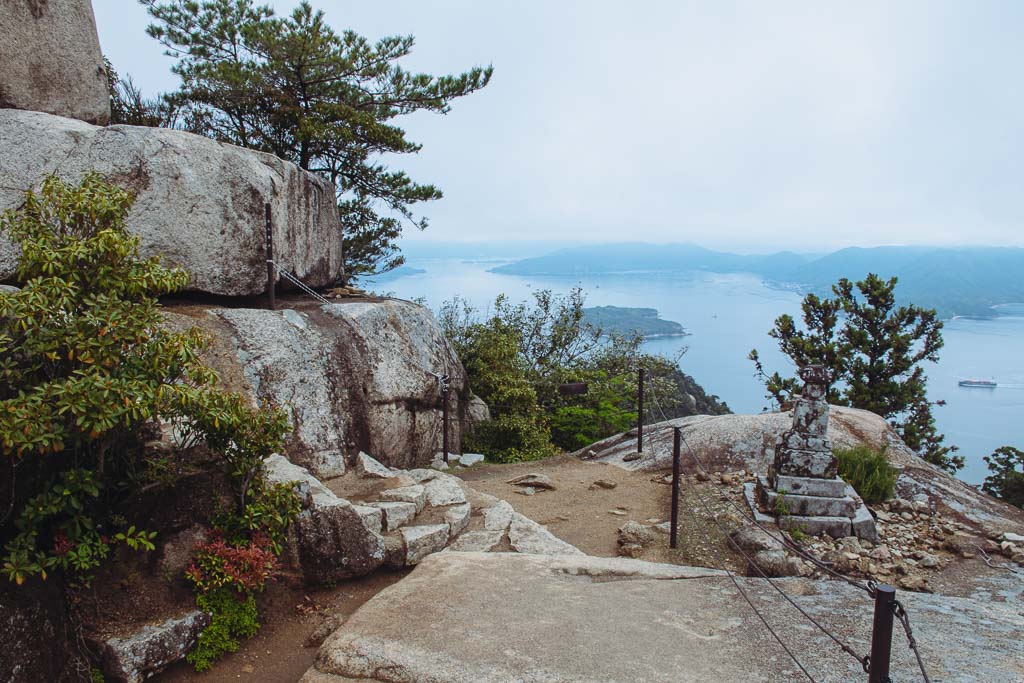
Once you reach the top of the ropeway, you have a small climb to reach the nearby Shishiiwa Observatory. If you want views of the island and surrounding Hiroshima Bay, this lookout does the trick.
But for an ever higher view, and something to do to justify the journey up, you can walk up to the Mount Misen Observatory.
This walk/hike takes about 30 minutes and is steep in sections, proving more of a workout than I expected. Along the route, you pass Buddhist temples and shrines before reaching a modern observation platform. This is a great place to stop for a rest and/or snack.
No matter how much walking or hiking you plan to do, I suggest dressing the part, including choosing proper footwear.