Disclosure: This post (probably) contains affiliate links. If you click on one, I may make a small commission. Of course, this will come at no extra cost to you and helps keep this site running.
While I do like to do my research before visiting a country, I was struggling to find much on the small landlocked Balkan nation of Macedonia, now North Macedonia. Other than a recommendation during my travels to visit Lake Ohrid and knowledge that the country’s capital is Skopje, I was mostly flying blind. This country is quite low-key and it’s only by visiting Macedonia that you get a chance to find out what a fun, intriguing place it is.
I think in part why so few people tend to travel to North Macedonia, is that it simply hasn’t been put on their radar. This is a real shame as I do feel that does manage to meet many tourists’ needs, despite its underdeveloped tourism infrastructure. Sharing my stories and photos of my time visiting Macedonia has been a lot of fun because of the responses they’ve gotten, from travellers getting a chance to see what the country is about, to local Macedonians being glad to see their country promoted.
In the hopes that I can further encourage you to give visiting North Macedonia a try, here are 9 useful or fun things to know about travelling to the country.
1. A “Hidden Gem”

I generally avoid using phrases like “hidden gem” or “off the beaten path” because I think they’re overused when people talk about travel. Also, probably a lot of the places I write about qualify. Either way, know that when I say the Republic of Macedonia is a hidden gem, I mean it.
While more and more of the Balkans are becoming popular with tourists (think Croatia), Macedonia seems remarkably unaffected. Sure, there are decent tourist numbers at Lake Ohrid and to a lesser extent Skopje, but that seems pretty much it.
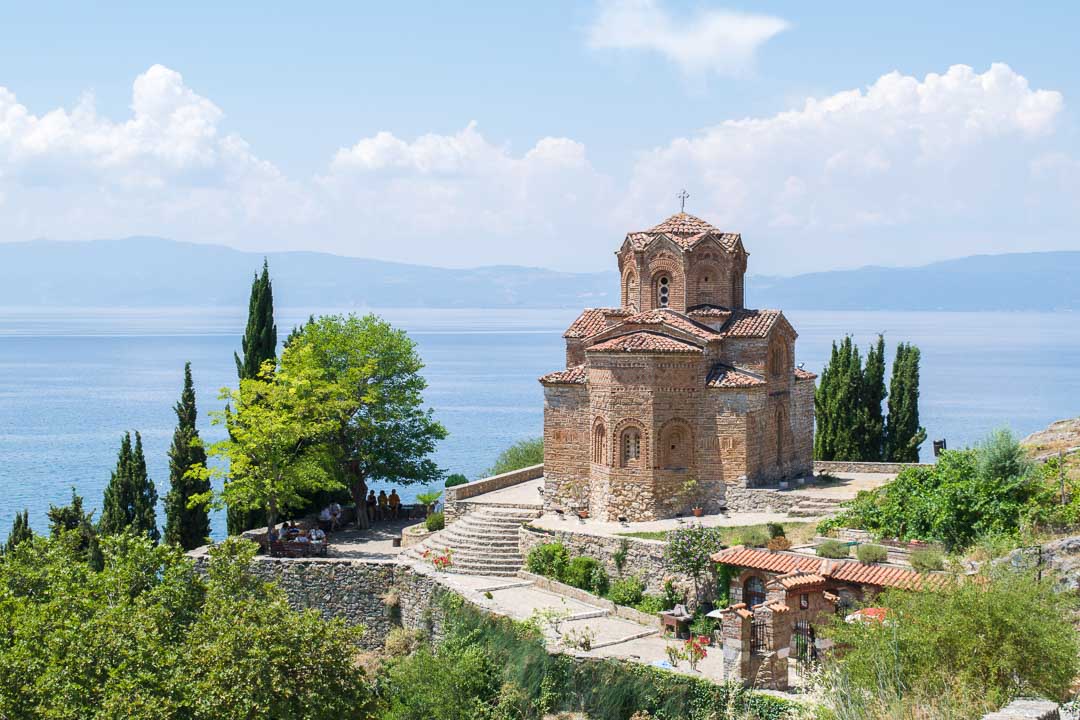
So that’s the hidden, but what about the gem? Well, Macedonia is home to a range of interesting sights and things for tourists from landscapes, to historical and cultural landmarks. There’s the “Pearl of Macedonia” in the gorgeous Lake Ohrid, to the rugged hills outside Prilep.
The country has plenty of gripping historical sites too, like Heraclea Lyncestis or its numerous medieval fortresses. Then there’s all the wonderful cultural insights you’re able to find, from the tobacco production in Prilep to countless bazaars, to the intriguing remnants of its communist past. Macedonia has plenty to offer those who choose to visit it.
2. Entry and Visa
The Republic of North Macedonia is not part of the European Union, nor is it part of the Schengen Area that allows free movement between countries, something many EU countries currently benefit from.
This seems like it should make it a challenge to visit North Macedonia, but it isn’t too bad. In effect, if you’re from an EU member country, a valid passport is all that’s needed. For other countries that also enjoy visa-free entry, you can stay for 90 days within an 180-day period.
For visa information, you can check the rules for your country here, and find more information on visas can be found here.
Crossing the border from Bulgaria to Macedonia, our minibus was stopped and we walked up to the border guard booth. One by one, we had our passports checked and then we simply met back up with our bus. Couldn’t have been more straightforward.
3. Getting Around

Sticking with my general rule of thumb for the Balkans, I went by bus all the way during my stay in Macedonia. I honestly don’t know if there is an operating train network presently, but I was content with the decent bus network. As would be expected, Skopje and Ohrid have the most connections but there are enough that you shouldn’t find getting about too hard.
Bus fares are dirt cheap (see #5), running between 3-8€ depending on the distance. Information can be found online at Balkan Viator, but it always pays to check at the station as I encountered the occasional discrepancy.
Another way to get about, at least short distances in share taxis which are quite common in the Balkans. I only took the one in Macedonia from Ohrid to Struga and while it was more than the bus fare, it was quicker and I got to have a nice chat with the driver about various things. It seems to be that they wait near bus stops to gather fares, so that’s really my only advice for finding one.
4. Friendly People

I don’t think I can overstate this enough: Macedonians have to be some of the kindest and friendliest people I have met in Europe. I’ve already shared how my arrival into the country was met with the utmost kindness in Warmest of Welcomes in Strumica. But it didn’t stop there. Everywhere I went, the people I met were always happy to help in whatever way they could. Perhaps it was because they were grateful for having a tourist there, who knows.
At one point, I stumbled into what turned out to be a man’s yard to take a photo in Prilep. Rather than getting upset, he began to chat with me and this willingness to chat was constant.
From the taxi driver to Struga who was happy to tell me about sights to see and the economy, despite having 3 other passengers in the car; to the school kids in Tetovo who were keen to practice their English; there was a genuine desire to connect and share their country which I think is something that often gets suppressed by mass tourism. If I remember nothing else about the country, it would be the hospitality of the people.
5. Super Cheap
It’s generally fair to say that Eastern Europe and the Balkans are the cheapest regions in Europe. I always loved the value you could get in countries like Bosnia Herzegovina or Bulgaria. And yet, visiting Macedonia beats them all. I’ve yet to encounter a country as affordable to visit as Macedonia. Even in the resort town of Ohrid – while more expensive than everywhere else I went – was still reasonable compared to anywhere in Western or Central Europe.
To put things in perspective, I only once spent over 10€ for dinner in my time there. Coffee usually runs around 40mkd (0.65€) and spacious rooms at nice guesthouses and hotels came to around 25€, which is generally unheard of. If you’re looking for a budget getaway in Europe, Macedonia has to be at the top of your list.
6. The Two Macedonias

This one is a little bit politically contentious, so I’ll do my best to explain this as carefully as possible. It comes down to a naming dispute over the name “Macedonia” between the Republic of Macedonia and Greece. After breaking free from Yugoslavia, the country was named the Republic of Macedonia, rather than simply Macedonia. This is because Greece has a region also named “Macedonia” and laid claim to the title.
The name “Macedonia” comes from the ancient kingdom of Macedon, home to legendary figures like Alexander the Great. Both countries trace their heritage partly or wholly to this kingdom, hence the struggle for the name. In 2019, the Republic of Macedonia adopted a new name, North Macedonia as a solution to this contentious issue. So just be mindful about what you call where when around Greeks or Macedonians.
7. Language
When it comes to the language of Macedonia, it shouldn’t be any surprise that they speak Macedonian. This Slavic language has quite a few similarities with its Balkan neighbours and yet is still very much its own language. As such, it’s not the easiest of languages to swiftly pick up by English speakers.
Thankfully, I was quite surprised to find quite some people who spoke conversational English and not always younger people. So English actually may be enough to get by, although when in doubt there are always hand gestures.
The real hurdle for tourists is that Macedonia uses the Cyrillic Alphabet. While probably best known for its use in Russia, Cyrillic is widely used throughout Eastern Europe. After time in both Bulgaria and Macedonia, I got halfway decent at reading Cyrillic even if I had to sound it out one letter at a time.
It will take some getting used to, but to help you start the following letters are the same as they are in Latin: ‘A‘, ‘E‘, ‘K‘, ‘M‘, ‘O‘, ‘T‘. Also, the following is translated easily: a Cyrillic ‘P‘ is latin ‘R‘, ‘C‘ is ‘S‘, ‘H‘ is ‘N‘, ‘X‘ is ‘H‘. So for example, you now know the first 4 letters of ‘HOTEL’ in Cyrillic are “XOTE”. Good luck with the rest!
Now, a few basic phrases to help you get by include Zdravo which means ‘Hello’; Blagodaram or Fala for ‘Thank you’; Ve Molim for ‘Please’; and Da and Ne for ‘Yes’ and ‘No’.
8. You’re Australian? Meh.
As an Australian in Europe, you tend to get a decent reaction when people find out where you’re from (ok, maybe not in the UK). Whether it’s a “Wow!” or “So far away!”, it’s generally a nice and positive response. Which makes the Macedonian response rather amusing.
From my experience, Macedonians are pretty apathetic to Australians. This seems to be because they often know people who have emigrated to Australia and see plenty of Australians return to Macedonia to visit family. Don’t expect to feel special simply for being an Aussie visiting Macedonia.
9. The “Macedonian Pour”

This one might seem obscure and requires an explanation of an Australian custom but I found it quite fascinating. So, in Australia when we drink beer we generally like it with not too much head, different from say Belgian or German drinking custom. This means angling the glass while pouring. Possibly nothing infuriates an Australian more than someone pouring beer into a straight glass.
Now to my point. The Macedonians have a rather unusual, but effective way of pouring beer. The first time I encountered it in Prilep, I was a little alarmed. The waiter lowered the bottle to the glass sitting on the table, but rather than immediately pouring, he hooked the lip of the bottle on the rim of the glass. He then pressed downward, using the bottle to tilt the glass, resulting in a well-poured beer. Sometimes it’s how we do the little things differently that I find particularly fascinating.
Resources for Visiting Macedonia

- Getting There: To find the cheapest and most convenient flights to North Macedonia make sure to check Kayak.
- Accommodation: Here you can find hotels, apartments and guesthouses across Macedonia, plus don’t forget Airbnb.
- Tours: There are quite a few day trips and sightseeing tours available in North Macedonia.
- Car Hire: If you want to travel more independently, consider renting a car to drive yourself about.
- Guide Books: Lastly, if you’re after a physical guide to take with you then you can’t beat a Lonely Planet Guide.
What other things would you like to know before visiting Macedonia? Have you visited Macedonia and have other insights to share? Please share them in the comments below.

13 comments
This is incredibly useful for when we go! Thanks for writing this and sharing it! Hope you have a great time in OZ! Happy holidays! #Wkendtravelinspiration
I have not been to Macedonia but it does sound interesting. I like the less developed tourism infrastructure. It makes for a more genuine experience.
This is very helpful. I have not been to Macedonia but hope to make it there someday. I love that you explained the cyrillic alphabet and common phrases in Macedonian. Very useful! #wkendtravelinspiration
Your comment on not to expect a Macedonian to be impressed that you are Australian is funny. I had a similar experience with a Macedonian friend on our first meeting. I had enthusiastically told her that she was the first Macedonian I knew and she replied with a very unimpressed air, “Really? I know many Sri Lankans in Macedonia.” Thanks for sharing your tips on visiting the country! #wkndtravelinspiration
I’m sold, would love to visit Macedonia. It so nice to hear that the people speak English and are friendly, that makes a big difference. Plus, love that it is still cheap! Thanks for sharing on #TheWeeklyPostcard.
Thanks for opening this whole new place Macedonia to me. It has been fascinating to follow your journey through this Country. Before I did not know that much information about it and would love to visit there one day. You pictures awesome and thanks for sharing 🙂 #feetdotravel
Thanks for offering your insights about the country. Agree there is probably not a lot of info out there on what to see outside the main tourist spots. I am happy you enjoyed the country. I feel like it is a place i would like too. #TheWeeklyPostcard
I have heard of Macedonia but only just. I’m going to have to look it up on Google Maps to fine out exactly where it is. It sounds perfect – interesting, friendly and undiscovered.
I’ve never visited Macedonia, even though I really want to, despite not knowing too many things about it. I’d love to visit Ohrid though. You paint a very pretty picture, bookmarked for future reference. 😀
That first photo is perfect! We’d want to visit just to see that. Beautiful. But you’re right, it is kind of off the radar. We have some friends from Macedonia who complain there’s no reason to visit because there’s no beach and no nightlife and no… From what I can tell, it’s beautiful and, as you mention, rich in history and culture. I’m starting to think our friends just want to keep it to themselves. 😉
Nice pictures … but unlabeled! Why not tell people what each one is …
About visas: You point people to the home page of the ministry of foreign affairs and leave it at that
But here’s what to do: pull down the menu (three bars in upper left corner). Go to Consular Services, then Foreign Citizen, then “Do you need a visa?” Find your country. For Australia, it says “entry visa not required”. So they just look at your Australian passport and stamp it, and you are in for up to 90 days. (Don’t overstay the 90 days … it’s a big deal.)
Since first writing this post in 2016, the link to the government page has changed multiple times, as has the navigation to the visa information (which can be different depending on your device type). This is true for many government pages for countries in Europe that I have linked to. I have updated the information and links as of 2025.