
Disclosure: This post (probably) contains affiliate links. If you click on one, I may make a small commission. Of course, this will come at no extra cost to you and helps keep this site running.
Some of Europe’s most interesting destinations are port cities, since they trade conventional beauty for character. Hamburg is a perfect example of a place that, rather than being loaded with history or grand beauty, oozes character. Not that I didn’t find scenic places during my March visit.
There was never any doubt that visiting Hamburg would be on my Germany itinerary. Many people told me they enjoyed the city, but never fully explained what made it special. Spending 3 days in Hamburg sightseeing helped me understand the appeal of this city in northern Germany. It’s complex and — dare I say — unique, compared to the many places around Germany that I’ve been. To experience why I think this city is so fascinating, here are my tips for what to do in Hamburg.
How to get to Hamburg

Knowing what to do in Hamburg during your visit is only useful once you’ve organized the logistics of your visit.
Let’s start by looking at getting to Hamburg.
Like many large cities, using public transport to get here works quite well. Direct trains connect Hamburg with lots of major cities in Germany, from Berlin and Düsseldorf to Bremen and Schwerin.
It’s also worth comparing the train offerings with FlixBus, as their prices or timetables may be more favorable.
While it’s no surprise that travelling to Hamburg from within Germany is easy, you might not realise how easy it is to reach Hamburg from Denmark.
Direct trains to Hamburg run from Odense, Aarhus, and even from Copenhagen, making it a convenient way to connect trips to both Denmark and Germany. There are even frequent buses between Copenhagen and Hamburg if the train doesn’t appeal to you.
Where to stay in Hamburg

A daunting part of visiting Hamburg is understanding where you should stay in the city.
Because of Hamburg’s layout, your accommodation options can be spread out in all directions. As soon as a map of hotels and hostels shows up in front of you, confusion is bound to follow.
The only place where you might not see many options is right in the city centre. This might all be disheartening at first, but don’t fret, it’s perfectly normal.
Hamburg is a decentralised city with excellent public transport, so staying right in the middle of the city isn’t necessary. This means you can prioritise other factors in your search, such as cost, quality, and public transport access. That’s where my stay at Superbude Hotel Hostel St Georg comes in.
Located just beyond the edge of the St Georg district, this hotel/hostel has a fantastic energy as soon as you walk in the door. Colourful and fun, every effort is made to make you feel welcome and a stay here feel a joy. Seeing families with kids, young couples, and older couples all in the same space immediately told me all I needed to know.
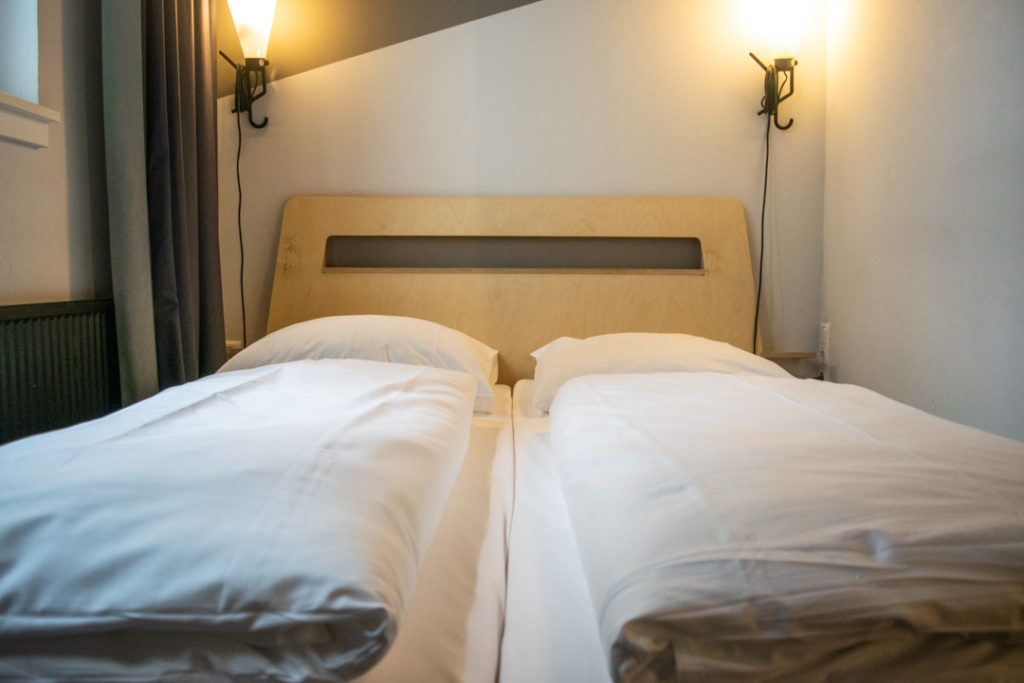
Passing the internet station, smothered in stickers, and the photo booth outside, you have access to the hotel rooms. Upstairs in my room, the wall shelves are made from skateboards, a drink crate has been converted into a neat stool, and there’s a singing fish in my bathroom! Throw in warm heating in winter, blackout curtains, and good Wi-Fi, and I couldn’t have asked for more.
There’s also another Superbude located in St Pauli if that side of the city seems more your speed. Accommodation in Germany isn’t the cheapest, so don’t miss this opportunity to save money on somewhere that’s worth it!
Of course, if these don’t sound like a place you’d enjoy staying at, Hamburg has many hotels, hostels, and apartments to choose from.
What to do when visiting Hamburg
Most of my tips for travelling to Hamburg focus on how you should spend your time there. There are many things to do in Hamburg, but some are easier, cheaper, or more worthwhile than you might realise.
On top of that, I think there are some things worth knowing in advance of your visit to help you plan your itinerary, such as which areas to visit and what the deal is with the Red Light Districts. Hopefully, this info will make planning a little easier.
Don’t just see Speicherstadt

While planning to visit Hamburg, one particular part of the city excited me most to see. Called Speicherstadt, this warehouse district had firmly settled in my brain thanks to all the photos I’ve seen of it on Instagram.
In my head, the image of red brick warehouses looming over narrow waterways was what I expected from Hamburg. While exploring Speicherstadt definitely delivered on that front, standing out as a place unlike any other I’ve seen in Europe, don’t let that be all you see of Hamburg.
What I naively didn’t realise before my first visit to Hamburg was that this massive city has plenty to see and do.
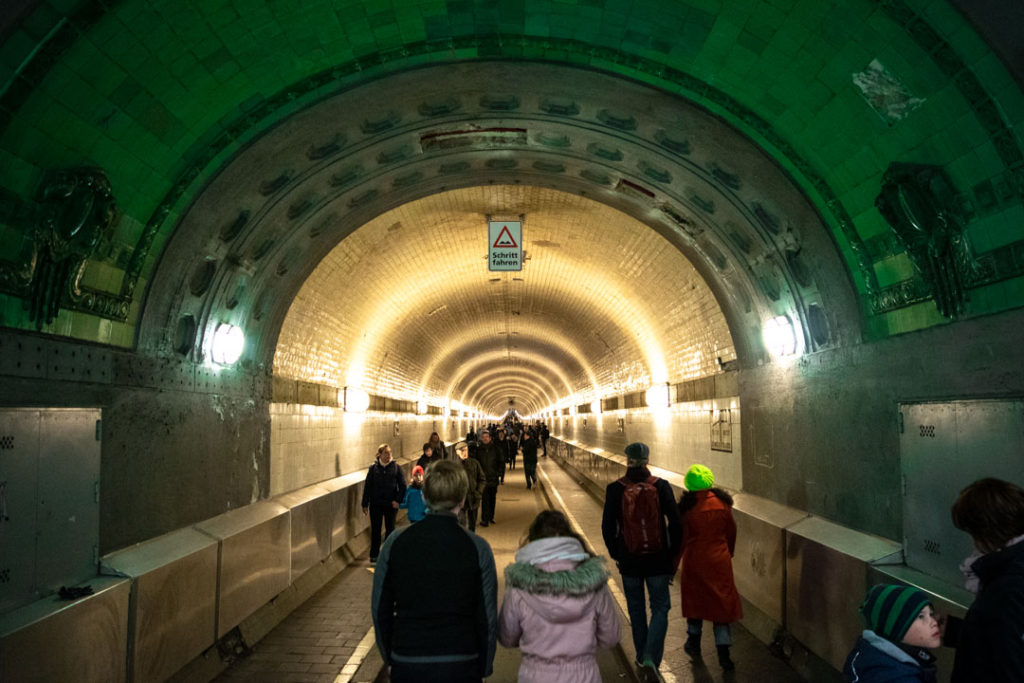
I had no problem filling three days with sightseeing here, bouncing around from one part of the city to the next. What’s great is that these attractions come in many forms. Take, for instance, the Old Elbe Tunnel, which you can descend into to walk or cycle across under the river. Built in 1911, it’s the oldest river tunnel in Europe, and the old lifts that take you down are something else!
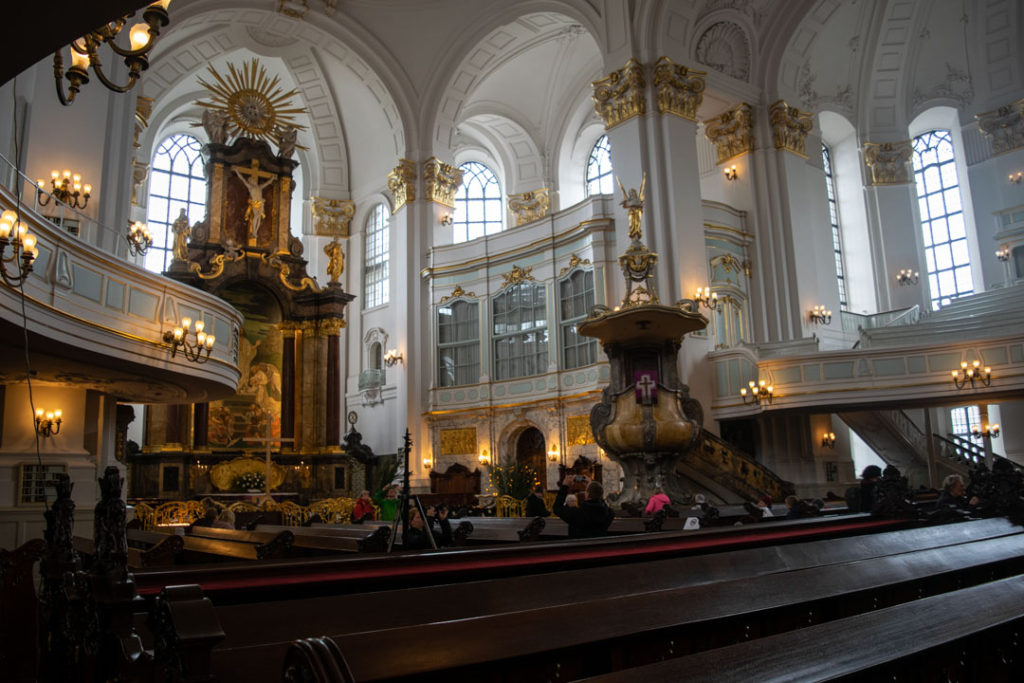
Another sight that blew me away was the interior of St Michael’s Church. I’ve seen far too many European churches by now, and yet this church still showed me something new. With a lavish baroque design and rings of balconies, it felt more like a theatre than a church. I didn’t even climb up its 132-meter-high tower to see the city views, and I was still left impressed.
I’ll get to some of the other major sights in a bit, but that should give you some ideas to start with.
Start your visit with Rathausmarkt
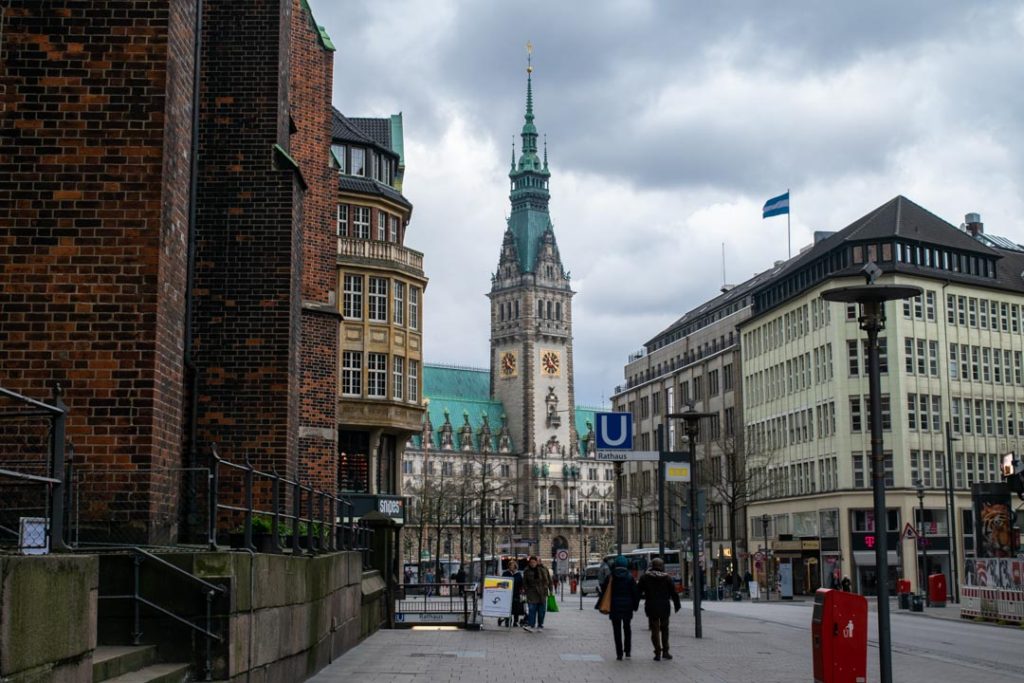
Rather than just heading straight for Speicherstadt, instead, begin your Hamburg trip with the Rathausmarkt.
This square at the very heart of Hamburg sits wedged between a number of the city’s compelling sights, not least Hamburg City Hall. There’s a lot to like about the neo-Renaissance look of the City Hall, especially with its central towering spire. You can also duck inside to take a look at its grand halls and continue through to its ornate courtyard.
A short distance from the square lies the Binnenalster, a scenic lake that boasts a great view of the Hamburg cityscape. To get there, I recommend crossing the Kleine Alster canal and walking through the charming Alster Arcade.
Circling out further from the main square, you’ll come across several churches like St. Peter’s Church. You’ll also see one of my favourite historic buildings in Hamburg, the Hulbe Haus. With its patterned brickwork and bay windows, its design seems like a rare sight in Hamburg.

By starting with Rathausmarkt, you quickly get to see several Hamburg attractions straight away. You’re then in a prime position to easily move through the city to wherever your next stop may be.
Enjoy free views from the Elbphilharmonie
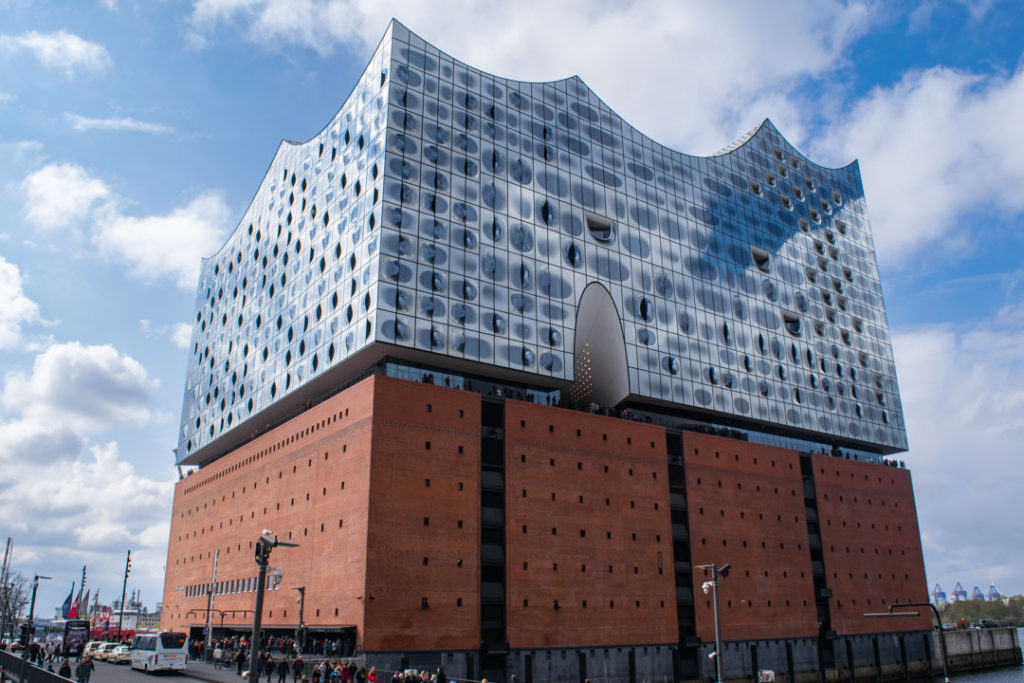
Only opened in 2017, the Elbphilharmonie has quickly become a star attraction in Hamburg.
That’s because this concert hall, down by the waterfront of HafenCity, is mesmerizing to look at. The lower half of the hall is simply a restored warehouse building typical of the area, but the upper glass section is something else entirely.
While to me it looked somewhat like an iceberg, others have said it mirrors the shape of waves or sails on a ship. Whatever it reminds you of, it sure is beautiful.
Even if you’re content with just staring up at this beautiful piece of architecture, there’s more to see. You’ll need a concert ticket to go inside the main hall, but that’s not the only way to see inside. The venue offers free tickets to the plaza level, where you can view the interior of the building and stroll around its observation deck.
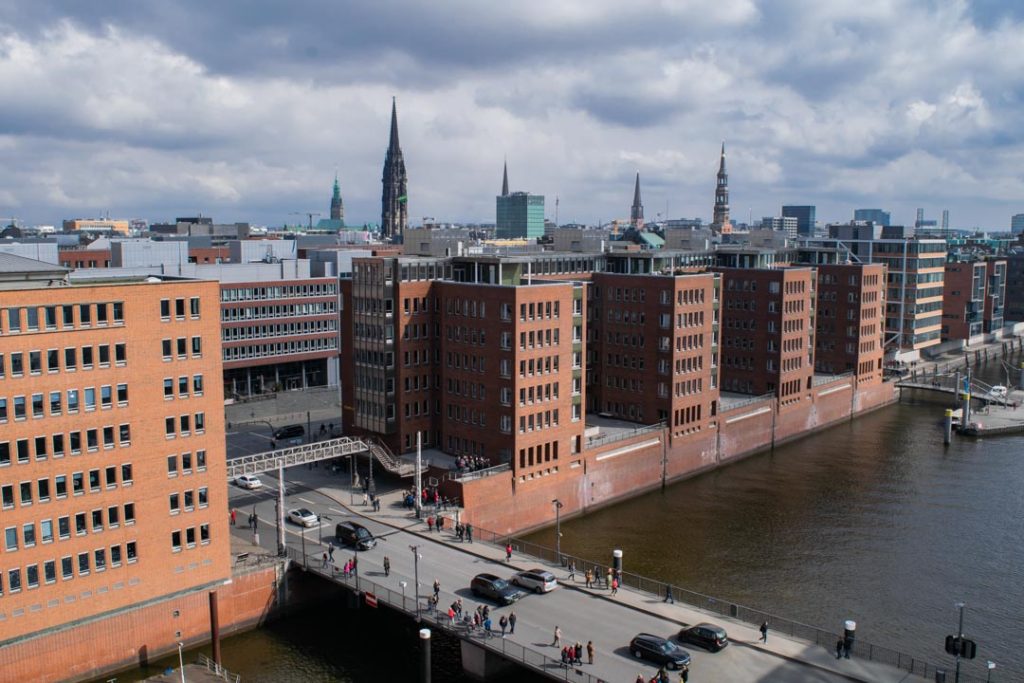
Plaza tickets have set time slots, so you may have to wait a little if it’s busy, but it’s worth it. Doing a lap of the deck, one side shows you the waterfront along the Norderelbe, another across the river to the industrial districts, the next nearby HafenCity, and the last shows you the city skyline.
Couldn’t ask more from a free viewpoint in my opinion!
Make the most of public transport
Hamburg isn’t the kind of city where every sight, attraction, and thing to do is found in a single district.
As you go about sightseeing in Hamburg, you have to move from one district to the next, and that’s plain exhausting on foot. You can walk everywhere if you feel like it, but a better use of your time is to make use of the city’s public transport.
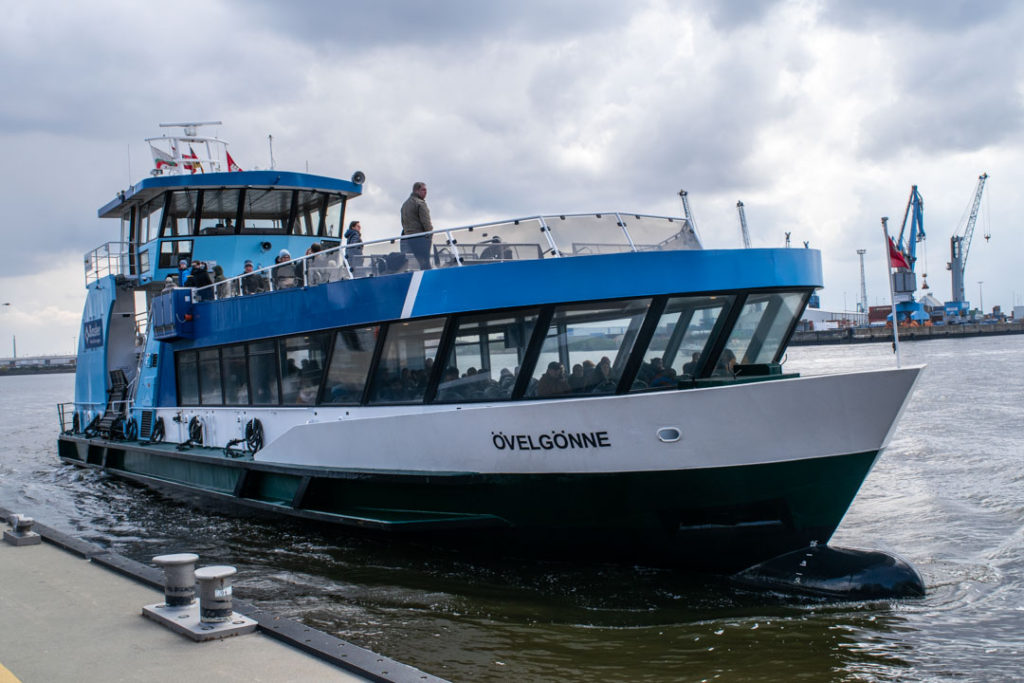
To help you cover the sprawling footprint of Hamburg, you have the U-Bahn metro, S-Bahn metro, buses, and even ferries at your disposal. Between the two metro networks, you can reach most places in Hamburg, but buses are another option. The HVV harbour ferries are also nice as they let you mix things up and see the city from the water.
Some of Hamburg’s waterways require a special sightseeing cruise, though.
With the Hamburg City Card, you get free use of the city’s public transport for its duration. You also get discounts on attractions and museums, which is handy. These kinds of cards take the stress out of navigating public transport and, used correctly, can save you money too.
Explore Hamburg’s neighbourhoods
There are some cities in Europe where you do not need to leave the city centre or old town.
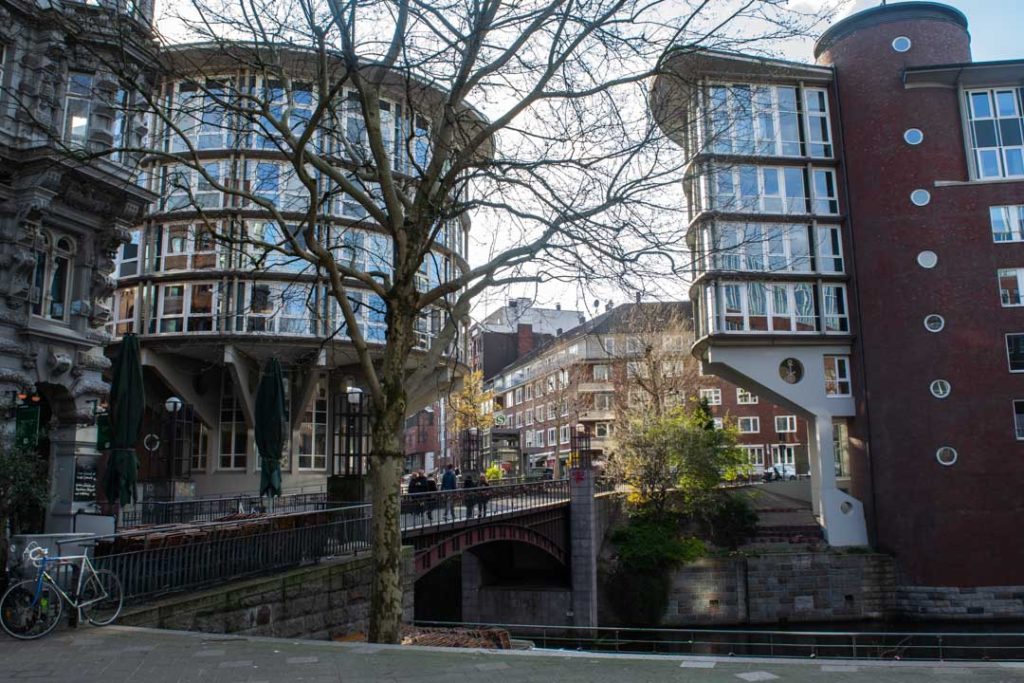
Hamburg is not one of those cities. The city’s layout means that to see the sights, you need to move around. But the major sights aren’t the only reason to explore the different districts of Hamburg. The look and feel of each district can be quite different from the last, making each neighbourhood fresh and interesting.
You only need to compare the warehouse district of Speicherstadt with the outer parts of Hamburg-Neustadt to see this. While both are centered on waterways, Hamburg-Neustadt feels like a trendy inner-city neighborhood and not a maze of brick. Venture into Hamburg’s Portuguese Quarter down by the riverfront and you find something new altogether.
Full of Mediterranean restaurants, tiled buildings, and luxury cars, it feels like a totally different city.
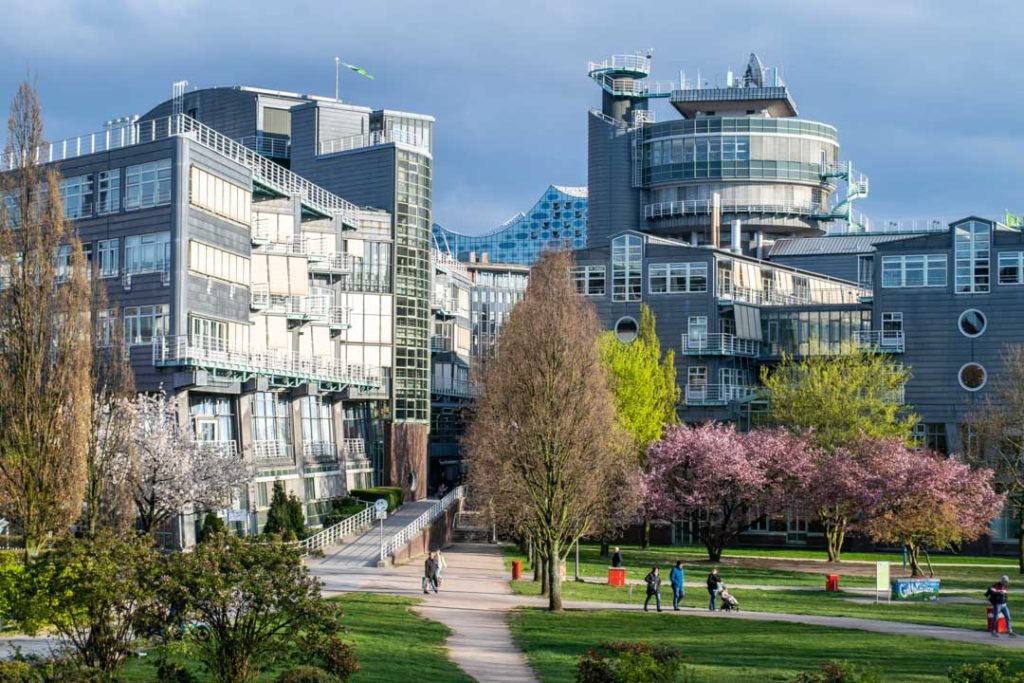
Sometimes that change happens within a single neighbourhood, as it does in St Pauli. Some streets there feel rough and tumble, covered in graffiti, while others feel gentrified and quite pleasant or benign. It’s only by feeling your way around the city that you come to understand just how dissonant Hamburg is.
Understand the Red Light Districts
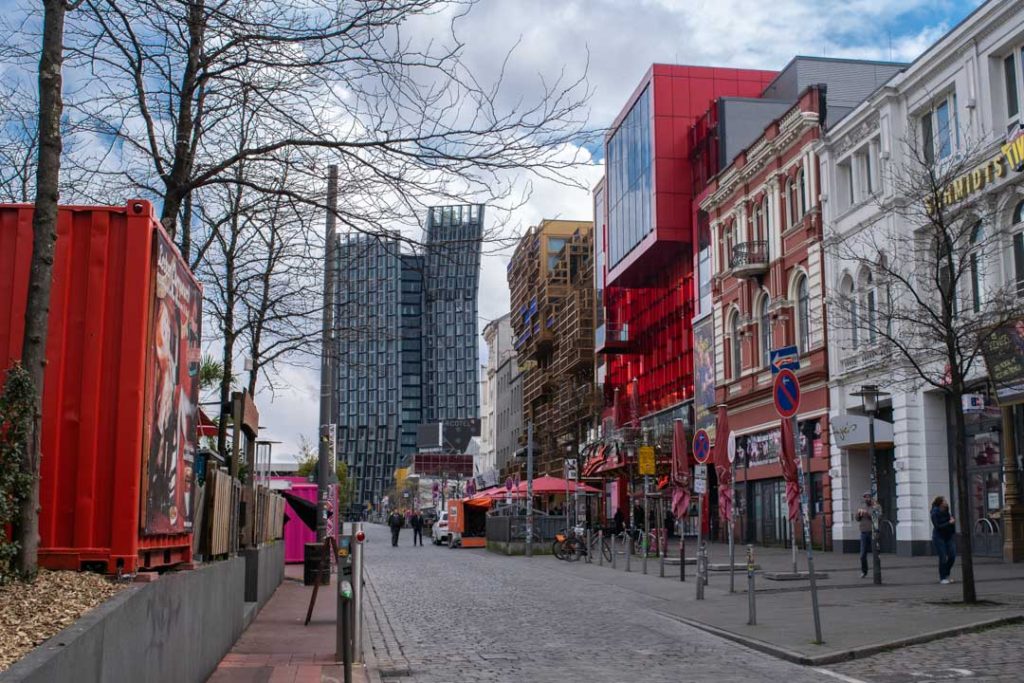
For some travellers, especially stag parties, the reason why they travel to Hamburg is the city’s infamous nightlife.
If that’s what you’re after with your Hamburg visit, then the Reeperbahn Red Light District is where you want to go. Found along the Reeperbahn is a seemingly endless run of bars, restaurants, and clubs, and yes, strip clubs and brothels.
Rather than a seedy back corner of the city, the Reeperbahn is quite an open area. It even feels kind of tame if you pass through during the day. To some, this nightlife district is just another part of Hamburg’s culture, similar in a sense to Amsterdam’s Red Light District.
The key point to note is that this is one of two red-light districts in Hamburg. The Reeperbahn is thoroughly policed with an active presence of patrolling police officers. Much like any area with drunk people and sex tourism, it still pays to be careful if you visit, but the Reeperbahn is safe for the most part.
The same can’t be said for the city’s other red light district, located in the heart of the St. George District.
With warnings from locals about the problems and dangers of the area, the streets around Steindamm and Hansaplatz are best avoided altogether. The areas along Kirchenallee, Lange Reihe, and south of Beim Strohhause seemed mostly fine, so maybe use those as boundaries when navigating St George.
The easiest way to explore this area and learn about its place in Hamburg’s past and present is with a Red Light District walking tour.
But seriously, go visit Speicherstadt
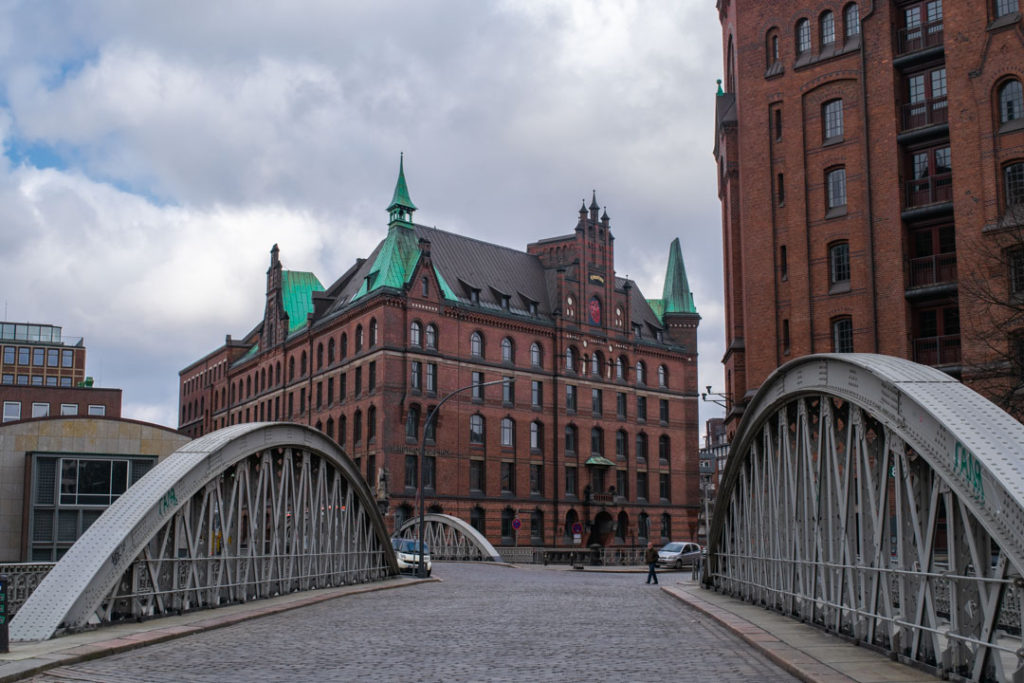
I could say that I glossed over Speicherstadt and wanted to tell you more about it. The truth, though, is that I simply wanted to share more photos from the area.
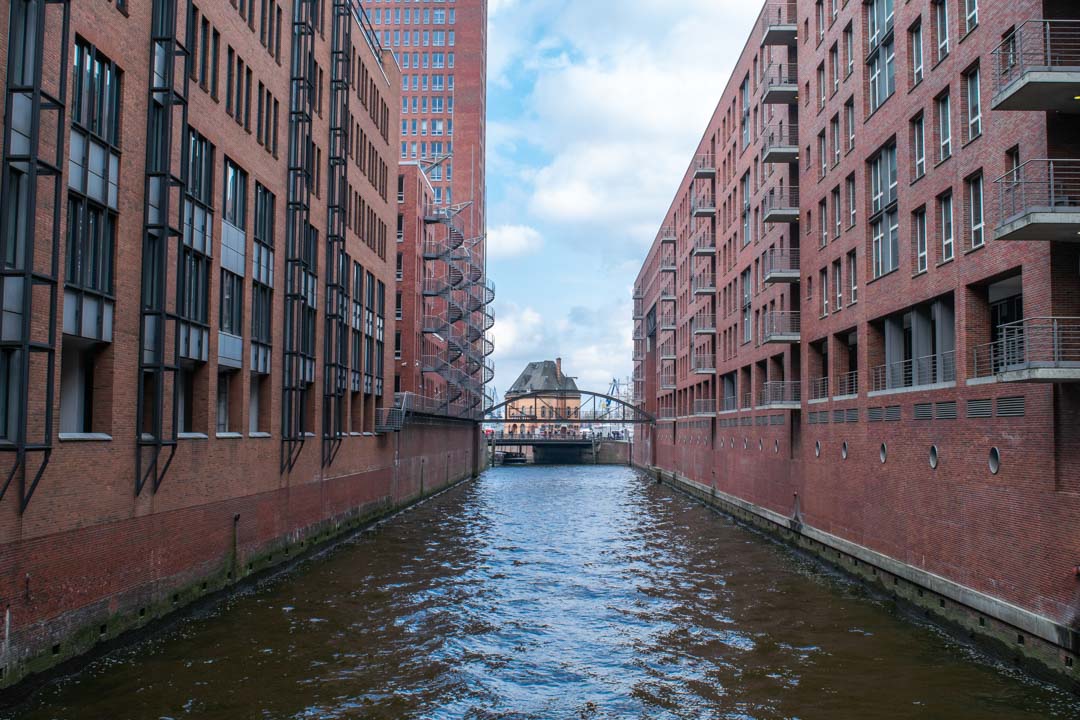
It’s strange to think that a warehouse district could be considered beautiful, but Speicherstadt certainly is. With block after block of red brick buildings, it can get quite repetitive, but looking along the harbour canals, it somehow becomes quite transfixing. No wonder it’s exceptionally popular with tourists.

Have you ever visited this curiously complex German city? What else do you think travellers need to know about visiting Hamburg? Please share your thoughts in the comments below.
*Disclosure: My stay at the Superbude Hotel Hostel St. Georg was as a complimentary guest. I also received a complimentary Hamburg Card from Hamburg Tourism to help me with my sightseeing. As always, opinions are completely and genuinely my own.

This article is now available as a mobile app. Go to GPSmyCity to download the app for GPS-assisted travel directions to the attractions featured in this article.

1 comment
I always love a good place to enjoy a free panoramic view over the city! I was always wondering what the fancy Elbphilharmonie building was! Now I know! And hopefully we can squeeze in Hamburg this year!