
Disclosure: This post (probably) contains affiliate links. If you click on one, I may make a small commission. Of course, this will come at no extra cost to you and helps keep this site running.
The Kansai region of Japan is densely packed with popular tourist destinations. But while the highlights of cities like Osaka and Kyoto are widely known and frequently visited, far fewer people are aware of the Wakayama tourist attractions found throughout Wakayama City.
A small city just south of Osaka, Wakayama doesn’t seem to be on many people’s radars, even though you can visit it as a day trip from Osaka. During my trip to Wakayama, I came across very few other international visitors. Maybe that’s because people don’t know what to expect from this relatively quiet destination, and only think of Wakayama Prefecture as the gateway to the Kumano Kodo pilgrimage route.
So, if you’re curious, here are my reasons to visit Wakayama, whether you make it a day trip or spend a little more time there.
How to get to Wakayama City
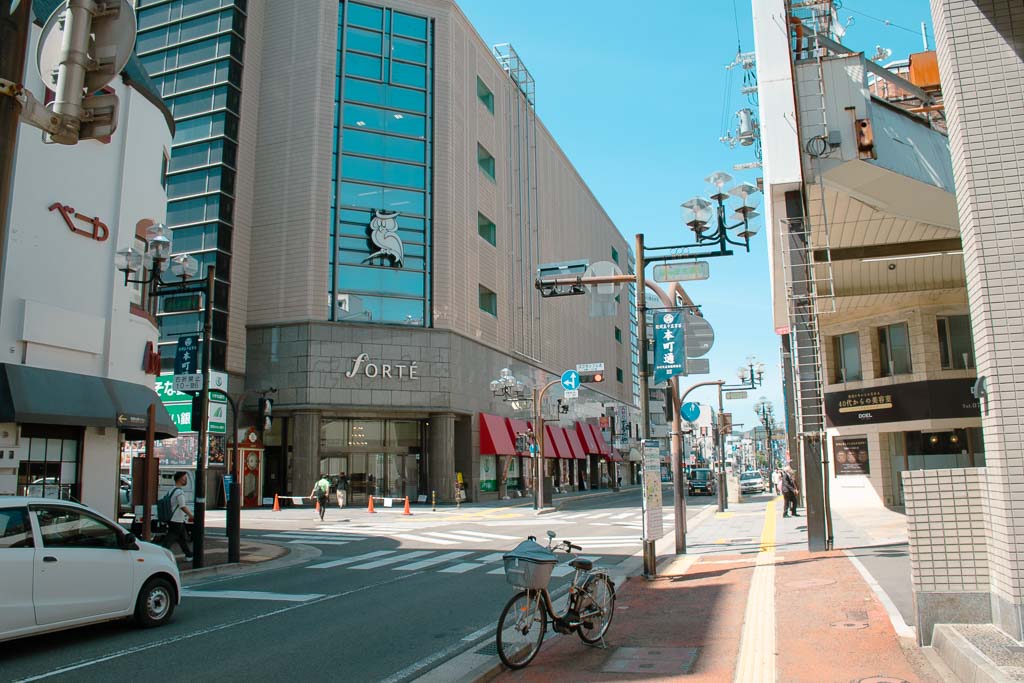
For a destination that few travellers are aware of, getting to Wakayama City couldn’t be easier.
Visitors are most likely to go from Osaka to Wakayama, as Osaka is the nearest major city and a popular tourist destination.
You have a choice of several different train lines that run from Osaka. The quickest takes around 45 minutes, but slower services can take up to 75 minutes.
The benefit of slower lines, such as the Hanwa Line (which extends from the Osaka Loop), is that they’re much cheaper than the JR Kurushio service.
It’s best to board the Hanwa Line at Tennoji Station, but be careful; this train splits in half, with one section going to Kansai Airport, the other to Wakayama. Read the signs on the platform to see which half you need to use.
Wakayama City has two main stations, Wakayama JR Station and Wakayamashi Station. I favor the JR station because Wakayamashi Station is accessed by the Nankai Line private railway from Namba Osaka Station. If you decide to get a Kansai Area Pass or the Kansai Railway Pass, you can’t use it on the Nankai Line.
Day trippers might find Wakayamashi Station more convenient for reaching the downtown area. But both stations have local bus stands with connections through downtown and beyond.
As you can see, a day trip to Wakayama from Osaka is easy to do and offers a quieter alternative to popular destinations such as Nara and Himeji.
Where to stay in Wakayama City

Since many people visit Wakayama as a day trip, they don’t need to worry about researching Wakayama hotels.
But, if, like me, you’re interested in exploring a little deeper, then you’re going to need somewhere to stay. Wakayama has a modest selection of hotels compared to major city destinations, but on the plus side, they’re generally more affordable.
Many hotel options are close to the Wakayama JR Station, but I chose to stay at Daiwa Roynet Hotel Wakayama, as it’s right across the road from Wakayama Castle. It’s a nice 4-star hotel, with some rooms with castle views, and it benefits from restaurants and a convenience store below it on the ground floor.
While my choice suited me fine, you may like to see other options, such as:
Things to do in Wakayama City
Typically, the most compelling reason to visit a place is its sightseeing and activities.
While I may be convinced by reasons such as the chance to escape crowds and explore off the well-worn track, I understand if you need more than that. Looking at these things to do in Wakayama, you should see that each contributes to the appeal of visiting this small city.
Two places I missed that I feel should be mentioned are the Museum of Modern Art and the Wakayama Prefectural Museum.
Wakayama Castle

Wakayama Castle is the central Wakayama tourist spot and was what first drew me to visit.
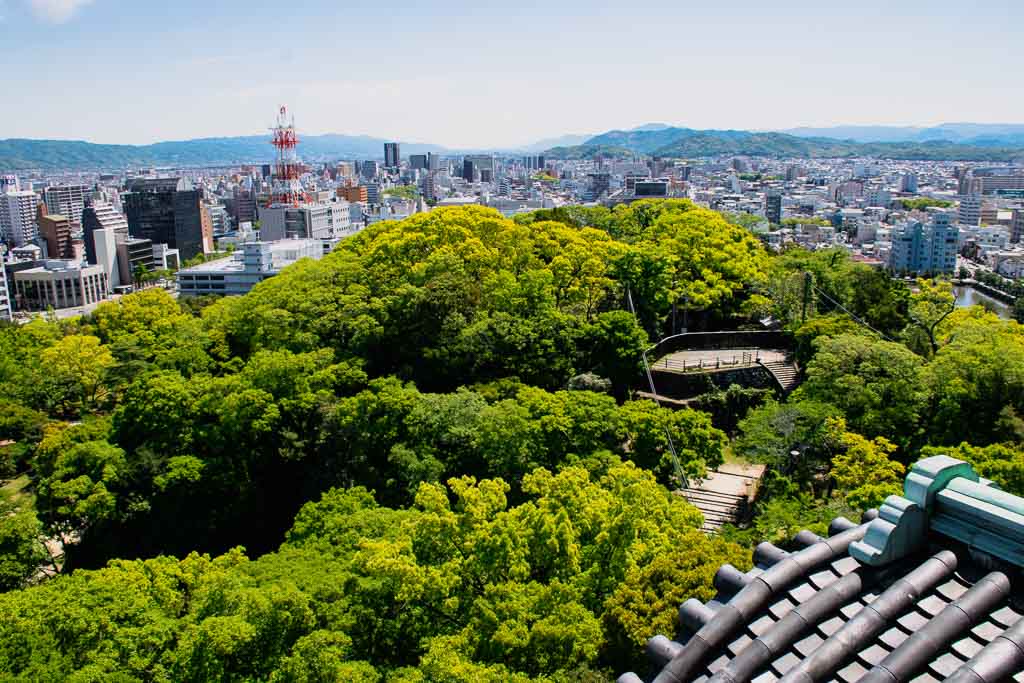
While the city is mostly flat, despite the nearby mountains, the castle sits on a small hill that makes it easily stand out among the local mid-rise buildings. Hidden behind a moat, layers of large stone walls, and even a small forest, you have Honmaru Goten – the main enclosure of Wakayama Castle.
A quick history lesson on Wakayama Castle:
- Feudal lord Toyotomi Hideyoshi ordered his brother to build the original castle in 1585.
- The current model came after the battle of Sekigahara, when it became home to the Kishu family of the Tokugawa Clan.
- It’s burned down twice, from lightning in 1846 and during WWII in 1945; both times, it was quickly rebuilt.

While impressive, the castle keep was mostly used for ceremonial purposes rather than as a residence. The main palace residence was down below in what is a field today.
Today, you can walk up to the castle keep, buy a ticket (410 yen in 2025), and walk around inside. It houses a museum of samurai armor, weaponry, art, and other artefacts tied to its feudal rules.
Highlights of the castle include the outdoor observation deck at the top of the keep and the long looping walkway that takes you around the keep, with a long row of painted panels.
Wakayama Castle Grounds
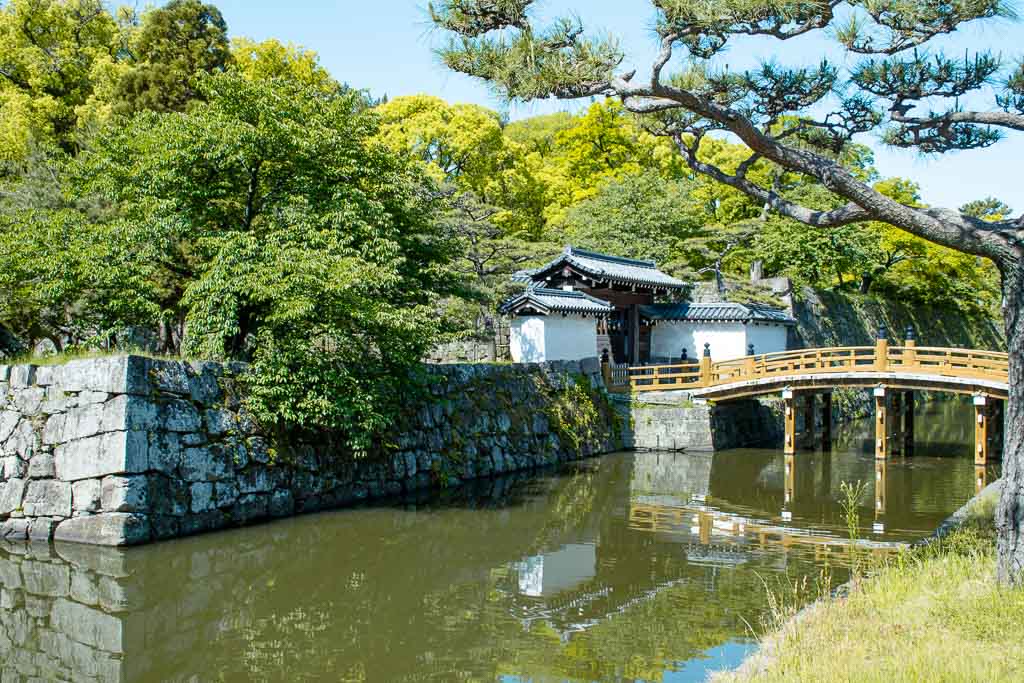
While the castle is the main focus, it’s only a small part of the castle complex. Within its moat, the grounds have walking routes between its many different areas.
After my arrival, I took an evening stroll through some of the grounds and was delighted by what I found. Despite being in the heart of the city, you can quickly feel like you’re off in a forest away from civilization. So I highly recommend taking a walk around between the different layers of stone defenses.
As you explore, try to find the sprawling 400-year-old camphor tree that can be seen on old drawings of the castle complex.
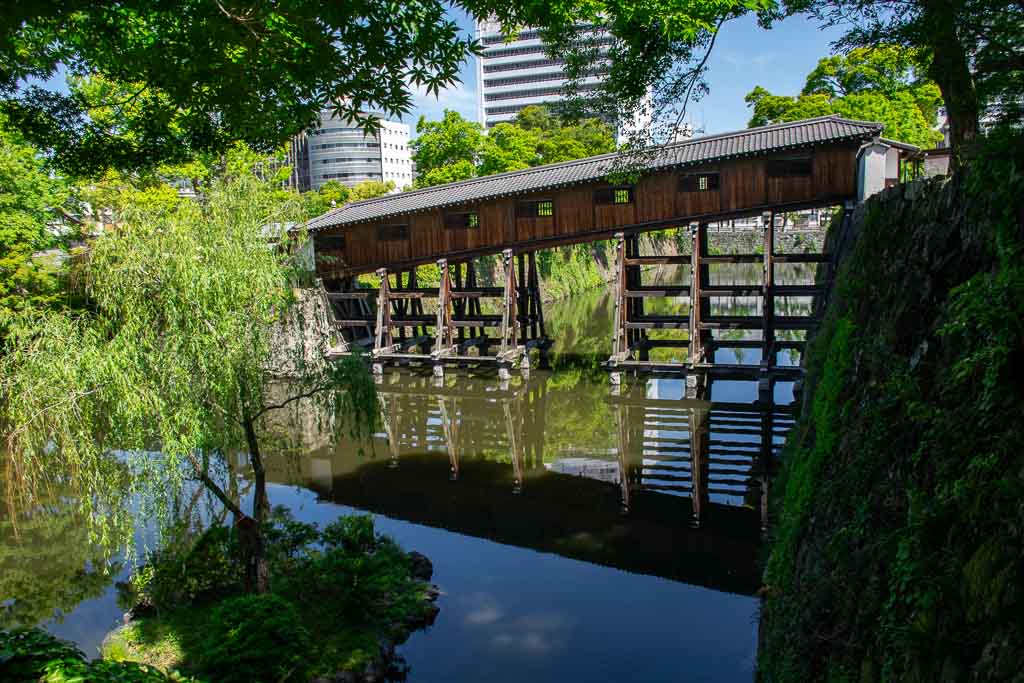
Other attractions in the area include the former site of the Ninomaru Palace, as well as other buildings and an old covered walkway — the Ohashiroka Bridge.
This preserved bridge is a signature local landmark, often seen in photos of Wakayama.
On the edge of the castle complex is the Wakayama Historical Center, a visitor center with some informative exhibits on the castle’s history. Entry to the center is included with your castle ticket. It’s a small museum, with a significantly larger gift shop of Wakayama produce, including the local delicacy of pickled plums and items marked with the old feudal crest.
Finally, there’s the Wakayama Castle Park Zoo in the southeast corner, which by all accounts is quite small. It’s not my type of thing either, but families may want to know it’s there.
Nishinomaru-Teien Garden
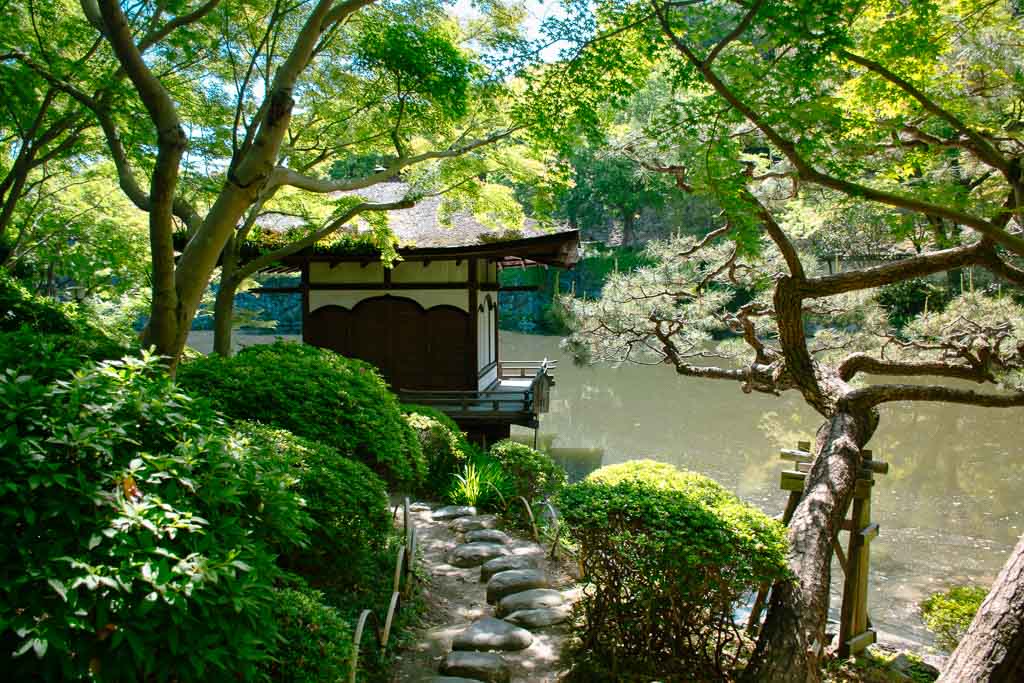
A small area of the castle grounds that is sure to interest visitors is the Nishinomaru-Teien Garden.
While not as large and complex as some Japanese gardens like the ones in Kanazawa, they’re worth visiting all the same. This garden was built in the Edo period and took advantage of the landscape to create a tranquil pond, surrounded by stepping stones and gardens.
Originally, the area was used by the feudal lords of Wakayama for their tea ceremonies. The Kishu family highly admired common samurai cultural activities, such as tea ceremonies and Noh plays, and they made this garden a center for those activities. They even hired a founder of a tea ceremony school to initiate the family in the art form.
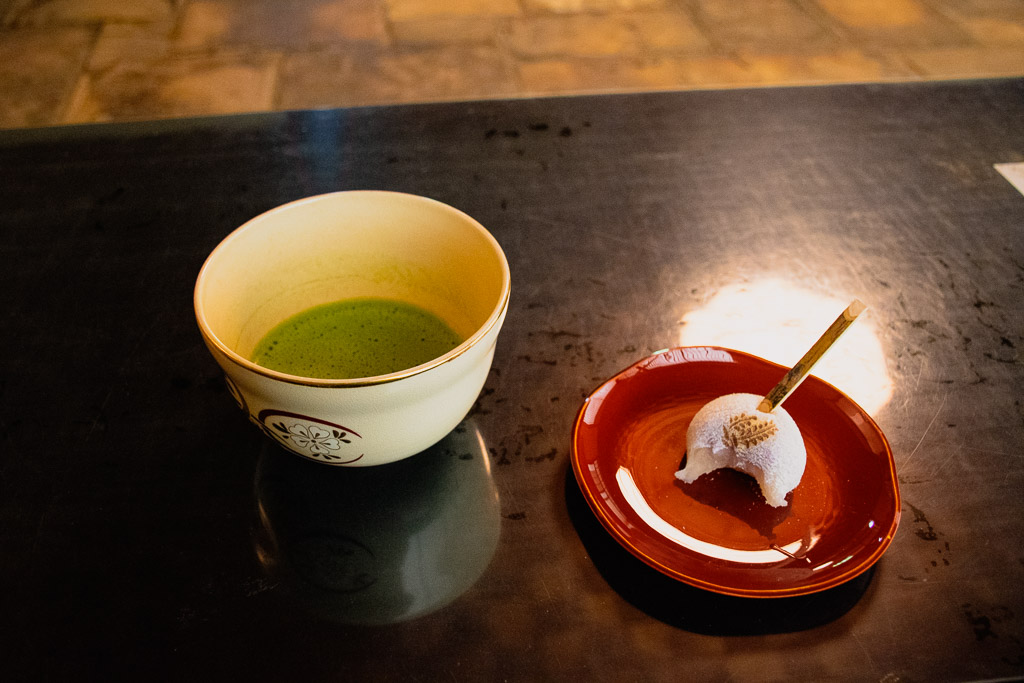
So it’s quite special that the gardens are still used in that way, with a teahouse on the grounds — the Koshoan Ceremony Tea Room — where you can go for a teahouse experience.
While you need to make a booking to do a formal tea ceremony, you can just pop in for some matcha tea and mochi dessert, if you like.
Wakayama City Museum
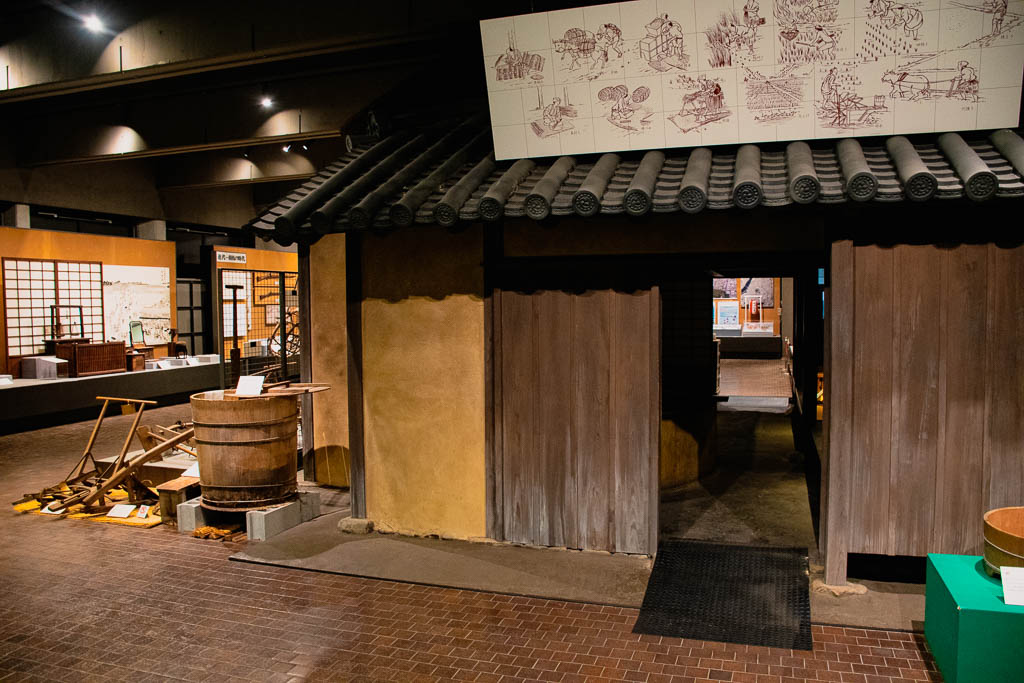
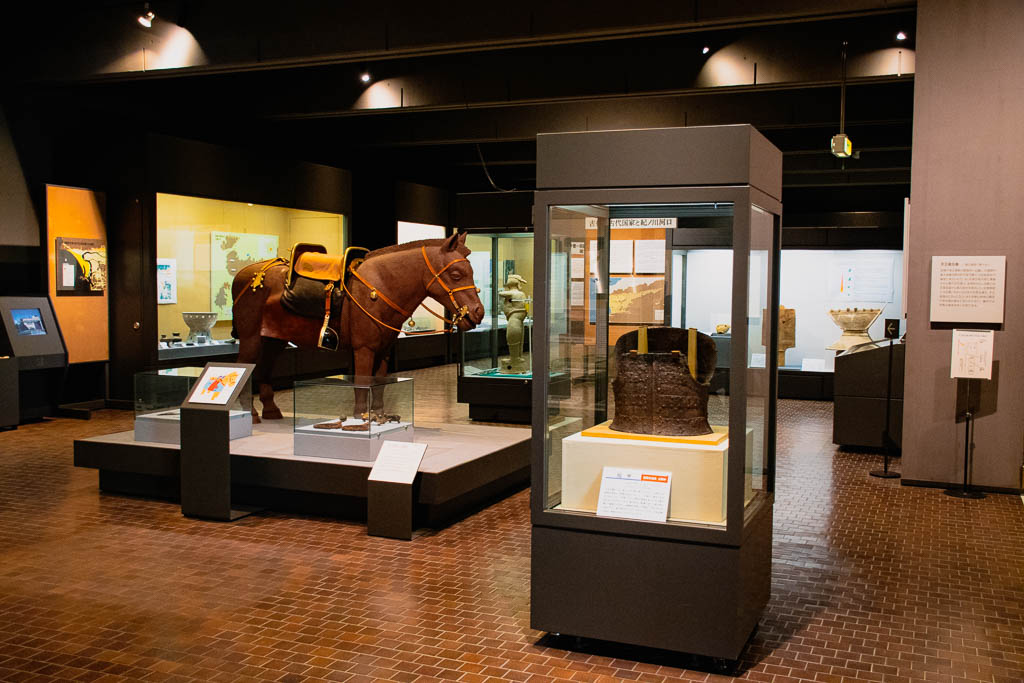
As for other landmarks in the city of Wakayama, tourists may struggle to find additional activities. But one option is the Wakayama City Museum.
On the far side of the city center from the castle, this local museum is set in a big brutalist building that might give you pause about what’s inside.
Despite appearances, it does a great job at explaining the city’s broader history and culture beyond the castle. Not all exhibits have English translations, but there’s enough here to keep you busy for 30 minutes or so.
One benefit is that if you still have your castle ticket, you get discounted entry from the staff (who seemed delighted to have foreign visitors).
Ichihori River
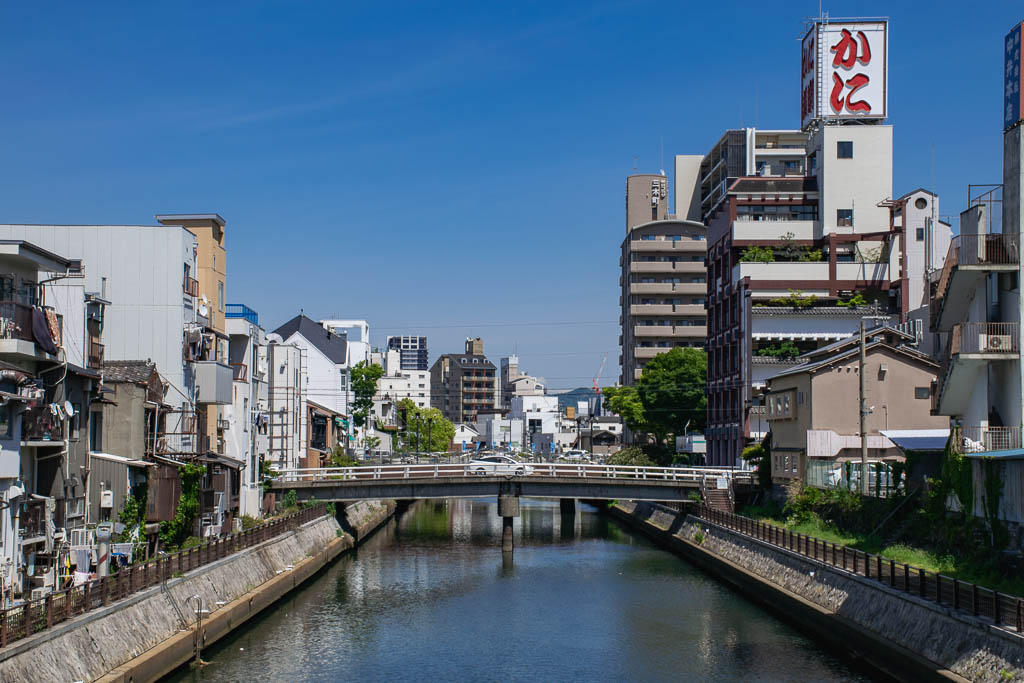
Wandering around Wakayama City, I kept coming back to one space beyond the castle.
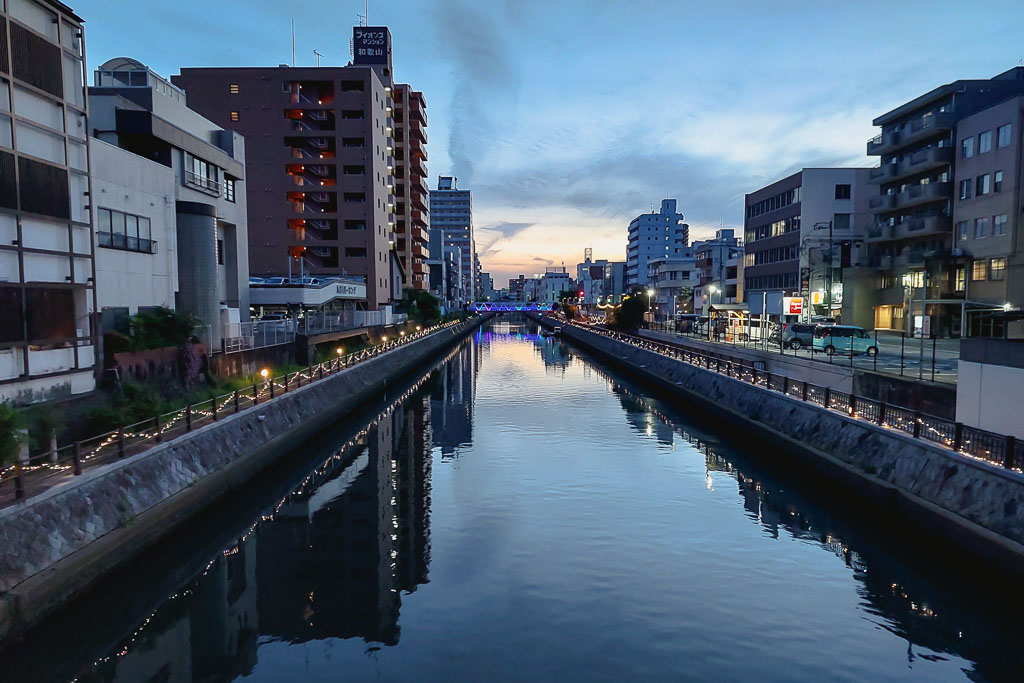
The Ichihori River runs through the city’s downtown area, peeling off the nearby Waka River. It zigzags behind many local restaurants and cafes, so I saw many parts when searching for coffee and food.
While it’s maybe not traditionally pretty, I enjoyed exploring its diverse urban landscape. Between the riverside paths and different bridges, it felt very calm and local, despite its downtown location. The river makes Wakayama feel much more walkable than it otherwise would.
As you can see below, lights even illuminate some areas at night, lending the space some life.
Wakanoura
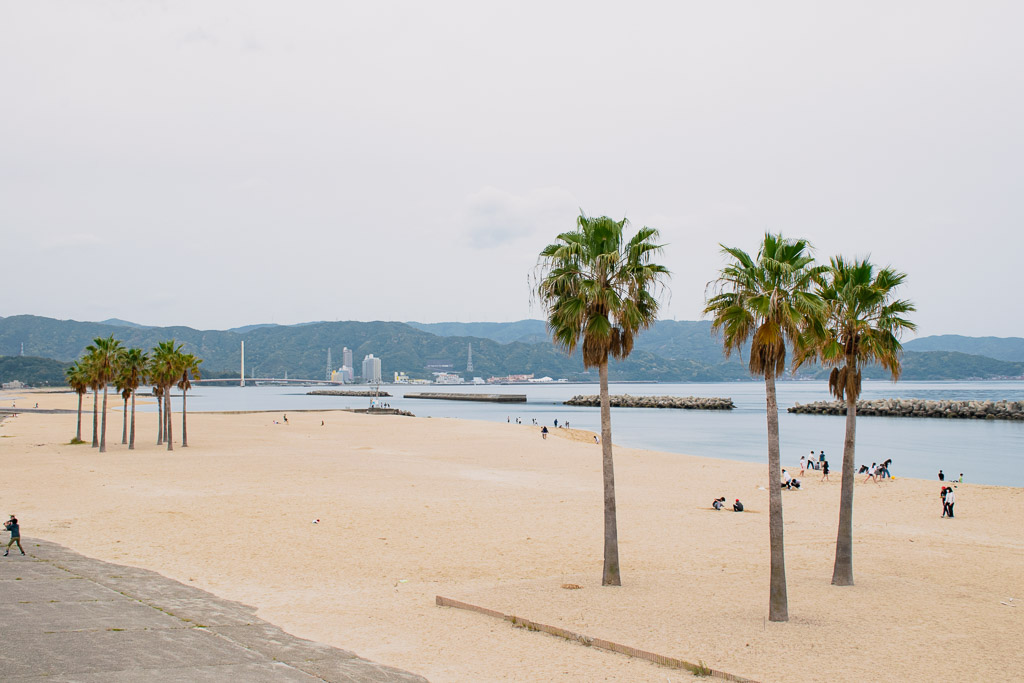
Looking for ways to spend my other day in Wakayama, I turned my attention south of the city. This opened my eyes to just how much Wakayama has to offer.
On a tourist map, a cluster of temples and other attractions around Wakanoura caught my eye. So, I hopped on a bus from downtown heading that way to check it out.
While downtown Wakayama feels hemmed in by rivers and a port, here you feel like you’re in a seaside village. The weather wasn’t on my side here, but I still had a good look around.
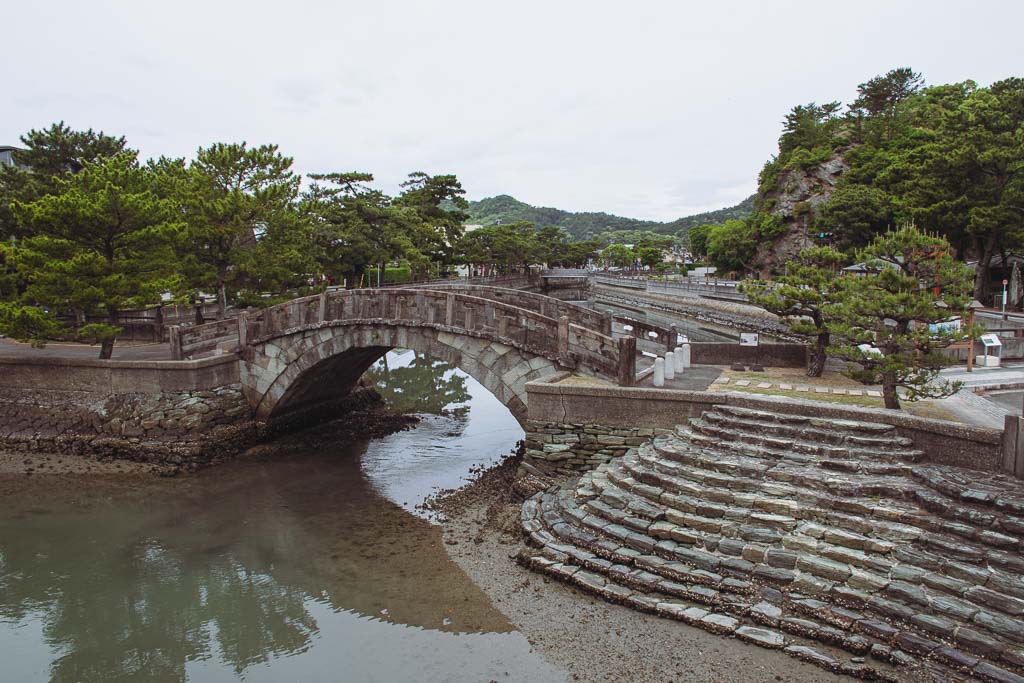
The map highlighted the Furobashi Bridge as a key landmark of the area. While it has historical ties to the Tokugawas and the Kishu family, it alone isn’t reason enough to visit.
But look around the area nearby, and you run into many temples and shrines, including the cave-like Shiogama Shrine over the road.
Just down the road stands the Wakanoura Ashibe-an Hermitage, a brand new poetry centre built in a traditional manner. I found some tourist information here, but the site was closed while I was there.
Still, I could walk up the garden path to the top of Tengu-san Hill and enjoy the views from its scenic spot.

Finally, I noticed on the map the beachfront, and I knew I had to check it out. Lo and behold, a surprisingly nice beach spot near Wakayama.
Had I known more about Wakanoura, I would have allowed more time there. With lots more hills, shrines, and coastline to explore, you could fill days in Wakanoura.
Kimii-dera Temple
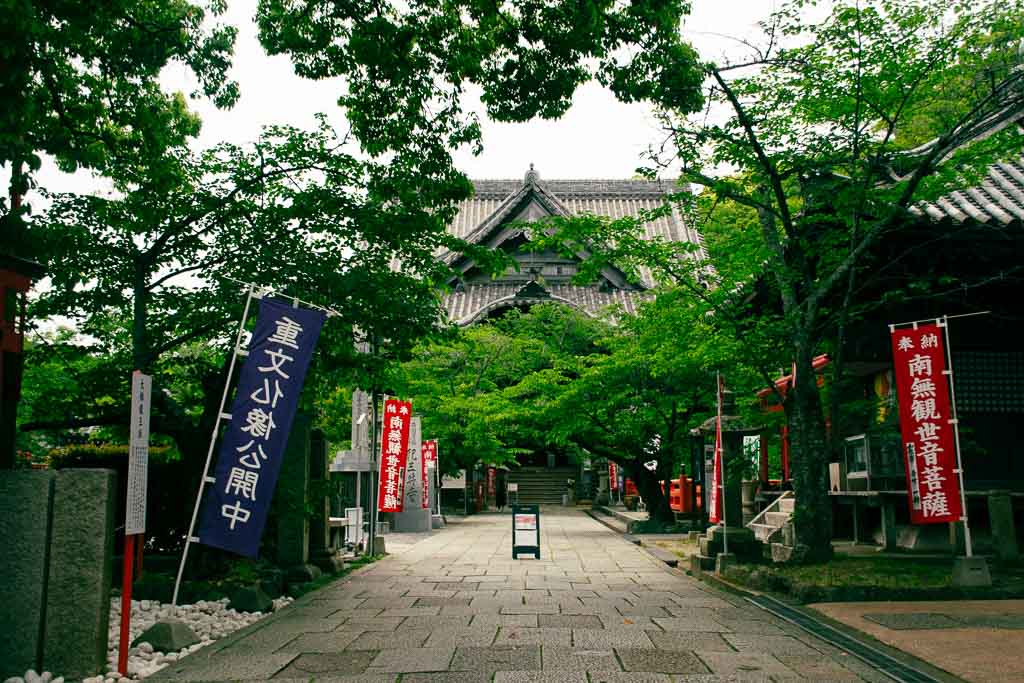
For a Japanese city, it’s strange that I’ve not mentioned more temples and shrines.
Kimii-dera Temple is possibly the most popular and important Wakayama temple, located south of the city near Wakanoura.
This Japanese heritage site is one of the temples along the Saikoku Kannon Pilgrimage route, which has existed for 1300 years. It once hosted emperors and had ties to the Tokugawa Clan.
Of more use to many visitors is knowing that the temple is an early spot for the cherry blossom season.
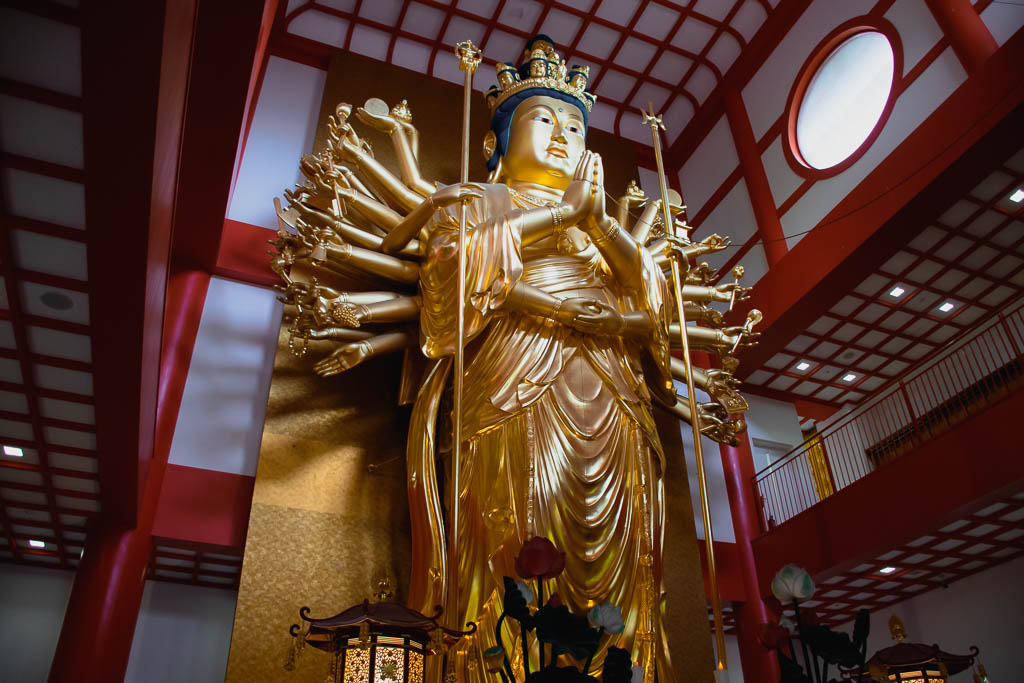
This Buddhist temple makes a major impression when you first arrive. Past a huge red gate, a staircase (231 steps) leads up the hillside, seemingly with no end.
To reach the temple, you can climb this staircase, ride a funicular, or even take a quick elevator. But before all of that, first stop at Gold Coffee near the base of the steps for delicious donuts (and coffee).
Walking the stairs has its benefits, as you stop at many intermediate terraces to see what shrines and statues decorate them.
And at the top? Various temple halls and garden spaces, including an eye-catching tunnel of red torii.
But what most stands out is the towering 12-metre-high golden statue of Kannon Bodhisattva, a figure of compassion and mercy.
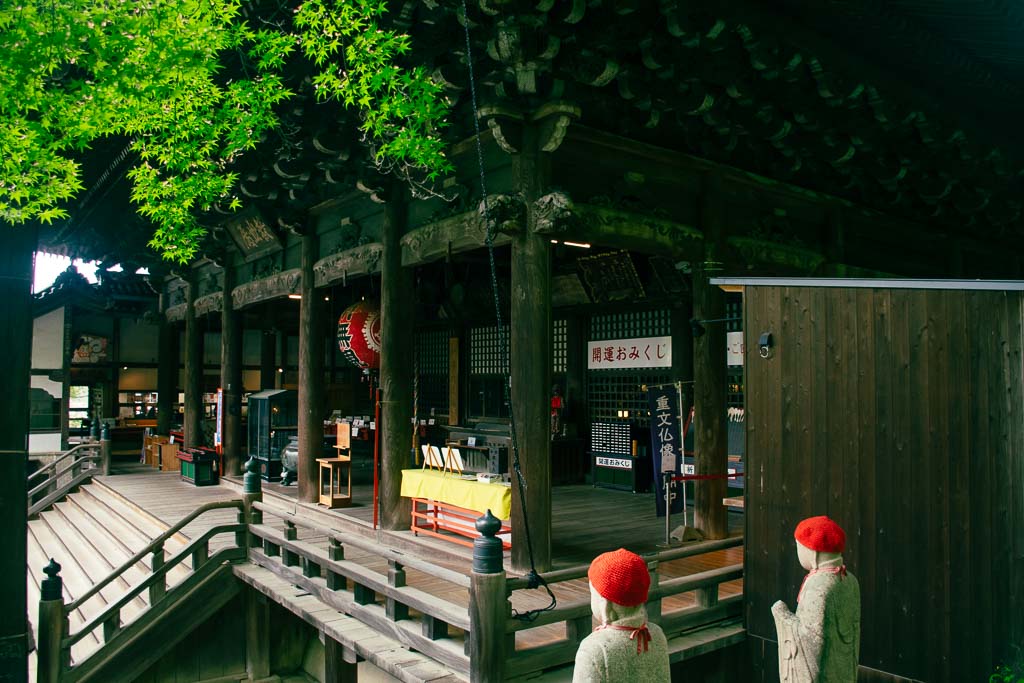
Information in English at the temple is quite limited. Mind you, it began drizzling while I was at this mostly outdoor attraction, so I may have missed things.
To get here, take a bus from Wakanoura, or walk like me if you’re impatient. To visit the temple from the city center, just ride the train to Kimiidera station.
