
Disclosure: This post (probably) contains affiliate links. If you click on one, I may make a small commission. Of course, this will come at no extra cost to you and helps keep this site running.
When it comes to historical destinations in Sicily, the seaside city of Syracuse is hard to ignore. After all, it’s an ancient city with millennia of history to its name, and it’s not too harsh on the eyes either. The best things to do in Syracuse invariably relate to its extensive past or its pretty present. Little wonder it’s one of the more popular destinations on Sicily’s east coast.
Now, I’m easily sold on places like Syracuse (Siracusa in Italian) that trade on history, folklore, and character. Sicily has quite a few destinations like that, but Syracuse still stands out to me. It feels less gritty than Catania and has more to offer visitors than Noto. You can easily spend two days in Syracuse getting to know the city, thanks to the various things to do in Syracuse and just how pleasant the city is to explore.
How to get to Syracuse

Showing you what to see in Syracuse is important, but so is the logistics of visiting Syracuse, such as how to get there.
Catania is the nearest major city, and both buses and trains travel there quite regularly. Expect the trip to take a bit over an hour either way.
There are also train connections to other tourist destinations in Sicily’s southeast, such as Noto and Ragusa. This is really one of the most convenient areas of the island to explore using public transport.
Of course, you could just rent a car for your Sicily getaway — just don’t bother driving around Ortigia if you can help it.
Finally, the easiest way to see Syracuse is to take a full-day tour from Catania, with your transport, itinerary, and food all handled for you.
Where to stay in Syracuse

Then there’s the matter of deciding where to stay in Syracuse. You’ll find accommodation in Syracuse right across the city, but Ortigia is the area with the best atmosphere.
However, for convenience and budget, the downtown area is also a common place to stay. That was where I stayed, at Campi Elisi, closer to the archaeological park. This B&B was great value, with kind owners and a great cafe down on the corner for breakfast.
Travelers looking for more accommodation recommendations should check out these highly-rated options:
Best places to visit in Syracuse
If you’re not already familiar with Syracuse, you might be surprised by how much there is to do there. All of the things to do in Syracuse are bound to keep you busy for a day or two, particularly if you’re interested in history or just picturesque traditional city spaces. There are definitely more places to visit, but these Syracuse attractions should give you plenty to get started with.
Neapolis Archaeological Park

One place you simply can’t miss when you visit Syracuse is the ruins of the Neapolis Archaeological Park.
The archaeological park sits on its own in the city’s northwest but is well worth the journey. Often also referred to as the Siracusa Archaeological Park, this site is full of wonderfully preserved remains from ancient Syracuse. While the Roman ruins there are to be expected, there’s a lot more going on here.
That’s because the star attraction here is its ancient Greek Theatre. Yes, you can see Greek ruins here in Sicily, with these dating back to well before the arrival of the Romans. This amphitheatre from the 3rd century BC could seat up to 16,000 people for the tragedies performed there.
Compared to other ancient amphitheatres you may have seen, it might not look special, but its presence is quite important.
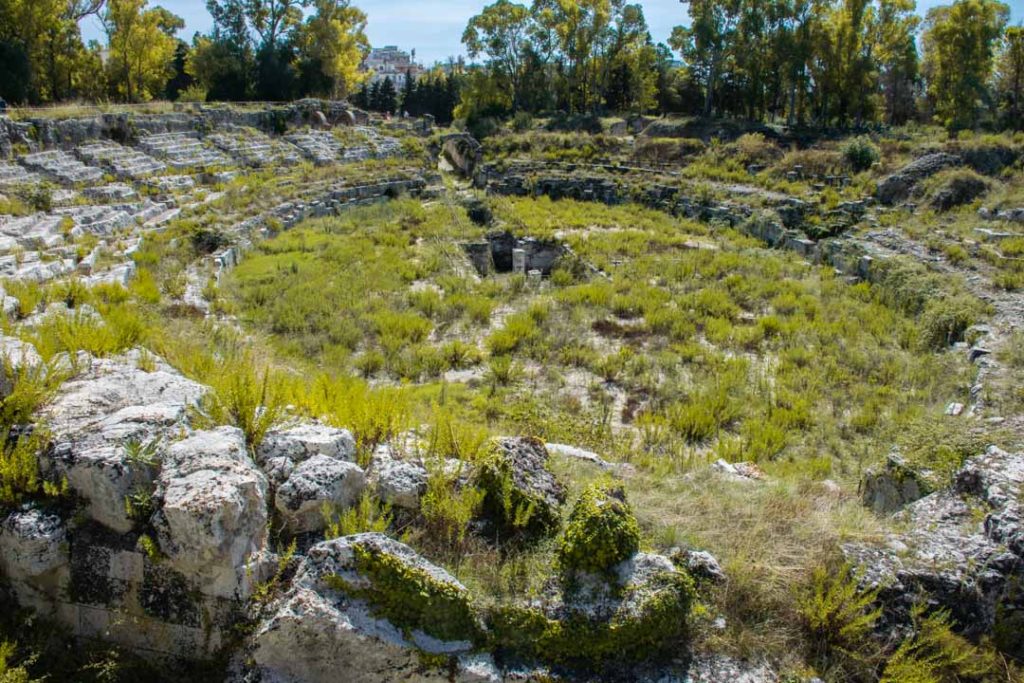
Other ruins to see here include the large and overgrown Roman Amphitheatre and the Altar of Hiero II used for ritual sacrifice. But the attractions here aren’t just man-made ruins. Behind the Greek Theatre lies the limestone quarry of Latomia del Paradiso used to build the ancient city.
It’s now quite a pleasant sunken garden to walk through as you head for a large cave called the Ear of Dionysius. The cave earns its name from its ear-like shape and you’ll discover the acoustics inside its dark recesses are quite something.
Book your tickets to the Neapolis Archaeological Park in advance to save time and hassle, or arrange for a guided tour to learn more.
Ortigia Island

It’s important to understand that the archaeological park is an outlier in the city.
To see the bulk of the Syracuse attractions, you instead need to make your way to Ortigia Island. This is the historical centre of Syracuse, full of tradition and character that is bound to win you over. All of this also means it has some of the coolest places to stay in Syracuse.
Ortigia or Ortygia is connected to the mainland by two small bridges. While this means it’s not exactly remote, the look and feel of the island are clearly different from the rest of the city.
The island settlement is as ancient as Syracuse itself, but unlike the mainland, it hasn’t been modernized.
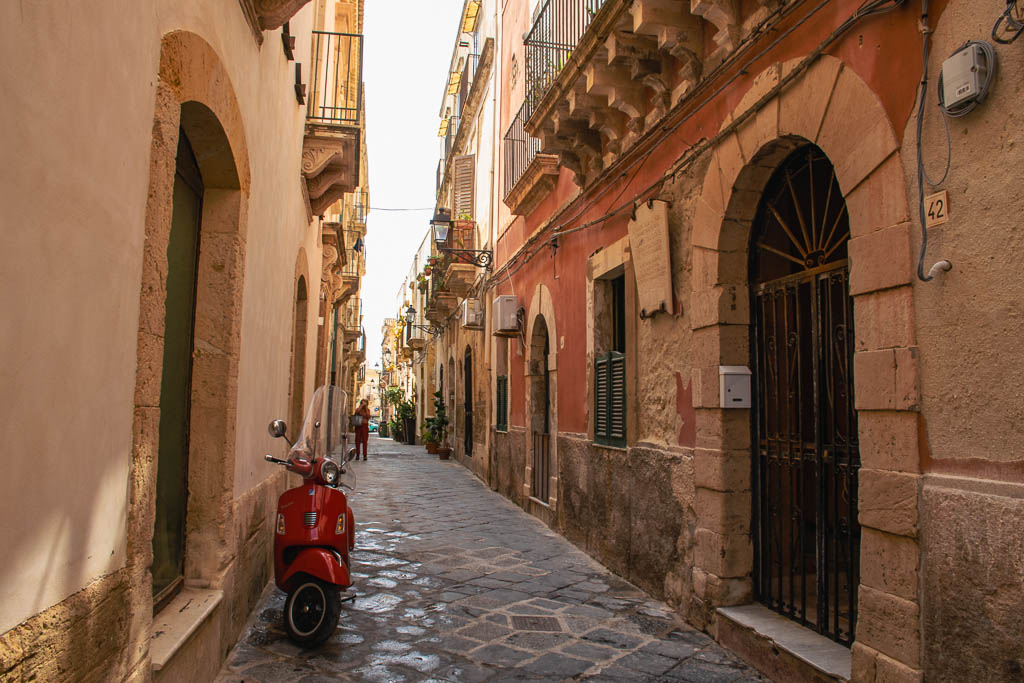
Wander around the island of Ortigia and you’ll be treated to narrow streets lined with well-preserved homes and buildings. We’ll get to the actual attractions in a moment, but take the time to just explore here.
While exploring on your own here is easy enough, if you’re pressed for time, a walking tour can help you quickly cover a lot of ground.
Temple of Apollo
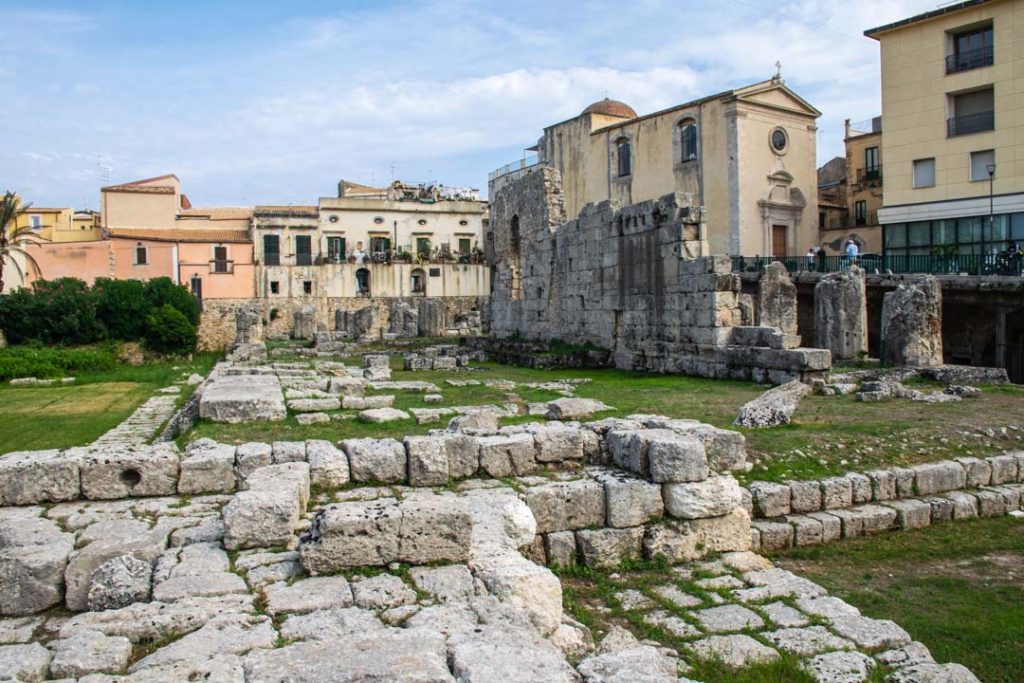
After walking out onto the island and passing through Piazza Emanuele Pancali, you should find more ancient ruins in front of you. This is what remains of the Temple of Apollo, the oldest Greek temple of its kind in all of Sicily.
The temple was built in the 6th century BC, converted by the Byzantines into a church, and then into a mosque by the Arabs. Given all that, it’s a wonder there’s anything left, although you really only need a brief stop to see it.
Fountain of Diana

Venture into the heart of the island and you’ll find the Fountain of Diana standing before you.
This elegant fountain takes centre stage in the Piazza Archimede, but it shares the spotlight with some other grand buildings. Around the edges, you’ll notice banks and offices, as well as cafes sitting out in the square.
Piazza Duomo
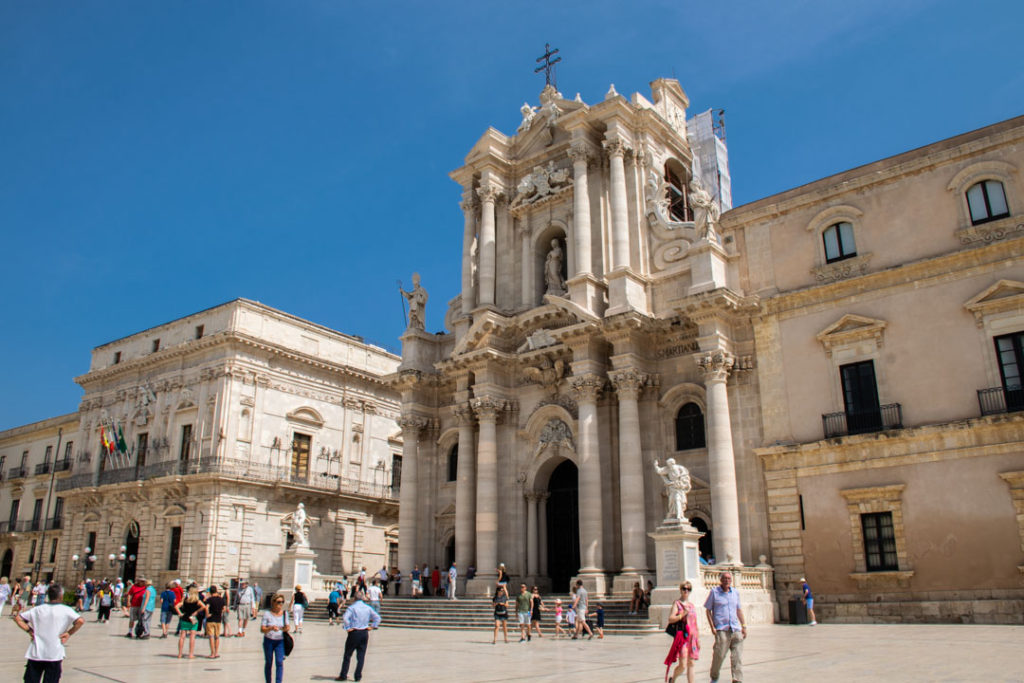
The main square in Ortigia is undoubtedly Piazza Duomo, thanks to the grandeur that surrounds it.
Here you’ll find several major palaces, not to mention the Syracuse Cathedral after which it’s named. While the entire city of Syracuse is recognised as a World Heritage site by UNESCO, the cathedral is one main reason why.
That’s because it’s actually based on an ancient Greek temple, with the original Doric columns incorporated into its striking Baroque design. It’s also said to host several holy relics of St Lucy, the patron saint of the city. You’ll actually find the famous painting Burial of St. Lucy by Caravaggio in the Church of Saint Lucia Alla Badia, also on the square.
Sharing the Piazza Duomo with those churches are some really impressive palaces whose architecture makes the square so appealing. Many house museums of this and that, but even if you don’t want to go inside, just take a look inside their resplendent courtyards.
Ortigia’s seaside promenade
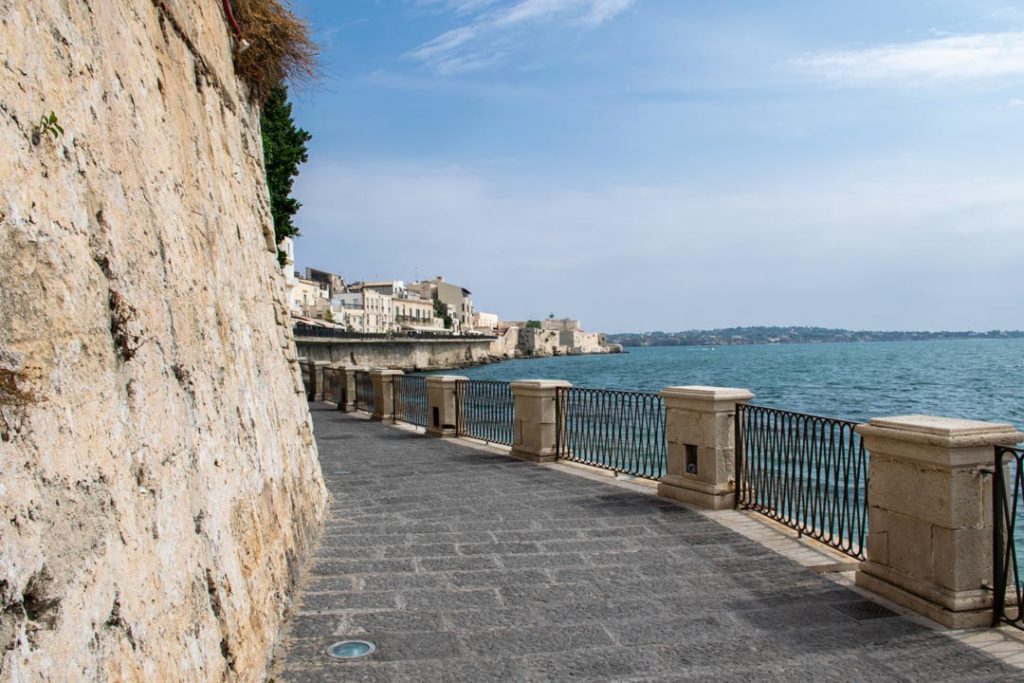
Being an island in a seaside city, it only makes sense that you take time to see Ortigia’s waterfront.
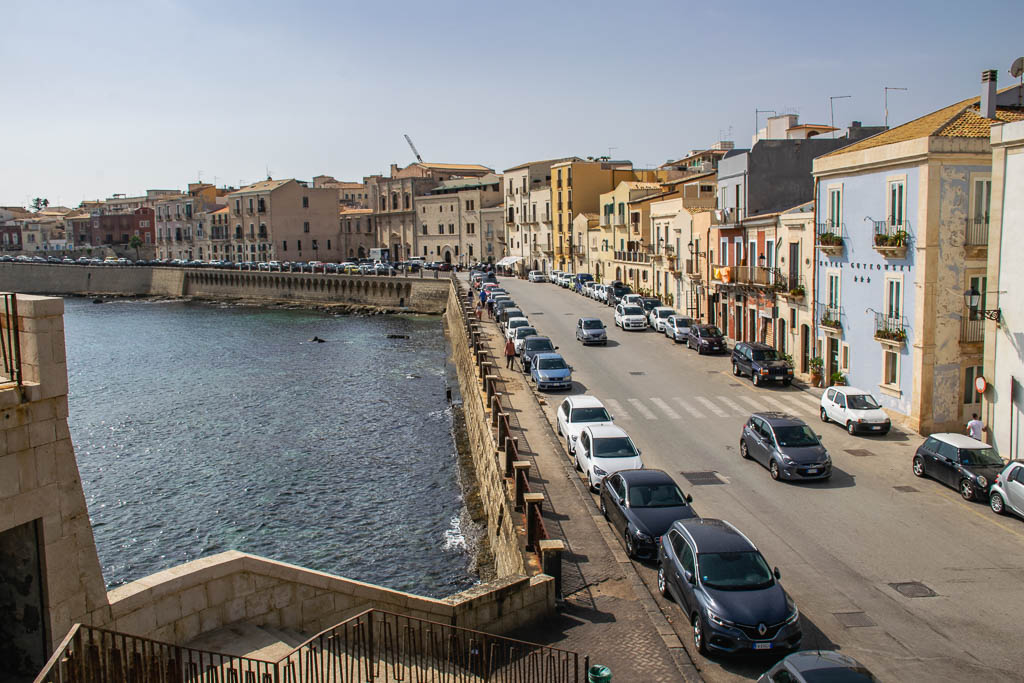
The best way to do that is to head down to the Ortigia Marina and just follow the coast. Down behind the marina, you’ll be on a wide-open promenade that ends with mighty fig trees in Giardino Aretusa. From there, though, you’ll be able to take a narrow coastal walk along the picture postcard waterfront.
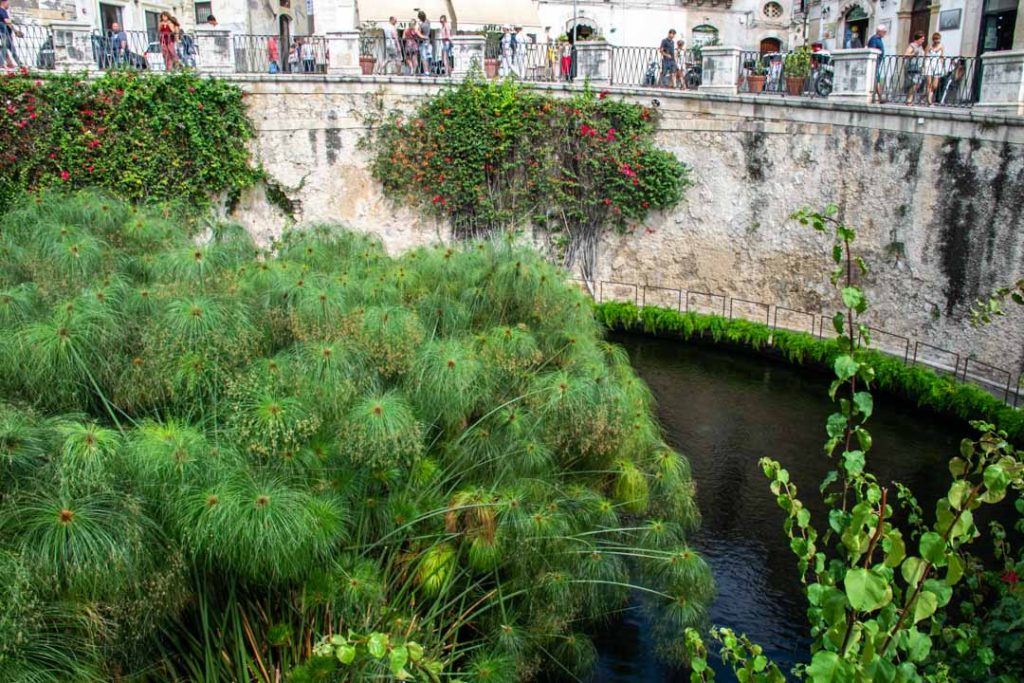
One spot that’s hard to miss along here is the Arethusa Spring. This ancient natural fountain lies just off the island’s shore with stone walls dropping down around it from street level.
It sort of feels like a little oasis in Ortygia, even though there are gardens right nearby. The fountain owes its name to a Greek legend relating to the nymph Arethusa. Legend says that the nymph was transformed into a spring by the goddess Artemis to help her escape a river god.
Castello Maniace
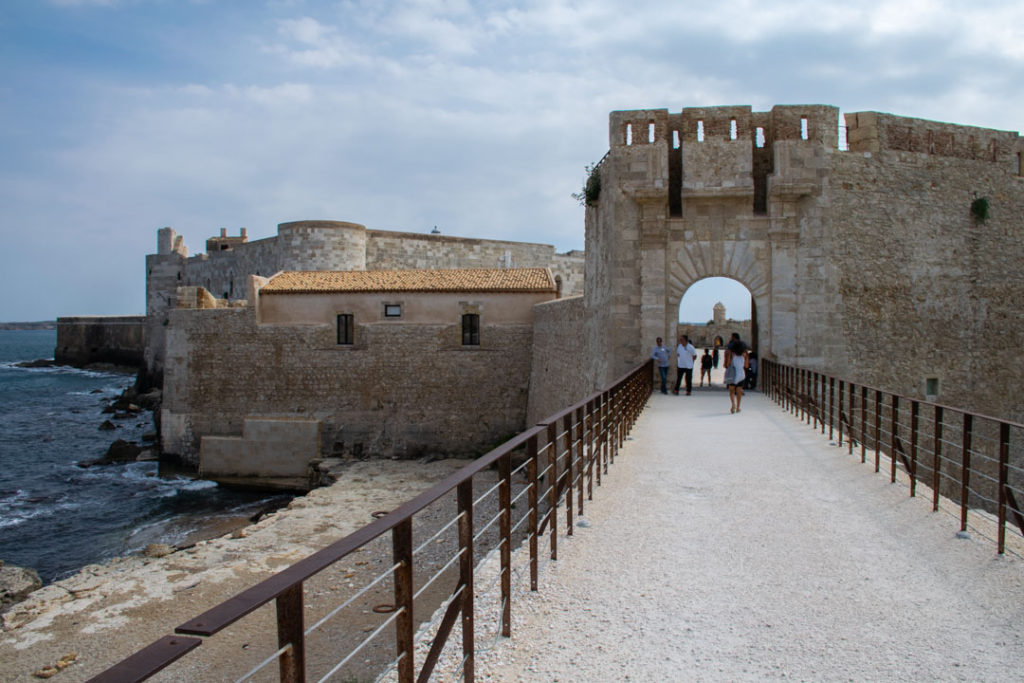
Down at the southern end of the island lies Castello Maniace, part of Ortygia’s old defences. The castle was one of two originally, with the second being where Corso Umberto I is. Castello Maniace was built by Holy Roman Emperor Frederick II in the 13th century, although it’s named after an 11th-century Byzantine general.
The fortress used to be separated from Ortygia by a moat, with just a single bridge providing access.
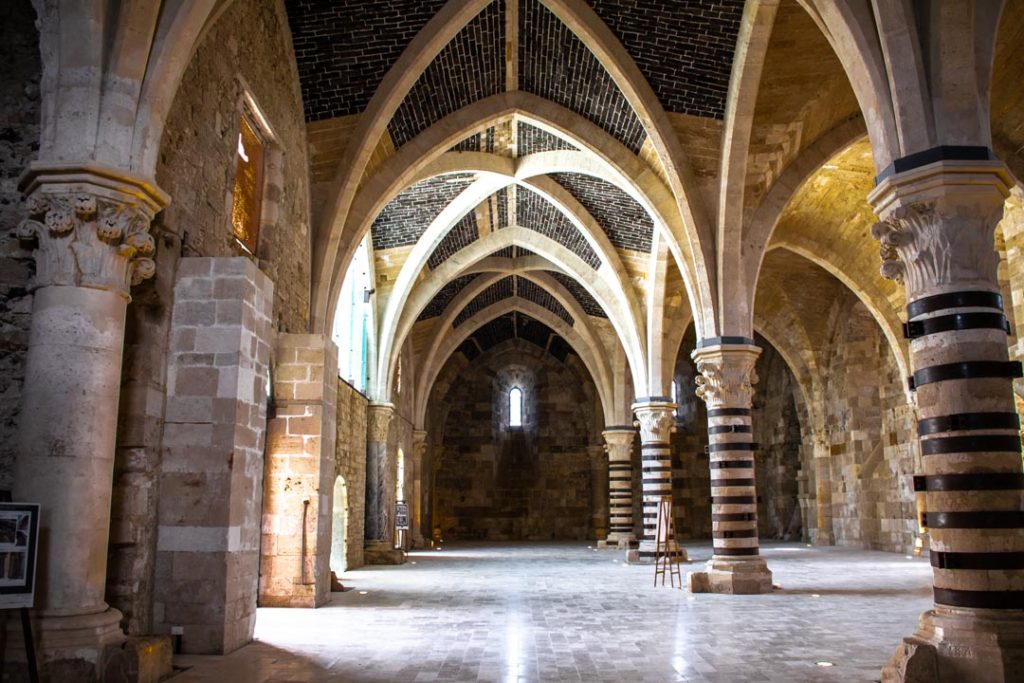
Today, it’s possible to visit Castello Maniace to explore its grounds and fortifications, as well as learn the castle’s history in its small but comprehensive museum. For a while, the castle was also a royal residence, which explains the beautiful vaulted archways seen in its main hall.
Get your tickets to Castello Maniace in advance and get a free audio guide.
Forte Vigliena
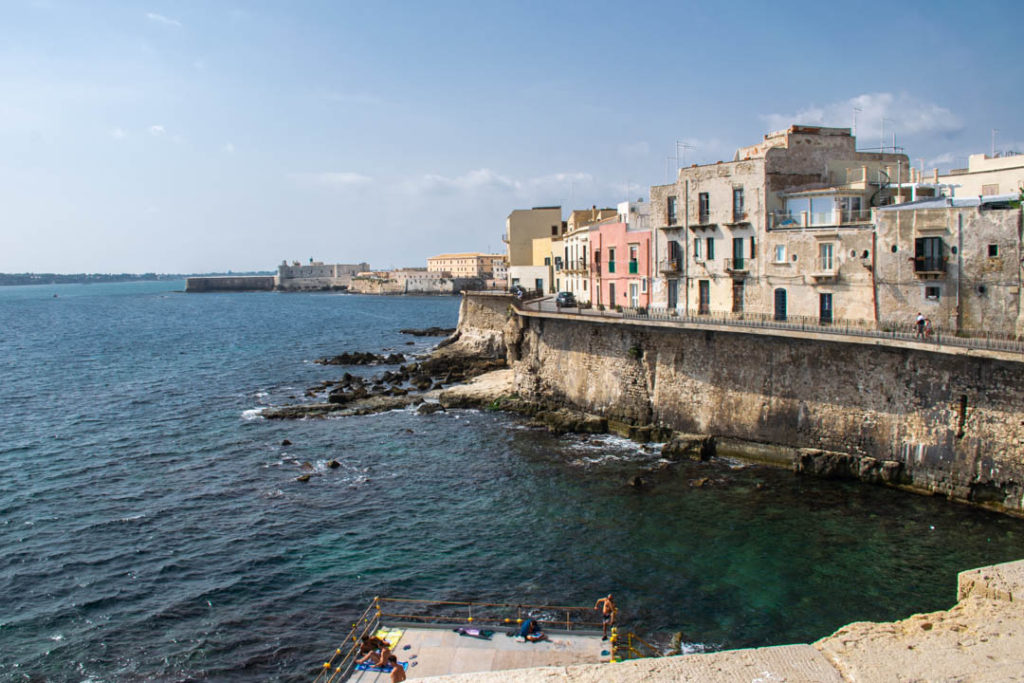
On the far side of the island from the Arethusa Springs lies Forte Vigliena, watching the coastline. It’s quite a modest fort, but it’s great if you’re after views of the island’s meandering waterfront here.
Down at the base of the fort, you’ll also find patches of rocky shore that are popular for sunbathing and swimming. There aren’t too many swimming spots on Ortigia besides here, other than Cala Rossa beach nearby.
Another way to see all of this coastline is with a boat tour. One thing I missed by staying on land was all the nearby sea caves, but you won’t miss them exploring by boat.
Eating Arancini
We’re almost done with what to do in Syracuse, Sicily, but it’d be careless of me if I didn’t mention food here.
One of the best things about visiting Sicily and indeed Italy is feeding your face with delicious things. There are plenty of different Sicilian things you could try here in Syracuse, from pasta alla norma to granita, but here I’m going to focus on arancini.
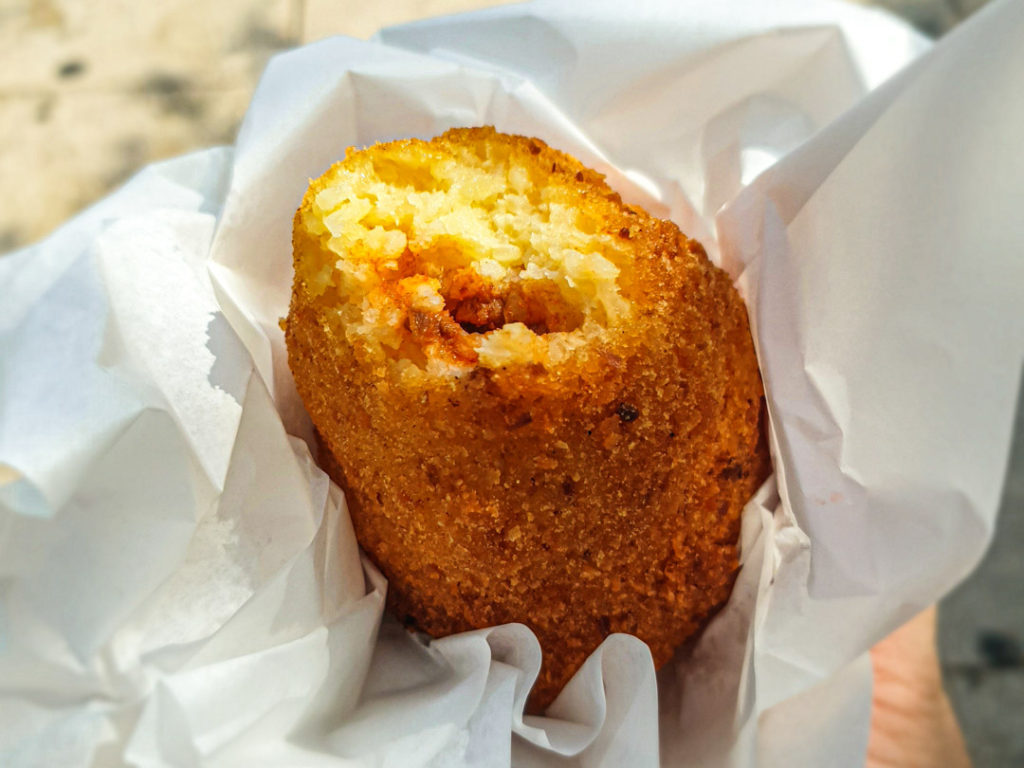
Arancini are a snack of rice deep-fried in breadcrumbs, often stuffed with other things like cheese and meat. I ate arancini in plenty of places on my trip, but it was Syracuse that started my arancini obsession.
Now these snacks are certainly not healthy if you have too many, but they’re delicious, especially with eggplant or ragu. You’ll find quite a few places selling them, especially in the heart of Ortygia.
If you don’t know where to start with food in Syracuse, a street food tour is a safe bet.
Where would you want to start with these things to do in Syracuse, Sicily? Have you ever heard of ancient Syracuse or wanted to visit this seaside city? Please share your thoughts in the comments below.

This article is now available as a mobile app. Go to GPSmyCity to download the app for GPS-assisted travel directions to the attractions featured in this article.
