
Disclosure: This post (probably) contains affiliate links. If you click on one, I may make a small commission. Of course, this will come at no extra cost to you and helps keep this site running.
A little overshadowed by its Southeast Asian neighbours, Laos is a destination that still holds some secrets for unfamiliar travellers. Planning my one week in Laos taught me a little, but it wasn’t until after visiting Laos that I realized how little I knew.
If you want to visit Laos, the good news is that this underappreciated country is totally worth visiting. It delivers on culture, raw natural beauty, and unique experiences, even if you don’t stray too far from the main route. If you’re thinking of making the trip, this Laos travel advice should give you the confidence to take the plunge.
1. Places to visit in Laos
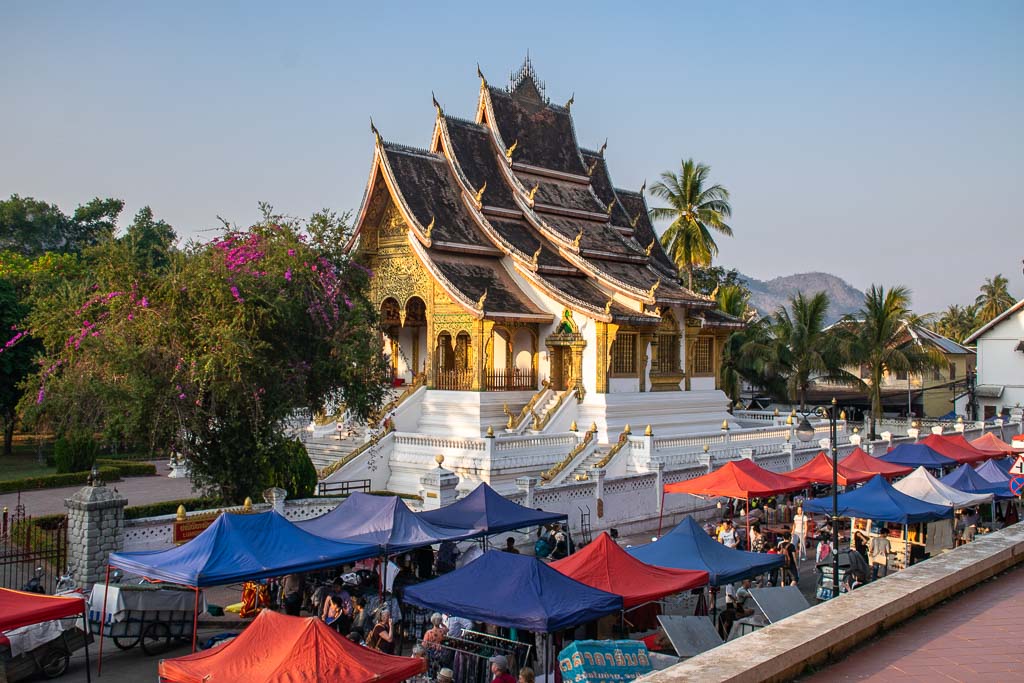
The first step in planning your Laos trip is finding where to go in the country.
Unless you’ve been doing your research or saving inspiration, you probably don’t know where to start. The easy answer is to focus on the common destinations of Luang Prabang, Vientiane, and Vang Vieng.
These three destinations are the core of most people’s Laos visits, as together they showcase the country’s culture, history, and natural scenery. It helps, too, that they all sit in the northern central part of the country.
But when researching my trip, I learned that these are just the beginning of the places you can visit in Laos.
In the country’s south, you have the 4000 Islands or Si Phan Don, which enjoy all sorts of beautiful scenery on the Mekong River. Go east, and you have the Plain of Jars, a UNESCO-listed archaeological site that dates to the Iron Age. Look to the far north, and Nong Khiaw offers more dramatic landscape scenery, while the Nam Ha National Protected Area lets you hike between different ethnic villages.
So, I only scratched the surface of where you can go in Laos. After enjoying my first trip there, I’m keen to explore more widely next time.
2. How to get to Laos
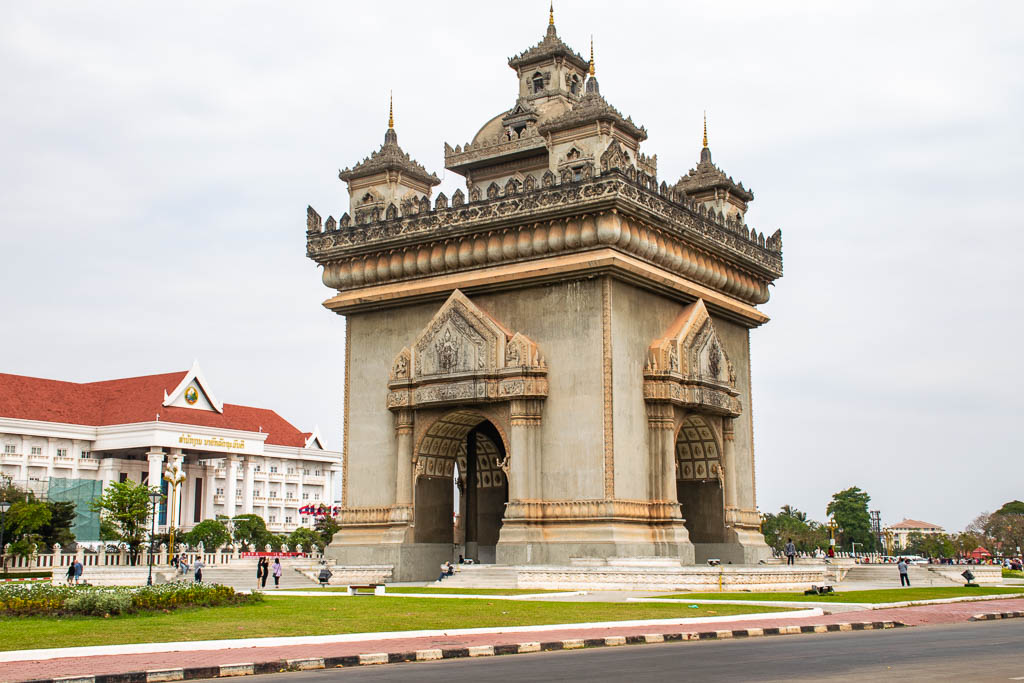
Even though Laos is deep in Southeast Asia, surrounded by Thailand, Vietnam, and Cambodia, the best way to get there is not immediately clear.
But, before deciding on how you get there, a word on the ever-important matter of visas.
Save yourself the hassle by organizing your $US50 eVisa through the official website (if eligible). Read about which countries can get one and at which borders you can use it. A visa on arrival may be cheaper, but it comes with hassles such as passport photos, floating costs, and the potential for complications.
Anyway, back to transport, flying is, of course, one option.
Vientiane has the country’s main airport, which has routes from other Asian capitals and cities, mostly with low-cost airlines. But Luang Prabang also has a small international airport that receives flights from Bangkok, Hanoi, and Siem Reap.
Many travellers, though, cross into Laos from neighbouring countries, with options to come by train/bus/shuttle, depending on the border.
The busiest land borders are with Thailand: Vientiane/Nong Khai (First Thai–Lao Friendship Bridge) and Houayxay/Chiang Khong (Thai – Lao Friendship Bridge No.4). Both have public transport connections on either side of the border and a bus that crosses between each immigration. My experience crossing at both was uneventful
There are other border crossings from Thailand into Savannakhet and Pakse, plus
- the Nong Nok Khiene Border with Cambodia (read the reviews first!)
- the Boten Border with China
- three Vietnamese border crossings open to foreigners
3. Getting around
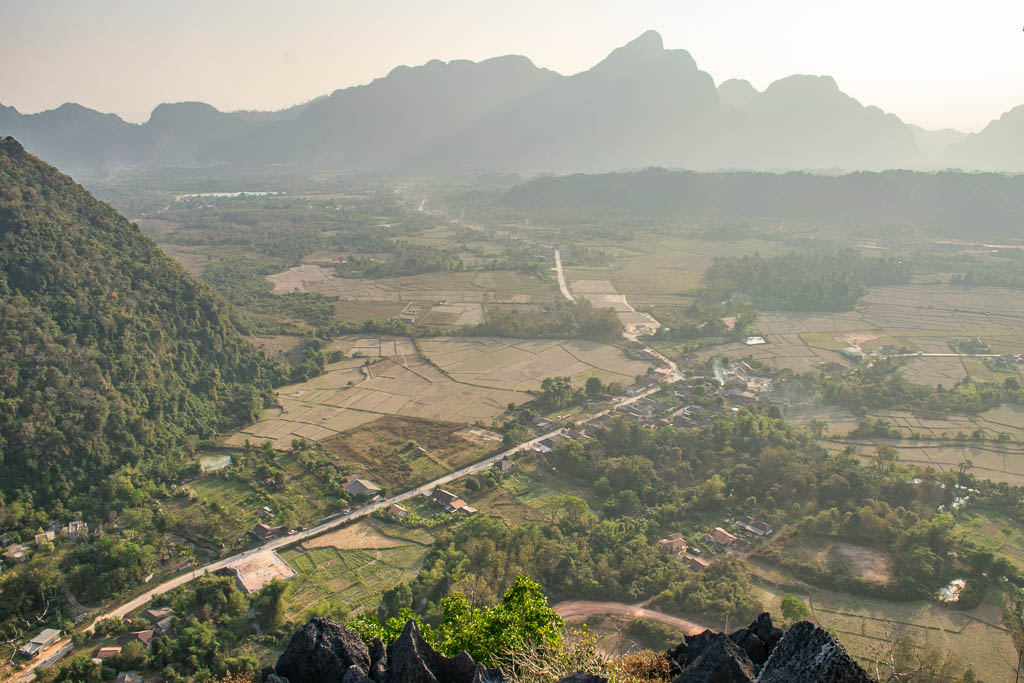
Once you’ve decided where you’re going and where you’re starting your Laos trip, the next step is transport.
Now, the easiest way to get around Laos is to take a guided tour. I did this with G Adventures, and it was a relief not to have to worry about travel days.
But that won’t be for everyone, and I looked at the alternatives before I booked my tour.
In 2021, Laos built a new high-speed train network between Vientiane and China that reduces the time it takes to travel between Vientiane, Vang Vieng, and Luang Prabang.
The catch? All of these modern stations are way outside the cities and towns. It’s for this reason that you can buy packages that bundle your train ticket with taxis/shuttles to/from the stations. Otherwise, you’ll need to get a tuk-tuk at either end and negotiate a price.
For a slower and cheaper alternative, you can book buses and minivans that drive all over the country. Booking buses and transfers online is easy, but you can also arrange them at travel agents/hostels in Laos if you’re less picky about what time you go.
Only on long-distance journeys, normally overnight, such as from Vientiane to Pakse, will you use real coach buses with sleeper beds.
4. The Mekong River

While the temples of Luang Prabang and the outdoor activities of Vang Vieng are all really interesting and fun, the star of the show in Laos is the Mekong River.
Flowing from one end of the country to the other, the Mekong River is the lifeblood of Laos. It not only forms the border with Thailand in many places, including at Vientiane, but it’s often the easiest route for navigating the country. Why spend ages driving around and over mountains when you can cruise between them and enjoy the scenery?
And it’s this very quintessential experience that tourists should ensure not to miss.
Riverboats, here known as slow boats, travel along the Mekong River, connecting Luang Prabang with the Thai border town of Chiang Khong. The journey is two days long and normally stops at the town of Pak Beng overnight.
You can take it in either direction, and it’s the best way to head into northern Thailand from Laos. No more winding roads and traffic – just gentle river scenery everywhere you look.
Organizing the slow boat may seem a little daunting since you also have to arrange the overnight stop, but for many, this is a highlight of their Laos trip.
5. Money and budgeting
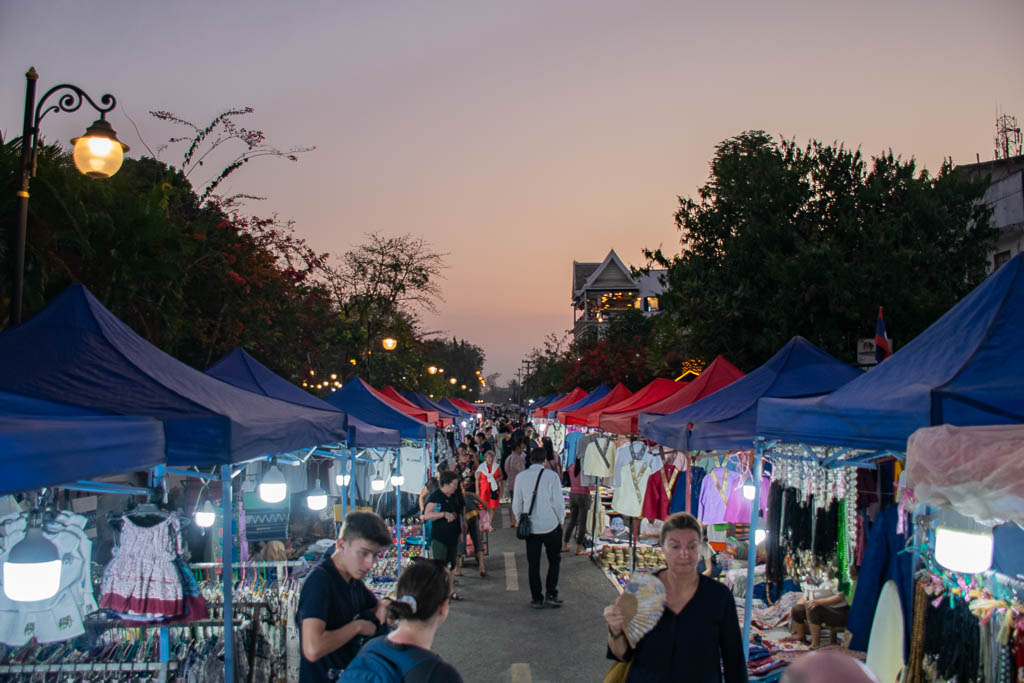
You probably expect Laos to be an affordable place to visit, right?
Yeah, it is. Like its Southeast Asian neighbours, your money goes a long way here.
Finding meals for US$5-10 is super easy, and you can spend less than that if you actually try. For example, getting dinner at the night market in Luang Prabang only costs a few bucks.
Likewise, entry to attractions and tuk-tuks are incredibly cheap, letting you do more with your visit. Activities like kayaking and visiting lagoons in Vang Vieng will set you back more, though.
You will need cash during your Laos visit. The local currency—Laotian kip—is used alongside US dollars, and even Thai baht is accepted in some places. I exchanged some baht for kip at the Nong Khai border before crossing just to play it safe.
Crisp bills, especially for US dollars, are incredibly important here. Keep this in mind when getting currency before your trip and any change you might receive while in Laos. I had people turn away a bill or two because they didn’t like the look of it.
Getting kip from ATMs in Laos is not hard, with machines easy to find in major tourist destinations. From my experience, ATM fees were in the range of 30,000-40,000 LAK (US$2-3), plus whatever your bank charges (less of an issue when using Wise as I do).
I used a credit card just once in Laos for the activities in Vang Vieng. Check that your hotel accepts payment by card; mine in Vientiane did not.
6. When to visit Laos

You probably have an idea of when you want to visit Laos already, but it pays to know what the weather will be like when you go.
The high season in Laos is from November to February when the country experiences its cooler dry season. March and April start to get hotter, and May through October is the wet season.
Another big reason that November to February is the busiest time is that those months are generally good times to visit nearby places such as Thailand and Cambodia.
I visited Laos in February, and the weather was ideal. Although the days still got hot in the afternoon, it did get chilly on the Mekong slow boat when the sun wasn’t up.
The dry season has its benefits and disadvantages.
On the plus side, you don’t need to worry about landslides or flooding ruining the integrity of the roads. The mild disadvantage is that the rivers and waterfalls are lower, so Kuang Si Waterfall at Luang Prabang may not be quite as impressive as it can be – I thought it still looked incredible.
While this is “high season” in Laos, destinations are not nearly as crowded as other Southeast Asian destinations. Lunar New Year was the rare busy point, as many Chinese tourists now travel during this holiday window, and Laos is increasingly becoming an option.
7. Staying safe

Like any destination, Laos has some things you should be mindful of to stay safe while you travel.
As always, the best approach is to do your research and follow common sense. Check if you need vaccinations, look at the country’s malaria map, avoid tap water, etc.
But for issues specific to Laos, two things come to mind.
One is that it’s best to avoid free or suspiciously cheap drinks. There was a lot of news about the tragic events of the mass methanol poisoning in Vang Vieng. This issue isn’t exclusive to Laos, but it’s worth bearing in mind.
The other danger is related to Laos’ awful history with unexploded ordnance since the Vietnam War. For decades, the country has made efforts to remove the bombs, munitions, and hazards dropped by the United States. If you’re interested in learning about this problem and how common amputations are in Laos, visit the COPE Visitor Centre in Vientiane.
Ultimately, many of the more remote parts of Laos are still uncleared of bombs. So please don’t wander in wild settings without checking in with local communities to ensure that it’s safe. Stick to the tourist path and this won’t be a problem.
