
Disclosure: This post (probably) contains affiliate links. If you click on one, I may make a small commission. Of course, this will come at no extra cost to you and helps keep this site running.
Valencia, a popular destination on Spain’s east coast, delights visitors with its oranges, paella, and spectacular historical landmarks. The city effortlessly finds its way onto people’s itineraries, but visiting a lot of Valencia attractions can quickly run up costs.
How then do you decide which things to do in Valencia? The answer is to focus on the most impressive (or free) sights to see in Valencia so that you can sprinkle in a few of the costlier attractions. Let me show you what I mean.
Getting to Valencia
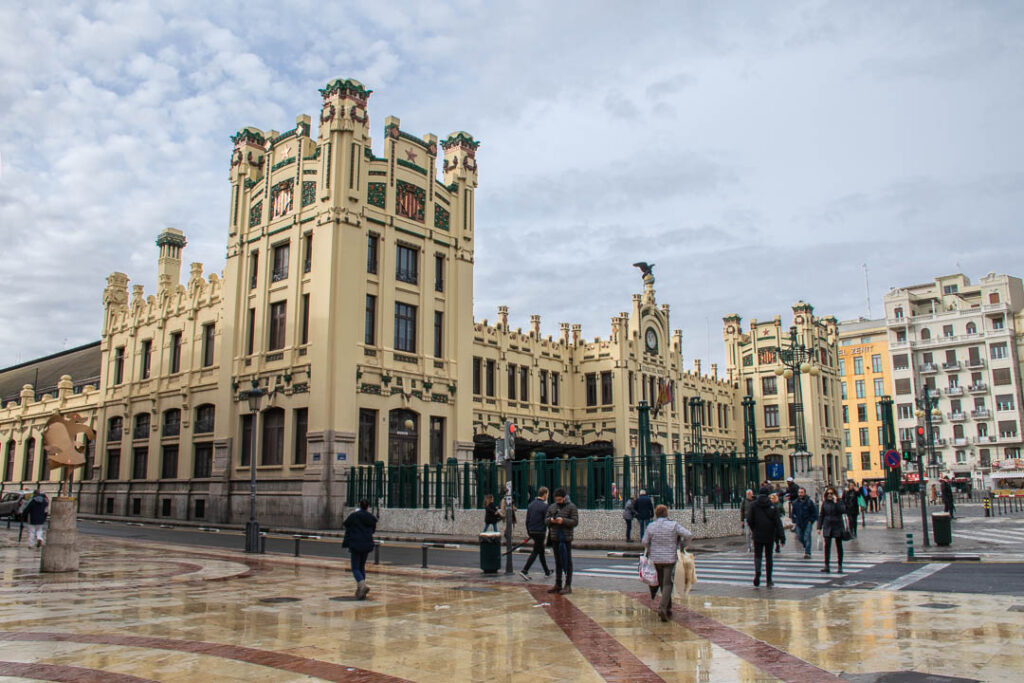
For your trip to Valencia, you won’t have any problems reaching the city.
Valencia has one of the busiest airports in Spain, so flying in is one way to get there. The airport also isn’t far from the city, so an airport transfer won’t set you back much.
For travellers already in Spain, Valencia is also easy to reach by train and bus. High-speed trains run directly to Valencia from Madrid and Barcelona (among others) on two of the country’s most popular train routes. Buses from major Spanish cities are just as easy to find but are generally cheaper.
Both the main train station and city bus station of Valencia are fairly convenient to reach, although nowhere near each other. Arrive at either and you’ll find great public transport options, although I mostly used the bus because of where I stayed.
Where to stay in Valencia
Finding somewhere to stay for your trip shouldn’t be a problem. There are loads of places to stay in Valencia, especially around the Old Town, and the city’s public transport makes getting about super easy too.
For my visit, I treated myself to a stay at the Eurostars Rey Don Jaime. It’s a very nice hotel above my usual level of comfort, but a bit far from the historic centre. That wasn’t so much an issue for sightseeing as it was finding places to eat.
Other highly recommended places to stay in Valencia are:
Where to eat in Valencia
As for food, my one memorable experience was at Secreter Sala de Estar. Ordering a little out of my comfort zone, I had snails and a rabbit dish from their daily menu. It was easy to see why this Old Town restaurant gets such rave reviews.
Valencia’s Must-See Attractions
It’s time to look at what there is to do in Valencia that will make you feel like you’ve seen what Valencia has to offer. With this list, you get a nice taste of the future and the past, the urban and the natural. You’ll find many similar spots included on a walking tour of the city, giving you the choice to go solo or learn more from an in-person guide.
Old Town of Valencia

Ciutat Vella is the historical centre of Valencia and where you’re bound to spend a fair share of your time.
But what makes the Old Town so interesting, at least to me, is how varied the area actually feels. The Old Town covers quite a large area of the city centre so areas feel like they’re from different eras of the city. That alone should encourage you to walk around, but it helps that much of Ciutat Vella is very pedestrian-friendly.
I won’t dive into each of the many attractions and museums in the Old Town of Valencia just yet. Instead, I’ll mention two places I missed out on because of cost. One is the Lonja de la Seda, with its vaulted ceilings and spiral columns. But perhaps my biggest regret is missing out on the Palace of the Marqués de Dos Aguas.
Its Rococo exterior looks stunning, so I’m majorly disappointed I somehow avoided it.
Plaça de la Mare de Déu

One of the first places people visit in Valencia is the Plaça de la Mare de Déu.
As the main square of the historical centre, this open plaza is home to multiple popular Valencia attractions. Looking around the square you’ll spot the Valencia Cathedral, the Basilica de la Virgen de los Desamparados and the Palau de la Generalitat. And let’s not forget the Torre del Miguelete, just down a side street off the square.
Part of what makes the Plaça de la Mare de Déu such an appealing spot is the square itself. With patterns in its marble pavement and the elaborate Turia Fountain at the heart of it, the square inviting feel to it. Perhaps the perfect way to appreciate this square is to find one of the many cafes on it and sit down with a coffee and people-watch.
Even on a budget, I couldn’t resist.
Torres de Serranos Gate
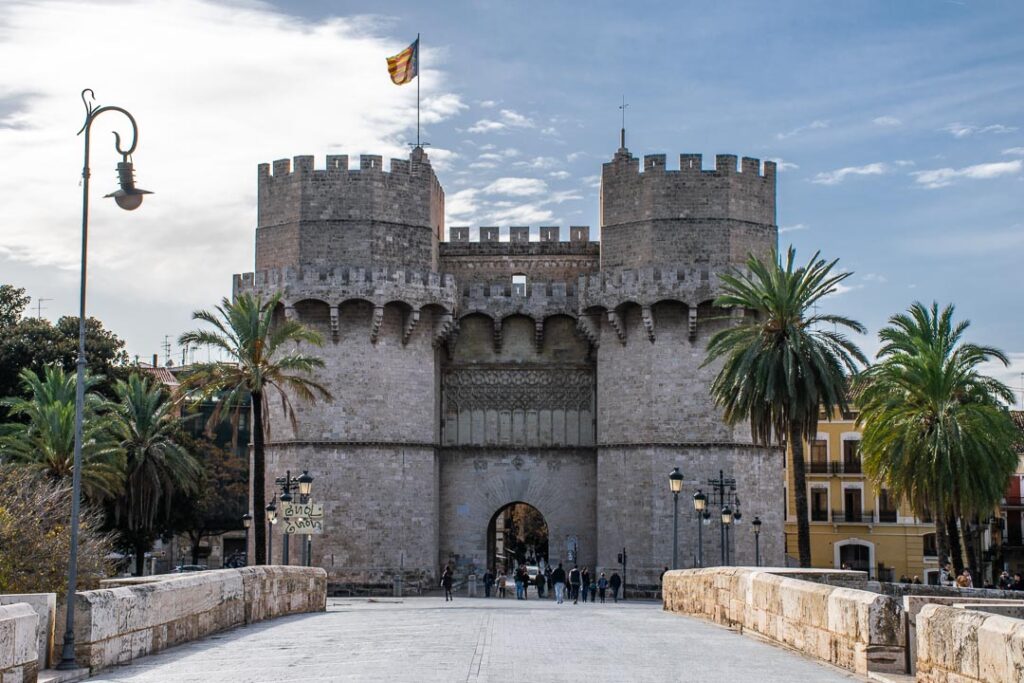
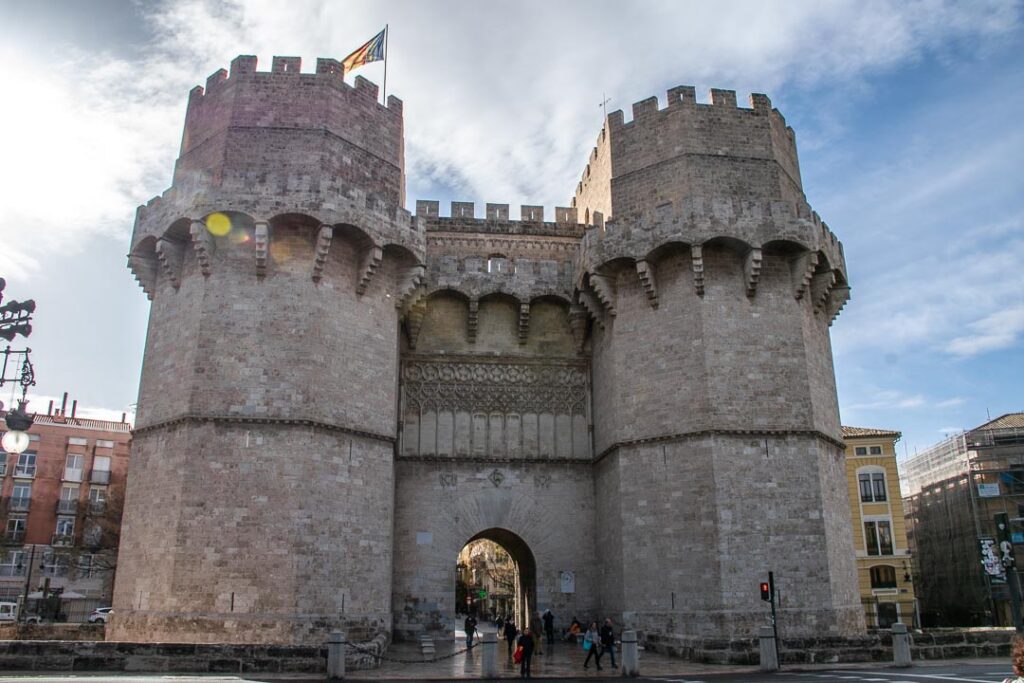
No matter which European city I’m visiting, I always enjoy seeing old city walls and gates.
This means I was in for a treat with Valencia as it has kept several of its old city gates. By far the more photogenic is the Torres de Serranos at the northern end of the Old Town.
With a well-preserved Gothic design, this gate gives you a taste of what approaching Valencia might have been like back in the day. While free to admire from the street, you’ll need to pay to see the view from the top.
The Torres de Quart is another gate around on the western side of the city, but it hasn’t aged as well. Sadly, these gates are all that’s really left of the old fortifications around Valencia.
I can only guess that modern development was the reason for their removal as is often the case.
Mercat Central
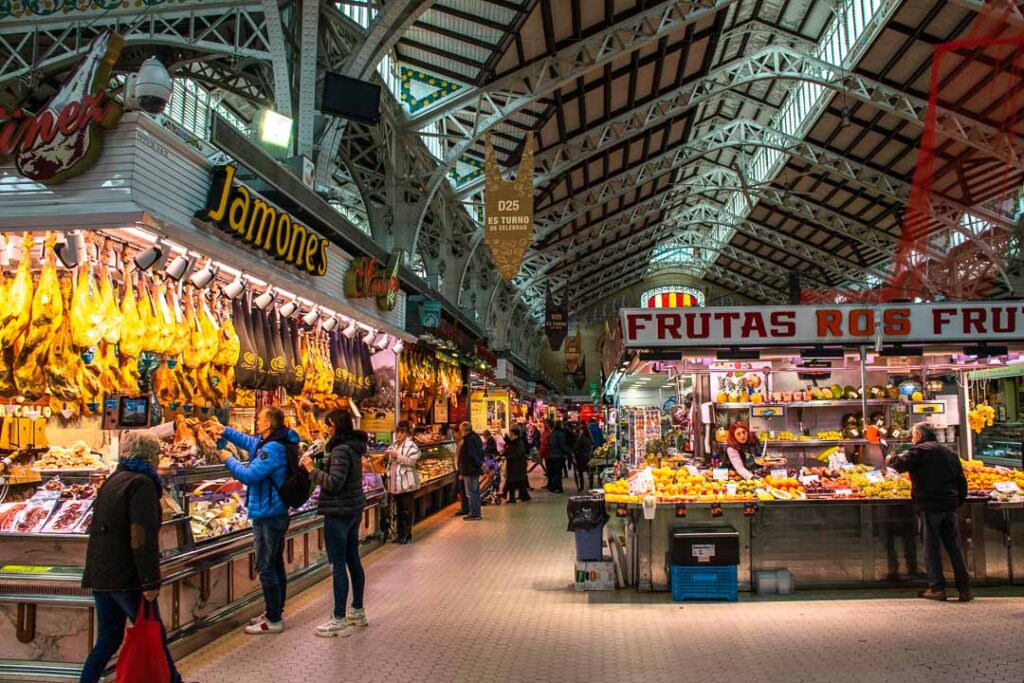
A common trait among the major cities of Spain is that they always have a large market worth visiting.
And that’s definitely the case in Valencia with the Mercat Central. Many say that it’s one of the best things to do in Valencia, both thanks to the design of the market and what’s inside. The awesome Art Nouveau design of the covered market is hard not to notice but is mostly noticeable on the outside.
Inside you’ll find loads of fresh produce and meat for sale, plus local favourites like horchata and more. You can experience all this on your own, but going with a guide can offer a richer experience.
Backstreets graffiti
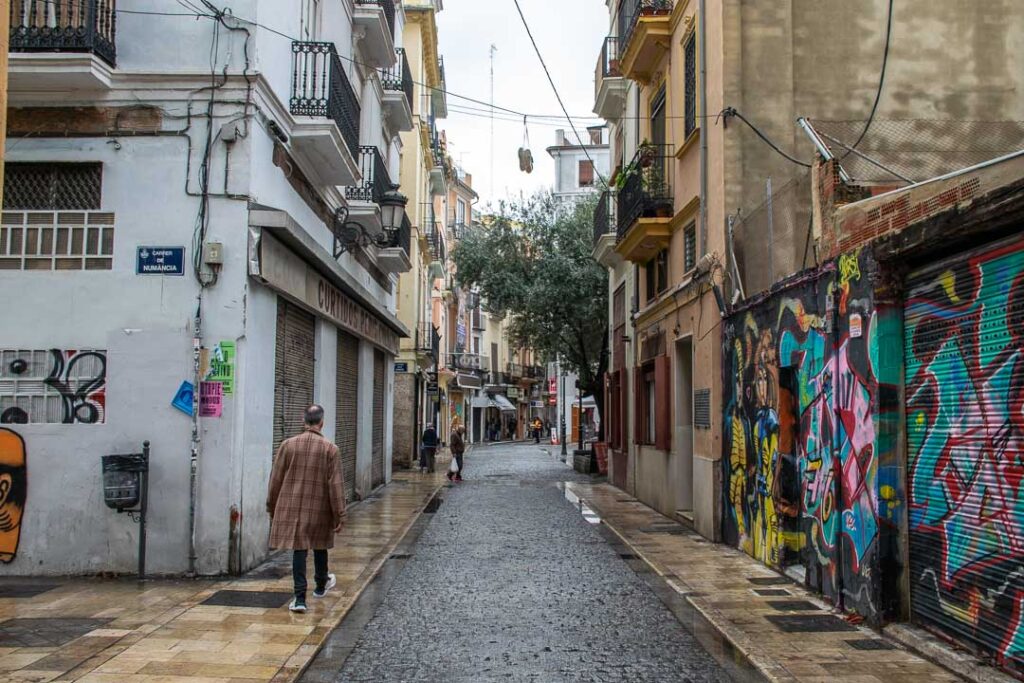
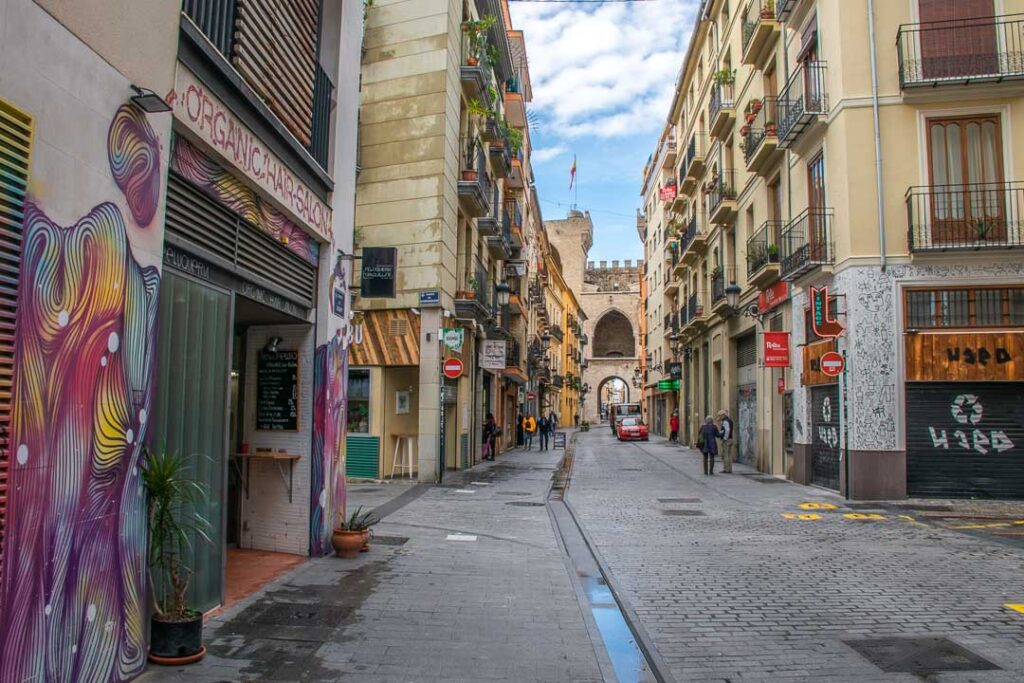
One interesting aspect of the Old Town in Valencia is how much colourful graffiti you find there.
Step away from the main streets and squares and you’ll quickly encounter graffiti somewhere. While I wouldn’t necessarily call it street art, it does lend some character to the outer parts of the Old Town away from the main sights.
It’s a good excuse to just wander without any set direction, which is something I think is worth doing anyway.
Jardí del Túria
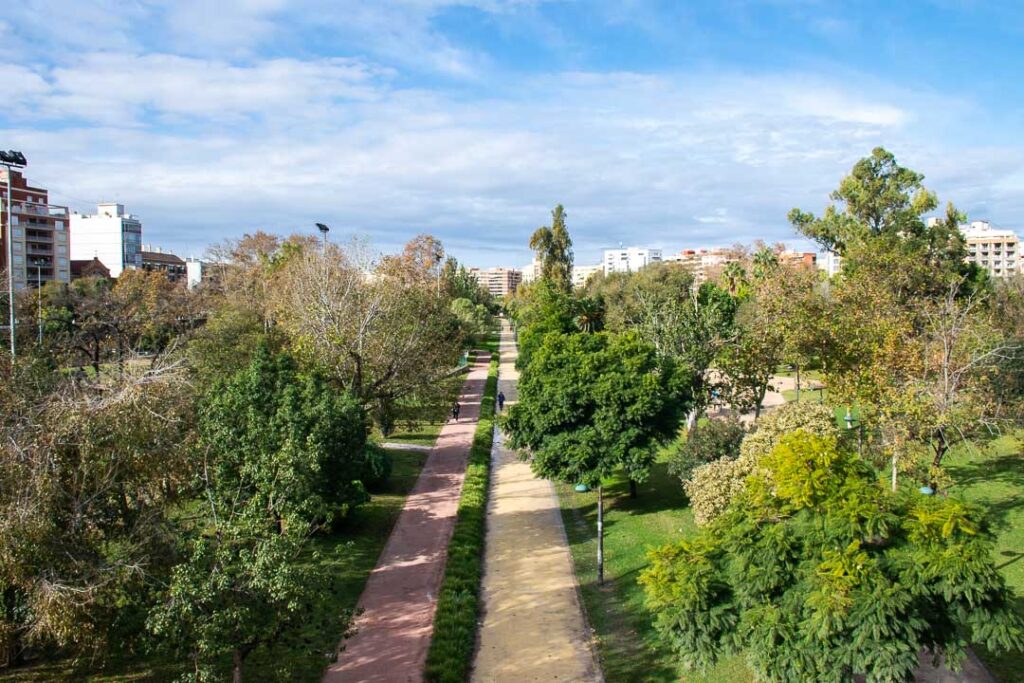
To me, one of the most unique places to visit in Valencia is the Jardí del Túria.
This long park borders much of the historic centre of the city and has an unexpected story behind it. The park’s name comes from the Turia River which used to flow right through the city.
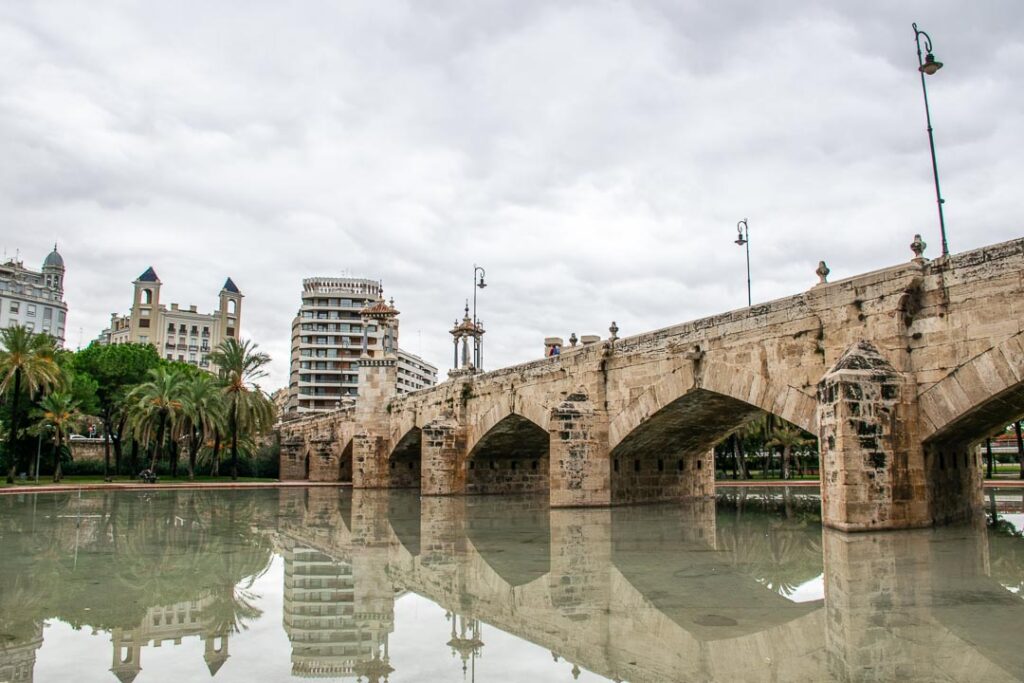
However, the city diverted the river to prevent horrendous floods that used to sweep through. Now, it’s a fantastic urban park that still has the old bridges crossing over it, creating a space I’ve never really seen before.
Many of the old bridges like the Pont dels Serrans are quite impressive, but the park is also a nice escape from Valencia’s dense city streets.
Plaça de l’Ajuntament
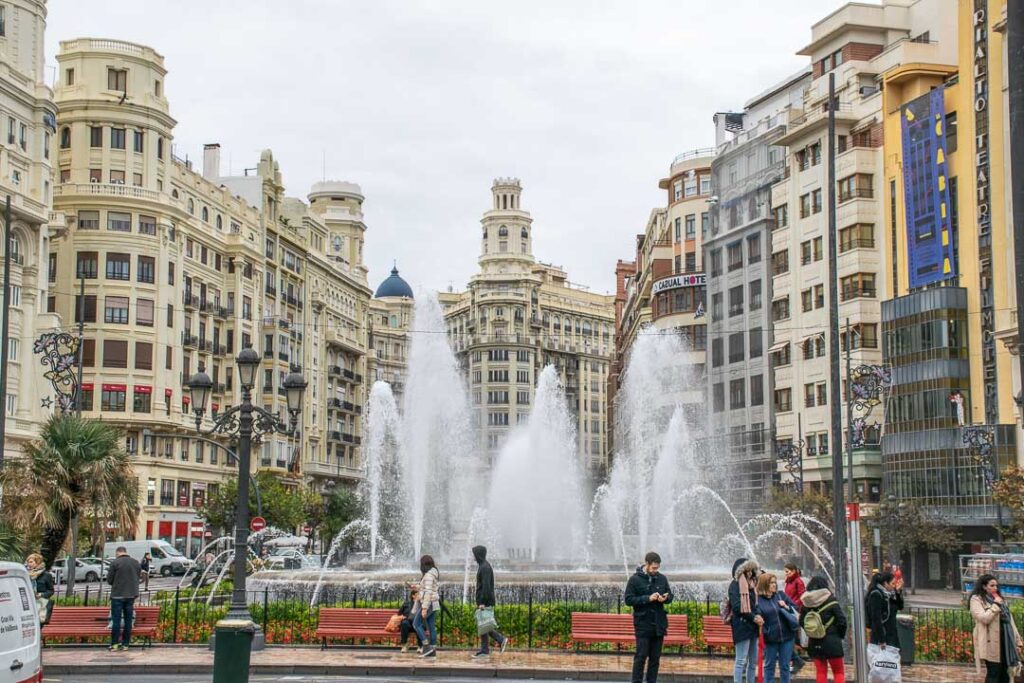
When you move south away from the heart of the Old Town, the feel of the city drastically changes.
It feels like you’ve jumped ahead a few centuries, as the buildings get higher and everything starts to reflect the early 20th century. A great place to see what I mean is the Plaça de l’Ajuntament, another major square in Valencia.
This square is enclosed by striking architecture from the 18th-20th centuries and feels completely divorced from what you see at Plaça de la Mare de Déu.
Eixample city streets

Because of where I was staying in the city, I spent quite a bit of time passing through the Eixample neighbourhood.
This part of the city does have a couple of sights but is more focused on restaurants, cafes and shopping. One aspect of it I quite liked was all the palms down the streets, especially on Avenida del Regne de Valencia. Eixample is also home to some interesting architecture, but that tends to be in the parts closest to the Old Town.
I’d recommend exploring this area a little if you’re curious to see more of the city and more of what modern life is like here.

City of Arts and Sciences
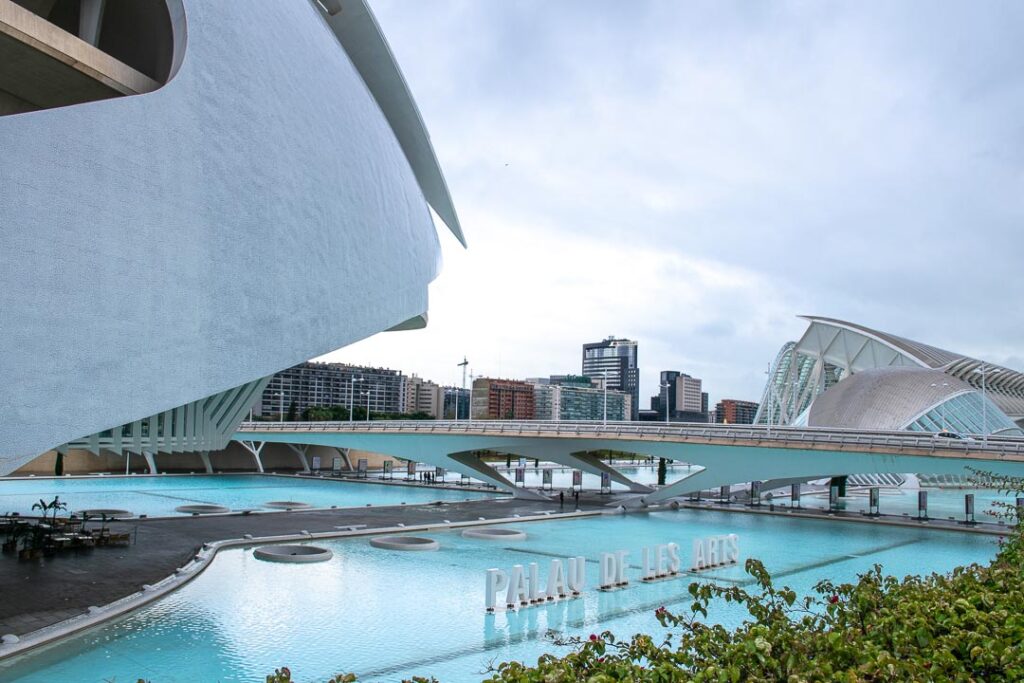
Found at the far end of the Jardi del Turia lies the weirdly futuristic City of Arts and Sciences.
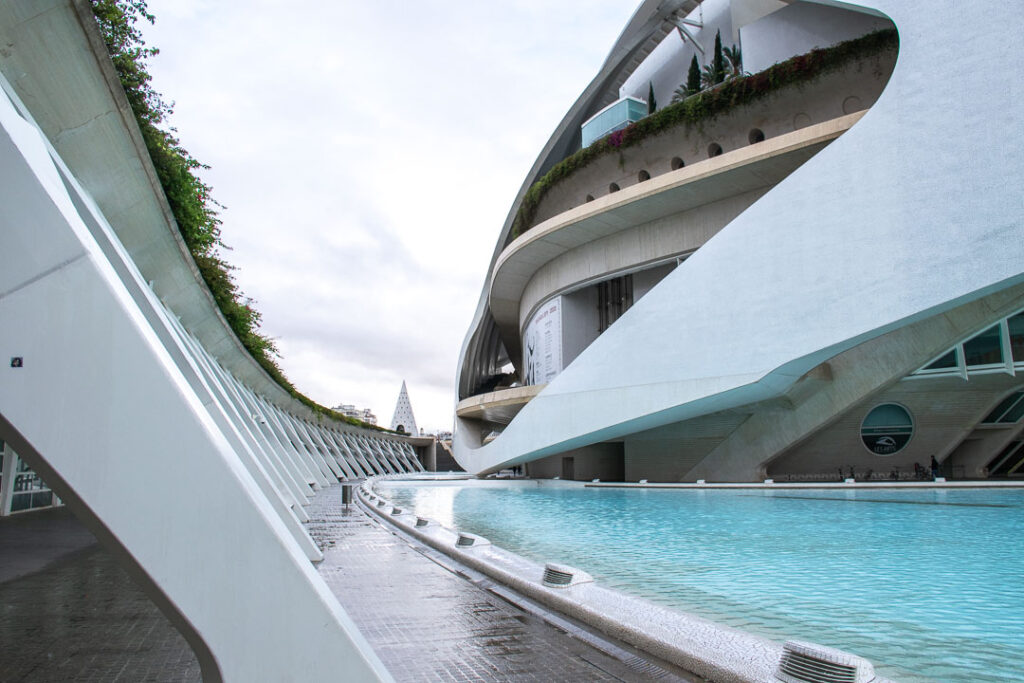
This is Valencia’s new-ish cultural precinct and I’d wager you haven’t seen anything else like it in Europe. The “city” is defined by its stark white buildings, surrounded by vast pools and fountains.
Within the precinct, there are some major cultural landmarks, including the Palace of the Arts, L’Oceanogràfic, and the Hemisfèric IMAX Theatre. You can book tickets to the Oceanogràfic de Valencia in advance, which is never a bad idea.
But even if you’re not interested in visiting any of these places, it’s another cool place to walk around.
Related Articles
To learn more about planning a trip to this part of Spain, take a look at these other Spain blog posts for nearby destinations:
- Quick Guide to Alicante Holiday Sightseeing, Spain
- Experience the Quaint Splendour of Altea in Spain
- How to Purposefully Spend a Day in Cartagena, Spain
- The Essential Sightseeing Guide to Teruel, Spain
Have you had the pleasure of travelling to Valencia? What would you recommend people do when visiting Valencia, especially if you’re on a budget? Please share your thoughts in the comments below.

1 comment
David, no pin for this post??