
Disclosure: This post (probably) contains affiliate links. If you click on one, I may make a small commission. Of course, this will come at no extra cost to you and helps keep this site running.
Tasmania is an Australian state known for its wilderness. Over 40% of Tasmania/lutruwita is covered by national parks and nature reserves, which are home to many of the island’s most famous destinations and attractions. As such, hiking in Tasmania is one of the best ways to explore the state and one of my favourite things to do there.
And yet, people often encounter problems when they head off into Tasmania’s wilderness to hike. It could be small things like getting surprised by the weather to matters of life and death with hikers getting lost and needing emergency rescue. You can never eliminate all risks in outdoor activities like hiking, but planning goes a long way to ensure you stay safe and have fun.
Here’s what I think you need to know before hiking in Tasmania, from someone who has done many of the state’s day hikes and plans to do its biggest multi-day treks one day.
Places to start hiking in Tasmania

In Tasmania, you can find all sorts of nature walks, hikes, and treks to suit your fitness and level of interest.
Want a gentle 30-minute stroll? No problem. Prefer a 6-day trek across mountain peaks? You got it (the Overland Track).
The best place to go for ideas about exploring Tasmania’s natural beauty is the 60 Great Short Walks. Don’t let the name fool you; you’ll find plenty of half-day and full-day hikes there.
In the past, I’ve also shared some of my favorite nature walks in Tasmania. You’ll find a few walks there that are not on the 60 Great Short Walks.
Some of the most common destinations to go hiking with plenty of options are:
- Cradle Mountain – Tasmania’s most popular national park, around its signature mountain
- Freycinet National Park – a coastal national park with iconic bay views
- Tasman Peninsula – clifftop trails allow for sweeping views on the island’s edge
When to visit Tasmania for outdoor activities

Picking the right time to visit is usually a priority when planning a hiking trip. But I think it’s less important than you’d expect for Tasmania.
The most popular time to visit Tasmania is in summer, from December to February. Milder weather from the mainland lures people south over the school holiday period.
Summer can actually be quite warm and sunny, though, so on exposed hikes you really feel it. Also, places such as Cradle Mountain get pretty busy then, which takes some of the ambience away from getting out into nature.
To me, the best time to hike in Tasmania is during spring and autumn, with March and November two of my favourite months to hike there.
During these months, it’s warm enough during the day to not be uncomfortable, but you shouldn’t encounter too many people. November to March also generally has the fewest rainy days, which I think we can all agree makes being outdoors nicer.
And what about going to Tasmania in winter?
People might think that winter is a bad time to go. Yes, in higher parts of the state, such as the highlands and down south around Mount Field National Park, you can encounter snow and freezing weather.
But hiking in winter can be an experience, if you don’t mind rain and mud. Some days it’s quite comfortable, particularly if you’re walking in a forest away from the wind. Plus, fewer people are around and accommodation rates are much more reasonable than normal.
What’s most important is that you’re thoroughly prepared for how the weather can change, both by packing properly and speaking with visitor center staff for information on the latest conditions.
Do you need a Tasmania Parks Pass?

States in Australia have different rules regarding fees for visiting national parks. In Tasmania, you need a parks pass to enter all national parks.
Parks passes can be easily organized online in advance of your visit through the Tasmania Parks and Wildlife Service.
Passes can be bought per vehicle or per person, depending on your mode of transport, and you can choose between a daily pass, a 2-month pass, or an annual pass. Do the math based on your trip to see what’s best value for money.
Cradle Mountain has its own pass, not included in the regular passes, because of its frequently used shuttle service.
But what about regional reserves or other nature spots?
Well, only the parks on this list require a pass. Any other place in Tasmania not listed does not require a permit, and you can visit it freely.
For instance, Mount Roland doesn’t require a pass, but Narawntapu National Park does.
Some of the state’s hikes require even more than that. Popular hikes, namely the Overland Track and the Three Capes Track, have limited places/facilities, and you must book ahead of time and pay a permit fee.
Understanding the hiking grades

When looking at hikes in Tasmania, you’re sure to notice that each comes with a grade, indicating how difficult it is.
If you’re not familiar with hiking in Australia, these might mean nothing to you. I don’t think these grades are that useful on their own, but they do provide a quick guide to tell you what you’re waiting for.
The grading system goes from 1-5; 1 is flat and easy, while 5 is difficult and usually requires special skills.
More often than not, you’ll encounter things in the 2-4 range, unless you’re a hardcore hiker. Even walks that I’d consider super gentle strolls sometimes get marked as Grade 2, purely because of the type of surface or that steps are involved.
Higher numbers can mean longer, steeper, or more technical hikes, but the number on its own doesn’t tell you which combination of these factors to expect.
When possible, search for the hike on the Parks Tasmania website and see why they’ve given a certain grading. Those details are far more valuable and give you a better sense if you can complete it.
Registering your hike
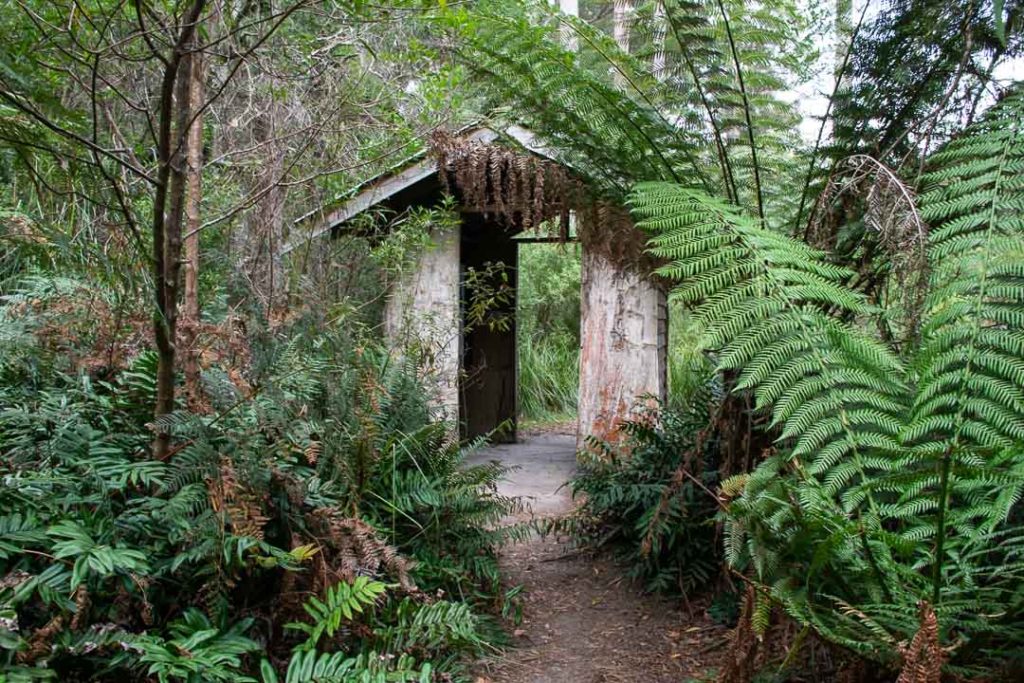
When starting on hiking trails in Tasmania’s national parks—and some nature reserves—you’ll pass a small hut or kiosk with a book inside.
This book is to register your plans for hikes, signing in and out to show you’re safe. While it’s not necessary for short nature walks, registering for longer walks helps park services tell if there’s a chance someone’s missing and begin search and rescue efforts.
News stories of hikers in Tasmania going missing or getting stranded are not uncommon, even in popular places such as Freycinet National Park.
My rule of thumb is to register if the hike is going to take more than half a day or is a high grade. You should also follow conventional hiking wisdom and let someone know your plans.
Registering is particularly important for Tasmania’s most serious hikes and treks, where incidents most often happen, including:
Stay on the path and leave no trace

“Leave no trace” is a mantra for outdoor communities around the world, and it’s something to bear in mind in Tasmania too.
While it’s one reason to stay on the path when hiking in Tassie, it’s not the only one.
Conservation is a good reason to follow them. By keeping to trails, you help reduce the impact on local flora; some parks even have elevated (and controversial) walkways to limit damage to nearby plants.
But the other big reason to follow the trail is your own safety. People do get lost when hiking in Australia, with news stories of lost hikers an all too common occurrence.
With good weather, it can seem strange that people might get turned around on a particular route. But fog, cloud, and rain can absolutely ruin visibility, meaning that one wrong turn can lead you into the middle of nowhere.
Sometimes, it can be tricky in good weather, such as at the poorly marked route to the summit of Mt. Roland.
When visiting Lake St. Clair, the weather forced me to change plans when the visitor center said that the fog on Mount Rufus was too severe to safely climb. Someone that week had gotten badly lost up there and couldn’t find the well-marked trail.
You might be thinking, “Well, I can just keep walking until I find civilization”. But again, 40% of the state is effectively wilderness, with much more farmland. Look south of the A10 around Lake St. Clair and Queenstown and go all the way to the coast; there is no road or settlement for a hundred or so kilometers. The Central Highlands aren’t much different.
It just doesn’t work like that, so please stay on the path for everyone’s sake.
PS. Brush your shoes. In Australian national parks, we often have shoe brushes set up near the start of trails. These brushes help with biosecurity, limiting the spread of unwanted seeds or pathogens among native flora.
What to pack and wear
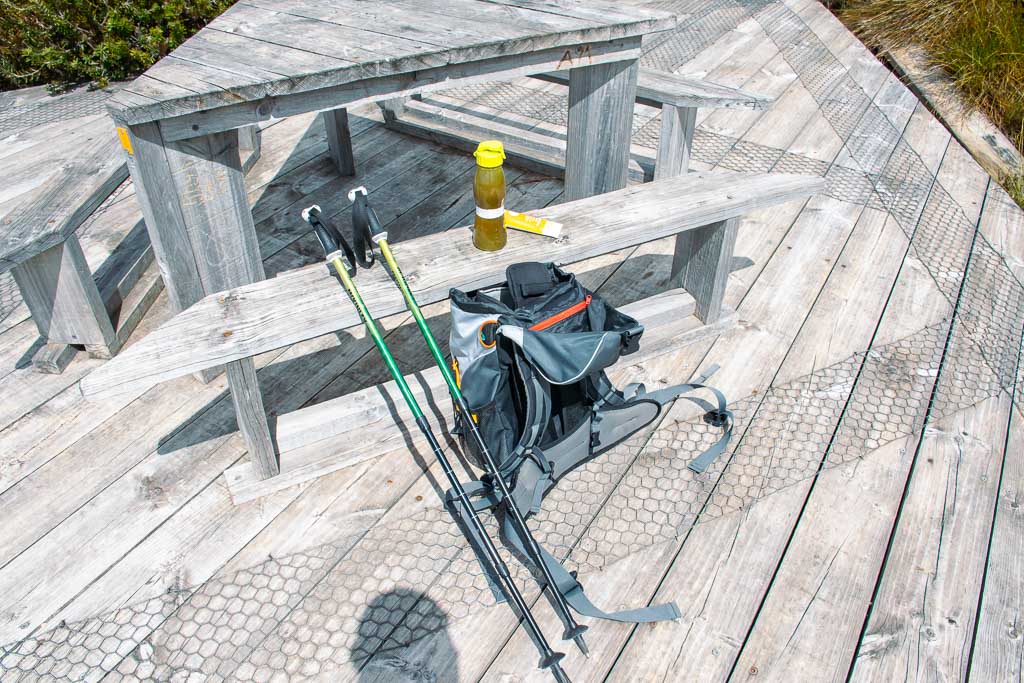
Packing and what to wear are two common concerns when planning a hike.
But what you need depends on whether you’re doing a short walk, a day hike, an organised overnight hike, or going it alone on one of the state’s most challenging hikes.
If you’re planning a serious trek, such as Frenchmans Cap or the Western Arthur Range Traverse, you need way more information than I can provide here (but consider getting a Personal Locator Beacon (PLB)).
But for people doing short walks and day hikes, packing is much more straightforward.
Things like water, snacks, sunscreen, a hat, a rubbish bag, and enough layers are pretty much always needed or a good idea, even if it’s just for an hour’s walk.
Don’t underestimate the sun in Tasmania in summer; the state’s incredibly clear air makes the sun harsher, and sunburn can happen quicker than you think.
On the subject of water, bring plenty of it. Unless you’re starting at a national park visitors center, you won’t find potable drinking water options or fountains like in other parts of the world.
The decision of wearing boots or shoes really comes down to where you’re hiking. If you’re hiking after rain or outside of summer, I highly recommend wearing waterproof boots. Muddy or flooded paths are super common, and if nothing else, wearing boots keeps your regular shoes clean.
Hiking poles can also be a good thing to have with you, even though they’re not that commonly used in Australia for regular hikes. But go to Mt. Roland or down the long staircases of Cape Hauy and you’ll be glad for the assist.
Finally, one thing for people doing overnight hikes. Campfires are more often than not banned due to the risk of bushfires. So, you’ll want to check if you need to pack a fuel stove for any cooking you might want to do.
Wildlife encounters
 In the south of Australia, we’re fortunate that you don’t need to worry about predators when out in nature (the north with dingos and crocodiles is a different story).
But even though we don’t have bears and wolves, it doesn’t mean you’re free from risk when it comes to local wildlife.
Snakes are obviously the main concern.
Tasmania has three species of snake, all venomous. I’ve only had one encounter with a snake (from a safe distance), but they are something to bear in mind.
They’re mostly active between October and March with the warmer weather. You’re most likely to be surprised by one in long grass or along overgrown trails.
Find more advice on hiking near snakes, including recommendations such as wearing long pants in summer, at this website.
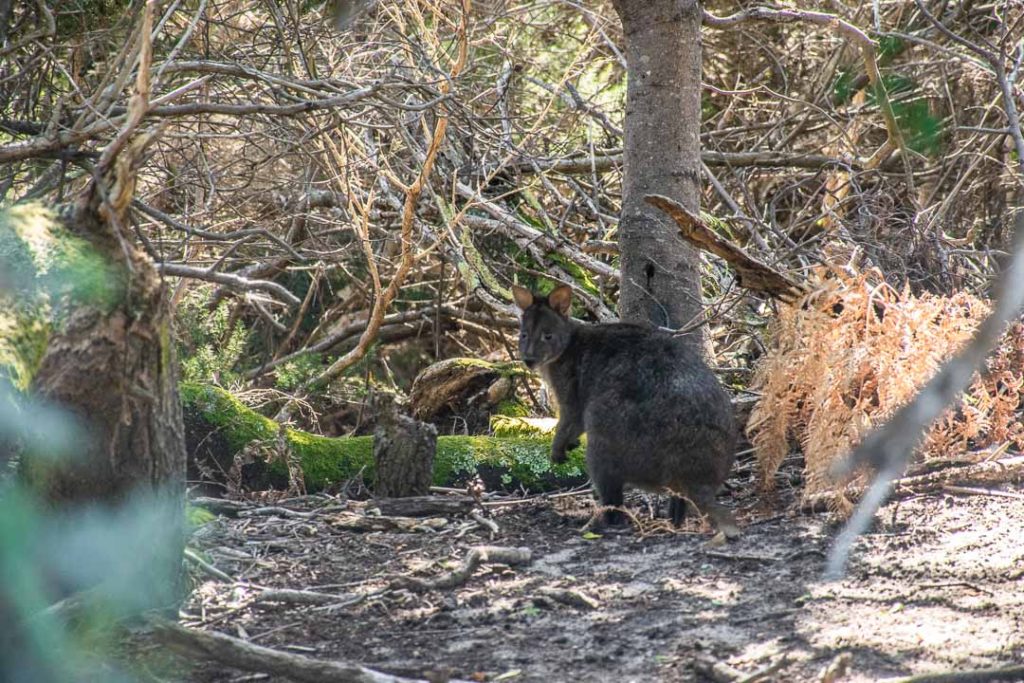
However, you should also try to give all animals their space. No matter how cute you might think a kangaroo, wombat, or pademelon is, don’t touch them.
Just don’t—they’re wild, and you don’t know how they’ll react. It’s also not appropriate to try feeding them, as that also creates risks and has hidden consequences.
Despite all these warnings, spotting Tasmanian wildlife is a highlight of hiking in the state and, thankfully, quite a common experience.
What to expect from the track quality

With so many different walks and hikes in Tasmania, you can expect very different trail conditions depending on where you go.
I’ve encountered everything from the regular crushed gravel or dirt tracks to modern boardwalks, rocky steps, and even what felt like flooded creek beds.
Looking at Cradle Mountain’s many walks and hikes is a good example of this.
The short walks, such as the Enchanted Walk or at Ronny Creek, are simple boardwalks. Dove Lake has boardwalk sections, but also a lot of gravel and dirt paths, which are still level and in good condition. Go up to Marion’s Lookout, though, and you have some steep rocks to climb, with chains to assist.
Flooded paths are a common challenge of hiking out of season. My winter hikes at Lake St. Clair and Montezuma Falls involved walking through free-flowing water, rockhopping, or submerged sections. Even tackling Mount Roland in November, this was an issue. I’d say this is more of an issue on hikes Grade 3+.
Some hikes are even trickier. I’ve yet to hike Mount Amos in Freycinet National Park due to its terrain. This climb is defined by steep rocky slopes that you need to go up, but hiking when it’s wet or raining is not advised. So, when it rained on and off during my visit, it felt too risky.
It’s best to look at how each hike is described in advance. That way, you can tell if you need proper (waterproof) boots or if it’s suitable for you.
Walking through flooded tracks can be fun sometimes, but not for everyone.
It’s all wilderness

Once you leave the visitor center or parking lot, that’s it.
Don’t expect restaurants, cafes, or any facilities really at the end of the hike, unlike in Europe or Asia. You’re on your own.
That’s generally how national parks and mountains are in Australia, as the focus has been on conservation and limited impact.
Sometimes, even the visitor center or nature reserve is completely lacking facilities, such as restrooms and places that sell food.
I do enjoy the mountain huts you get in Europe, with their hearty cuisine and beer, but the untouched approach in Australia is nice too.
So, you need to bring (or leave in your vehicle) everything you might want or need with you. Some hiking locations are also more remote than you realize, so it can take even longer to find modern amenities after a hike if you’re not prepared.
I remember one time leaving lunch too late at Cradle Mountain, missing the cafeteria’s opening hours, and having to drive an hour after a day of hiking to scrounge together food in Sheffield.
