
Disclosure: This post (probably) contains affiliate links. If you click on one, I may make a small commission. Of course, this will come at no extra cost to you and helps keep this site running.
Riga may be the biggest city and cultural centre in Latvia, but it’s by no means alone. After all, there are four regions in Latvia, each with their own character and tradition. For the region of Zemgale, that capital is the city of Jelgava. Destinations in Zemgale like Rundale Palace and Bauska may be better known among visitors, but there are actually loads of sights to see in Jelgava.
Visit Jelgava and you’ll see that it isn’t a big city by any standards. But that doesn’t take away from its history or natural beauty. In fact, those aspects are even easier to see as they’re not hidden away among a sprawling urban expanse. This means that tourists are quickly able to see what makes the city special, even with just a day trip to Jelgava from Riga. Here’s what you have to look forward to if you give this understated city a chance.
Jelgava Palace

Easily the most talked about attraction in the city is the elegant Jelgava Palace. Nestled between the Driksa and Lielupe rivers on an island, it’s quite an impressive sight. That’s thanks to its late Baroque design, which was receiving some restoration work when I was there.
There were several earlier castles built here, starting with a wooden castle for the Livonian Order in 1265. However, this palace was built by the Duke of Courland in 1771 and later became the governor’s residence when the Russian Empire invaded. In the following years it was repeatedly destroyed and rebuilt, with the most recent major renovation in 1961.
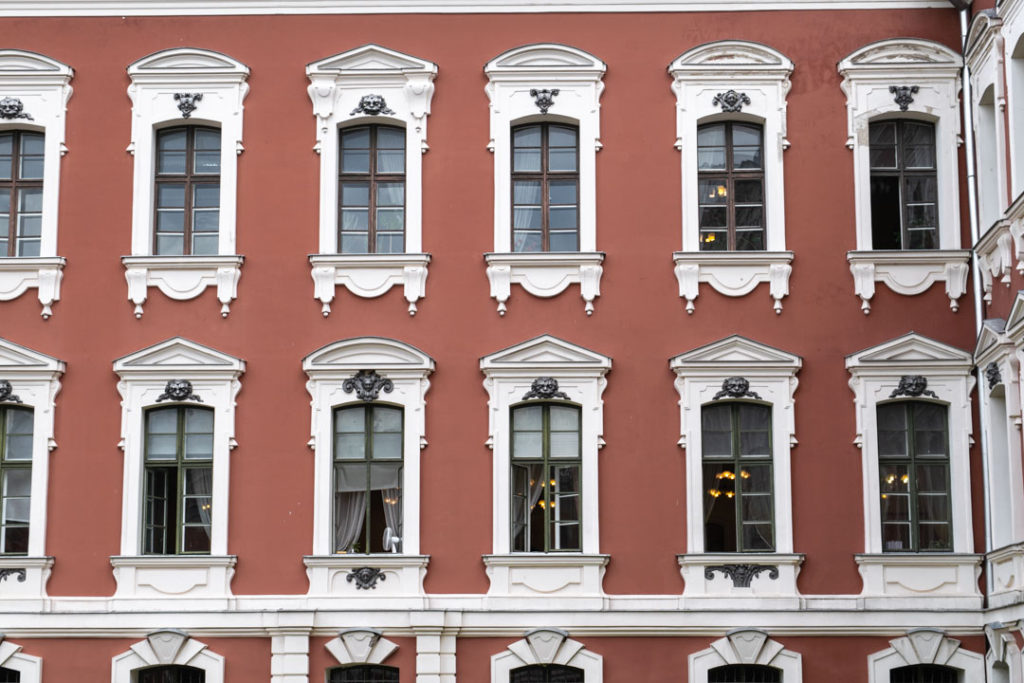
It now hosts a museum detailing the history of the various castles and palaces that have stood here. There’s also meant to be an exhibit on the crypts of the Dukes of Courland. But I got to see none of this. I never found the museums while walking through its corridors, unsure whether I was allowed in. Maybe it was due to the restoration work that I couldn’t find the way in. Regardless, I still saw the palace facade and wandered through the surrounding gardens.
Jelgava Holy Trinity Church Tower
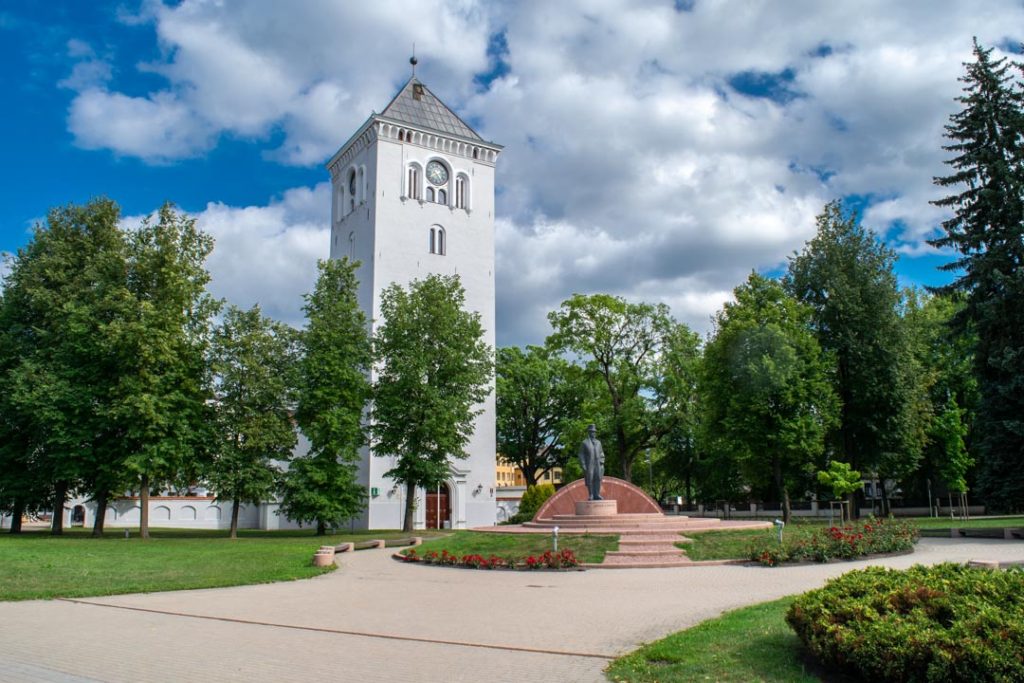
Instead, my main museum experience in Jelgava was over in the Jelgava Holy Trinity Church Tower. Before the church was destroyed in 1944, it was the largest church in the entire Zemgale region. Now, only the lone tower is left of the 16th century church. At first glance, it may seem like a simple 50 metre-high tower, but there’s a lot going on inside.
Three of the lower floors of the tower host exhibitions on the region of Zemgale. There you can learn a little about the region’s history and its knack for producing Latvian presidents. You also see exhibitions on traditional clothing from the region and other aspects of the culture. Of course, there’s also a section dedicated to the tower itself.
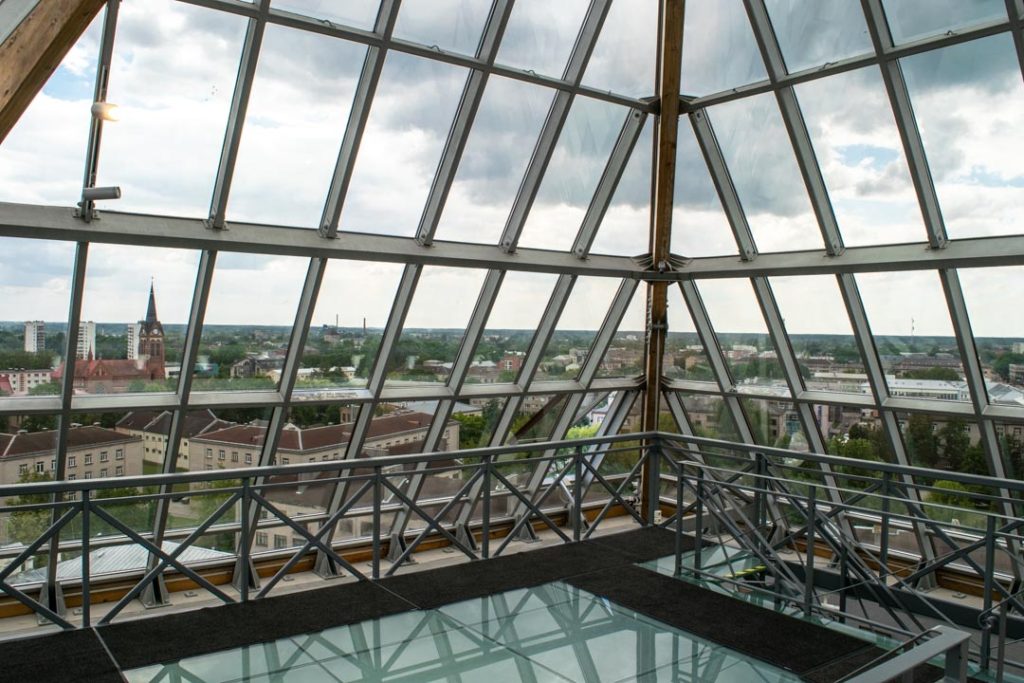
Up above all this you have a restaurant with views of the city, and above that an observation deck on the top floor. Surrounded by a glass ceiling you can see right across Jelgava and its low cityscape. To me, it’s definitely a spot not to miss among the sights to see in Jelgava. It’s also worth mentioning that on the ground floor is a tourist information centre if you need help at all.
Jelgava Old Town Quarter
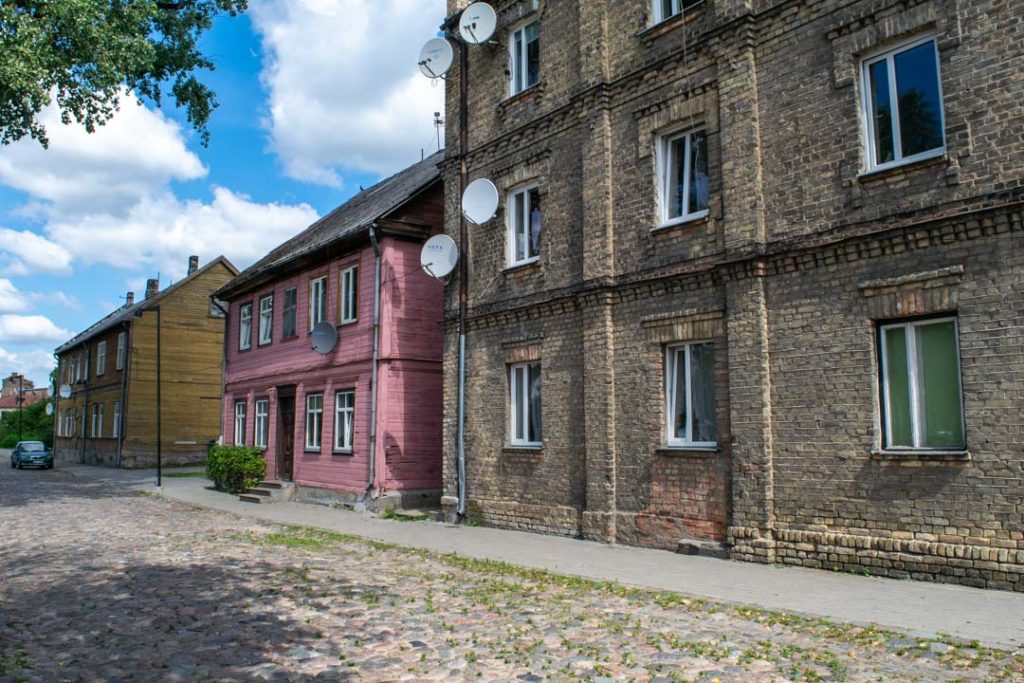
An interesting thing about visiting Jelgava is that it’s Old Town is quite removed from the city centre. To see the so-called “Old Town Street Quarter” you need to head west from the city centre into what seems a residential area. But it’s worth the walk because there you’re met with a charming collection of old buildings and cobblestone streets. They’re a mix of wooden and brick houses, with some having seen better days. But it’s a nice little insight into what Jelgava must have once looked like.
Jelgava Time Wheel
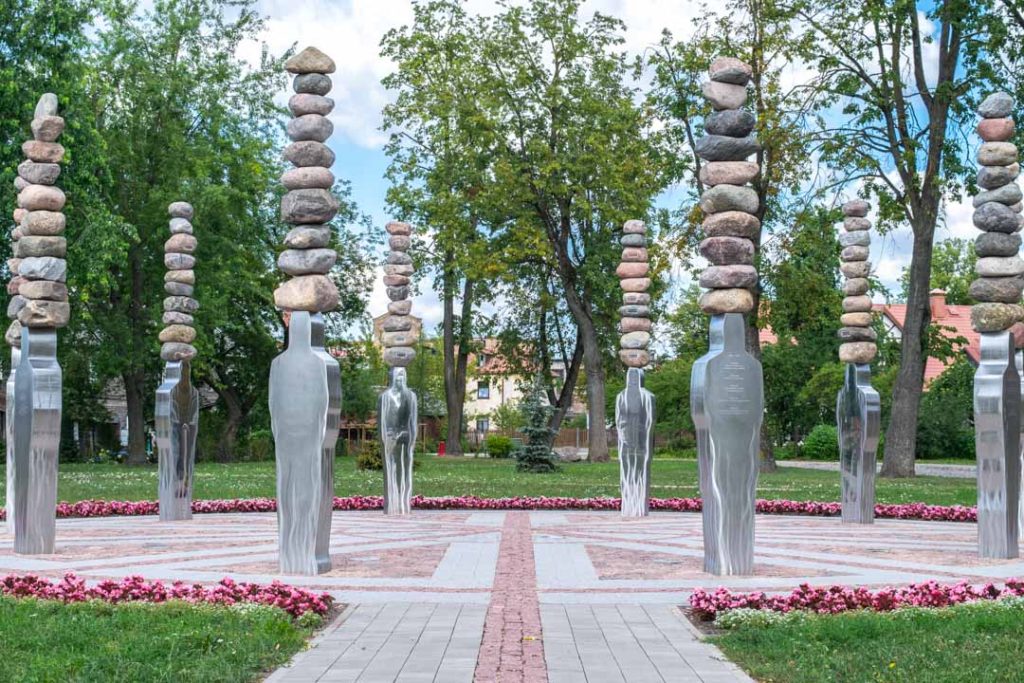
One sight in Jelgava that’s sure to make you curious is the above eye-catching monument. This is the 100 Time Wheel and it was created to celebrate the centennial of Latvian independence in 2018. Around the circle are ten figures with ten stones, together representing the 100 tough years Latvia has undergone since. The ten figures are also made from reflective metal so that people can see themselves in the struggle. It’s honestly quite a memorable concept and I think quite cool.
Other Statues Around Town
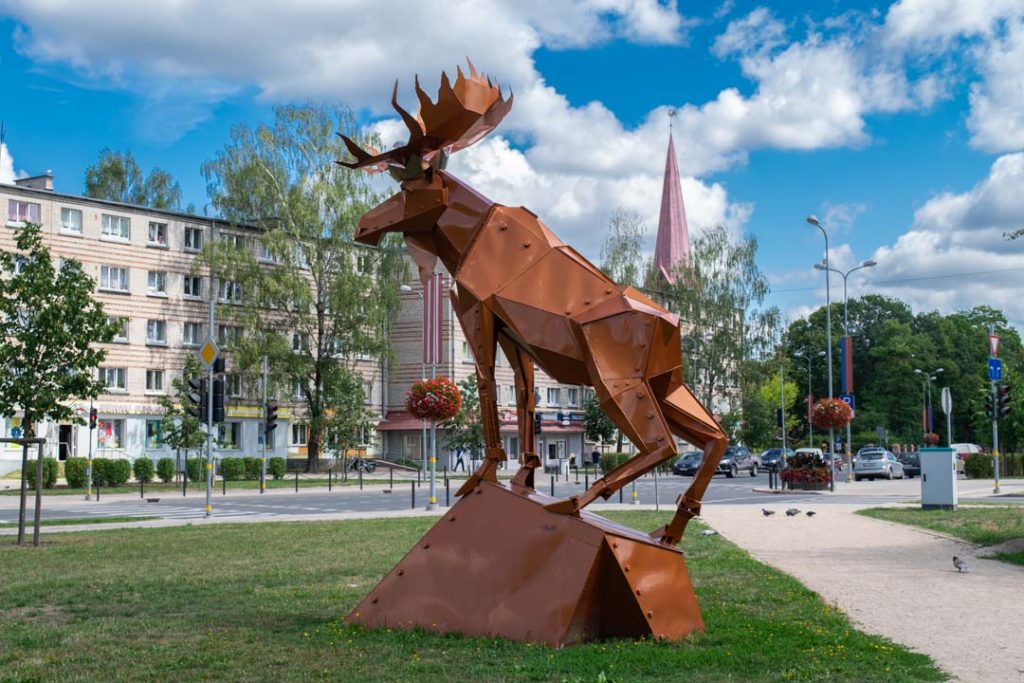
And actually, there are quite a lot of interesting statues around Jelgava if you take the time to explore the city. Much like murals, this sort of street art is a clever way to entice visitors to see more of the destination. As someone who likes wandering wherever I go, it’s the kind of thing that’s right up my alley. But even those that don’t wander far will find things. The below scrap metal statue with plenty of character is right in the city centre in the main pedestrian area.

Museum of History and Art

Jelgava Palace isn’t the only building in the city that offers up a hint of old grandeur. It shares its late Baroque design with the Museum of History and Art in the city centre. The building was constructed in 1775 and actually became the first university in Latvia, which you can kind of see in its architecture I think.
Today though, it’s a history and art museum named after Gedert Elias, a prominent Latvia painter. Admittedly, I didn’t visit inside but it’s said to host a huge collection of regional items and have a good view from the tower.
Driksa Riverfront

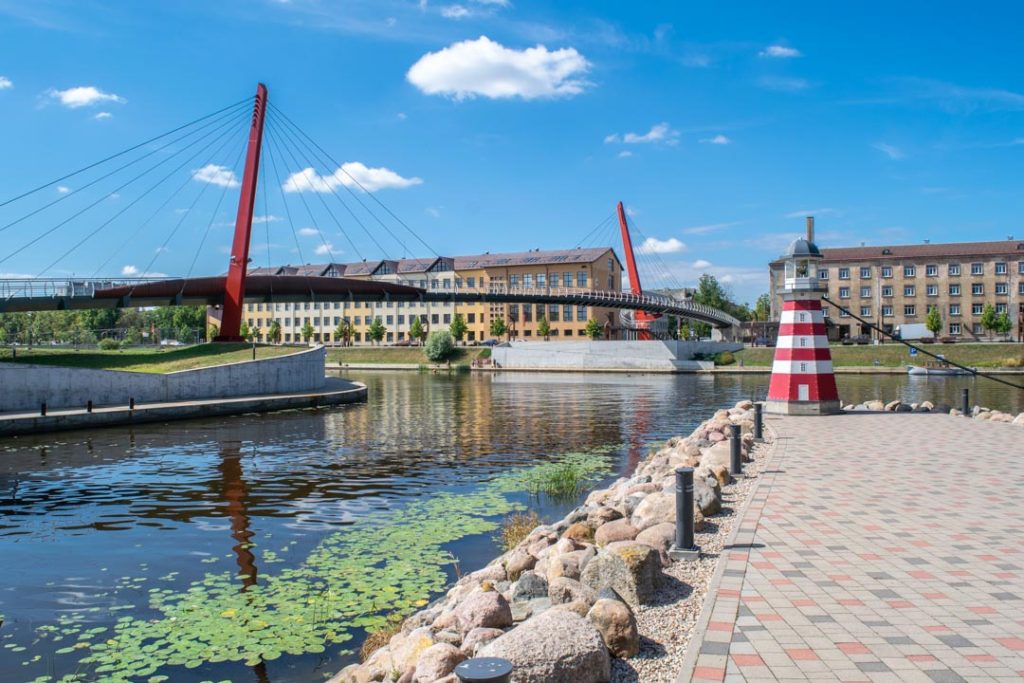
There isn’t much of Jelgava that feels particularly modern until you reach the waterfront of the Driksa river. South of the main bridge and Jelgava Palace you find the most newly developed part of the city. One look at the waterfront promenade and man-made waterfall and you can tell that there’s been an urban renewal project here.
With a modern pedestrian bridge connecting to the island and new developments on the island, it was a really inviting place to be. The riverfront area actually reminded me of the Netherlands or Denmark with its modern touch for some reason. People had rented kayaks and boats to paddle about in the river and further along there are even beaches. If you have more than a day in Jelgava, this is where I think you’d want to spend most of your time.

Lielupe Floodplain Meadows

Earlier I mentioned that Jelgava Palace sits on an island between two rivers. However that’s not the only sight on the island. The palace only covers a tiny portion of the land, with the rest belonging to the Lielupe Floodplain Meadows. Taking the road along the river you soon reach the untamed meadows, full of wildflowers and not much else. That is until you reach the lookout tower.
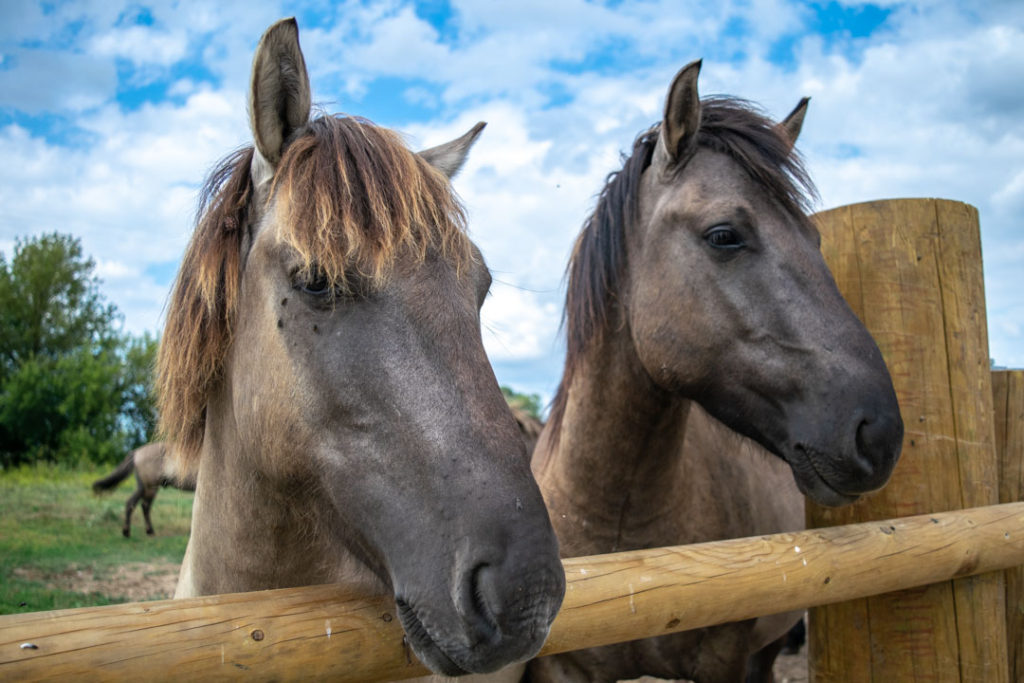
Climb the tower and you’re treated to a nice view of the river area and some of Jelgava’s taller landmarks. But it’s really the super laid-back feel up there that’s most enjoyable. Down below though, there’s a fence behind which are lots of horses just grazing. There are around 70 wild horses that graze on the floodplains, but they certainly weren’t too afraid of company as you can see.
Churches of Jelgava
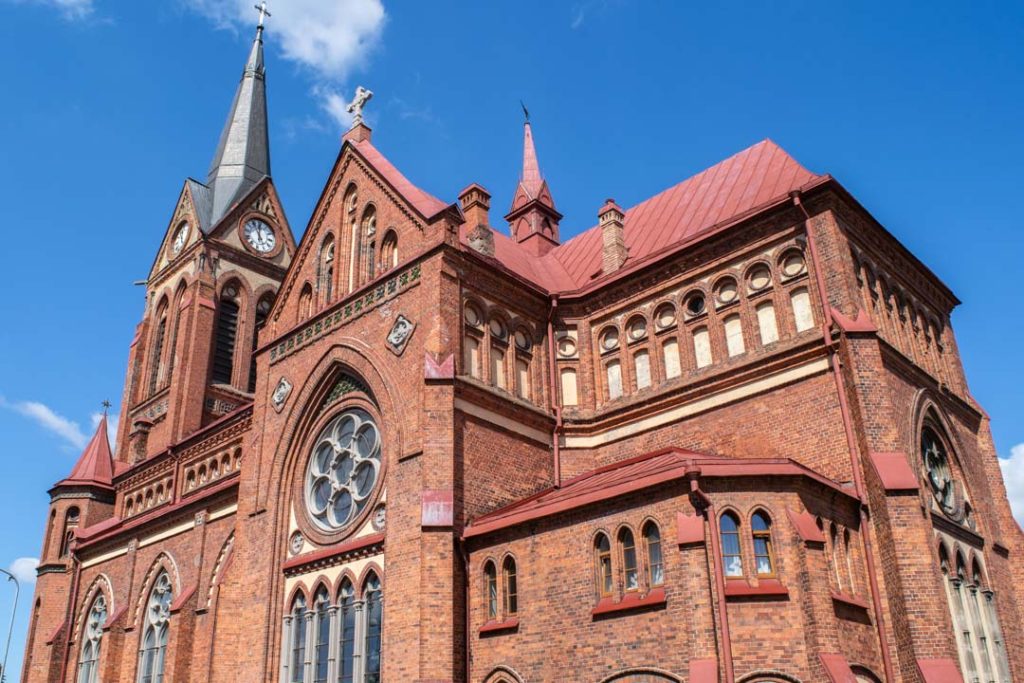
Heading back into the city centre, it’s worth pointing out multiple churches in Jelgava that stand out. There are actually loads of churches in the city, but there were two that made an impression. The first was the Cathedral of the Immaculate Virgin Mary, seen above. It’s quite a intricate Neo Gothic catholic church that dates from 1906.
Just across the street, you also have the St. Simeon and St. Ann Orthodox Cathedral. Although slightly older dating from 1892, it lay in ruins from 1944 until Latvia regained independence. Not sure why, but I always find these Orthodox churches quite interesting.

Uzvaras Park

One final little place that I stumbled onto while exploring Jelgava was the Uzvaras Park. Just outside the park is a historic building, Villa Medem, not far from where I was staying. It turned out to just be a mansion-turned-venue, but the park was at least interesting. The park used to be the mansion’s gardens, but is now full of various sculptures and statues. It is a little out of the way, so don’t worry too much if you miss it.
Travel Tips for Visiting Jelgava
When planning to visit Jelgava, there’s a few things to consider. The big one is whether you do a day trip from Riga or spend a little longer there. A day trip will certainly cover the bulk of things to do in Jelgava, but I enjoyed spreading my sightseeing over 2 days there. If you do choose to stick around, there are a reasonable selection of places to stay in Jelgava. I won’t get into my experience staying there, just to say the language barrier can be an issue.
No matter how long you visit though, you first need to get there. Honestly, getting to Jelgava couldn’t be easier with both buses and trains to choose from. Taking the Riga Jelgava train is the faster and cheaper option, with hourly departures. But the Jelgava Riga bus runs about every 15 minutes, so you really can’t go wrong. I’d argue that this is the easiest day trip from Riga you can do outside of Jurmala.
Have you ever heard of Jelgava Latvia before? Are there other things to do in Jelgava that you think people should know about? Please share your thoughts in the comments below.

This article is now available as a mobile app. Go to GPSmyCity to download the app for GPS-assisted travel directions to the attractions featured in this article.
